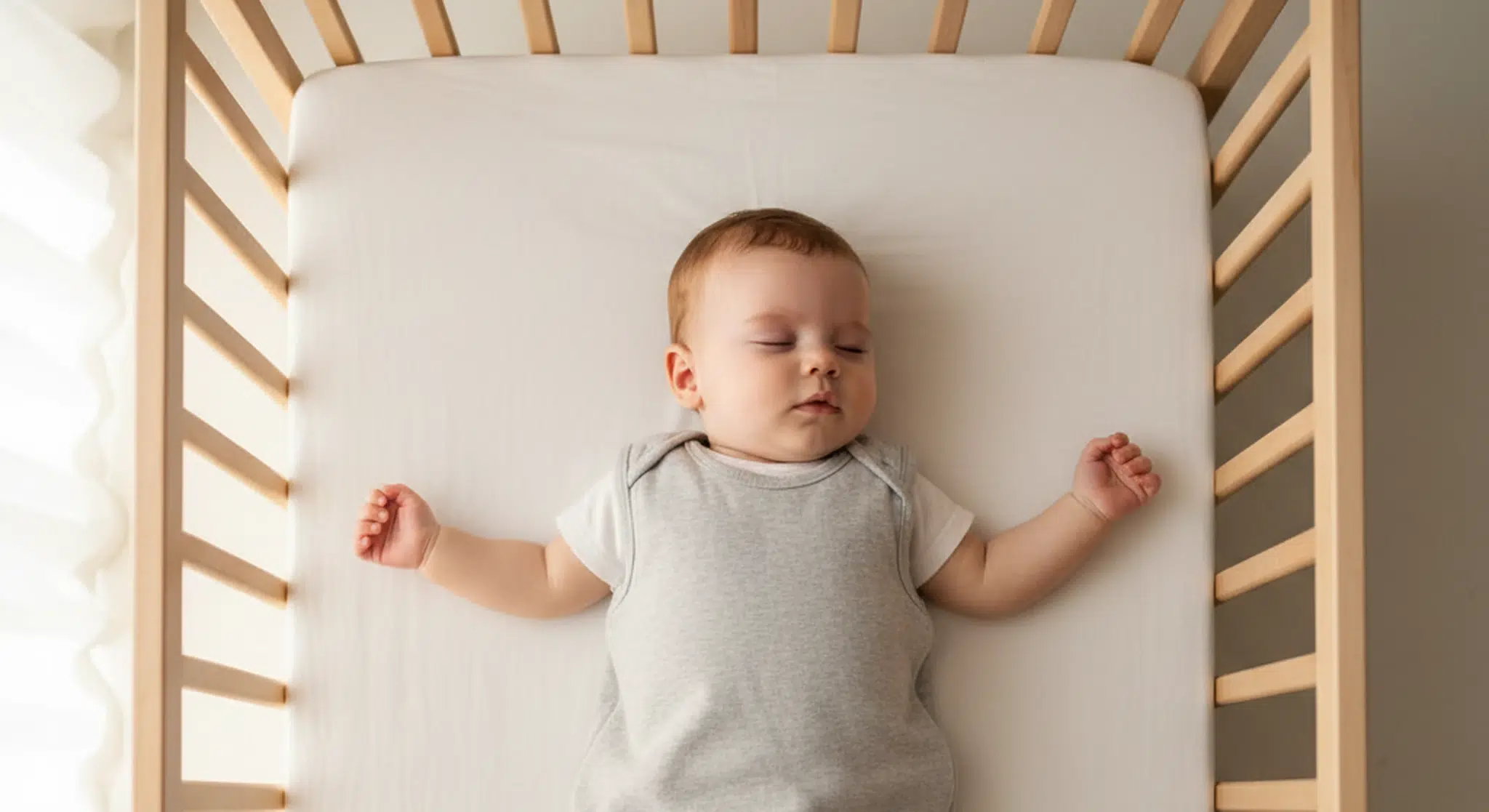
The simplest rule for dressing a baby for sleep is to give them one more light layer than you would wear to be comfortable in the same room, then swap loose blankets for a sleep sack. Aim for a room around 68 to 72 degrees Fahrenheit and dress for that number, not the weather outside.
Getting your baby’s sleepwear right is one of those small decisions that feels weirdly high stakes at 2 a.m. Too little and they wake up cold, too much and you worry about overheating, which is a known risk factor for unsafe sleep. The good news is that dressing a baby for sleep comes down to two things you can actually control: the temperature of the room and the total warmth of what they are wearing.
This guide breaks down the one-layer rule, explains what TOG ratings mean and how to match them to your room, gives you a plain-language chart by temperature, and covers the safe-sleep basics like skipping loose blankets and hats. By the end you will be able to dress your baby confidently in any season.
Key Takeaways
Dress your baby in one more thin layer than you would wear to be comfortable in the same room.
Keep the nursery around 68 to 72 degrees Fahrenheit and dress for that, not the outdoor weather.
TOG measures warmth: use a lower TOG (0.5) in warm rooms and a higher TOG (2.5) in cool rooms.
Use a sleep sack or wearable blanket instead of loose blankets until at least 12 months.
Check the chest or back of the neck, not hands and feet, to judge whether your baby is too warm.
Table of Contents
The One-Layer Rule, Explained
The most reliable starting point is simple: dress your baby in one additional thin layer beyond what an adult would need to feel comfortable in the same room. If you are cozy in a t-shirt, your baby is probably right in a onesie plus a light sleep sack. If you would want a long-sleeve top and a sweater, your baby likely needs footed pajamas plus a warmer sleep sack. Babies cannot regulate their temperature as well as adults, but they do not need to be bundled the way many of us instinctively assume.
Dress for the room your baby actually sleeps in, not the forecast. A nursery on the top floor in summer can run far warmer than the thermostat downstairs suggests, and a basement room in winter can be cooler. If you can, keep the sleep space between 68 and 72 degrees Fahrenheit, which most pediatric groups consider a comfortable range, and build the outfit around that number.1
What TOG Means and How to Match It
TOG stands for thermal overall grade, a textile measure of how much warmth a fabric holds. The higher the TOG, the warmer the garment. Baby sleep sacks are usually labeled from about 0.5 TOG for warm rooms up to 2.5 or 3.5 TOG for cold ones. You do not need to memorize the science, just match the TOG to your room temperature and adjust the layer underneath.
Room temperature
Sleep sack TOG
What to wear underneath
74 F and up
0.5 TOG
Short-sleeve onesie, or diaper only in a heat wave
70 to 74 F
1.0 TOG
Short or long-sleeve onesie
68 to 70 F
1.5 to 2.0 TOG
Long-sleeve onesie or light footed pajamas
61 to 68 F
2.5 TOG
Footed pajamas over a long-sleeve onesie
A general guide. Every baby runs a little warmer or cooler, so use it as a starting point.
If you only want to buy one sleep sack for a temperate home, a 1.0 TOG is the most versatile choice and works year round in a room kept near 70 degrees. You then dial warmth up or down with the layer underneath rather than buying a sack for every season.
Loose Blankets, Hats, and Safe Sleep
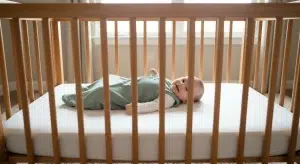
Loose blankets, quilts, and comforters do not belong in the sleep space until at least 12 months because they raise the risk of suffocation. A wearable blanket, also called a sleep sack, solves this: it keeps your baby warm without anything that can ride up over the face. For younger babies who are not yet rolling, a swaddle serves the same purpose. Once your baby shows any sign of rolling, stop swaddling and move to a sleeveless or short-sleeve sack that leaves the arms free.
Skip hats for sleep indoors: babies release heat through the head, and a hat during sleep can contribute to overheating.
Avoid loose blankets, pillows, bumpers, and stuffed animals in the crib.
Choose snug, breathable cotton or merino layers rather than thick fleece against the skin.
Hands and feet are a red herring. They often feel cool even when your baby is perfectly warm, because circulation to the extremities is still developing. To judge your baby’s actual temperature, slip a hand onto the chest, tummy, or the back of the neck. That skin should feel warm and dry, not hot, clammy, or sweaty.
Signs of overheating: damp hair, sweaty neck or back, flushed cheeks, rapid breathing, or restlessness.
Signs of being too cold: a chest or belly that feels genuinely cool to the touch, or fussing that settles once you add a layer.
When in doubt, err slightly cooler rather than warmer, since overheating carries more risk than being a touch cool.
Room temperature matters more than the outdoor season, so revisit your baby’s layers whenever you change the thermostat, travel, or move them to a new room. For the full picture on nursery climate, see our guide to the best room temperature for baby sleep.
Your baby feels hot and is unusually irritable or hard to wake, which can signal a fever rather than clothing.
You see persistent sweating during sleep even in a cool, well-dressed setup.
Your baby is frequently waking cold despite added layers in a room you believe is warm enough.
You have questions about a specific medical condition, prematurity, or medication that affects temperature regulation.
Sleepwear is about comfort and safe sleep, not treating illness. If your baby feels feverish or seems unwell, check a temperature and call your pediatrician rather than adjusting clothing alone.
Frequently Asked Questions
How should I dress my baby for sleep by room temperature?
Match a sleep sack TOG to the room and adjust the layer underneath. In a room near 70 degrees, a 1.0 TOG sack over a onesie works well. In a warmer room above 74 degrees, use a 0.5 TOG sack with a short-sleeve onesie. In a cool room around 65 degrees, use a 2.5 TOG sack over footed pajamas.
What is a TOG rating for baby sleep sacks?
TOG, or thermal overall grade, measures how much warmth a fabric provides. Higher numbers are warmer. Baby sleep sacks usually range from about 0.5 TOG for warm rooms to 2.5 or 3.5 TOG for cold rooms. A 1.0 TOG sack is the most versatile single choice for a room kept near 70 degrees.
Can my baby sleep with a blanket?
Loose blankets are not recommended in the sleep space until at least 12 months because they raise the risk of suffocation. Until then, a wearable blanket or sleep sack keeps your baby warm safely. After the first birthday, a thin blanket can be introduced if your pediatrician agrees.
Should babies wear a hat to sleep?
No. Babies should not wear hats to sleep indoors. They release heat through the head, and a hat during sleep can contribute to overheating, which is a safe-sleep risk. Keep the head bare and adjust warmth through the room temperature and sleep sack instead.
How do I know if my baby is too hot at night?
Feel the chest, tummy, or back of the neck rather than the hands and feet, which often feel cool normally. Damp hair, a sweaty neck, flushed cheeks, or rapid breathing suggest your baby is too warm. Remove a layer or lower the room temperature if you notice these signs.
Still fighting rough nights?
Comfortable clothing is one piece of the puzzle. Get a gentle, personalized plan built around your baby’s age, room, and routine.