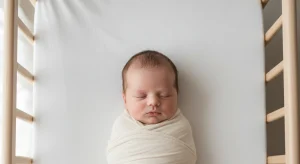
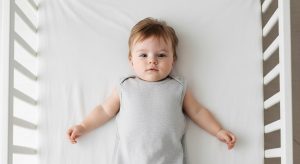
A baby clothes size chart matches each size, from preemie and newborn up to 24 months, to a weight and height range, so you can shop by your baby’s measurements instead of by age alone.
Baby clothes sizes confuse nearly every new parent. A “3 month” outfit may fit at 4 weeks, a “newborn” sleeper may never fit at all, and no two brands seem to agree.
This guide gives you a clear chart of baby clothes sizes, explains how newborn clothes size works, compares 24 months with 2T, converts U.S., U.K., and European sizes, and shows how many pieces you really need in each size.
Key Takeaways
Shop by weight and height first. The age on the label is usually the upper end of the range.
Newborn size typically fits 5 to 8 pounds, and many babies outgrow it within 3 to 6 weeks.
Buy only a few newborn pieces and more in 0 to 3 months and up.
24 months is cut roomier for diapers, while 2T is slimmer and longer.
Sizes vary by brand, so always check the brand’s own chart.
Table of Contents
Baby Clothes Size Chart (Newborn to 24 Months)
This baby clothes size chart shows a typical U.S. range for each size, based on the published chart from Carter’s, one of the largest baby clothing brands. Most U.S. brands land close to these numbers, though each has its own chart.
Size on the label
Weight
Height / length
Roughly fits
Preemie (P)
Up to 6 lb
Up to 17 in
Babies born early or small
Newborn (NB)
5 to 8 lb
17 to 21.5 in
Birth to about 1 month
0 to 3 months (3M)
8 to 12.5 lb
21.5 to 24 in
About 1 to 3 months
3 to 6 months (6M)
12.5 to 16.5 lb
24 to 26.5 in
About 3 to 6 months
6 to 9 months (9M)
16.5 to 20.5 lb
26.5 to 28.5 in
About 6 to 9 months
12 months (12M)
20.5 to 24.5 lb
28.5 to 30.5 in
About 9 to 12 months
18 months (18M)
24.5 to 27.5 lb
30.5 to 32.5 in
About 12 to 18 months
24 months (24M)
27.5 to 30 lb
32.5 to 34 in
About 18 to 24 months
Typical U.S. baby clothes sizes by weight and height. Always check the brand’s own chart.
The most useful thing to know: the age on the label is usually the upper end of the range. A size 3M or “0 to 3 months” is made for babies up to about 3 months old, not for babies who just turned 3 months.
How Baby Clothing Sizes Work
Baby clothes are labeled by age, but babies of the same age can differ by several pounds and inches. A big 2 month old and a small 5 month old might wear the same size. That is why experienced parents shop by weight and length first and treat the age as a rough hint.
Go by weight and height: weigh and measure your baby, or use the numbers from the last checkup, and match them to the brand’s chart.
When in between, size up: babies only grow in one direction, and slightly roomy clothes are more comfortable than tight ones.
Check both numbers: a long, lean baby may need the next size for length even if the weight still fits.
Brands differ: some run small and snug, others run large. European brands size by height in centimeters.
Single number vs. range: “6M” and “3 to 6 months” usually mean the same size.
Newborn Clothes Size: Will Your Baby Even Wear It?
Newborn size typically fits babies from about 5 to 8 pounds and up to about 21.5 inches long. The average full-term baby in the United States weighs a little over 7 pounds and measures about 20 inches at birth, so most newborns start in newborn size.
They do not stay there long. After losing a little weight in the first days, healthy babies gain roughly an ounce a day in the early weeks. Many outgrow newborn clothes within 3 to 6 weeks, and babies born at 9 pounds or more may go straight to 0 to 3 months.
A sensible plan:
Buy only a handful of newborn pieces: about 5 to 7 bodysuits or sleepers is plenty.
Keep the tags on and the receipts handy until your baby arrives.
Stock up more on 0 to 3 months, which most babies wear for longer.
If your ultrasound suggests a small or early baby, add a few preemie pieces.
Babies go through 2 or 3 outfits on a messy day, and how often you do laundry matters more than anything. As a starting point for each size from 0 to 3 months up:
Bodysuits: 7 to 10, short or long sleeve depending on the season.
Footed sleepers or pajamas: 5 to 7. Two-way zippers make night changes much easier.
Pants or leggings: 4 to 6 pairs.
Sleep sacks or swaddles: 2 or 3. See our guide to the baby sleep sack.
Socks: 6 or more pairs, because they vanish.
Layers: 1 or 2 sweaters or a jacket, plus a hat for outdoors in cool weather.
Something nice: 1 or 2 special outfits, if you want them.
Think about the season your baby will be in each size. A summer baby in size 6M needs light cotton. The same baby in 12M the following winter needs warm layers.
24 Months vs. 2T: What Is the Difference?
Both sizes fit a child of about 2, but they are cut differently:
24 months: baby sizing. Roomier through the seat to fit a diaper, rounder in shape, and often has snaps at the crotch for diaper changes.
2T: toddler sizing. Slimmer and a little longer, cut for a child who is walking and may be potty training, with fewer snaps.
If your child is still in diapers and has a round tummy, 24 months may fit better. If your child is tall, lean, or starting to use the potty, try 2T. After 2T come 3T, 4T, and 5T, followed by kids’ sizes.
U.S., U.K., and European Baby Sizes
Shopping from an international brand? European baby clothes are sized by the child’s height in centimeters, which many parents find more accurate than age.
U.S. size
U.K. size
European size (height in cm)
Newborn
Newborn / up to 1 month
50 to 56
0 to 3 months
0 to 3 months
56 to 62
3 to 6 months
3 to 6 months
62 to 68
6 to 9 months
6 to 9 months
68 to 74
12 months
9 to 12 months
74 to 80
18 months
12 to 18 months
80 to 86
24 months
18 to 24 months
86 to 92
Approximate conversion between U.S., U.K., and European baby clothing sizes.
These conversions are approximate. Check the brand’s own chart, and remember that 1 inch equals 2.54 centimeters.
How to Tell When to Size Up
Babies grow fast. On average they double their birth weight by about 4 to 5 months and triple it by their first birthday. Move to the next size when you see:
Snaps at the crotch that pull or pop open.
Toes curling or pressing against the end of footed pajamas.
Red marks on the skin from elastic at the waist, wrists, or ankles.
Sleeves and legs that ride up above the wrist or ankle.
A neckline that is hard to pull over the head.
A bodysuit that sits tight across the diaper.
Clothes that are too tight are uncomfortable and can make it harder for your baby to move freely during tummy time and play.
Sizing for Sleepwear, Sleep Sacks, and Shoes
A few items follow their own rules:
Sleepwear: U.S. safety rules require children’s sleepwear above size 9 months to be either flame resistant or snug fitting. That is why cotton pajamas are cut close to the body. Buy the right size instead of sizing up.
Sleep sacks: sized by weight and length, and fit matters for safety. The neck opening should be snug enough that the fabric cannot ride up over your baby’s face.
Hats and socks: often sold in broad ranges such as 0 to 6 months. Babies should not wear hats for indoor sleep.
Shoes: babies do not need shoes until they are walking outdoors. Soft socks or bare feet are best for learning to stand and walk.
Clothing sizes are not a measure of health. A baby who wears a size ahead or behind their age is usually growing just fine. Pediatricians track growth on standardized charts, and for children under 2 the CDC recommends the World Health Organization growth standards. What matters is steady growth along your baby’s own curve.
Check in with your pediatrician if your baby seems to stop gaining weight, drops in size instead of moving up, or has fewer wet diapers than usual. Regular well-child visits include a weight and length check every time.
Frequently Asked Questions
How do baby clothes sizes work?
Baby clothes are labeled by age, but each size is really based on a weight and height range. The age on the label is usually the upper limit, so a 3 month size fits babies up to about 3 months old.
What weight is newborn clothes size?
Newborn size typically fits babies who weigh about 5 to 8 pounds and are up to about 21.5 inches long. Babies who weigh more than that at birth often start in 0 to 3 months.
How long do babies wear newborn size?
Many babies wear newborn size for about 3 to 6 weeks. Larger babies may outgrow it in days or skip it completely, and smaller babies may wear it for two months.
What is the difference between 24 months and 2T?
Size 24 months is cut roomier to fit a diaper and often has snaps. Size 2T is slimmer and slightly longer, made for toddlers who are walking and may be potty training.
Should I buy newborn or 0 to 3 month clothes?
Buy a few newborn pieces and more in 0 to 3 months. Most babies fit newborn size at birth but outgrow it quickly, and 0 to 3 months is worn for longer.
Is 3 months the same as 0 to 3 months?
Usually, yes. A size labeled 3M and one labeled 0 to 3 months generally cover the same range, fitting babies from about 8 to 12.5 pounds.
Calmer days, better nights.
Betteroo builds a personalized sleep plan for your baby. Take the free two-minute quiz to get started tonight.