If you have started a baby registry, you already know the truth: the lists are enormous, the reviews contradict each other, and almost every item claims to be a must-have. The good news is that the real list of baby must-haves is much shorter than the internet suggests.
A newborn needs only a handful of things done well and done safely. Your baby will spend the first weeks feeding, filling diapers, and sleeping, so the essentials that matter most are the ones that support those three jobs. Everything else is either a convenience that makes your day easier or a nice-to-have you can add later once you know your baby.
This guide sorts the baby essentials into what you truly need before day one, what to buy in small quantities and restock once you know your baby, and what you can comfortably skip. We have leaned on pediatric and safe-sleep guidance so the list keeps your baby healthy as well as comfortable, and we note quantities so you do not over-buy newborn sizes you will outgrow in weeks.
Key Takeaways
- The core baby must-haves cover three jobs: feeding, diapering, and safe sleep. A car seat is non-negotiable before you can leave the hospital.
- Buy newborn-size clothing and diapers in small amounts. Babies grow fast and spend far more time in size 1 and 2 diapers and 3-month clothing.
- A safe sleep space means a firm, flat crib or bassinet that is completely bare: no bumpers, pillows, blankets, or positioners.
- Convenience gear like a carrier, swing, or bouncer can be a lifesaver, but it is optional. Borrow or add it after birth if you need it.
- You can skip wipe warmers, newborn shoes, most special bath tubs, and a closet of tiny outfits. That money is better saved for size 1 and 2.
As an Amazon Associate, Betteroo earns from qualifying purchases.
Table of Contents
Baby Must-Haves at a Glance
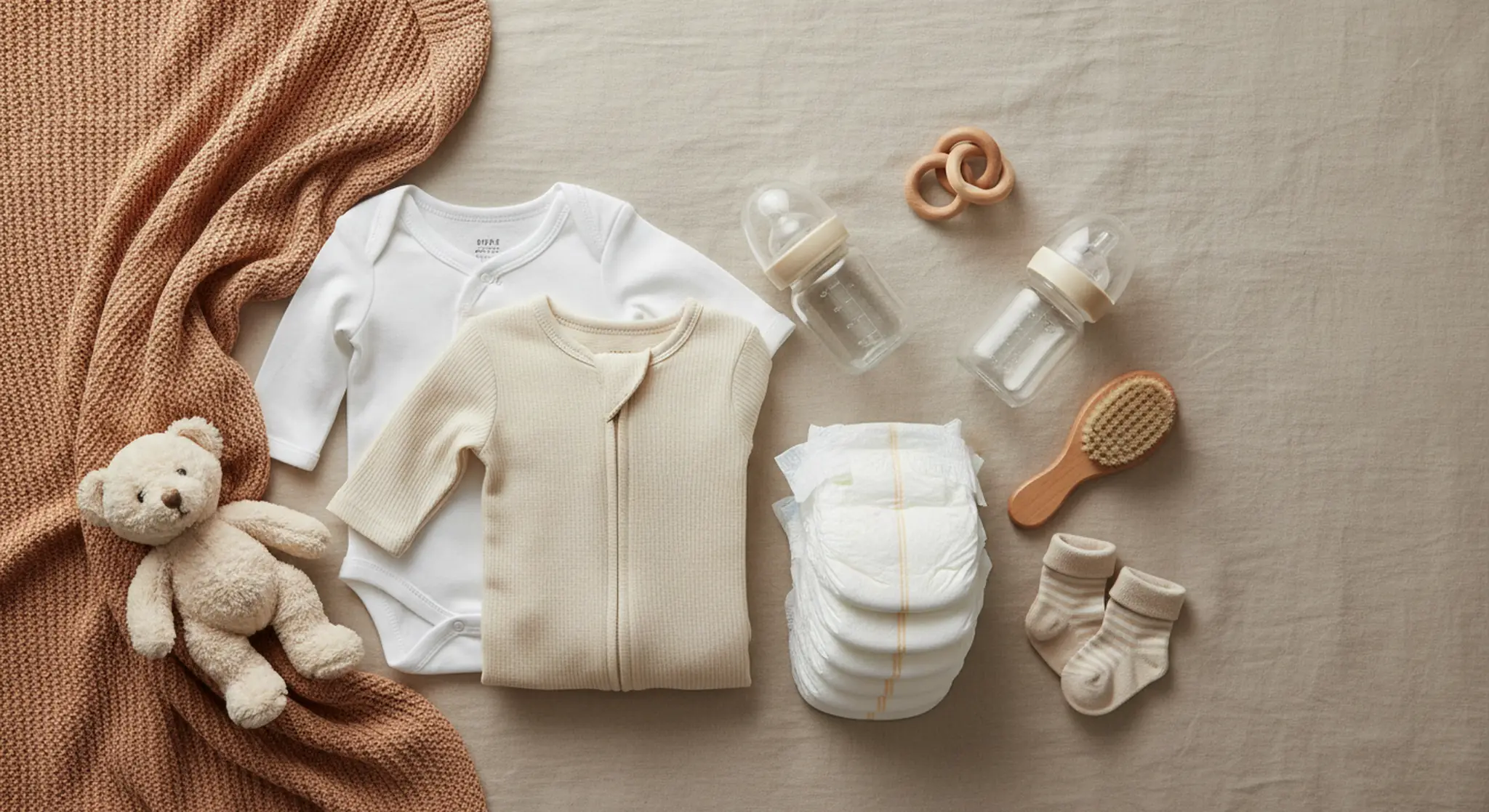
Before the category-by-category detail, here is the short version. If you covered only the items below, you could bring a newborn home safely and comfortably. Everything else on this page is helpful, but this is the core baby essentials list.
- A car seat, installed rear-facing before your due date
- A safe sleep space: a firm, flat, bare crib or bassinet plus a sleep sack
- Feeding supplies for your plan: nursing support, or bottles and formula
- Diapers and unscented wipes, mostly in sizes 1 and 2, plus diaper cream
- A week of simple zip sleepers and plain bodysuits, mostly 3-month size
- A digital thermometer and a few grooming basics
Feeding Essentials
How you feed your baby shapes this part of the list. If you are breastfeeding, your body is the main equipment, and a supportive nursing pillow, a few burp cloths, and lanolin or nipple balm cover the basics. If you are pumping or formula feeding, add slow-flow bottles and a way to clean and dry them. Start with four to six small bottles rather than a full set, because babies often have a preference and you do not want a cabinet of bottles they refuse. Learning to bottle feed a newborn and using paced bottle feeding helps every caregiver share feeds without overwhelming your baby. A predictable newborn feeding schedule comes together in the first weeks.
| Item | Why it matters | How many to start |
|---|---|---|
| Bottles (slow-flow) | For formula, pumped milk, or shared feeds | 4 to 6 small bottles |
| Burp cloths | Spit-up happens after most feeds | 8 to 12 |
| Bibs | Protect clothes from drool and spit-up | 5 to 8 |
| Nursing pillow | Support your arms and back during long feeds | 1 |
| Breast pump | Needed if you plan to pump or return to work | 1 (many plans cover one) |
| Formula | Only if formula feeding, in part or full | 1 to 2 containers to start |
Diapering Essentials
Newborns go through ten to twelve diaper changes a day, so diapers and wipes are the supplies you will burn through fastest. Resist the urge to stockpile newborn size. Buy one small pack of newborn diapers and far more size 1 and size 2, because most babies move through those sizes quickly and stay in them for months. Unscented wipes are gentler on new skin, and a tube of thick zinc-oxide diaper cream handles the first bout of redness. A simple changing pad on a dresser works as well as a dedicated table. When you head out, a stocked bag makes life easier, and our diaper bag essentials list keeps it lean. If you are unsure of the technique, our step-by-step guide on how to change a diaper walks through it.
Safe Sleep Essentials
A safe sleep space is the baby must-have that people most often get wrong by adding too much to it. Your baby needs a firm, flat surface in a crib, bassinet, or play yard that meets current safety standards, and that surface should be completely bare. No bumpers, pillows, loose blankets, stuffed animals, or sleep positioners. The American Academy of Pediatrics is clear that a bare crib on the baby’s back lowers the risk of sudden infant death syndrome and suffocation. For the mattress itself, see our pick guide on the best crib mattress, which must be firm and fit snugly with no gaps. To keep your baby warm without loose bedding, a wearable blanket or baby sleep sack replaces blankets entirely. In the newborn weeks a snug swaddle can help; learn how to swaddle a baby safely and stop swaddling once your baby shows signs of rolling. A white-noise machine is optional but genuinely helpful, and we compare the best sound machines for babies if you want one.
Not sure your sleep setup is right?
Take our free 3-minute quiz for a safe-sleep and schedule plan built around your baby’s age.
Clothing: Buy Less Than You Think
The clothing aisle is where enthusiasm becomes waste. A newborn lives in simple layers, so a week’s worth of zip-up sleepers, a stack of plain bodysuits, a few pairs of socks, a couple of swaddles or sleep sacks, and a warm going-home outfit will carry you further than a closet of tiny dresses. Zippers beat snaps at three in the morning. Buy only a small amount in newborn size and more in the 3-month size, because many babies skip newborn clothing within a few weeks. Skip shoes entirely; newborns do not need them, and mittens plus footed sleepers keep hands and feet warm.
Health, Bath, and Grooming
A small health and grooming kit rounds out the true essentials. A reliable digital thermometer lets you check a fever accurately, which pediatricians rely on to decide how urgently a young baby needs to be seen. Add baby nail clippers or a file, a soft-bristled brush, infant gas relief or saline drops if your pediatrician recommends them, and a bulb syringe or nasal aspirator for stuffy noses. For bathing, a clean sink or a basic infant tub is plenty; browse the best baby bathtubs only if you want the convenience. Newborns need just two or three baths a week, so a hooded towel and a fragrance-free wash are enough. If your home air is dry, a humidifier can ease a stuffy nose, though it is a nice-to-have rather than a must.
Getting Around: Car Seat and Carrier
Two items make leaving the house possible. The first is a car seat, which is not optional: hospitals will not let you drive away without a properly installed, rear-facing infant seat, so buy this new and install it before your due date. The second is a way to move your baby around, whether that is a stroller that clicks with your car seat or a soft carrier that keeps your hands free. A carrier is often the unsung hero of the newborn weeks because it soothes a fussy baby while you get things done. A swing or bouncer can help too, but treat these as optional convenience gear rather than must-haves, and never let a baby sleep in an inclined seat.
Newborn Must-Haves vs What You Can Skip
Just as useful as knowing what to buy is knowing what to leave off the list. Wipe warmers, bottle sterilizers, changing tables, shoes for a baby who cannot walk, crib bumpers, special baby laundry detergent, and a pile of newborn-size outfits all tend to gather dust. Many parents also find they never use a dedicated baby food maker or a top-of-the-line bassinet with features their baby ignores. Borrow big-ticket convenience items like swings before you buy, since babies have strong and unpredictable opinions. Spending less on these frees up money for the things you truly run through, like size 1 and 2 diapers and the next size of clothing.
How Your Must-Haves Change by Stage
Your must-haves shift as your baby grows. The newborn stage is all about feeding, diapering, safe sleep, and soothing. Around four to six months, high chairs, first-foods gear, and teethers enter the picture as solids begin. Later in the first year, a baby who is cruising needs outlet covers, cabinet latches, and other babyproofing more than another lounger. Buying in stages keeps you from purchasing gear months before it is useful, and it lets you choose based on the baby you actually have rather than the one you imagined.
Let Safety, Not Marketing, Set Your List
The strongest filter for any baby must-have is whether it keeps your baby safe. Items that touch sleep, feeding, and travel deserve the most care, because that is where the real safety stakes are. Choose a car seat that fits your car and your baby, keep the sleep surface firm, flat, and bare, and follow current recall information for anything secondhand. When a product promises to help your baby sleep longer or eat better through a special position or feature, be skeptical, and ask your pediatrician before using it.
Your pediatrician and the hospital care team are your best resources in the early weeks. They can tell you what your specific baby needs, confirm whether an item is safe, and reassure you that the short, sensible list almost always beats the long, expensive one. If you are still building your registry, our baby registry checklist pairs well with this guide: use the checklist to see the full range of options, then use these must-haves to decide what to buy first.
Frequently Asked Questions
What are the real baby must-haves for a newborn?
The true baby must-haves cover three jobs: feeding, diapering, and safe sleep, plus a car seat so you can leave the hospital. That means feeding supplies for your plan, diapers and wipes, a firm and bare crib or bassinet with a sleep sack, a few simple sleepers and bodysuits, and a thermometer. Everything else is a convenience you can add later.
How many newborn clothes and diapers should I actually buy?
Buy small in newborn size and more in the next size up. Most babies spend only a few weeks in newborn clothing and diapers, then months in the 3-month clothing and size 1 and 2 diapers. Start with one small pack of newborn diapers, several boxes of size 1 and 2, and about a week’s worth of zip sleepers and bodysuits in the 3-month size.
What baby items can I skip or borrow?
You can usually skip wipe warmers, crib bumpers, newborn shoes, special baby detergent, a changing table, and a large wardrobe of tiny outfits. Big convenience items like swings, bouncers, and bassinets are worth borrowing first, because babies have strong preferences and you may not need them at all.
Do I need a special bathtub, and how often should a newborn bathe?
You do not need a special tub. A clean sink or a basic infant tub is plenty, and many families skip a dedicated tub entirely. Newborns only need two or three baths a week because frequent bathing can dry their skin, so a hooded towel and a fragrance-free wash cover the essentials.
What is the one baby must-have I cannot leave the hospital without?
A properly installed, rear-facing infant car seat. Hospitals will not let you drive away without one, so buy it new, install it before your due date, and have it checked by a certified technician if you are unsure it is in correctly.
Build a plan around your baby, not a shopping list
Betteroo turns pediatric sleep and care guidance into a simple plan for your baby’s exact age. Take the free quiz to get started.
Related Betteroo Guides
- baby carrier types and safety rules
- best baby monitors compared
- baby clothes size chart
- what car seat comes after the infant seat
- gifts for new parents
- free baby samples
- How to Use a Pregnancy Pillow: Positions, Types, and Tips for Better Sleep
- When Does Nesting Start? Signs, Timing, and How to Nest Safely
- How to Get Free Baby Stuff: Boxes, Samples, and Freebies
- Baby Registry Must Haves
Related reading: For hands-on gear comparisons before you buy, see independent, tested baby gear reviews.
5 Sources
- American Academy of Pediatrics, HealthyChildren.org: Safe Sleep and Reducing the Risk of SIDS
https://www.healthychildren.org/English/ages-stages/baby/sleep/Pages/A-Parents-Guide-to-Safe-Sleep.aspx - American Academy of Pediatrics, HealthyChildren.org: Baby Gear and Getting Ready for Baby
https://www.healthychildren.org/English/ages-stages/prenatal/Pages/default.aspx - American Academy of Pediatrics, HealthyChildren.org: Car Seats Information for Families
https://www.healthychildren.org/English/safety-prevention/on-the-go/Pages/Car-Safety-Seats-Information-for-Families.aspx - Mayo Clinic: Bathing your newborn
https://www.mayoclinic.org/healthy-lifestyle/infant-and-toddler-health/in-depth/healthy-baby/art-20044438 - Nemours KidsHealth: A Guide for First-Time Parents
https://kidshealth.org/en/parents/guide-parents.html