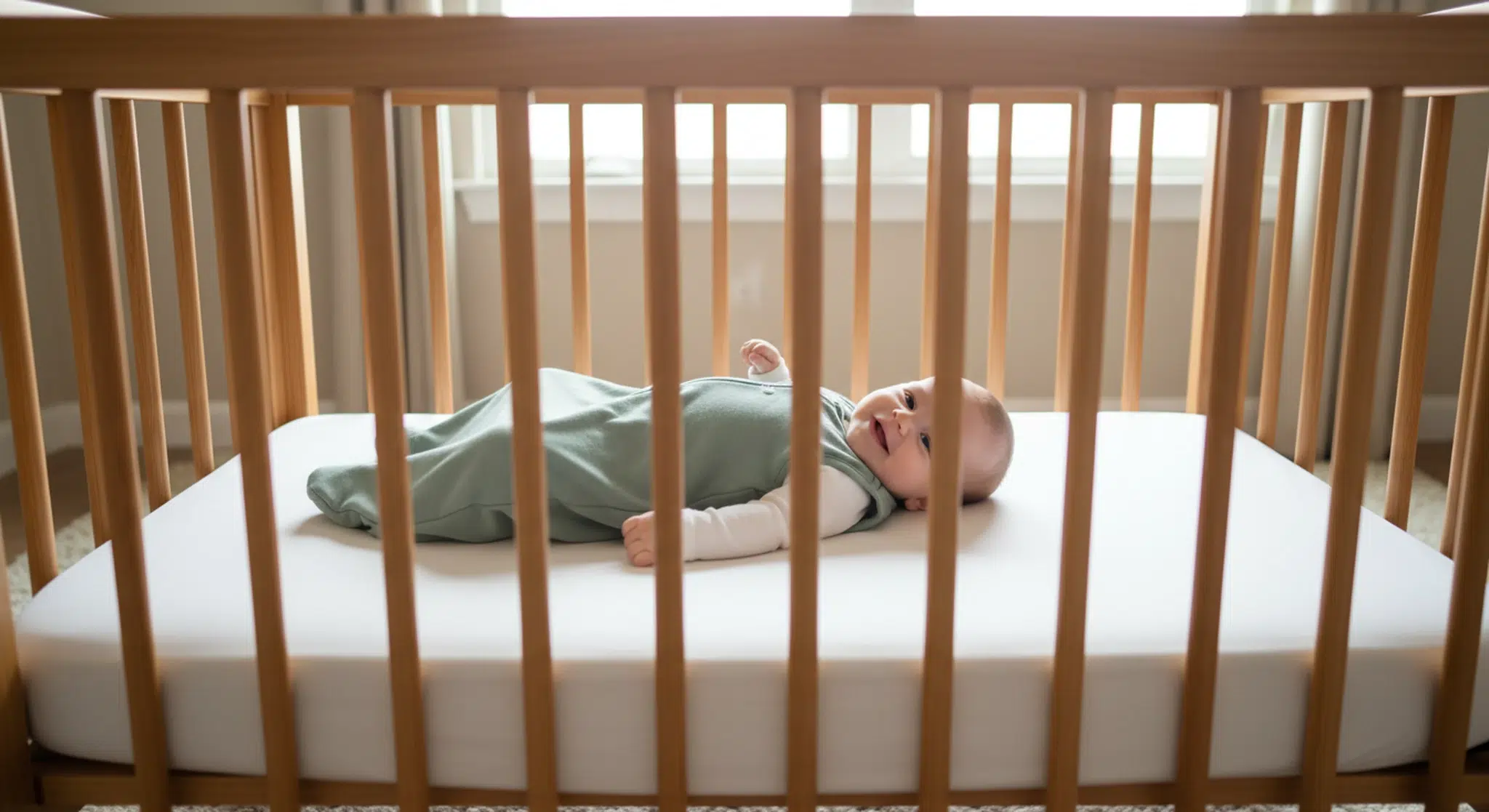
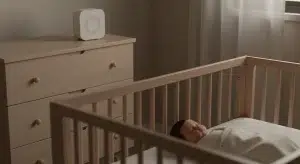
A baby sleep sack is a wearable blanket that zips over your baby’s sleep clothes, keeping them warm without the suffocation risk of loose bedding. Used from the newborn swaddle transition until toddlerhood, it is one of the simplest safe-sleep tools there is, once you know how to pick the right TOG, size, and style.
Loose blankets are off the table for the entire first year of safe sleep, but babies still get cold, and cold babies wake up. The sleep sack solves both problems, which is why it has become the default sleepwear of the crib years.
This guide covers when to start and stop using a baby sleep sack, how TOG ratings map to room temperature, what to dress your baby in underneath, weighted sleep sack warnings, and how to keep using one when your toddler learns to work a zipper.
Key Takeaways
Sleep sacks let you follow the AAP rule of a completely bare crib: no blankets, pillows, bumpers, or soft objects for at least the first 12 months.
Start an arms-free sleep sack as soon as your baby shows signs of rolling, which is the hard deadline for swaddling.
Match the sack’s TOG rating to room temperature: roughly 0.5 TOG for warm rooms, 1.0 for mild, 2.5 for cool.
Skip weighted sleep sacks and weighted swaddles entirely; the AAP advises against any weighted sleep product for infants.
There is no required stop age; many children wear sacks happily to age 2 or 3, and a sack even delays crib climbing for some toddlers.
Table of Contents
What Is a Baby Sleep Sack?
A baby sleep sack (also called a wearable blanket or sleep bag) is a sleeveless, zip-up pouch worn over pajamas. Arms stay free, hips and legs have room to move, and there is nothing loose in the crib that could cover a face. It replaces the blanket a baby cannot safely have.
Sleep sacks differ from swaddles in one crucial way: a swaddle pins the arms to prevent the startle reflex from waking a newborn, while a sleep sack leaves arms completely free. That distinction is exactly why the sack is safe after rolling begins and the swaddle is not.
The safe-sleep case for sacks is straightforward. The AAP and NICHD recommend babies sleep alone, on their backs, on a firm flat surface, with no loose bedding or soft objects for at least the first year. A sleep sack provides warmth inside those rules. Blankets can wait until well after the first birthday; see when babies can sleep with a blanket.
When to Start Using a Sleep Sack
You can use an arms-free sleep sack from day one if you prefer, but most families start at the swaddle transition. The moment your baby shows any sign of rolling (often between 8 weeks and 4 months), swaddling must stop, because a swaddled baby who rolls onto their stomach cannot push up or roll back. That moment is the sleep sack’s cue to enter.
Transition tips: go cold turkey or use the one-arm-out method for a few nights, keep everything else about the sleep routine identical, and expect 3 to 7 slightly startle-punctuated nights while your baby’s arms learn their new freedom. Our guides on when to stop swaddling and how to swaddle cover the before; the sack is the after.
Fit matters more than brand. The neck opening should not let the sack slip over the chin, armholes should be snug enough that your baby cannot wriggle an arm inside, and the body should be roomy at the hips and legs for healthy hip development. Always follow the manufacturer’s weight range rather than age on the label.
TOG Ratings Explained: Matching Warmth to Room Temperature
TOG (thermal overall grade) measures how much warmth a fabric traps. The higher the TOG, the warmer the sack. Pick the TOG for your baby’s room temperature, then adjust the layer underneath. A comfortable nursery sits around 68 to 72°F; our baby room temperature guide explains how to measure and manage it.
Room temp
Sleep sack TOG
What baby wears underneath
75°F+
0.2–0.5
Diaper only, or short-sleeve bodysuit
71–74°F
0.5–1.0
Short- or long-sleeve bodysuit
68–70°F
1.0–2.0
Long-sleeve bodysuit or light pajamas
64–67°F
2.0–2.5
Footed pajamas
Below 64°F
2.5–3.5
Footed pajamas, consider a bodysuit layer
TOG and layering guide by nursery temperature. When in doubt, dress one light layer warmer than you would wear.
Check for overheating at the chest or back of the neck, not the hands and feet, which normally run cool. Sweating, damp hair, flushed cheeks, or rapid breathing mean too warm. Overheating is a known SIDS risk factor, so cooler beats warmer whenever you are unsure. Full layering details live in how to dress baby for sleep.
Sleep still rough even with the perfect sleepwear?
Sleepwear is step one. Take Betteroo’s free quiz and get a full, personalized sleep plan for your baby’s age and schedule.
Weighted sleep sacks, weighted swaddles, and weighted loveys promise calmer sleep through gentle pressure. The American Academy of Pediatrics explicitly recommends against weighted sleep products of any kind for infants: weight on a baby’s chest can impede breathing, and a weighted garment makes it harder for a baby to reposition if they end up in an unsafe position. Several major retailers have pulled them, and the CPSC has warned about infant deaths in weighted products. Whatever the marketing says, this category is a no.
If your baby seems to crave the snug feeling, use a well-fitted regular sack, a consistent wind-down routine, and white noise. The sleep pressure math of good wake windows does more than any fabric technology.
When to Stop Using a Sleep Sack
There is no medical stop date. As long as your child fits the manufacturer’s size range and is not fighting it, a sack can run to age 2, 3, or beyond; toddler sizes exist for exactly this reason. Many parents keep the sack because it preserves the bedtime signal, keeps a blanket-kicking toddler warm all night, and, for some crib acrobats, makes climbing out harder and buys months before the toddler bed transition.
Time to stop sooner: your toddler can unzip it (try wearing it inverted with the zipper pull hidden, or a sack with a shoulder-snap design, before giving up), it becomes a genuine tantrum trigger, or your child walks and climbs in it unsafely during wake time. Sacks are for sleep spaces, not stairs.
After the sack, move to snug pajamas plus, from around 18 months at the earliest and ideally later, a small toddler blanket. For product picks, see our roundup of the best toddler sleep sacks.
Sleep Sack Safety Checklist
Arms-free design once rolling begins; no swaddle-style wings after that point.
Correct size by weight: snug neck and armholes, roomy hips and legs.
TOG matched to room temperature, with layers adjusted underneath.
No weighted products, no hoods, no attached strings or loose parts.
Baby still sleeps alone, on their back, in a bare crib; the sack replaces the blanket, not the rules.
Check wear and tear: zippers, seams, and pilling that could become loose material.
For toddlers, leg-hole walker sacks only for children steady on their feet, and never for sleep-space climbing practice.
When to Ask Your Pediatrician
Ask your pediatrician about sleepwear if your baby was premature or has low weight (TOG guidance shifts when body fat is low), has a medical condition affecting temperature regulation, uses a hip harness or brace (special sacks exist for hip dysplasia treatment), or if you notice persistent sweating or cold extremities regardless of layering. And if your baby snores, breathes rapidly, or seems to overheat at normal room temperatures, get it checked rather than adjusting fabric.
Frequently Asked Questions
What is a baby sleep sack and why use one?
A sleep sack is a sleeveless wearable blanket that zips over pajamas. It keeps a baby warm without loose bedding, which the AAP says should stay out of the crib for at least the first 12 months because blankets raise suffocation risk. It is the standard safe alternative to blankets.
When should my baby start wearing a sleep sack?
Anytime from birth for arms-free styles, but the classic starting point is the swaddle transition: the moment your baby shows signs of rolling, usually between 8 weeks and 4 months, swap the swaddle for an arms-free sleep sack.
What TOG sleep sack does my baby need?
Match TOG to room temperature: around 0.5 TOG above 74°F, 1.0 TOG for 68 to 74°F, and 2.5 TOG for rooms in the low-to-mid 60s, adjusting the layer underneath. Check warmth at the chest or neck; sweating or flushed skin means go lighter.
Are weighted sleep sacks safe for babies?
No. The American Academy of Pediatrics recommends against weighted sleep sacks, weighted swaddles, and other weighted infant sleep products because added weight can restrict breathing and movement. Use a regular well-fitted sack instead.
When should a child stop using a sleep sack?
There is no required age. Most children move on between 18 months and 3 years, when they outgrow toddler sizes, learn the zipper, or transition to a bed and blanket. As long as it fits and your child accepts it, continuing is safe and often helps sleep.
Can my baby wear a sleep sack when sick with a fever?
Yes, but drop to a lower TOG or lighter layer underneath so you do not trap extra heat, keep the room comfortable, and follow your pediatrician’s advice on fever care. Never add a loose blanket to a feverish baby’s crib.
Dress them right, then fix the schedule
Betteroo’s free quiz turns your baby’s age and sleep struggles into a personalized, step-by-step sleep plan.