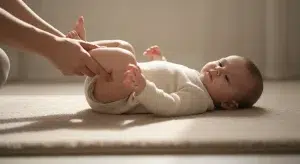
How to tell if baby is cold: feel your baby’s chest, back or tummy, not the hands and feet; warm, dry skin there means your baby is comfortable, while pale, cool skin on the core, shivering or low energy means they need warming.
Cool little hands send many parents reaching for a blanket. But hands and feet are unreliable places to check, and loose blankets are not safe for sleep.
Below: how to tell if baby is cold awake and asleep, why cold hands are usually normal, safe warming, overheating, winter outings, car seats, nights and when to call for help.
Key Takeaways
Check the chest, back or tummy. Warm and dry means comfortable; cool and pale means add warmth.
Cool or bluish hands and feet are common in babies; blue lips, tongue or torso need medical care right away.
Avoid overheating too: the AAP says sweating or a hot chest can mean your baby is too hot, and staying cool helps reduce SIDS risk.
For sleep, use a one-piece sleeper or wearable blanket, never loose blankets or an indoor hat.
No bulky coats under car seat straps: dress in thin layers and add a blanket or coat over the buckled harness.
Table of Contents
How to Tell If Baby Is Cold: The Quick Check
Quick Answer
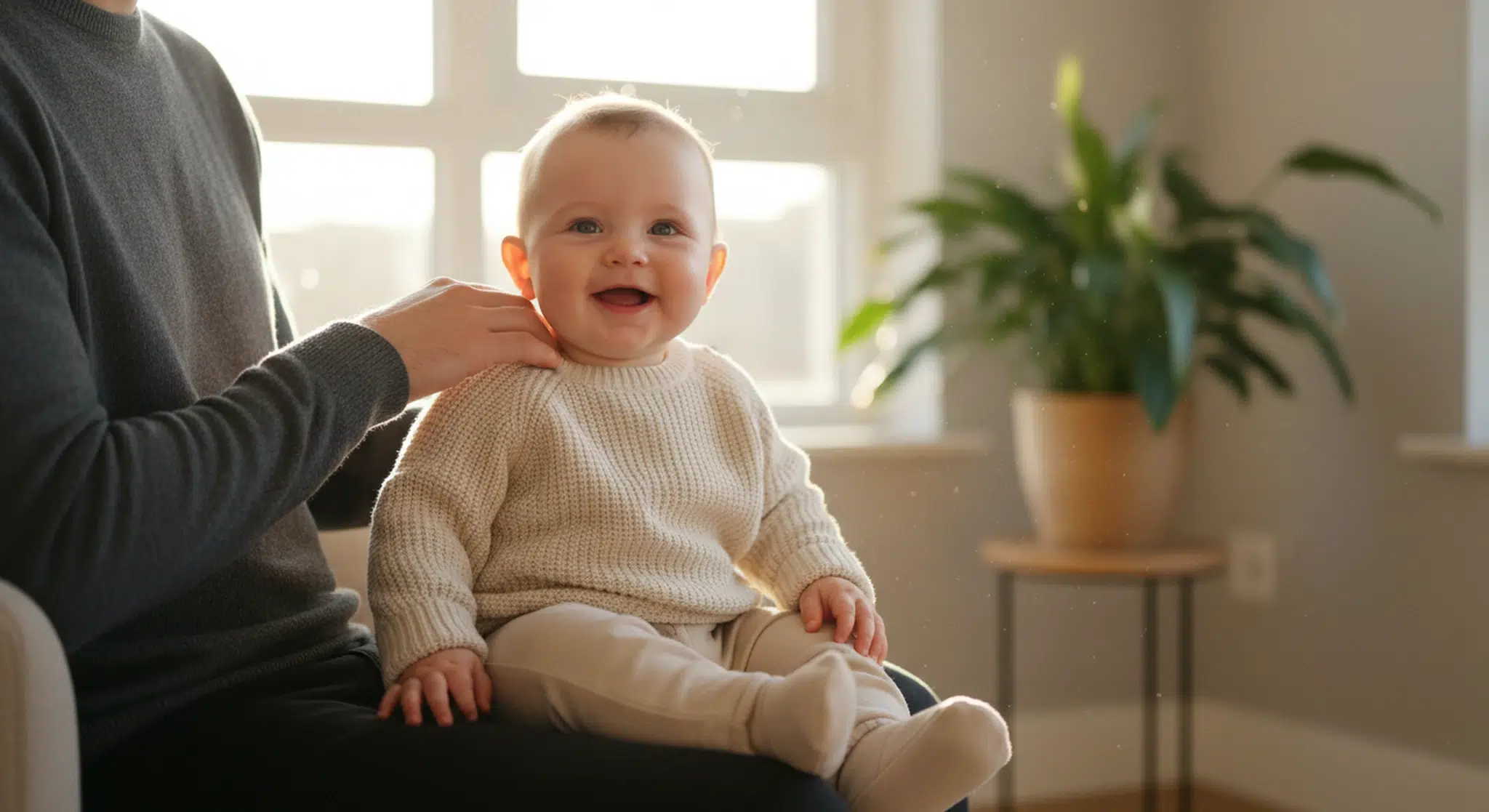
Slip your hand under your baby’s clothes and feel the chest, back or tummy. Neonatologist June Hu, M.D., of Children’s Health says the skin there should feel warm, not too hot or too cold. Cool hands and feet on their own are common and usually do not mean your baby is cold. Pale, cool skin on the core, shivering or very low energy are signs to act on (Riley Children’s Health).
Riley Children’s Health explains that a baby’s circulatory system is still developing and sends blood to the vital organs first, so fingers and toes often feel cooler than the core.
Where to feel: the chest, belly, back or the back of the neck, with a warm, dry hand.
Warm and dry: your baby is likely comfortable.
Cool or pale: add a layer or move somewhere warmer, then check again in a few minutes.
Damp or hot: your baby is likely too warm. The American Academy of Pediatrics (AAP) says sweating or a chest that feels hot can mean your baby is too hot.
Check again whenever conditions change: after a bath, after coming in from outside or before you lay your baby down.
Signs a Baby Is Too Cold (Awake and Asleep)
Riley Children’s Health lists these signs that a baby is too cold:
Shivering: the body trying to make heat.
Pale, cool skin on the back, belly or chest: not just cold hands or feet.
Very low energy: a baby who seems unusually quiet or sleepy.
Trouble sleeping: a baby who cannot settle.
Slow breathing: a more serious sign that needs prompt attention.
When your baby is awake, test it: warm them up and see whether the fussing stops. If it does not, hunger, tiredness or illness may be the cause.
When your baby is asleep, do the core check gently with a hand on the chest or back. If the skin feels cool, the safe fix is a warmer sleeper or wearable blanket, never a loose blanket. Our guide to dressing baby for sleep walks through layering choices by season.
Why Cold Hands and Feet Are Usually Normal
Bluish or cool hands and feet in a newborn have a name: acrocyanosis. Cleveland Clinic says many newborns have it in the first few hours of life and that it is normal and nothing to worry about. It happens because a baby’s blood carries oxygen to the vital organs first, such as the lungs, kidneys and brain.
Cleveland Clinic adds that the color might come back later if your baby gets cold, and should go away on its own.
The line that matters: Cleveland Clinic says that if the torso, tongue, lips or inner cheeks turn blue or gray, call your healthcare provider right away.
What you see
What it may mean
What to do
Cool or bluish fingers and toes, warm pink chest
Common acrocyanosis; circulation favors the vital organs (Cleveland Clinic)
Check the core. Add socks, footed pajamas or a layer if the core is cool
Cool, pale skin on the chest, belly or back
Baby may be too cold (Riley Children’s Health)
Warm your baby now (see below) and recheck
Blue or gray lips, tongue, inner cheeks or torso
Central cyanosis, which Cleveland Clinic says requires immediate medical attention
Call your provider right away; call 911 if your baby is struggling to breathe or hard to wake
Cold hands and feet vs. warning colors. Sources: Cleveland Clinic, Riley Children’s Health.
How to Warm a Cold Baby Safely
If the core check says your baby is chilly, warm them gradually with simple steps. Riley Children’s Health advises bringing a cold baby indoors, replacing wet clothing and holding them close.
Get out of the cold: move indoors or to a warmer room.
Swap anything damp: Riley Children’s Health suggests checking chewed mittens for cold, wet layers.
Hold your baby close: your body warmth helps. Read more about skin-to-skin contact if you have a newborn.
Add a thin layer: such as a long-sleeve bodysuit or footed sleeper.
Recheck in a few minutes: the chest or back should feel warm, not sweaty.
What not to do: do not put your baby to sleep near heaters, fireplaces or in direct sunlight (Riley Children’s Health), and do not pile on so many layers that your baby swings to too hot.
Big days go better with a good night of sleep.
Got a little one at home too? Our free two-minute quiz builds a gentle, personalized sleep plan for babies and toddlers.
Being a little cool is uncomfortable. Being too hot is a safety issue. The AAP says plainly: do not let your baby get too hot, because this helps reduce the risk of sudden infant death syndrome (SIDS).
The AAP’s guidance for sleep is to dress your baby in no more than one extra layer than you would wear, and it says your baby may be too hot if they are sweating or if their chest feels hot. For more on what sweat during sleep can mean, see baby sweating while sleeping.
Check
Too cold
Just right
Too warm
Chest, belly or back
Cool or cold, may look pale
Warm and dry
Hot or damp
Hands and feet
Cool, possibly bluish (also common when comfortable)
Can be slightly cool
Warm, sometimes clammy
Skin
Pale; shivering
Normal color
Sweating
Behavior
Unusually low energy, cannot settle
Calm and alert when awake, settles to sleep
Check the chest for heat and sweat
What to do
Warm gradually, add a layer, recheck
Leave as is
Remove a layer, cool the room, recheck
Signs a baby is too cold vs. too warm vs. just right. Sources: AAP (HealthyChildren.org), Riley Children’s Health, Children’s Health.
Newborn vs Older Baby
Newborns. The first weeks are when temperature questions feel most urgent and when acrocyanosis is most common (Cleveland Clinic). Children’s Hospital of Philadelphia (CHOP) lists a rectal temperature below 97.5 F (36.5 C) as a newborn warning sign to call about; the feel of the skin cannot tell you this. A sleepy newborn who is hard to wake is a separate concern; see sleepy newborn: when to worry.
Hats for newborns. The AAP says not to place hats on babies indoors except in the first hours after birth or in the neonatal intensive care unit. Outdoors in cold weather, a hat is a good idea, and you take it off once you are back inside.
Older babies. They still rely on you to dress them, and the AAP’s cold weather rule is the same at every age: several thin layers, plus one more layer than an adult would wear.
Outdoors and Winter: Layers, Hats and Time Outside
The AAP’s cold weather safety page recommends:
Thin layers: several thin layers keep children dry and warm.
One more layer than you: dress infants and young children in one more layer of clothing than an adult would wear in the same conditions.
Cover the extremities: warm boots, gloves or mittens, and a hat.
Riley Children’s Health suggests introducing cold weather gradually, starting with brief outings on mild days, and avoiding or minimizing time outside when the temperature or wind chill is below freezing. Keep your baby’s face uncovered and check the core now and then.
A baby carrier shares your body heat, so check for sweating. Indoors, take off outer layers right away so your baby does not overheat.
Frostbite: the AAP says it tends to affect fingers, toes, ears and nose, which may turn pale, gray and blistered. Bring your child indoors, use warm (not hot) water, about 104 F, and do not rub the area.
Car Seats in Winter: No Bulky Coats Under the Harness
The AAP says bulky clothing, including winter coats and snowsuits, should not be worn underneath the harness of a car seat, because the fluffy padding in a coat immediately flattens out from the force of a crash, leaving extra space under the harness.
The AAP’s winter car seat tips:
Store the infant carrier indoors: so your baby is not strapped into a cold seat.
Dress in thin layers: snug base layers, then a warmer top and pants, and a thin fleece if needed.
Use hats, mittens and socks: they keep kids warm without interfering with car seat straps.
Do the pinch test: the harness should fit snugly against your child’s chest. If you can pinch the strap, it is too loose.
Add warmth over the straps: after buckling, put the coat on backwards over the harness or lay a blanket over it.
Choose covers carefully: use a car seat cover only if it does not have a layer under the baby, and keep your baby’s face uncovered.
Once the car warms up, remove the blanket or coat so your baby does not get too hot, and at home move a sleeping baby to a safe sleep space. Moving to a bigger seat? See car seat after the infant seat.
How to Tell If Baby Is Cold at Night
The safe approach at night is to dress your baby warmly instead of covering them.
No loose blankets: the AAP says loose bedding should be kept out of an infant’s sleeping environment because it is associated with suffocation deaths.
Use sleep clothing instead: the AAP recommends one-piece sleepers or wearable blankets. A baby sleep sack should be the right size and should not cover your baby’s head.
No hats for indoor sleep: outside of the first hours after birth or the NICU, the AAP says not to place hats on babies indoors.
No weighted products: the AAP says not to use weighted blankets, weighted clothing or weighted swaddles.
Back to sleep, bare crib: place your baby on their back on a firm, flat, bare surface with no pillows, bumpers or toys. See our safe sleep environment checklist.
To check, slide a hand onto the chest or back of the neck. If the core feels cold, add one layer, such as a warmer sleeper under the sleep sack.
Room conditions matter too. For the setup side, see baby room temperature for sleep and ideal humidity for baby. Keep the crib away from drafty windows and, as Riley Children’s Health notes, away from heaters and fireplaces.
When Cold Is an Emergency: Hypothermia
Mild chill is easy to fix. Hypothermia, a dangerous drop in body temperature, is an emergency.
Signs in children: the AAP says a child with hypothermia may shiver and become lethargic and clumsy, and speech may become slurred.
Signs in babies: Riley Children’s Health says to seek immediate medical attention if a baby becomes lethargic or non-responsive, or their lips or face turn blue.
What to do: the AAP says to call 911 at once if you suspect hypothermia, and until help arrives, take the child indoors, remove any wet clothing and wrap them in blankets or warm clothes. That wrapping is for an awake child in your arms while you wait for help, not for sleep.
Call 911 or go to the emergency room if your baby:
Has blue or gray lips, tongue, inner cheeks, face or torso (Cleveland Clinic, Riley Children’s Health).
Is lethargic, non-responsive or very hard to wake (Riley Children’s Health, AAP).
Has slow breathing, pauses in breathing, or struggles to breathe with the ribs pulling in (Riley Children’s Health, CHOP).
Might have hypothermia after cold exposure (AAP: call 911 at once).
Call your pediatrician’s office right away if:
Your newborn has a rectal temperature below 97.5 F (36.5 C) or over 100.4 F (38 C) (CHOP).
Your baby stays cold on the chest or back after warming.
A newborn is so sleepy it is hard to wake them enough to feed, or shows signs of sickness such as cough, diarrhea or pale color (CHOP).
Numbness from frostbite lasts more than a few minutes (AAP).
Anything about your baby worries you. CHOP advises calling if you see signs that are worrisome to you.
This article is general education, not medical advice.
Frequently Asked Questions
How to tell if baby is cold without a thermometer?
Feel the chest, back or tummy rather than the hands and feet. Children’s Health says the skin there should feel warm, not too hot or too cold. Riley Children’s Health lists pale, cool skin on the core, shivering, very low energy, trouble sleeping and slow breathing as signs a baby is too cold.
Is it normal for a baby’s hands and feet to be cold?
Usually, yes. Cleveland Clinic explains that bluish hands and feet, called acrocyanosis, are common in newborns because blood goes to the vital organs first, and the color can return when a baby gets cold. If the lips, tongue, inner cheeks or torso turn blue or gray, call your provider right away.
How do I know if my baby is cold at night?
Slide a hand onto the chest or back of the neck. Warm and dry is comfortable. If the core feels cool, add a warmer sleeper or wearable blanket rather than a loose blanket, which the AAP says should be kept out of the sleep space. Sweating or a hot chest means too warm.
Should my baby wear a hat to sleep?
Not indoors. The AAP says not to place hats on babies indoors except in the first hours after birth or in the neonatal intensive care unit. A hat is useful outside in cold weather, but take it off once you are back inside and before your baby goes down to sleep.
What temperature is too low for a newborn?
Ask your pediatrician for the numbers they want you to use. Children’s Hospital of Philadelphia lists a rectal temperature below 97.5 F (36.5 C) in a newborn as a warning sign to call the doctor about. Use a thermometer for this, because the feel of the skin cannot give you an accurate reading.
How many layers should a baby wear in cold weather?
The AAP advises several thin layers and one more layer of clothing than an adult would wear in the same conditions. In the car, skip bulky coats and snowsuits under the harness; dress in thin layers and put a blanket or backwards coat over the buckled straps instead.
Gentle changes, peaceful nights.
Betteroo builds a personalized sleep plan for your baby or toddler. Take the free two-minute quiz to get started.