Most babies sweat at least sometimes while they sleep, and it is usually harmless. A baby’s temperature-regulation system is still immature, they often sleep most deeply early in the night, and warm rooms or heavy pajamas add to it. In most cases the fix is simply a cooler room and lighter layers.
Finding your baby with a damp head, sweaty neck, or clammy back can be alarming, especially in the middle of the night. The reassuring reality is that sweating during sleep is extremely common in babies and toddlers, and the vast majority of the time it points to something simple: the room is a touch warm, the pajamas are a touch heavy, or your baby is in a stretch of deep sleep where sweating naturally increases.
This guide walks through why babies sweat in their sleep, how to tell ordinary sweating from a problem, the practical steps that usually solve it, and the specific red flags that mean you should call your pediatrician. As always, when something feels wrong, trust that instinct and check in.
Key Takeaways
Sweating during sleep is common and usually harmless in babies, whose temperature control is still developing.
Deep sleep, especially early in the night, naturally increases sweating.
The most frequent causes are a warm room and too many layers, both easy to fix.
Aim for a room temperature around 68 to 72°F (20 to 22°C) and light, breathable sleepwear.
Sweating with a fever means treat the illness and watch your baby, not the sweat itself.
Red flags: sweating plus noisy or paused breathing, poor feeding, poor weight gain, or unusual tiredness deserve a pediatrician’s review.
As an Amazon Associate, Betteroo earns from qualifying purchases.
Table of Contents
Why Do Babies Sweat in Their Sleep?
A few normal things stack up. First, babies have an immature thermoregulation system, so they are less efficient than adults at fine-tuning body temperature, and they have more sweat glands relative to their body size, concentrated on the head. Second, babies spend long stretches in deep, slow-wave sleep, particularly in the first few hours of the night, and the body tends to sweat more during that stage. Third, the sleep environment is often warmer than parents realize, between heating, a swaddle or sleep sack, and a onesie underneath.
Put those together and a sweaty head at 9 or 10 pm is one of the most ordinary things a baby’s body does. It does not mean your baby is sick or uncomfortable on its own.
Quick Answer
Babies sweat in their sleep because their temperature regulation is still developing, they sleep deeply (which increases sweating), and their sleep space is often too warm or over-layered. A cooler room and lighter clothing resolve most cases.
Common, Harmless Causes
A warm room. The single most common cause. Nurseries drift warm, especially in winter with the heat on.
Too many layers. A sleep sack plus footed pajamas plus a long-sleeve onesie is often one layer too many.
Deep sleep. Sweating peaks during the deepest sleep early in the night, then eases.
Non-breathable fabrics. Synthetic sleepwear and thick bedding trap heat against the skin.
Being held to sleep, then set down warm. Body heat from cuddling lingers after your baby is put down.
A mild, passing illness with fever. Sweating can accompany a fever as the body works to cool down.
If your baby is sweaty but otherwise content, feeding well, and growing, the cause is almost always on this list. For layering, our guide to how to dress a baby for sleep gives a simple room-temperature chart.
How to Keep Your Baby Cooler and Drier
Start with the environment, since that fixes most sweating without any medical concern at all.
Set the room to about 68 to 72°F. If you do not have a thermostat in the nursery, a small room thermometer helps you stop guessing.
Dress one light layer at a time. A good rule is one more layer than you would wear to sleep comfortably, no more.
Choose breathable fabrics like 100 percent cotton or muslin for sleepwear and sleep sacks. Check the TOG rating on sleep sacks and drop to a lighter one in warm months.
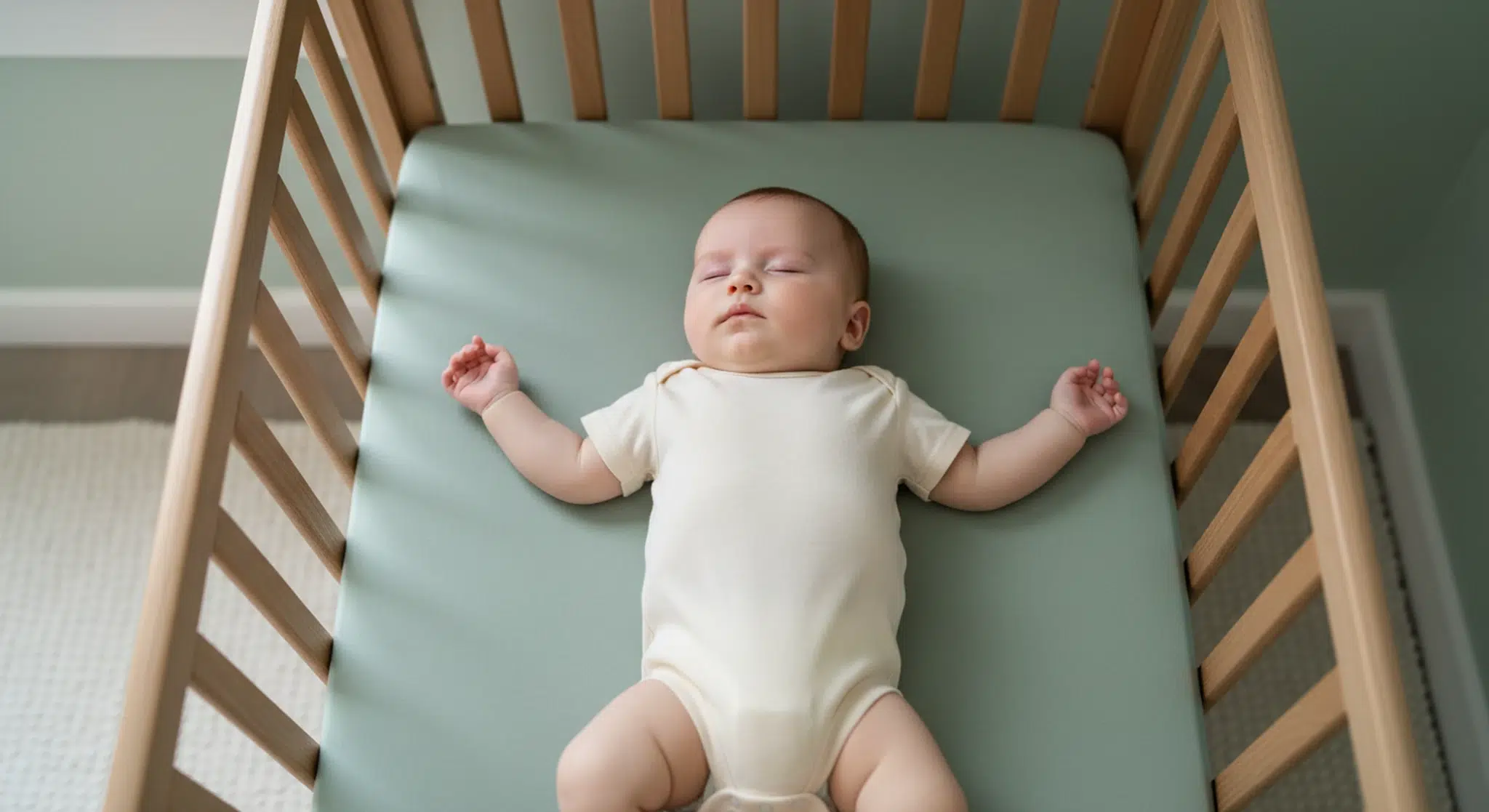
Keep the crib bare. No blankets, pillows, or bumpers. Bare is both cooler and safer.
Feel the chest or back, not the hands. Cool hands are normal. A chest that feels hot and damp means overdressed; adjust down a layer.
Avoid hats indoors for sleep and skip extra swaddle layers once your baby is warm.
Comfortable sleep, night after night
The right routine and environment help your baby settle and stay asleep. Betteroo builds a plan around your child in about two minutes.
If your baby is sweating and also feels hot, take their temperature. Sweating is part of how the body sheds heat, so it commonly accompanies a fever. In that situation, the sweat is a symptom of the illness, not the problem to solve. Follow standard fever guidance for your baby’s age, keep them hydrated, dress them lightly, and contact your pediatrician based on their age and how they look and act.
Any fever in a baby under 3 months (a rectal temperature of 100.4°F / 38°C or higher) is a reason to call your doctor right away, regardless of sweating. For older babies, watch how your baby is feeding, playing, and responding rather than fixating on the number alone.
When Sweating Might Signal Something More
Occasionally, heavy or persistent night sweating that is not explained by the room or clothing can be a clue worth investigating, especially when it travels with other symptoms. The point is not to alarm you but to know the patterns clinicians care about.
Persistent, drenching night sweats combined with loud snoring, mouth breathing, gasping, or pauses in breathing can point to sleep-disordered breathing, such as obstructive sleep apnea. Sweating during feeds together with poor weight gain, fast breathing, or tiring easily is, rarely, associated with heart conditions and deserves prompt evaluation. Night sweats alongside ongoing fevers, poor appetite, or failure to gain weight should always be checked. These situations are uncommon, but they are exactly why the red-flag list below matters.
Adjust the room and clothing first. Call your pediatrician if sweating comes with any of these.
Loud snoring, mouth breathing, gasping, or pauses in breathing during sleep.
Sweating heavily during feeds, along with tiring quickly, fast breathing, or poor weight gain.
Persistent night sweats that continue after you have cooled the room and lightened layers.
Fever in a baby under 3 months, or a higher or lasting fever in an older baby.
Poor feeding, unusual sleepiness, irritability, or your baby simply seeming unwell.
When in doubt, a quick call is always reasonable. Describe the pattern, what you have already changed, and any other symptoms.
Frequently Asked Questions
Is it normal for my baby to sweat while sleeping?
Yes, in most cases. Babies have immature temperature regulation and many sweat glands on the head, and they sweat more during the deep sleep that dominates the early night. Combined with warm rooms and extra layers, occasional or even regular sweating is common and usually harmless.
What temperature should my baby’s room be for sleep?
Aim for roughly 68 to 72°F (20 to 22°C). A room thermometer takes the guesswork out. Dress your baby in light, breathable layers, keep the crib bare, and feel their chest or back rather than their hands to judge whether they are too warm.
Why does my baby sweat so much on the head specifically?
Babies have a high concentration of sweat glands on the head and face, and the head is often the only part not covered by a sleep sack or pajamas, so it releases heat and moisture most visibly. A damp head with an otherwise comfortable, content baby is typically nothing to worry about.
When should I worry about my baby’s night sweats?
Be more attentive if sweating comes with noisy or paused breathing, sweating during feeds plus poor weight gain or fast breathing, persistent sweats after you have cooled the room, or signs of illness like fever, poor feeding, or unusual tiredness. Those patterns warrant a call to your pediatrician.
Can teething cause night sweats in babies?
Teething can raise a baby’s temperature slightly and cause fussiness that may come with some sweating, but teething does not cause a true fever or heavy, persistent night sweats. If your baby has a real fever or drenching sweats, look for another cause and check with your pediatrician.
Help your baby sleep soundly and comfortably
A cool room and a steady routine make for calmer nights. Betteroo builds a personalized sleep plan around your child’s age and temperament in about two minutes.