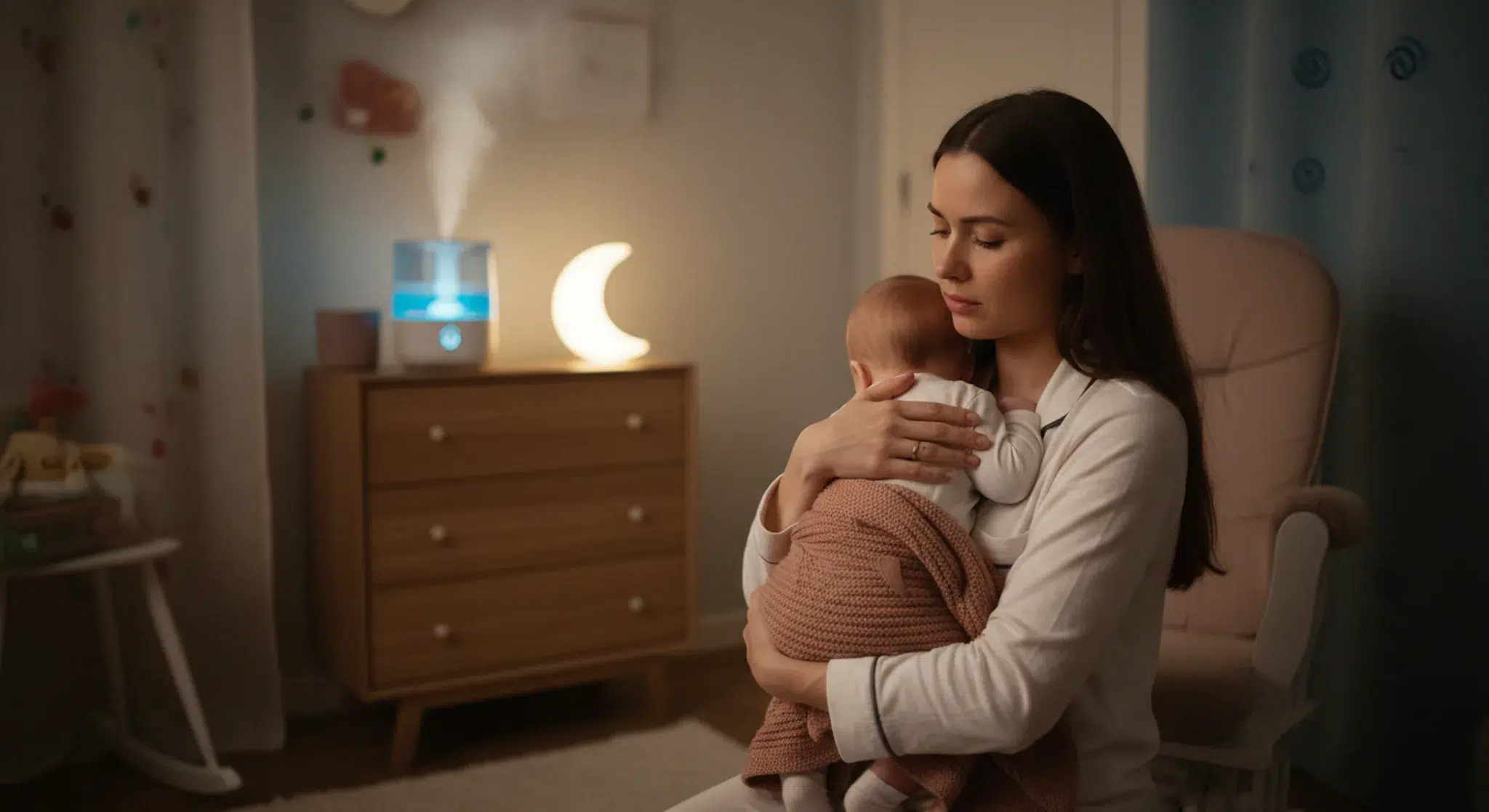
A baby coughing in sleep is usually caused by post-nasal drip from a cold, dry air, or reflux, all made worse by lying flat, and an otherwise well baby who is feeding normally and breathing comfortably can typically be managed at home with saline, suction, and a cool-mist humidifier. Seek care promptly for labored or fast breathing, a barky or whooping cough, fewer wet diapers, fever in a baby under 3 months, or a cough that drags past 10 to 14 days.
Night is when coughs perform. Lying down lets mucus from a runny nose pool at the back of the throat, overnight air is drier, and the natural nighttime dip in airway-calming hormones makes airways twitchier. So a baby who seems fine all day and coughs at 11 p.m. is following the standard script, not hiding something sinister.
This guide breaks down baby coughing in sleep: the common causes and how to tell them apart by sound, safe home remedies by age (and the ones to never use), why cough medicine is off the table for young children, and the exact red flags that mean call the pediatrician tonight rather than wait for morning.
Key Takeaways
Most sleep coughing is post-nasal drip from a cold: babies average 6 to 8 colds a year, each with a cough that can linger 1 to 2 weeks.
The safe toolkit: saline drops plus gentle suction before sleep, a cool-mist humidifier, upright feeds, and time. No honey before 12 months, no OTC cough medicine before age 4 (AAP guidance: avoid before 6).
Never prop, incline, or wedge a baby’s sleep surface for congestion: babies must sleep flat on their backs on a firm surface; inclined sleep is a suffocation risk.
Sound is diagnostic: barky seal-like cough suggests croup, cough-fits with a whoop or vomiting suggest whooping cough, wheezy wet coughing in RSV season suggests bronchiolitis.
Go to urgent care or the ER for labored breathing (rib retractions, nostril flaring, grunting), breathing pauses, blue or gray lips, dehydration, or any fever of 100.4 or higher under 3 months.
Table of Contents
Why Coughs Get Louder at Night
Three mechanics stack up after lights out. Gravity: upright babies swallow their nasal drainage all day without noticing; flat babies collect it against the throat, which triggers protective coughing. Air: heated bedrooms run dry, and dry airway linings are cough-prone. Physiology: natural cortisol dips overnight leave airways slightly more inflamed and reactive, which is why croup and asthma-type coughs peak between roughly 10 p.m. and 4 a.m.
A cough that exists only at night with a happy, well baby by day is usually drainage or dryness. A cough that is constant day and night, or getting worse across days, earns more attention.
The Usual Suspects, by Sound and Story
Cold with post-nasal drip: wet-sounding cough, runny or stuffy nose, otherwise well baby. Peaks at night, lingers up to 2 weeks after the cold. The companion problem of congested sleep is covered in our stuffy nose sleep guide.
Croup: sudden barky, seal-like cough with a raspy squeak on the in-breath (stridor), classically striking at night in fall and winter. Calm the baby and try 10 to 15 minutes of cool night air or a steamy bathroom; stridor at rest means emergency care.
Bronchiolitis (often RSV): wet, wheezy cough with fast breathing, in winter, commonly under 12 months. Watch the breathing effort, not just the cough; worst nights are usually days 3 to 5.
Whooping cough (pertussis): fits of machine-gun coughing followed by a gasping whoop, vomiting after coughing, or, in young infants, pauses in breathing instead of the whoop. Any suspicion is a same-day call.
Reflux: coughing or gagging shortly after laydown following feeds, with spit-up history. Upright holding for 20 to 30 minutes after feeds helps; the crib itself stays flat.
Dry air or irritants: nightly dry cough in winter without illness, or exposure to smoke and strong fragrances. A humidifier and cleaner air fix what medicine cannot.
Safe Home Remedies (and the Forbidden List)
What actually helps a coughing baby sleep:
Saline drops or spray, then gentle bulb or motorized suction, 10 to 15 minutes before bedtime and before night feeds: clearing the nose removes the drip that drives the cough.
Cool-mist humidifier in the bedroom, cleaned and dried daily to prevent mold.
Smaller, more frequent feeds and full burping if reflux is a player, with upright time after; fluids keep mucus thin.
For babies over 12 months only: 2 to 5 ml of honey before bed measurably calms night coughs, and beats OTC syrup in trials. Never before the first birthday because of infant botulism risk (see why babies cannot have honey).
The forbidden list is short and strict. No over-the-counter cough or cold medicines: the FDA warns against them under age 4 and the AAP discourages them under 6, because they do not work in young children and carry real risks. No vapor rubs on babies. No aspirin ever. And no inclined sleepers, wedges, pillows, or propped mattresses for congestion: a coughing baby still sleeps flat, on the back, in a bare crib, full stop. Congestion relief comes from the nose-clearing toolkit above, not from tilting the sleep surface.
Sick nights end, sleep habits stay
When the cough clears, get sleep back on track fast: Betteroo’s free quiz builds a personalized recovery plan.
Cough lasting beyond 10 to 14 days, or any cough in a baby under 3 to 4 months.
Fever with the cough in a baby 3 to 6 months, or fever lasting more than 2 to 3 days at any age.
Cough disrupting every feed, thick nonstop drainage, or possible ear infection signs (ear pulling, night crying, fussiness).
Coughing fits that end in vomiting, or any suspicion of whooping cough exposure.
Seek urgent or emergency care now
Working hard to breathe: rib retractions, belly breathing, nostril flaring, grunting, or persistently fast breathing.
Pauses in breathing, blue or gray lips or face, or limpness.
Stridor (raspy in-breath squeak) at rest, or drooling with inability to swallow.
Fever of 100.4 or higher in a baby under 3 months, always, cough or no cough.
Dehydration: markedly fewer wet diapers, no tears, sunken soft spot, or a baby too tired to feed.
Trust the breathing over the cough: a loud cough in a comfortable baby is routine, while a quiet baby breathing fast and hard is the one who needs help. If nights stay rough after the illness clears because new wake habits formed, our guide to babies sleeping through the night resets the pattern.
What a Normal Cough Timeline Looks Like
Calibrating expectations prevents both panic and complacency. A routine cold cough builds over days 1 to 3, peaks around days 3 to 5, and then fades, but the fade is slow: coughs commonly linger 10 to 14 days, and a night cough is often the last symptom standing a full week after the runny nose dried up. That lingering pattern in an otherwise improving baby is normal healing, not a failed recovery.
What breaks the pattern matters more than the calendar: a cough that was improving and then abruptly worsens (often with new fever) suggests a secondary problem like an ear infection or pneumonia; a cough past 3 to 4 weeks is officially chronic and needs evaluation regardless of how mild; and back-to-back colds in daycare season can chain into what feels like one endless cough, which is worth a pediatrician look to rule out asthma-type reactivity. When in doubt, video the night cough: sound is diagnostic, and pediatricians triage a 20 second clip better than any written description.
Preventing the Next Sick Night
Hand washing before handling the baby, and keeping obviously ill visitors at arm’s length, blocks the viruses that cause nearly all of these coughs.
Stay current on immunizations: whooping cough protection comes from the DTaP series plus a Tdap dose in every pregnancy, and RSV protection is available for infants via maternal vaccination or antibody shots per your pediatrician’s advice.
Annual flu vaccination for everyone in the household 6 months and older shields the baby too young or too recently vaccinated to be fully protected.
Zero smoke exposure: tobacco smoke on clothes and in air measurably increases coughs, colds, ear infections, and asthma in infants.
Run the humidifier preventively on dry winter nights and rinse it daily; a clean 40 to 50 percent humidity bedroom is hostile terrain for night coughs.
Frequently Asked Questions
Why is my baby coughing in their sleep but fine during the day?
Lying flat lets nasal drainage pool against the throat, night air is drier, and airways are naturally more reactive overnight, so mild congestion that goes unnoticed upright becomes a nighttime cough. If your baby feeds well, breathes comfortably, and seems well by day, it is almost always post-nasal drip or dry air.
What can I give my baby for a nighttime cough?
Under 12 months: saline drops with gentle suction before sleep, a cool-mist humidifier, fluids, and upright time after feeds. Over 12 months: 2 to 5 ml of honey before bed is the best-proven remedy. Do not use OTC cough and cold medicines (unsafe and ineffective under 4) or vapor rubs on infants.
Should I elevate my baby’s mattress for coughing?
No. The AAP is unequivocal: babies sleep flat on their backs on a firm, bare surface. Inclined sleepers, wedges, and propped mattresses raise suffocation risk because babies slide and curl into positions that block breathing. Relieve congestion with saline and suction before sleep instead of tilting the crib.
How do I know if my baby’s night cough is croup?
Croup announces itself: a sudden harsh, barky, seal-like cough, often with a hoarse cry and a raspy squeaking sound on the in-breath, typically starting late at night. Calm your baby and try cool outdoor air or a steam-filled bathroom for 10 to 15 minutes. If the squeak (stridor) continues at rest or breathing is labored, seek emergency care.
When should I worry about my baby coughing at night?
Same-night care: labored or fast breathing, retractions, nostril flaring, breathing pauses, blue lips, stridor at rest, or fever of 100.4 or higher under 3 months. Prompt call: cough past 10 to 14 days, fever beyond 2 to 3 days, feeding poorly, fewer wet diapers, or coughing fits with a whoop or vomiting.
From sick nights back to sleep
Betteroo’s free quiz rebuilds your baby’s sleep routine after illness, personalized to age and temperament.