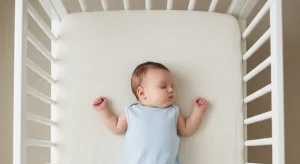
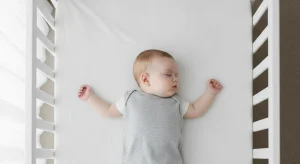
A safe sleep environment is the most powerful thing you can control to protect your baby every time they sleep.
Building a safe sleep environment comes down to a short, science-backed checklist: your baby sleeps alone, on their back, on a firm flat surface, in a bare crib, in a room that is dark, quiet with steady white noise, and comfortably cool. Get those basics right and you sharply reduce the risk of SIDS and accidental suffocation.
This guide walks through every layer of a safe and sleep-friendly space, from the crib itself to light, sound, and temperature, so you can set up your baby’s room with confidence and repeat it at every nap and every night.
Key Takeaways
Alone, on the Back, in a bare Crib (the ABCs) is the foundation of every safe sleep.
Use a firm, flat, approved sleep surface with only a fitted sheet: no blankets, pillows, bumpers, or toys.
Room share on a separate surface for at least six months, but never bed share.
Keep the room dark for sleep, add steady white noise under 50 decibels, and hold the temperature near 68 to 72 degrees Fahrenheit.
Dress your baby in a sleep sack rather than loose bedding, and always place them on their back.
As an Amazon Associate, Betteroo earns from qualifying purchases.
Table of Contents
What a Safe Sleep Environment Means
A safe sleep environment is built on one simple idea: your baby sleeps alone, on their back, on a firm and flat surface, in a space that is completely bare. Everything else, the sound, the light, the temperature, sits on top of that foundation. When those safe sleep basics are in place, you dramatically lower the risk of sudden infant death syndrome (SIDS) and accidental suffocation, the two leading causes of sleep-related infant death.
The American Academy of Pediatrics updated its safe sleep guidance in 2022, and the recommendations apply every time your baby sleeps, including naps. A safe setup is not something you do once and forget. It is a habit you repeat at every sleep, at home, at grandma’s house, and on the go, until your baby’s first birthday and beyond.
The Bare Crib: Your Non-Negotiable Foundation
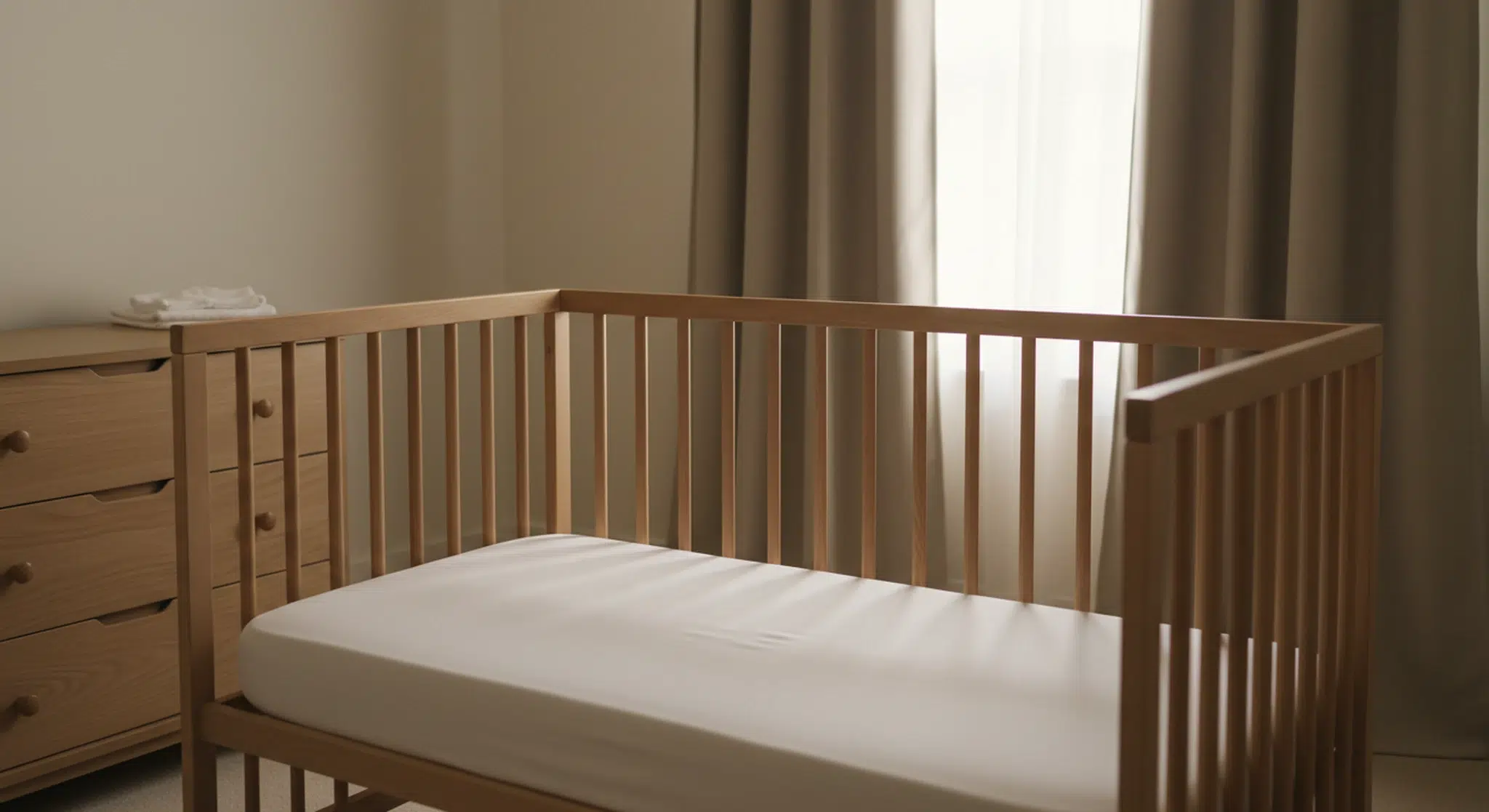
The single most important part of a safe sleep environment is the sleep surface itself. Your baby should sleep in a product designed and approved for infant sleep: a crib, bassinet, portable crib, or play yard that meets current safety standards. The mattress must be firm, flat, and fit snugly with no gaps at the edges, and it should be covered with nothing more than a fitted sheet made for that mattress.
Keep the crib completely bare. That means no blankets, no pillows, no crib bumpers (padded or mesh), no positioners or wedges, no stuffed animals, and no loose sheets. These items look cozy, but they are exactly what raises the risk of suffocation, entrapment, and strangulation. If you want your baby to feel warm and snug, use a wearable blanket or sleep sack instead of anything loose.
Firm, flat, and level surface (no inclined sleepers, car seats, or swings for routine sleep)
A fitted sheet designed for that specific mattress, and nothing else
No blankets, pillows, bumpers, wedges, positioners, or toys
The crib is placed away from windows, blind cords, curtains, and wall decor
Back to Sleep, Every Sleep
Always place your baby on their back for every nap and every night. Back sleeping is the safest position because it keeps the airway open and lowers SIDS risk. Side and stomach sleeping are not safe for young infants.
Once your baby can roll from back to belly and belly to back on their own, usually somewhere between four and six months, you can leave them in the position they choose after you place them down on their back. Until then, if you find your baby has rolled, gently return them to their back. You do not need to stay up all night flipping them; simply start every sleep on the back.
Room Sharing Without Bed Sharing
The AAP recommends that your baby sleep in your room, on their own separate sleep surface, ideally for at least the first six months. Room sharing can lower SIDS risk by as much as half and makes nighttime feeding and comforting easier. Bed sharing, where the baby sleeps in an adult bed with a parent, is not recommended because of the risk of suffocation, entrapment, and overheating.
If you feed your baby in bed and worry about dozing off, an adult bed cleared of pillows and blankets is far safer than a couch or armchair, which are the most dangerous places to fall asleep with an infant. The safest plan is to feed, then move your baby back to their own crib or bassinet.
Light: Bright Days, Dark Nights
Light is one of the most powerful signals for your baby’s developing internal clock. Exposure to natural daylight during awake windows helps set a healthy circadian rhythm, so open the curtains and get outside during the day. For naps and overnight sleep, a dark room tells the brain it is time to rest and reduces the odds that stray light will stir a lightly sleeping baby awake.
Most babies do not need a night light until they are past two years old. If you need light for feedings or diaper changes, choose a dim, warm, red-toned light, which is the least disruptive to sleep, and switch it off when you are finished. You can read more in our guide to setting up the room for sleep.
Sound: The Case for White Noise
A continuous white noise machine can be a genuinely helpful part of the sleep environment. Steady, low-level sound masks household noise, mimics the whooshing your baby heard in the womb, and can help a fussy baby settle and stay asleep through the small disturbances that would otherwise cause a full waking.
Use it safely. Keep the volume at a conversational level, no louder than about 50 decibels, place the machine at least seven feet from the crib, and choose a steady sound rather than one with sudden peaks. Skip the auto-off timer so the sound stays constant for the whole sleep, and reserve it for sleep times so your baby still hears plenty of language while awake.
Temperature and What to Wear
Overheating raises SIDS risk, so aim for a room that feels comfortable to a lightly dressed adult, generally around 68 to 72 degrees Fahrenheit. Rather than fixating on the thermostat, dress your baby in about one more layer than you would wear to be comfortable in that room, and skip hats indoors.
To check whether your baby is comfortable, feel their core, the chest, back, or the nape of the neck, not their hands or feet, which run cool normally. A core that feels warm but not sweaty is exactly right. A wearable sleep sack is the safest way to keep your baby warm without loose bedding; our guides on how to dress your baby for sleep and when to stop swaddling walk through the details by age. Running a ceiling fan has also been associated with lower SIDS risk.
A Few Extra Safeguards
Offering a pacifier at nap and bedtime, once breastfeeding is well established, is associated with a lower risk of SIDS. If it falls out after your baby is asleep, you do not need to put it back in. Keep the sleep space smoke-free, since exposure to smoke before and after birth is a major risk factor. And avoid products marketed to reduce SIDS risk, such as wedges, positioners, and home heart-rate monitors, because none have been shown to be safe or effective for that purpose.
Supervised tummy time while your baby is awake is the other side of safe sleep. It strengthens the neck and shoulders, supports development, and helps prevent flat spots, all without any of the risk that comes from unsupervised belly sleeping.
A Note on Consistency
The safest sleep environment is only as good as how consistently you use it. Caregivers, grandparents, and daycare providers should all follow the same bare-crib, back-sleeping rules, because a large share of sleep-related deaths happen in unfamiliar settings or during a one-time exception. When in doubt, keep it boring: a flat mattress, a fitted sheet, a sleep sack, and nothing else.
If your baby has reflux, a medical condition, or you are considering any change to positioning, talk with your pediatrician first rather than relying on wedges or inclined products, which are not safe for routine sleep.
Frequently Asked Questions
What is the ideal room temperature for a safe baby sleep environment?
Aim for roughly 68 to 72 degrees Fahrenheit, a temperature that feels comfortable to a lightly dressed adult. Overheating is a known SIDS risk, so dress your baby in about one extra layer rather than piling on blankets, and check their core (chest or neck) to confirm they feel warm but not sweaty.
Is white noise safe for babies all night?
Yes, when used correctly. Keep the volume at a conversational level of about 50 decibels or lower, place the machine at least seven feet from the crib, choose a steady continuous sound, and turn off any auto-off timer so the sound lasts the whole sleep. Reserve white noise for sleep times.
Can I put a blanket in the crib if I tuck it in tightly?
No. Current safe sleep guidance calls for a completely bare crib with only a fitted sheet. Loose blankets, even tucked ones, raise the risk of suffocation. Use a wearable blanket or sleep sack instead to keep your baby warm.
When can my baby sleep with a pillow or stuffed animal?
Wait until at least 12 months, and most experts suggest holding off until 18 months to 2 years, before adding a small pillow or lovey. For the entire first year, the crib should stay bare to keep the sleep environment as safe as possible.
Does room sharing really lower SIDS risk?
Yes. The AAP recommends your baby sleep on a separate surface in your room, ideally for the first six months, and research links room sharing (without bed sharing) to a meaningfully lower risk of SIDS, in some studies by up to half.
Want a sleep plan built around your baby
Take our free 3-minute sleep quiz for a personalized plan that fits your baby’s age and temperament.