A crib bumper is not safe for a baby: padded crib bumpers have been linked to infant suffocation, entrapment, and strangulation, and since November 12, 2022, it has been unlawful to make or sell them in the United States.
If you are setting up a nursery, you have probably seen a crib bumper in a bedding set, on a registry, or in a relative’s attic. They look soft and protective, which is why so many parents ask about them.
This guide explains what crib bumper pads are, why they are dangerous, what the Safe Sleep for Babies Act bans, where mesh liners fit in, and the safe alternatives for bumped heads and stuck legs.
Key Takeaways
Padded crib bumpers are not safe and are linked to infant deaths from suffocation, entrapment, and strangulation.
Federal law has banned the manufacture and sale of crib bumpers in the U.S. since November 12, 2022.
Non-padded mesh crib liners are excluded from the ban, but the AAP says they are not necessary and can come loose.
Crib slats should be no more than 2 3/8 inches apart, so bumpers are not needed to protect a baby’s head.
The safe setup is a firm, flat mattress with a fitted sheet and nothing else.
Table of Contents
Are Crib Bumpers Safe?
Quick Answer
No. Padded crib bumpers are not safe for babies. They have been linked to infant deaths from suffocation, entrapment, and strangulation, the American Academy of Pediatrics (AAP) says to keep them out of the crib, and federal law has banned their manufacture and sale in the United States since November 12, 2022.
The AAP’s safe sleep guidance lists bumper pads, and related products that attach to crib slats or sides, among the soft objects that can raise a baby’s risk of entrapment, suffocation, or strangulation. Its advice is short: a firm, flat mattress and a fitted sheet only. Nothing else belongs in the crib with your baby. For the full picture, see our guide to a safe sleep environment.
What Is a Crib Bumper?
A crib bumper is a strip of padding or other material that lines the inside of a crib and is tied, snapped, or buttoned to the slats. Crib bumper pads were often sold in bedding sets with a matching quilt.
Parents used them to stop a baby’s head from slipping between widely spaced slats, to cushion bumps, and to keep arms and legs inside the crib.
The first reason no longer applies. The Consumer Product Safety Commission (CPSC) says crib slats should be no more than 2 3/8 inches apart, about the width of a soda can, so a baby’s body cannot fit through. As the AAP puts it, bumpers are not necessary anymore because safety regulations call for narrow rail spacing. Our bassinet vs. crib guide covers what else to check.
Why Bumper Pads Are Dangerous
Suffocation: a baby can roll into the padding, which the AAP warns can block their airflow.
Entrapment: a baby can become wedged between the bumper and the mattress or another object.
Strangulation: ties and loose bumpers can wrap around a baby’s neck.
Falls: once a baby can pull to stand, a bumper becomes a step for climbing out.
A 2007 study in The Journal of Pediatrics searched CPSC records from 1985 to 2005 and found 27 accidental deaths attributed to bumper pads, from suffocation and from strangulation by bumper ties. The authors concluded that bumpers prevent only minor injuries and should not be used.
A 2016 follow-up in the same journal reviewed CPSC data through October 2012 and identified 48 suffocations caused by bumpers. In 67% the bumper alone was responsible, and in 33% the baby was wedged between a bumper and another object. A second national database raised the total to 77 deaths. The authors noted that CPSC reports undercount deaths.
Tired nights don’t have to last forever.
Our free two-minute quiz builds a gentle, personalized sleep plan for your baby’s age and temperament.
Are Crib Bumpers Illegal? The Safe Sleep for Babies Act
Yes, for sellers. The Safe Sleep for Babies Act of 2021 (Public Law 117-126), signed on May 16, 2022, made crib bumpers and inclined sleepers for infants banned hazardous products under the Consumer Product Safety Act. According to the CPSC, the ban took effect on November 12, 2022.
What is banned: any material intended to cover the sides of a crib to prevent injury from impacts, or to keep a child’s body from getting caught in the openings.
What that includes: padded crib bumpers, supported and unsupported vinyl bumper guards, and vertical crib slat covers.
What it excludes: a non-padded mesh crib liner.
Who it applies to: the CPSC says it is unlawful to sell, offer for sale, manufacture for sale, distribute in commerce, or import these products, regardless of the date of manufacture.
“Regardless of the date of manufacture” means old stock and secondhand bumpers are covered too. The law is aimed at commerce, not at parents, but the judgment behind it is clear: these products are too dangerous to sell.
Bumper Types: What the Law and the AAP Say
Product
U.S. legal status
AAP position
Padded crib bumper pads
Banned from sale since November 12, 2022
Do not use
Braided or pillow-style bumpers
Banned (padding that covers the crib sides)
Do not use
Vinyl bumper guards
Banned
Do not use
Vertical slat covers
Banned
Do not use
Non-padded mesh crib liner
Not covered by the ban
Not necessary, and can come loose
Fitted sheet only
Legal
Recommended
Crib bumper types compared by legal status and American Academy of Pediatrics guidance.
Are Mesh Crib Bumpers and Breathable Liners Safe?
A mesh crib bumper, also sold as a breathable crib bumper or mesh liner, is a thin, non-padded panel that wraps the slats. It is legal to sell because the federal ban excludes non-padded mesh crib liners. Legal is not the same as recommended.
The AAP says most child health advocates, including the AAP itself, believe these liners are not necessary, because modern crib slats are closely spaced. It warns that liners can work their way loose and suffocate or trap a sleeping child, and that toddlers have used them to climb or jump out of cribs.
“Breathable” is a marketing word, not a safety certification. The safest liner is no liner.
Arms and Legs in the Slats, and Bumped Heads
These two worries send most parents looking for a baby crib bumper.
Limbs through the slats: a leg or arm poking out looks alarming and may wake your baby, but it is a minor problem. Free the limb and resettle. The 2007 study found that the injuries bumpers might prevent were minor.
Bumped heads: babies roll into the crib sides, and some bang their heads to self-soothe. See baby banging head on crib.
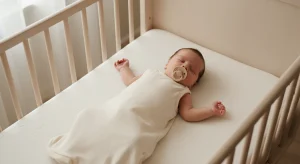
A simple fix: a sleep sack keeps both legs together, which makes it harder for a foot to slide between the slats.
A stuck limb is a nuisance. A blocked airway is an emergency.
Safe Crib Bumper Alternatives
The best crib bumper alternative is nothing at all, plus a few habits that solve the same problems:
Decorate the room, not the crib. Our nursery themes have ideas.
What to Do With a Bumper You Own or Were Gifted
Take it out: remove it today, even if your baby has slept with it without a problem.
Do not pass it on: do not sell, donate, or hand it down. Selling one is unlawful, and giving it away moves the risk to another baby.
Throw it away: cut off the ties so it cannot be reused, then put it in the trash.
Handle gifts kindly: the AAP suggests a gentle and respectful “no.”
Shop secondhand carefully: the AAP warns that banned products still show up in online listings, resale shops, and garage sales, and as homemade versions.
If a bedding set came with a quilt, use it for supervised floor play. Our baby blanket size guide explains which blankets suit which use.
Toddlers and Older Babies: Does It Get Safer?
A bumper does not become a good idea as your baby grows. A child who can stand uses anything along the crib side as a foothold, and the AAP warns that toddlers have used liners to climb or jump out of cribs, raising the risk of dangerous falls and head injuries.
The AAP’s safe sleep recommendations cover babies up to 1 year of age. After that, a bumper still adds nothing your toddler needs. If your child is climbing out, use the lowest mattress setting and, when the time comes, a bed. See when to transition to a toddler bed.
What a Safe Crib Looks Like
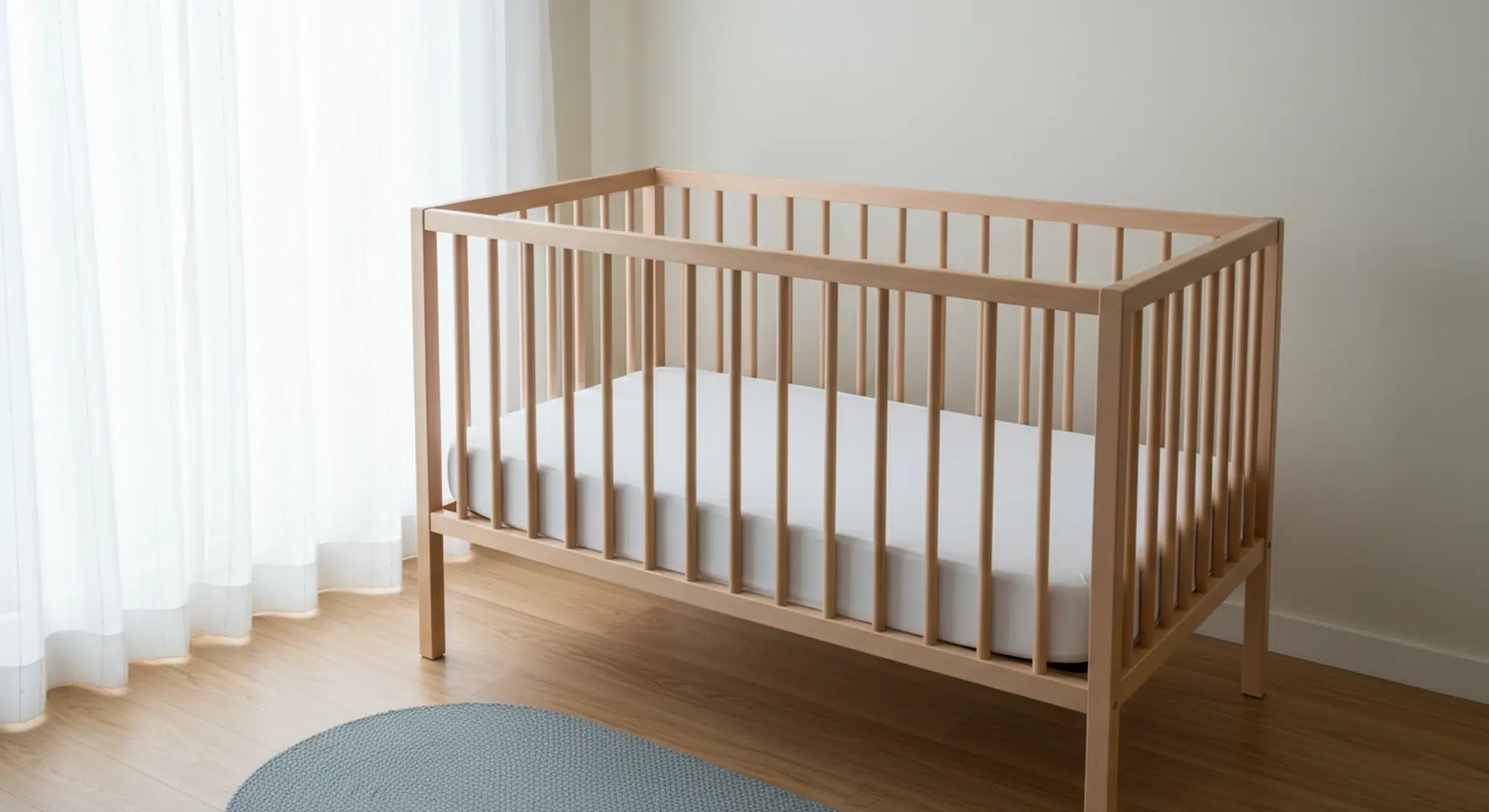
Slats no more than 2 3/8 inches apart, with none missing or cracked.
A firm, flat mattress that fits tightly.
A fitted sheet, and nothing else.
No bumpers, liners, pillows, blankets, quilts, or stuffed toys.
No corner posts that could catch clothing and no cutouts in the headboard or footboard.
No missing, loose, or broken hardware, and no drop side.
Not recalled. Check the CPSC website, especially for a used crib.
Baby placed on their back, alone, for every sleep.
Ask your pediatrician if you are unsure whether a product is safe for sleep, if your baby was born early or has a condition that affects breathing, or if head banging is frequent and worries you.
Call 911 if your baby is ever unresponsive, not breathing, or blue or gray in color.
Frequently Asked Questions
Are crib bumpers safe?
No. Padded crib bumpers have been linked to infant deaths from suffocation, entrapment, and strangulation by the ties. The American Academy of Pediatrics says bumper pads and similar products that attach to crib slats or sides should be kept out of a baby’s sleep area.
Are crib bumpers illegal in the United States?
It is unlawful to manufacture, import, distribute, or sell crib bumpers in the United States. The Safe Sleep for Babies Act, signed on May 16, 2022, made them banned hazardous products, and the ban took effect on November 12, 2022, regardless of when the bumper was made.
Are mesh crib bumpers safe?
Non-padded mesh crib liners are legal because the federal ban excludes them, but the American Academy of Pediatrics does not consider them necessary. It warns that liners can work loose and suffocate or trap a sleeping child, and that toddlers have used them to climb out.
What can I use instead of a crib bumper?
Nothing needs to replace a crib bumper. Use a firm, tightly fitting mattress with a fitted sheet, and dress your baby in a sleep sack for warmth. Lower the mattress as your baby grows, and keep decorations on the walls instead of inside the crib.
At what age are crib bumpers safe?
There is no age at which a crib bumper is recommended. Safe sleep guidance keeps bumpers out of the crib for the whole first year, and once a child can pull to stand, a bumper becomes a step for climbing out, which can lead to falls.
How do I keep my baby’s legs from getting stuck in the crib slats?
Put your baby to sleep in a sleep sack, which keeps both legs together inside the fabric. A leg through the slats is usually a minor problem that may wake your baby. Free the leg, resettle your baby, and do not add a bumper or liner.
Calmer days, better nights.
Betteroo builds a personalized sleep plan for your baby. Take the free two-minute quiz to get started tonight.
Scheers NJ, Woodard DW, Thach BT. Crib Bumpers Continue to Cause Infant Deaths: A Need for a New Preventive Approach. J Pediatr. 2016;169:93-97.e1. https://pubmed.ncbi.nlm.nih.gov/26621044/
Thach BT, Rutherford GW Jr, Harris K. Deaths and injuries attributed to infant crib bumper pads. J Pediatr. 2007;151(3):271-274. https://pubmed.ncbi.nlm.nih.gov/17719936/