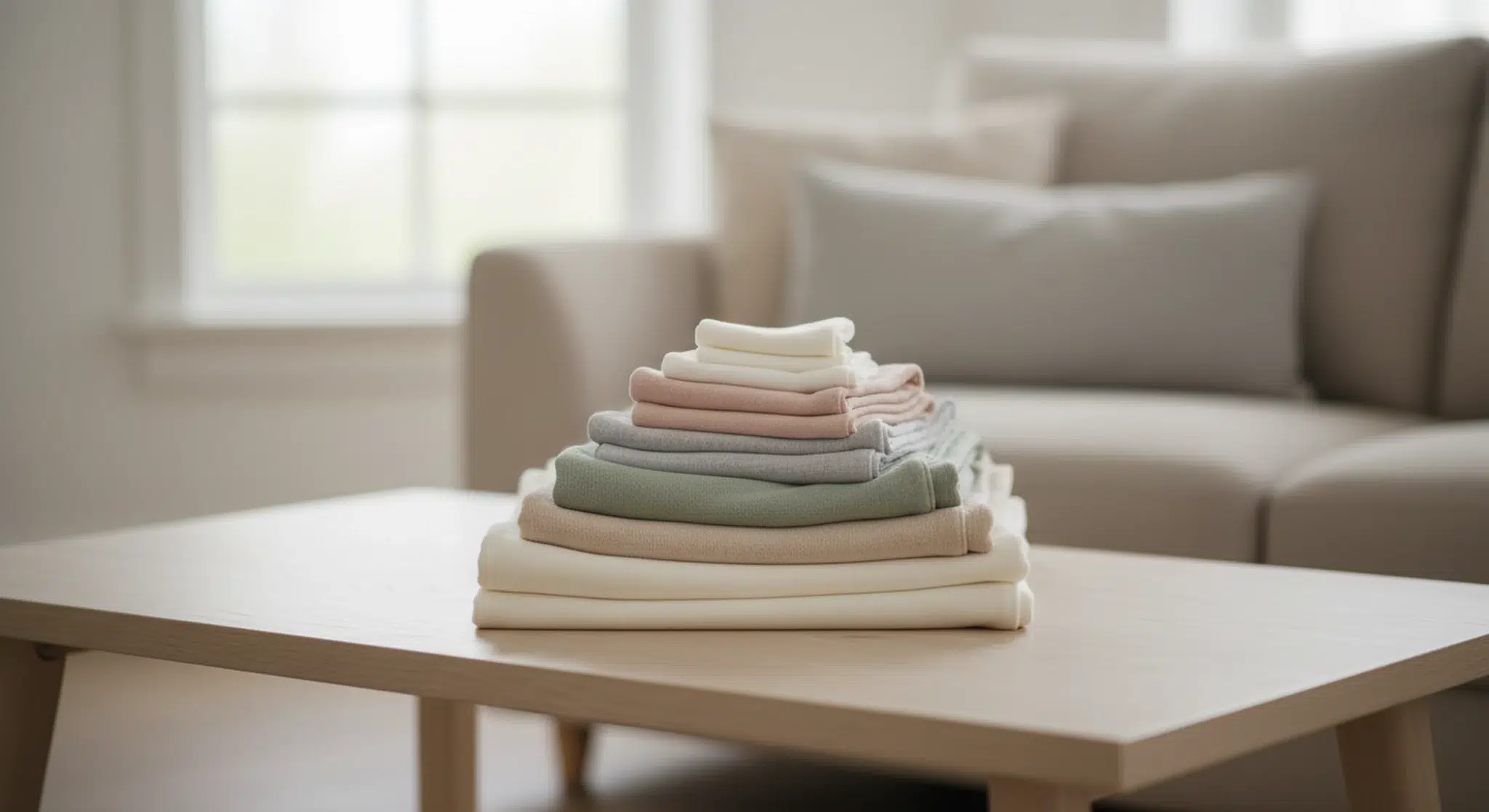
Baby blanket size depends on the job: a typical lovey is about 12 x 12 inches, a receiving blanket is 30 to 40 inches square, a swaddle is about 47 x 47 inches, and a crib blanket runs up to 45 x 60 inches.
Whether you are shopping, building a registry, or about to cast on, the names can be confusing. Receiving, swaddle, stroller, and crib blankets look similar on a shelf, and no rule sets their dimensions.
This guide gives you a chart of typical sizes in inches and centimeters, shows how to choose by use, covers crochet, knit, and quilted blankets, and explains the safe sleep rules that matter more than any measurement.
Key Takeaways
Baby blanket sizes are conventions, not regulated standards.
Typical sizes in inches: lovey 12 x 12, receiving 30 to 40 square, swaddle 47 x 47, stroller 30 x 40, crib 45 x 60.
No blanket of any size goes in a crib, bassinet, or play yard for the first 12 months.
Use a wearable blanket for sleep, and stop swaddling at the first signs of rolling.
In a car seat, the blanket goes over the buckled harness, never under it.
Table of Contents
Baby Blanket Size Chart (Inches and Centimeters)
Quick Answer
There is no official baby blanket size. Typical sizes run from about 12 x 12 inches for a lovey to 45 x 60 inches for a crib blanket. A handy all-purpose size is about 30 x 40 inches. No loose blanket of any size belongs in a crib before 12 months.
Blanket type
Typical size (inches)
Typical size (cm)
Used for
Lovey or security blanket
10 x 10 to 17 x 17
25 x 25 to 43 x 43
Comfort object (for sleep only after 12 months)
Preemie blanket
18 x 18 to 24 x 24
46 x 46 to 61 x 61
Very small babies, awake and held
Receiving blanket
30 x 30 to 40 x 40
76 x 76 to 102 x 102
Burping, cuddling, a quick cover
Swaddle blanket
45 x 45 to 48 x 48 (often 47 x 47)
114 x 114 to 122 x 122
Swaddling a newborn
Stroller or car seat blanket
22 x 30 to 30 x 40
56 x 76 to 76 x 102
Over the lap, or over a buckled harness
Multi-use blanket or play mat
40 x 40 to 50 x 50
102 x 102 to 127 x 127
Tummy time and floor play
Baby quilt (crib quilt)
36 x 52 (range 36 x 48 to 40 x 60)
91 x 132 (range 91 x 122 to 102 x 152)
Play mat, keepsake, toddler bed later
Crib or baby blanket
36 x 54 to 45 x 60
91 x 137 to 114 x 152
A bed after the first birthday
Toddler blanket
40 x 50 to 45 x 60
102 x 127 to 114 x 152
Toddler bed, couch, travel
Typical baby blanket sizes in inches and centimeters. These are common conventions, not regulated standards.
These ranges come from crochet and quilting size guides, and makers differ by a few inches, so check the listed dimensions before you buy or cast on.
Older pattern charts also list “cradle” and “bassinet” blankets. Those are names for a small blanket, not instructions: nothing loose goes into a cradle or bassinet with a sleeping baby.
Safe Sleep First: Blankets of Any Size Stay Out of the Crib
Where a blanket goes matters more than how big it is. The American Academy of Pediatrics (AAP) recommends that babies up to 1 year of age sleep on their back on a firm, flat surface with a fitted sheet and nothing else. Loose bedding and soft objects, including blankets, quilts, pillows, and bumper pads, raise the risk of entrapment, suffocation, and strangulation.
No blanket in the crib, bassinet, or play yard for at least 12 months: that covers small or “breathable” blankets, quilts, and loveys. The Consumer Product Safety Commission (CPSC) puts it simply: bare is best.
Swaddle only until the first signs of rolling: use a thin blanket, and stop as soon as your baby shows any signs of trying to roll over, which the AAP notes can be as early as 2 months. See how to swaddle a baby and how to transition out of the swaddle.
Skip weighted blankets and weighted swaddles: the AAP advises against them because they can put too much pressure on a baby’s chest and lungs.
Car seat: nothing bulky goes under the harness. The AAP explains that fluffy padding flattens in a crash and leaves extra space under the straps. Dress your baby in thin layers, buckle snugly, then lay the blanket over the buckled straps.
Face uncovered: always, to avoid trapped air and suffocation, the AAP says.
Stroller in cool weather: tuck the blanket around the lap and legs, with nothing trailing toward the wheels.
Stroller in hot weather: do not drape a blanket over the stroller for shade. A pediatrician at Children’s Hospital of Orange County warns that it blocks the breeze and traps heat.
If your baby falls asleep: in a car seat or stroller, the AAP advises moving them to a firm sleep surface, on their back, as soon as possible.
Sizes for Makers: Crochet, Knit, and Quilted Baby Blankets
Crochet baby blanket size: 30 x 36 inches (stroller) or 36 to 40 inches square (general use) are common targets. Crochet a swatch, count the stitches per inch, and multiply by the width you want. Round to the stitch pattern’s multiple, then add the turning chain.
Knit baby blanket size: the math is the same for your cast-on. A garter or seed stitch border helps the edges lie flat.
Baby quilt size: Missouri Star Quilt Company lists about 36 x 52 inches as the most common crib quilt, with 36 x 48 to 40 x 60 inches also working well and 30 x 40 inches for a stroller quilt. Its crib quilt yardage: roughly 1 3/4 to 2 yards for a simple top, 1 1/2 to 1 3/4 yards of 42 inch wide backing, and 1/2 yard for binding.
Yarn amounts: these depend on yarn weight, hook or needle size, and stitch, so go by your pattern or the yarn label.
Safe details: skip fringe, tassels, pompoms, buttons, and ribbon loops, and avoid open lace that can catch small fingers and toes.
Fabric and Material Choices
Cotton muslin: thin and light. The usual choice for swaddles and warm weather.
Cotton flannel: soft and a little warmer. The classic receiving blanket.
Cotton knit or jersey: stretchy and smooth, common for stroller blankets.
Fleece and minky: warm polyester for cold-weather walks. Too thick for swaddling: the AAP recommends a thin blanket and warns against overheating.
Wool: warm for outdoors. Check the care label.
Yarn for handmade blankets: machine washable cotton or acrylic is the practical pick.
How Many Blankets Does a Baby Need?
Fewer than most registries suggest. A reasonable start, if you do laundry every two or three days:
3 or 4 swaddle blankets, if you plan to swaddle.
4 to 6 receiving blankets, which double as burp cloths.
1 or 2 stroller blankets.
1 play mat or multi-use blanket.
2 or 3 wearable blankets for sleep.
How to Wash and Care for Baby Blankets
Wash new blankets before first use, and follow the care label.
Expect cotton to shrink slightly.
Wash handmade blankets on a gentle cycle in a mesh bag, and lay knits and crochet flat to dry.
Check for loose threads, holes, and unraveling edges after each wash.
For sensitive skin, a fragrance-free detergent is a reasonable choice.
When Can a Toddler Sleep With a Blanket?
The AAP’s safe sleep recommendations cover the first 12 months, so a loose blanket can wait until after the first birthday. Many families keep using a wearable blanket well beyond that, because toddlers kick covers off anyway. When you do introduce one, start small, thin, and lightweight. Our guide on when babies can sleep with a blanket walks through the timing.
Pick the size for the job: about 47 inches square to swaddle, 30 to 40 inches square for a receiving blanket, around 30 x 40 inches for the stroller, and 40 x 50 inches or more for a toddler. Then keep every one of them out of the crib until after the first birthday. If you have questions about keeping your baby warm at night, your pediatrician can help.
Frequently Asked Questions
What is the standard baby blanket size?
There is no official standard baby blanket size. Typical sizes range from about 12 x 12 inches for a lovey to 45 x 60 inches for a crib blanket. For an all-purpose blanket, about 30 x 40 inches or 36 inches square suits the stroller, floor play, and cuddling.
What size is a receiving blanket?
A receiving blanket is usually a square of about 30 x 30 to 40 x 40 inches, or 76 to 102 centimeters per side. It is smaller and thinner than a crib blanket, which makes it handy for burping, cuddling, or a quick cover.
What is the best size for a swaddle blanket?
Most swaddle blankets are squares of about 45 to 48 inches, and 47 x 47 inches is very common. That gives enough thin fabric to wrap and tuck. Stop swaddling as soon as your baby shows any signs of trying to roll over.
How big should a crochet baby blanket be?
A crochet baby blanket is commonly about 30 x 36 inches for the stroller or 36 to 40 inches square for general use. Crochet a swatch, count the stitches per inch, and multiply by the width you want before making the starting chain.
What size is a crib blanket?
A crib blanket is typically about 36 x 54 to 45 x 60 inches, and the most common crib quilt is about 36 x 52 inches. Despite the name, keep it out of the crib for the first 12 months and use it for floor play.
When can a baby sleep with a blanket?
Not before 12 months. The American Academy of Pediatrics recommends keeping loose blankets and other soft bedding out of the sleep space for the first year. Until then, use a wearable blanket. After the first birthday, start with a small, thin, lightweight blanket.
Better nights start before baby arrives.
Betteroo builds a personalized sleep plan for your baby. Take the free two-minute quiz and feel ready from day one.