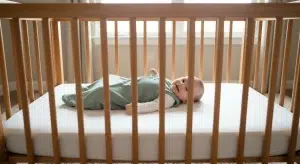
A baby should not sleep with a lovey or any soft object until they are at least 12 months old. That is the safety answer, and it is worth leading with, because many babies form an attachment to a comfort object before it is safe to leave it in the crib with them.
A lovey, a small comfort blanket or soft toy, can be a genuinely helpful sleep tool for a toddler. It offers a portable piece of security that helps a child settle themselves. But the timing is set by safe-sleep rules, not by a marketing age or how attached your baby seems.
Here is the safe answer, the reasoning behind it, and how to introduce a lovey well once the time is right.
Key Takeaways
No soft objects in the sleep space until at least 12 months. This includes loveys, blankets, pillows, and stuffed toys.
The crib stays bare for the first year: firm, flat surface, fitted sheet, nothing else.
Comfort objects typically emerge between 8 and 12 months, often before it is safe to sleep with one.
A lovey is neither necessary nor a problem. The AAP says it is not a sign of weakness or insecurity.
After 12 months, choose a small, breathable object with no cords or detachable parts, and keep a backup.
As an Amazon Associate, Betteroo earns from qualifying purchases.
Table of Contents
The Safety Answer First
Quick Answer
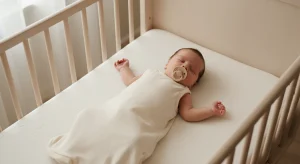
Do not put a lovey or any soft object in the crib until your baby is at least 12 months old.1 For the whole first year the sleep space stays bare: a firm, flat surface, a fitted sheet, and nothing else, no blankets, pillows, bumpers, or stuffed toys. After the first birthday, a small lovey is generally considered safe.
Nothing soft in the crib for the first year
The AAP safe-sleep recommendations are explicit: keep soft objects and loose bedding, including pillows, pillow-like toys, quilts, blankets, and stuffed toys, out of your baby’s sleep area for the first 12 months.12 A lovey is a soft object. It waits until after the first birthday.
This is the same principle behind every safe-sleep rule and behind stopping the swaddle once a baby can roll. For the full bare-crib picture, see our guides to safe swaddling and getting a baby to sleep in the crib.
Why 12 Months, and Not Sooner
The 12 month line is about airway safety. In the first year, anything soft in the sleep space, however small or beloved, adds a suffocation and rebreathing risk, and young babies do not reliably have the strength and coordination to move an object away from their face.1
After about 12 months that risk drops substantially, which is why the AAP’s crib restrictions are written for babies up to one year of age.2 It is not that a lovey becomes helpful at 12 months. It is that it becomes safe.
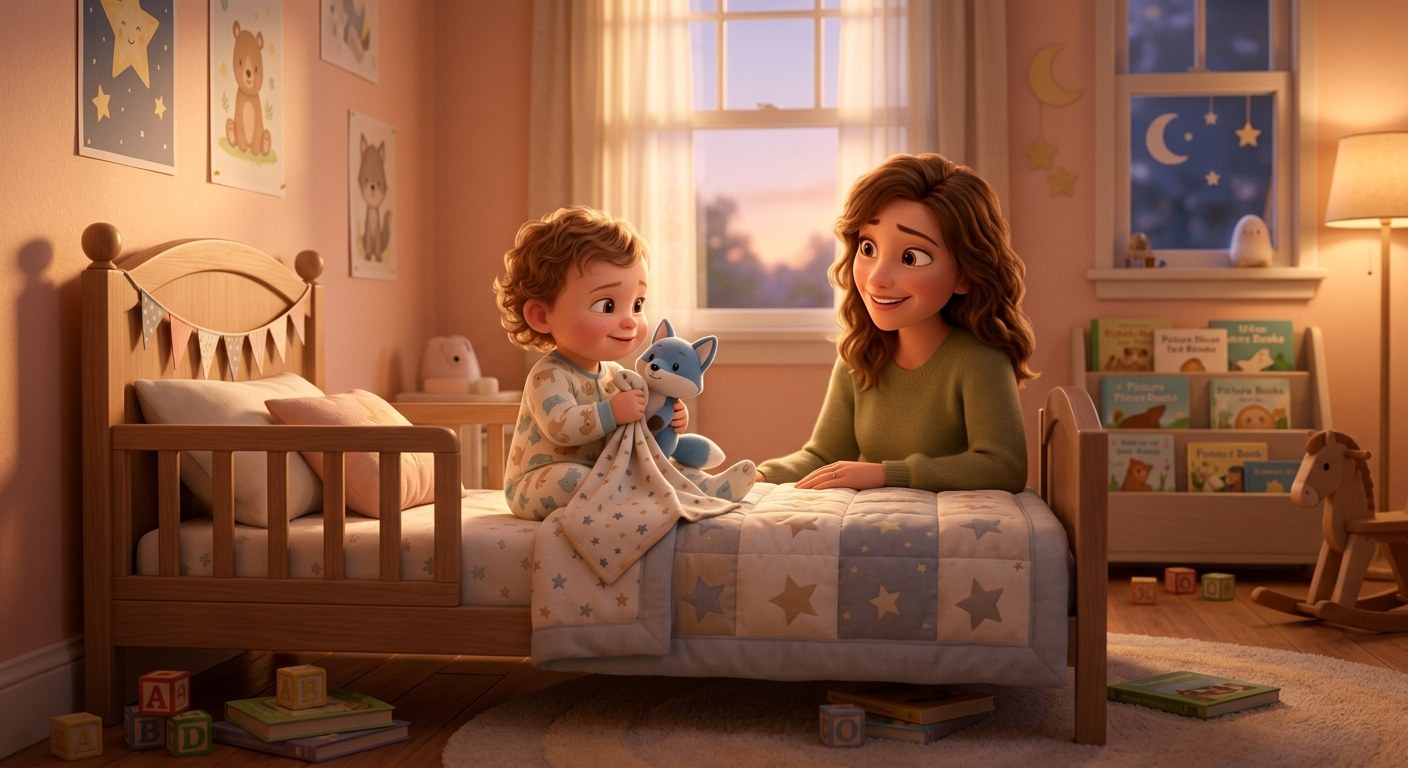
The honest tension worth naming: your baby may bond to a comfort object well before it is safe to sleep with it. That is fine. You can let them hold and love it during awake, supervised times in the meantime, and only move it into the crib after the first birthday.
When Do Babies Get Attached to a Comfort Object?
Attachment to a transitional object commonly begins between 8 and 12 months, and children often keep it for years.3 This is a normal, healthy part of development. It is how a child learns to carry a sense of security with them when a parent is not right there.
And it is not a warning sign. The AAP states directly that transitional objects are not a sign of weakness or insecurity, and there is no reason to keep a child from using one.3 If anything, the research points the other way: one study found children with a transitional-object attachment reported more optimal bonding with their mothers, not less.4
That same study offers a nuance worth keeping: a comfort-object attachment that first appears in childhood looks entirely benign, while one that emerges for the first time in adolescence was associated with more difficulty.4 In other words, the timing matters more than the object. An early lovey is a normal, self-resolving thing.
Working on independent sleep?
A lovey is one small piece. Get a full plan built around your child’s age and stage.
How Most Babies Settle, and Why a Lovey Helps Later
A lovey is a tool for a child learning to settle themselves, and most babies start from a lot of adult help. In our State of Baby Sleep 2026 report, a survey of 74,379 parents across 112 countries, independent settling is rare in the first year.
How babies fall asleep
Feeding and rocking dominate; falling asleep alone is rare
Fewer than 1 in 10 babies fall asleep on their own. A comfort object, safe from the first birthday on, is one gentle way to give an older baby or toddler a piece of that self-settling, without anything soft in the crib before 12 months.
How to Introduce a Lovey Safely
Once your child is past 12 months, a few practical steps make a lovey work well and stay safe:
Choose small and breathable. A small comfort blanket or soft toy, with no long cords, ribbons, buttons, or parts that could detach and become a choking hazard.5
Buy two, identical. A backup that you rotate saves a lost-lovey crisis and lets you keep both clean.3
Involve it in the routine. Bring the lovey into the bedtime wind-down so it becomes a cue for sleep.
Wash it regularly. Rotating the two makes this easy without a meltdown.
Keep the rest of the bed simple. One small lovey is plenty. The bed does not need to fill up with toys.
A lovey can be especially handy through the wobbles of toddler and preschool sleep, including the 3 year old sleep regression, when a portable piece of security helps a child settle themselves.
Is a Lovey Necessary?
No, and this is the honest bottom line. A comfort object is neither required for healthy development nor a problem to worry about. Plenty of children never take to one and sleep beautifully, and plenty of children adore theirs for years. Both are completely normal.
The claims at both extremes, that every child needs a lovey, or that a lovey creates dependence, are overstated. Most children give theirs up on their own when they are ready.3 If a lovey helps your child feel secure at bedtime, it is a lovely tool. If your child is not interested, nothing is missing. The only firm rule is the safety one: not in the crib until 12 months.
Frequently Asked Questions
When can a baby sleep with a lovey?
Not until at least 12 months old. For the entire first year, the AAP recommends keeping all soft objects and loose bedding, including loveys, blankets, pillows, and stuffed toys, out of the sleep space, because they add a suffocation risk. After the first birthday, a small lovey is generally considered safe to have in the crib.
Why can’t a baby have a lovey before 12 months?
It is about airway safety. In the first year, any soft object in the sleep space adds a suffocation and rebreathing risk, and young babies cannot reliably move something away from their face. After about 12 months that risk drops substantially, which is why the AAP writes its bare-crib recommendation for babies up to one year of age.
What age do babies get attached to a comfort object?
Attachment to a transitional object commonly begins between 8 and 12 months, though it varies. This is normal and healthy. Many babies form the attachment before it is safe to sleep with the object, so you can let your baby hold and love it during awake, supervised times, and move it into the crib only after 12 months.
Is it bad for a baby to have a lovey?
No. The AAP is clear that a transitional object is not a sign of weakness or insecurity, and there is no reason to discourage one. Research even links comfort-object attachment in childhood to better parent bonding. Most children give up their lovey on their own when they are ready. The only rule is safety: not in the crib before 12 months.
How do I choose a safe lovey?
Pick a small, breathable comfort blanket or soft toy with no long cords, ribbons, buttons, or parts that could detach and become a choking hazard. Buy two identical ones so you have a backup and can keep them clean. Introduce it after 12 months as part of the bedtime routine, and keep the rest of the bed simple.
Does my baby need a lovey to sleep well?
No. A comfort object is optional. Some children take to one and find it soothing, and many never do and sleep perfectly well without it. Both are normal. If a lovey helps your child settle after their first birthday, it is a useful tool, but nothing is wrong if your child is not interested in one.
Want a plan that fits your child?
Get a personalized, adaptive sleep plan for every stage.
Bachar E, Canetti L, Galilee-Weisstub E, et al. Childhood vs. adolescence transitional object attachment, and its relation to mental health and parental bonding. Child Psychiatry Hum Dev. 1998;28(3):149-167. https://pubmed.ncbi.nlm.nih.gov/9540239/