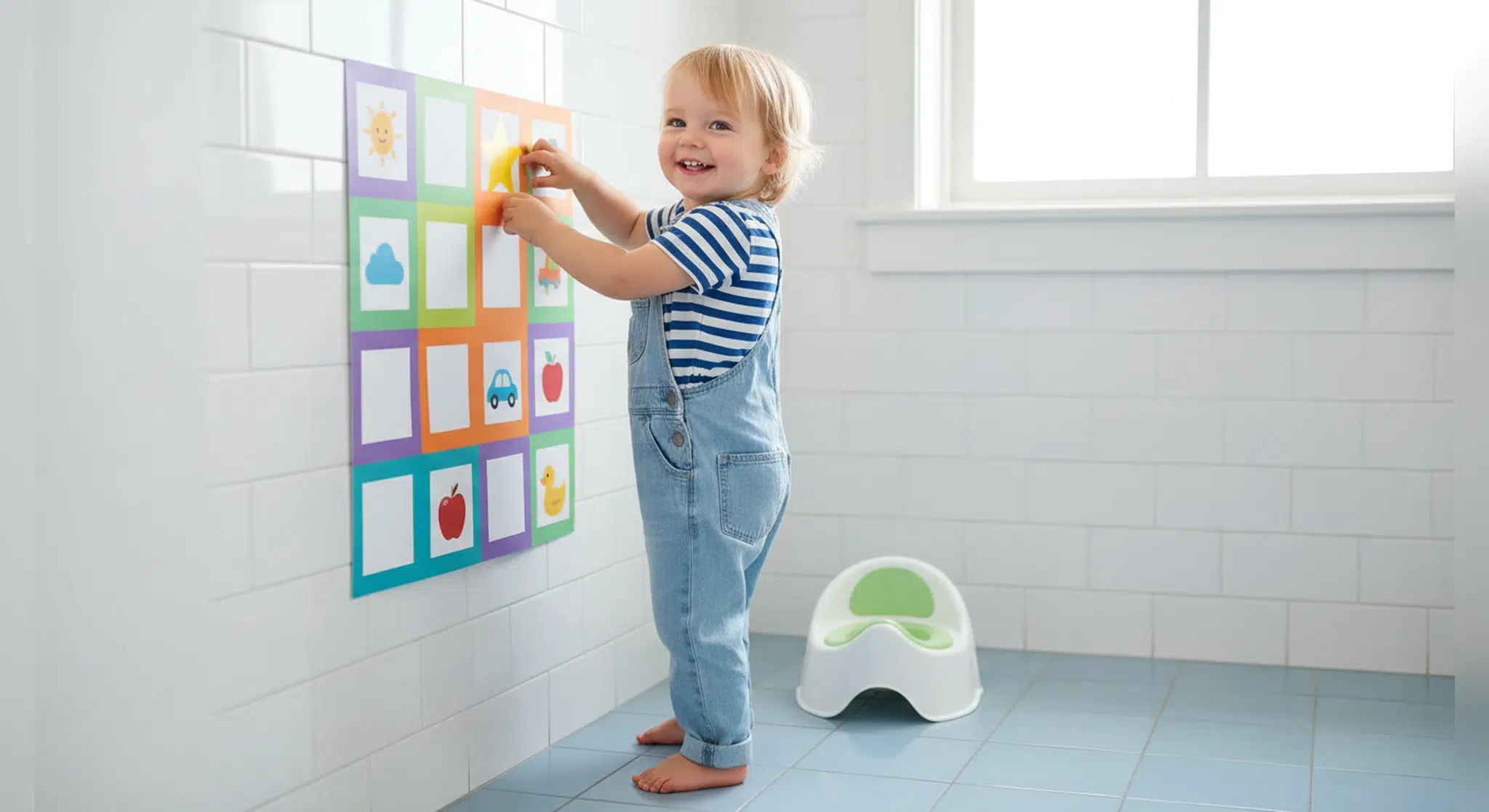
A potty chart is a simple sticker chart that rewards your toddler for trying and using the potty, and it works best when it is small, visual, and focused on effort, not perfection.
Potty training can feel like a long road, and toddlers love seeing their progress. A potty chart gives your child a clear, visual way to celebrate each step, and gives you a calm way to keep the momentum going.
This guide explains what a potty chart is, when to start, how to make one, a sample potty training chart by stage, reward ideas that are not candy, tips to make it work, why nighttime charts usually backfire, and when to call your pediatrician.
Key Takeaways
Start a potty chart when your child shows readiness signs, often between 18 and 24 months or later.
Keep it short and visual: one row of 5 to 10 boxes is plenty for a toddler.
Reward sitting on the potty at first, then successes, then independence.
Never take stickers away for accidents; punishment can make potty training harder.
Skip rewards for dry nights, since nighttime dryness is not under a child’s control.
As an Amazon Associate, Betteroo earns from qualifying purchases.
Table of Contents
What Is a Potty Chart?
A potty chart is a simple visual tracker your child uses during potty training. Each time they try the potty or succeed, they add a sticker, a stamp, or a check mark. When they reach a goal, like five stickers, they might get a small reward or a special activity with you.
Potty charts work because toddlers are concrete thinkers. A row of stickers turns an abstract goal (“use the potty”) into something they can see and feel proud of. They also give you a quick way to spot patterns, like the time of day accidents usually happen.
When to Start Using a Potty Chart
Start the chart when your child shows signs of readiness, not on a set birthday. The AAP notes that most children are not ready before about 18 months, and many are ready between 18 and 24 months or later. Common readiness signs include:
Staying dry for about 2 hours at a time, or waking up dry from naps
Noticing and telling you when their diaper is wet or dirty
Showing interest in the potty or in what family members do in the bathroom
Being able to walk to the bathroom and help pull pants up and down
Rewards do not need to be toys or candy. Many of the best rewards are time and attention:
Choosing tonight’s bedtime story
A special trip to the park or library
Calling a grandparent to share the news
Picking dinner or a family movie
A bath with bubbles or a favorite bath toy
Small items from a “prize box”: stickers, crayons, a toy car, hair clips
A “big kid” pack of underwear with a favorite character
Keep rewards small and immediate for toddlers. Waiting a week for a big prize is too long for a 2-year-old to connect it with using the potty today.
Tips to Make a Potty Chart Work
Praise the effort, specifically: “You sat on the potty when your body told you!” means more than “Good job.”
Never take stickers away: accidents are normal. Removing earned stickers turns the chart into a punishment.
Pair it with a routine: try the potty on waking, after meals, before bath, and before bed.
Stay calm about accidents: clean up matter-of-factly. The AAP warns that punishment and pressure can backfire and make children hold their urine or stool.
Phase it out: once using the potty is routine, fade the chart. Many kids naturally lose interest after a few weeks.
Be consistent across caregivers: share the chart with daycare, grandparents, or a nanny if you can.
Usually not. Staying dry at night depends on bladder maturity and hormones your child cannot control, and many children are not dry at night until age 5 or later. Rewarding dry nights can make kids feel like they failed when their body simply is not ready yet.
If you want a nighttime chart, reward the things your child can control: going to the potty right before bed, or helping change the sheets without fuss. Our nighttime potty training guide explains more.
When the Chart Stops Working
It is common for a potty chart to work great for a week or two and then lose its magic. That usually means it is time to change the reward, move to the next stage, or drop the chart altogether.
If your child was doing well and suddenly starts having accidents again, it may be a potty training regression. Big changes like a new sibling, a move, starting daycare, or illness are common triggers. Go back to stage 1 of the chart for a little while and keep things positive.
Talk to your child’s doctor if your child has pain when peeing or pooping, blood in their urine or stool, hard or infrequent stools, or is withholding poop. Constipation is one of the most common reasons potty training stalls, and it is easy to treat once it is spotted.
Also check in if your child was fully trained and has many new daytime accidents, is drinking or peeing much more than usual, or is not showing any interest in the potty by around age 3 to 3 and a half. Most of the time nothing is wrong, but your pediatrician can help you adjust the plan.
Frequently Asked Questions
How does a potty chart work?
A potty chart tracks your child’s potty progress with stickers or check marks. Each time they try or succeed, they add a sticker. When they fill a row or reach a goal, they earn a small reward or special activity.
What age should you start a potty chart?
Start a potty chart when your child shows signs of readiness, like staying dry for 2 hours, telling you about wet diapers, and showing interest in the potty. For many children that is between 18 and 24 months, and for some it is closer to 3.
What should a potty training chart reward?
At first, reward sitting on the potty. Next, reward peeing or pooping in the potty. Finally, reward independence, like telling you they need to go and washing hands. Changing what earns a sticker keeps the chart motivating.
What are good rewards for potty training?
Good potty training rewards include stickers, choosing a bedtime story, a trip to the park, calling a grandparent, picking a family movie, a bubble bath, or a small prize from a prize box. Keep rewards small and immediate.
Should you use a potty chart at night?
Usually not for dry nights, because nighttime dryness depends on bladder maturity your child cannot control. Instead, reward things they can control, like using the potty right before bed.
Gentle changes, peaceful nights.
Betteroo builds a personalized sleep plan for your baby or toddler. Take the free two-minute quiz to get started.