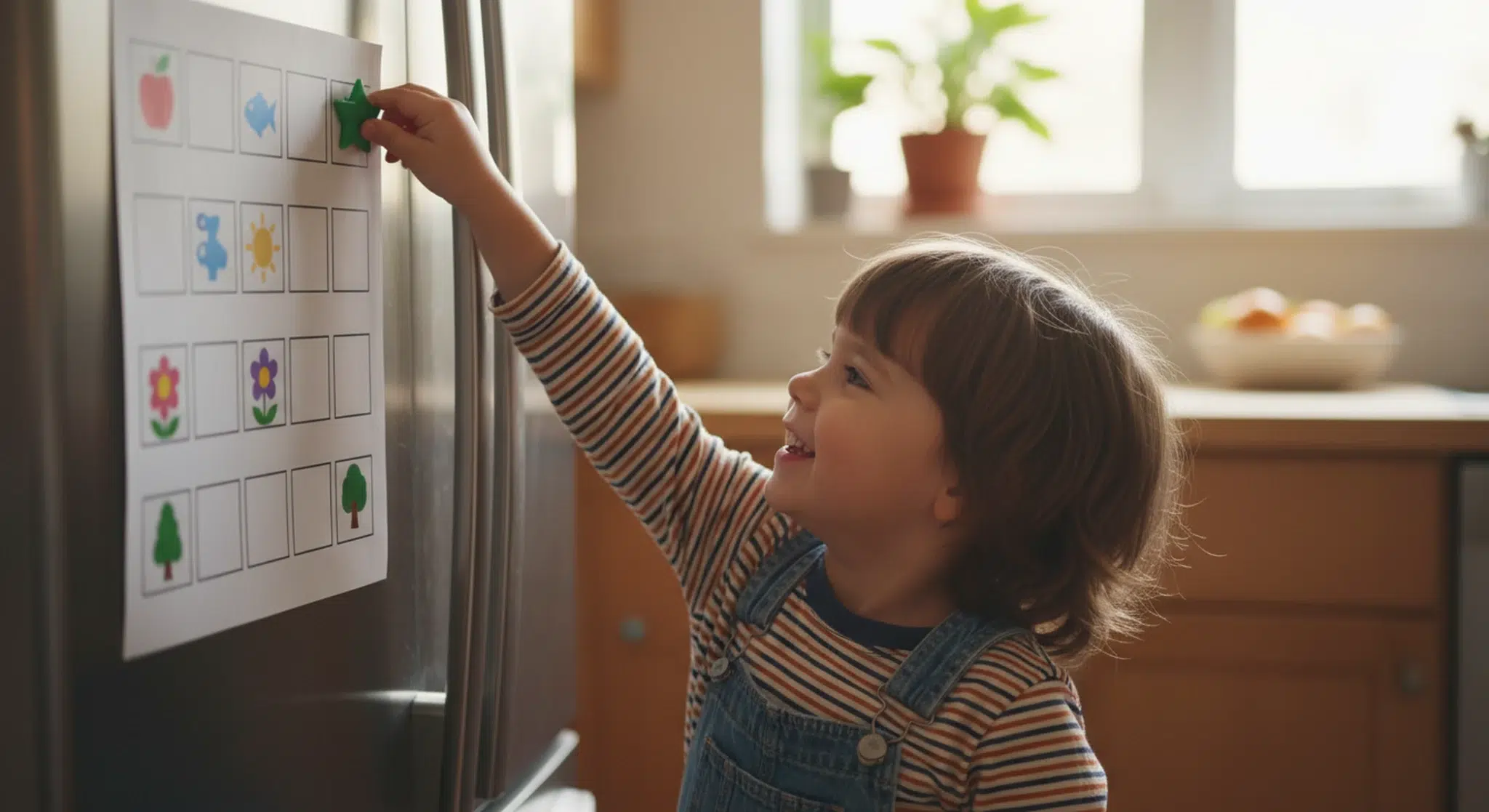
A good chore chart turns a child’s natural urge to help into a lasting habit, and the secret is matching the tasks to their age and keeping the list short.
Chores are not just about a cleaner house. Doing age-appropriate tasks builds responsibility, independence, and confidence, and children who help out tend to feel more capable. A simple chart makes it easy for kids to see what to do and feel proud when they do it.
This guide covers why chore charts work, exactly which chores kids can handle at each age, how to build a chart that actually sticks, the pay-or-not-pay question, and what to do when chores turn into a battle.
Key Takeaways
Age-appropriate chores build responsibility, independence, and self-esteem from the toddler years up.
Use a picture-based chart for pre-readers so they can follow it themselves.
Keep it short: two to three daily tasks for young children beats a long, ignored list.
Skip money for toddlers; attention, stickers, and pride are the reward that works.
Consistency matters most; a chart enforced daily beats an elaborate one that fizzles.
Table of Contents
Why Chore Charts Work for Kids
Young children are wired to help, and a chore chart channels that instinct into a habit. Age-appropriate chores build responsibility, independence, and self-esteem, and research on children who do chores links them to greater competence and even better outcomes later in life. A chart makes the invisible visible: your child can see what to do and feel the small, real pride of checking it off.
For toddlers and preschoolers especially, a picture-based chart works better than words, because they can “read” it themselves. The point at these ages is not spotless results, it is the routine and the sense of being a capable, contributing member of the family.
Age-Appropriate Chores (What Kids Can Actually Do)
The fastest way to make a chore chart fail is to assign tasks a child cannot manage. Match chores to your child’s stage, expect help rather than perfection, and add responsibility as they grow.
Age
Chores they can handle
2–3 years
Put toys in a bin, throw diapers away, wipe spills, fill the pet’s bowl with help
4–5 years
Make the bed (roughly), set the table, feed pets, put away laundry, dust
6–8 years
Clear dishes, sort and fold laundry, tidy their room, water plants, take out recycling
9–11 years
Load the dishwasher, help cook, sweep, take out trash, basic yard help
A rough guide to age-appropriate chores. Every child is different; adjust to your own child’s abilities.
Keep the list short. Two or three chores a young child can succeed at every day beats a long list they will ignore. As tasks become automatic, rotate in something new.
How to Make a Chore Chart That Sticks
A chore chart is only as good as the system behind it. Build it with your child, use pictures for pre-readers, and keep it somewhere they see daily, like the fridge or their bedroom door. Decide in advance how you will mark completion (stickers, checkmarks, magnets) and keep it simple enough to maintain on a busy morning.
A calmer morning starts the night before.
Chore charts run smoother when kids are well rested. Take our free quiz for a sleep plan that makes mornings easier.
Use photos or simple icons so young children can follow the chart without reading.
Tie chores to existing routines (before breakfast, after dinner) so they become automatic.
Keep it short: two to three daily tasks for little ones.
Praise the effort and the specific action (“You put every block away”), not just the outcome.
Do chores alongside your child at first; helping is a skill you teach, not one they are born with.
Should You Pay Kids for Chores? Rewards and Allowance
This is a genuine parenting fork, and reasonable families land in different places. One camp keeps everyday chores unpaid, framing them as simply what members of a household do, and handles money separately through an allowance or paid “extra” jobs. The other camp ties an allowance to chores to teach the link between work and money.
For toddlers and young preschoolers, skip money entirely; the reward that works is your attention, a sticker, and the satisfaction of the task. If you do use a reward chart, keep the payoff small and frequent for little kids (who cannot wait a week) and fade it over time as the habit takes hold. Whatever you choose, be consistent, since a chart that is enforced some days and forgotten others teaches that the rules are optional.
When Chores Become a Battle
If chores turn into a daily fight, shrink the ask and rebuild momentum with one small task your child can win at. Offer a controlled choice (“Do you want to feed the cat or set the table?”), work side by side, and keep your tone matter-of-fact rather than pleading. Meltdowns over chores, like meltdowns over most things, get worse when a child is tired or hungry.
Consistency beats intensity. A short, predictable routine that happens every day will outperform an elaborate chart that fizzles by the weekend. If mornings are the flashpoint, an earlier bedtime and a calmer wind-down (see our toddler bedtime routine guide) often do more than any reward system.
The Mindset That Makes Chores Work
The families who succeed with chores treat them as a normal, expected part of belonging to a household, not as a special favor. They start young, accept imperfect results, and teach the task by doing it together before handing it over. That patience in the early years is what produces a genuinely helpful older child.
Praise effort and specific actions rather than gushing over every small job, and let natural consequences do some of the teaching (toys left out are not available for a bit). Above all, keep it low-drama. Chores are a rhythm you build over years, not a battle you win in a week.
Frequently Asked Questions
What chores can a 2 or 3 year old do?
Toddlers can put toys in a bin, throw away trash, wipe up small spills, help feed a pet, and carry light items. Expect help and imperfect results; the routine matters more than the outcome at this age.
How do I make a chore chart for a child who can’t read?
Use photos or simple icons for each task so your child can follow the chart independently. Keep it to two or three daily chores and mark completion with stickers or magnets they can move themselves.
Should I pay my child for chores?
Families differ. Many keep everyday chores unpaid as part of belonging to a household and handle money through a separate allowance or paid extra jobs. For toddlers and preschoolers, skip money and use attention and stickers instead.
How many chores should a child have?
For young children, two to three simple daily tasks is plenty. Older kids can handle more. A short list they complete reliably is far better than a long one they ignore.
What if my child refuses to do chores?
Shrink the task, offer a choice between two chores, work alongside them, and stay calm. Refusal often spikes when a child is tired or hungry, so check timing, and keep the routine consistent day to day.
Easier mornings, happier helpers.
Well-rested kids handle routines and chores better. Take our free 3-minute quiz for a sleep plan that smooths out your day.