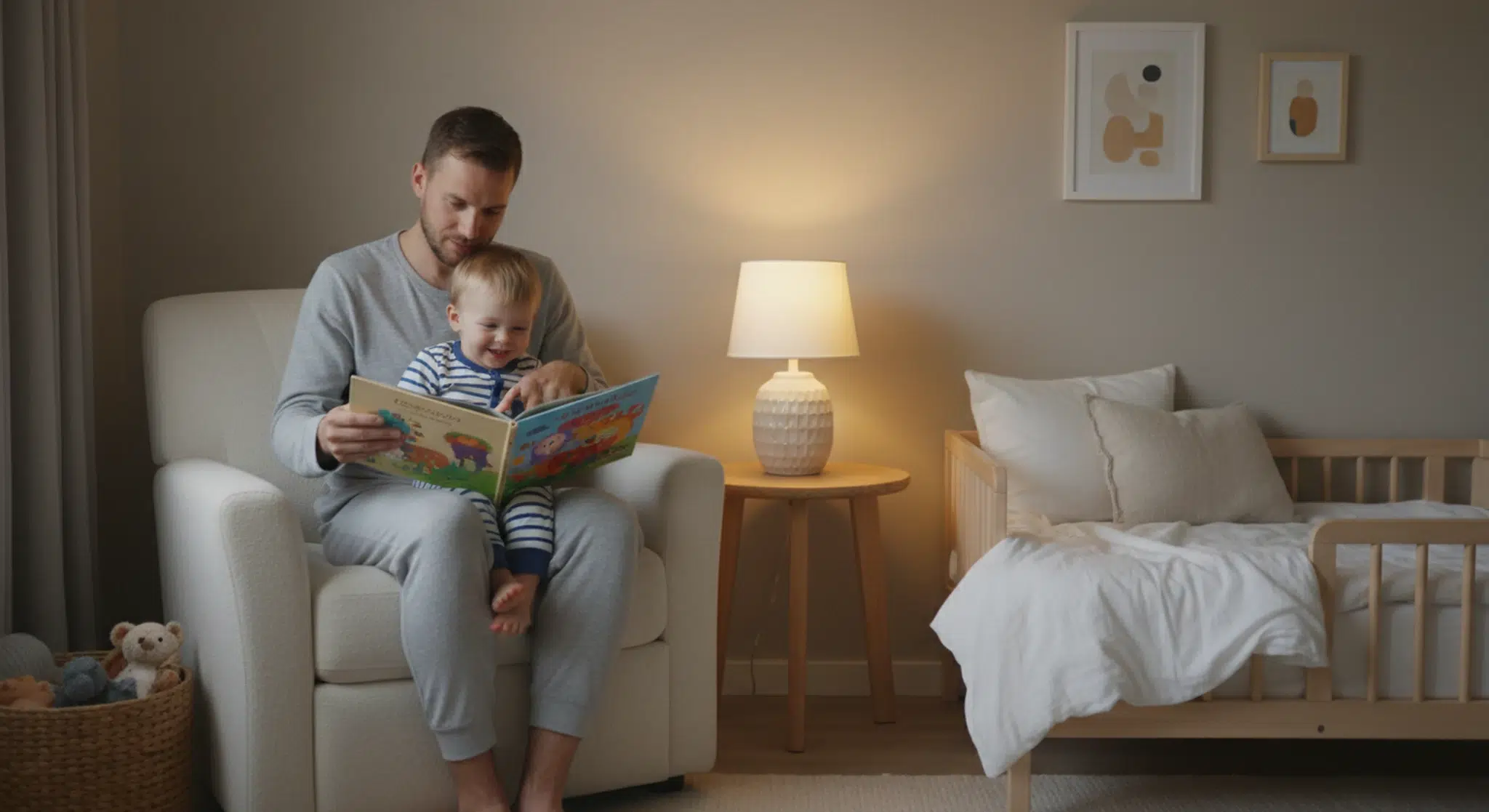
A consistent bedtime routine is the closest thing to a magic trick for toddler sleep, because it teaches the brain to wind down on cue.
A good toddler bedtime routine is a short, calming sequence of the same steps in the same order every night: wash-up, pajamas and teeth, a book or two, a song or cuddle, and lights out. That predictability helps your toddler fall asleep faster, wake less, and resist bedtime less.
This guide covers why routines work, the core building blocks, a sample 30-minute schedule, how to find the right bedtime, how to keep the wind-down calm, and how to adapt the routine as your toddler grows.
Key Takeaways
A consistent routine cues the brain that sleep is coming and is linked to better toddler sleep and mood.
Keep it about 20 to 45 minutes, moving from active to quiet and ending in the bedroom.
Most toddlers need 11 to 14 hours of sleep a day and a bedtime around 7:00 to 8:00 pm.
Put your toddler down drowsy but awake so they learn to fall asleep independently.
Dim the lights and switch off screens at least an hour before bed.
As an Amazon Associate, Betteroo earns from qualifying purchases.
Table of Contents
Why a Bedtime Routine Works
A bedtime routine is one of the most researched, most effective sleep tools parents have, and it works because of how the brain learns. When the same calming steps happen in the same order every night, they become cues that tell your toddler’s body sleep is coming. That predictability lowers stress, eases the transition from a busy day to rest, and helps your child fall asleep faster and wake less overnight.
Studies of young children consistently link a regular bedtime routine to better sleep, easier bedtimes, and even improvements in mood and behavior during the day. The routine also gives your toddler a sense of control during a transition they might otherwise resist, because they know exactly what comes next. You are not just filling time before bed, you are training the brain to wind down.
The Core Building Blocks
A good toddler routine does not need to be elaborate. It needs to be consistent, calming, and roughly twenty to forty-five minutes long. Most effective routines are built from a small set of familiar steps that move steadily from active to quiet and from the rest of the house toward the bedroom.
A warm bath or a quick wash-up to signal the day is ending
Pajamas, teeth, and potty or a fresh diaper, grouped together
One or two books read together in a calm voice
A song, a cuddle, or a few quiet words about the day
Lights out with a lovey, sound machine, and a short goodnight phrase
The order matters less than the consistency. Pick a sequence that flows naturally in your home, then keep it the same every night. Ending in the bedroom, with the last steps happening in the dark or dim light, ensures the very last thing your toddler experiences is their sleep space rather than a bright, stimulating room.
A Sample 30-Minute Routine
Here is a simple template you can adapt. The exact clock times matter less than keeping the steps and their order steady from night to night.
Time
Step
Why it helps
7:00
Warm bath or wash-up
Body temperature drops afterward, which cues sleep
7:15
Pajamas, teeth, potty
Groups the practical tasks so they do not interrupt the calm later
7:20
Two books in the bedroom
Quiet, connecting, and signals the wind-down
7:28
Song or cuddle, lights out
The final soothing bridge into sleep
7:30
In bed, drowsy but awake
Lets your toddler practice falling asleep independently
A sample 30-minute toddler bedtime routine. Shift the times to fit your child’s ideal bedtime.
Aim to have your toddler in bed drowsy but still awake, because that is how children learn to fall asleep on their own and resettle when they wake in the night. If you want help keeping your toddler in bed once the routine ends, see our guide on how to get a toddler to stay in bed.
Timing: Finding the Right Bedtime
Even a perfect routine falls flat at the wrong time. Toddlers between one and three years typically need about eleven to fourteen hours of sleep in a day, including naps, and most do best with a bedtime somewhere between about 7:00 and 8:00 in the evening. The clue that bedtime is right is a toddler who settles within about twenty minutes without a long fight and wakes reasonably rested.
Watch for the two classic mistakes. A bedtime that is too late produces an overtired, wired toddler who fights sleep and may wake more overnight. A bedtime that is too early, or a nap that runs too long or too late, leaves a toddler who simply is not sleepy and lies in bed calling for you. If bedtime is bumpy, adjust it in fifteen-minute steps and keep an eye on the afternoon nap, which has a big influence on how the evening goes.
Keeping the Routine Calm
The goal of the last hour is to dial energy down, not up. Dim the lights after dinner, since bright light and especially screens suppress melatonin and make it harder for your toddler to feel sleepy. Most guidance is to switch off screens at least an hour before bed and keep the bedroom a screen-free zone. Trade rough-and-tumble play for puzzles, coloring, or quiet pretend.
Keep your own energy low too. A calm, unhurried voice and relaxed body language are contagious, and toddlers take their emotional cues from you. If your toddler stalls with one more request after another, fold the predictable ones, a drink, a last hug, a final potty trip, into the routine itself so there is nothing left to bargain for once the lights are out.
Adapting the Routine as Your Toddler Grows
A routine is a living thing, and it should evolve. A younger toddler may need more physical soothing and a shorter attention span for books, while an older toddler can handle a slightly longer wind-down and enjoys having choices, like picking which two books or which pajamas, which satisfies their push for independence without derailing bedtime. Offering small, bounded choices is a powerful way to reduce resistance.
Expect the occasional rough patch even with a solid routine. Travel, illness, a new sibling, dropping the nap, or a developmental leap can all shake things up temporarily. When that happens, return to your consistent routine as soon as you can, since the familiarity is exactly what helps your toddler regroup. The routine is the anchor you come back to, not something you rebuild from scratch each time.
Consistency Beats Perfection
You do not need a flawless, Instagram-worthy routine. You need the same handful of calming steps, in the same order, at roughly the same time, night after night. That reliability is what does the work. On the nights everything goes sideways, do a shortened version rather than skipping it entirely, so the cue stays intact.
If your toddler routinely takes far longer than about twenty to thirty minutes to fall asleep, snores or seems to struggle to breathe in sleep, or is persistently exhausted during the day despite a solid routine and bedtime, mention it to your pediatrician. Most bedtime struggles are behavioral and respond to consistency, but occasionally a sleep or medical issue is worth ruling out.
Frequently Asked Questions
What should a toddler bedtime routine include?
A calming, consistent sequence of about 20 to 45 minutes: a bath or wash-up, pajamas, teeth and potty, one or two books, a song or cuddle, and then lights out with a lovey and sound machine. Move from active to quiet and end in the bedroom so the last thing your toddler experiences is their sleep space.
How long should a toddler bedtime routine be?
About 20 to 45 minutes works well for most toddlers. Long enough to genuinely wind down from the day, short enough to avoid dragging or stalling. What matters most is that the steps and their order stay the same every night, because the consistency is what cues your toddler’s brain that sleep is coming.
What time should a toddler go to bed?
Most toddlers do best with a bedtime between about 7:00 and 8:00 in the evening and need roughly 11 to 14 hours of sleep per day including naps. The right bedtime is the one where your toddler settles within about 20 minutes and wakes reasonably rested. Adjust in 15-minute steps and watch the afternoon nap’s timing.
Should toddlers have screens before bed?
It is best to avoid them. Bright light and screens suppress melatonin and make it harder to fall asleep, so most guidance is to turn screens off at least an hour before bed and keep the bedroom screen-free. Replace screen time with quiet play, books, or puzzles to help your toddler wind down.
How do I start a bedtime routine with my toddler?
Choose a simple sequence that flows in your home, pick a consistent bedtime, and start doing the same steps in the same order every night, even on weekends. Aim to put your toddler down drowsy but awake. Give it a couple of weeks of consistency, and offer small choices within the routine to reduce resistance.
Want a routine tailored to your toddler
Take our free 3-minute sleep quiz for a personalized plan matched to your child’s age, nap schedule, and temperament.