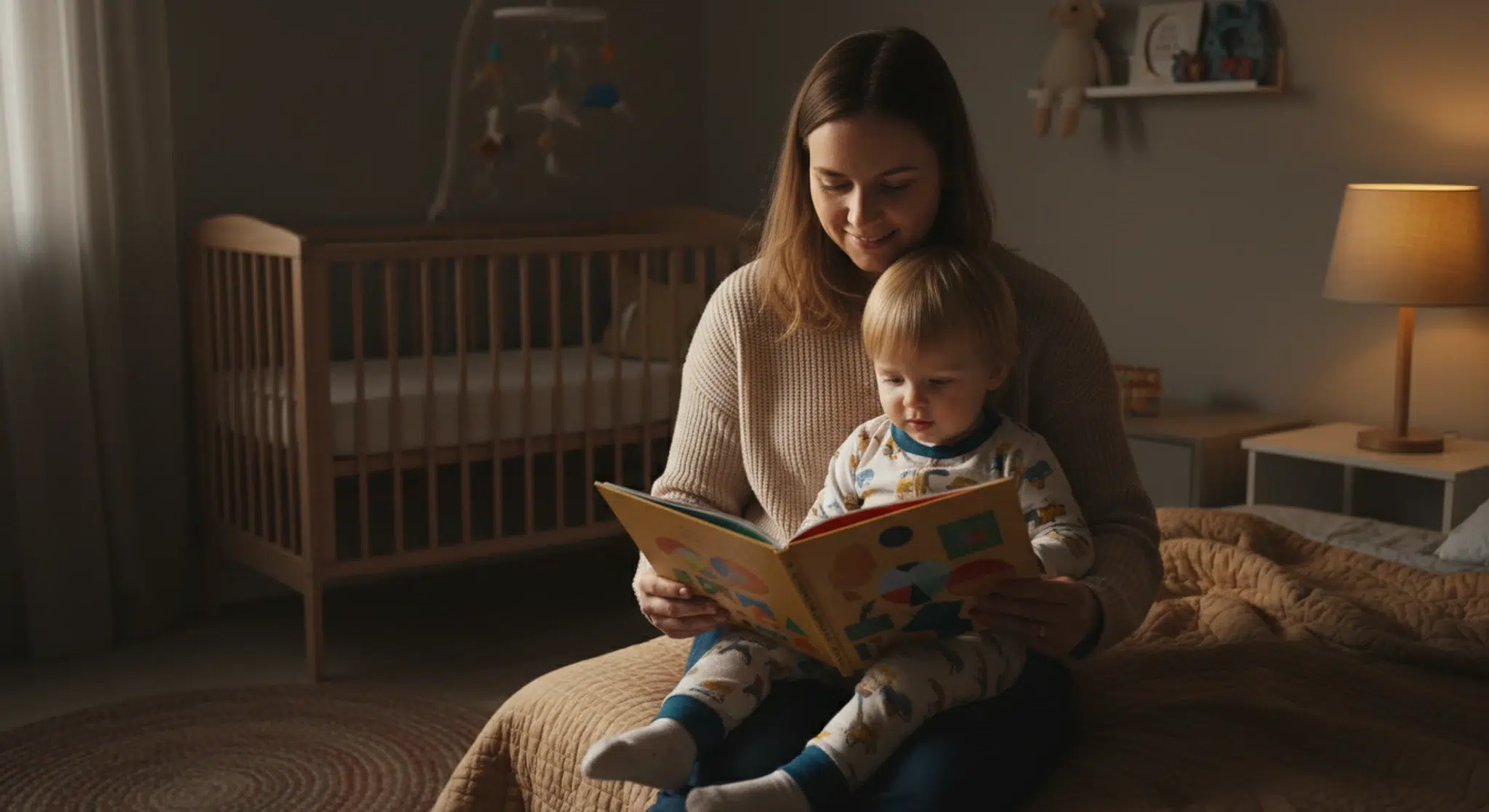
A nightly bedtime story is one of the simplest, most powerful things you can do for your child: it winds them down for sleep and builds their brain at the same time.
Reading aloud at bedtime is not just a sweet ritual. It is backed by decades of research showing that children who are read to daily arrive at kindergarten with bigger vocabularies, stronger focus, and an easier path into reading. And it happens during the one part of the day that is already calm and connected.
This guide covers why bedtime stories matter, the best books and story types by age from newborn to preschool, exactly how to read so your child settles instead of revving up, and what to do when “one more book” turns into a nightly standoff.
Key Takeaways
The AAP recommends reading aloud daily from birth; kids read to regularly hear about 1.4 million more words by age five.
Read slower and quieter at bedtime, and save the calmest, most repetitive book for last.
Match the book to the stage: rhythm for babies, repetition for toddlers, a small story arc for preschoolers.
Rereading the same favorite is good for language; it is not a rut.
Set the number of books before you start to keep stories from becoming a stalling game.
Table of Contents
Why Bedtime Stories Matter More Than You Think
A bedtime story does two jobs at once. It winds your child down for sleep, and it quietly builds the brain. Children who are read to regularly hear roughly 1.4 million more words by age five than children who are not, and that word gap predicts vocabulary, reading readiness, and how easily school comes later on.
The American Academy of Pediatrics recommends reading aloud with children every day, starting at birth and continuing well past the point where they can read on their own. The bedtime slot is ideal because it repeats at the same time each night, which is exactly what a young brain needs to file new words and ideas away. Beyond language, a shared story builds empathy, focus, and the simple, powerful feeling of being close to you at the end of the day.
How to Read a Bedtime Story So It Actually Calms Your Child
The goal at bedtime is not a performance, it is a slow landing. Read a little quieter and a little slower than you would during the day. Let your voice drop toward the end of the book. Resist the urge to add big, exciting sound effects in the last story, since a giggling, wound-up child is harder to settle.
Make it interactive early and calm late. With babies and young toddlers, point at pictures, name what you see, and pause so they can babble back. With preschoolers, ask a gentle question or two (“What do you think happens next?”) in the first book, then choose a quieter, more repetitive story to close on. Predictable, rhythmic text is the secret weapon here, because the sameness is soothing.
Keep the routine short and fixed: bath, teeth, two books, lights out.
Let your child pick one book and you pick one, to head off the endless “one more” negotiation.
Read the last book in the same spot every night so the location itself becomes a sleep cue.
Skip screens for the hour before bed; the story replaces them, it does not compete with them.
Best Bedtime Stories and Books by Age
The right book meets your child where they are. Babies want rhythm and high-contrast pictures; toddlers want repetition and familiar routines; preschoolers want a small story arc they can follow. These are time-tested picks that reliably work at bedtime, organized by stage.
Age
What works
Well-loved bedtime picks
0–12 months
Short, rhythmic, high contrast, board pages
Goodnight Moon, Time for Bed, Moo Baa La La La
1–2 years
Repetition, lift-the-flap, naming things
The Going to Bed Book, Llama Llama Red Pajama, Dear Zoo
2–3 years
Simple routines, gentle rhymes
Time for Bed, Guess How Much I Love You, Sleep Train
3–5 years
A small story arc, feelings, humor
The Rabbit Who Wants to Fall Asleep, Dragons Love Tacos, Corduroy
Bedtime book suggestions by age. Follow your child’s lead; a beloved “too young” book is still a great bedtime book.
Do not worry if your child wants the same three books for months. Rereading a favorite is not a rut, it is how young children master language: each repeat lets them predict the next line, chime in, and feel like an expert. That confidence is part of what makes bedtime feel safe.
Make-Up and Told-From-Memory Stories (No Book Required)
Some of the best bedtime stories are the ones you invent. A told story lets you dim the lights fully, and it works when you are traveling, when the books are packed, or when your child is too tired to look at a page. It also lets you fold in the day gently, which helps anxious kids let go of it.
Sleep is where reading pays off fastest.
A calm story is one of the strongest bedtime cues there is. If nights still feel like a battle, our free quiz builds a plan around your child’s age and temperament.
Keep an invented story simple and slow: a small character (often a stand-in for your child) has a quiet, low-stakes adventure and then gets sleepy and goes to bed at the end. Lower your voice as the character yawns. You can also try a “rose and thorn” mini-story about their own day, ending on something good, which doubles as a calm way to process worries before sleep. For children who stall or fear the dark, a predictable made-up story with the same comforting ending each night can be more settling than a brand-new book.
When Bedtime Stories Turn Into a Stalling Game
Reading is powerful, but it can become the stage for bedtime resistance: one more book, one more page, one more sip of water. The fix is not to drop stories, it is to make the boundary clear and boring. Decide the number of books before you start, say it out loud, and hold it kindly. A visual routine chart the child can “check off” often works better than a nightly debate.
If the real issue is that your child cannot fall asleep, or wakes and needs you to get them back down, the story is not the problem and no number of books will solve it. That is usually about wake windows, the sleep environment, or a routine that needs tightening. Our guides on the toddler bedtime routine and on night terrors in toddlers can help you sort the difference, and quiet indoor activities earlier in the evening take the edge off an over-tired child before books even begin.
A Note on Reading and Sleep
If bedtime feels hard, protect the story and tighten everything around it. Keep the room dark and cool, keep the routine order the same every night, and finish books before your child is past the point of no return. Reading works best as the last calm step of a predictable wind-down, not as a tool to rescue a bedtime that has already gone sideways.
Every child settles differently, and a few weeks of consistency almost always beats any single trick. If your child fights sleep night after night despite a solid routine, the issue is usually timing or the sleep environment rather than the books themselves.
Frequently Asked Questions
What age should I start reading bedtime stories?
You can start at birth. Newborns benefit from hearing your voice and simple rhythmic books, even though they do not follow the plot. The habit matters more than comprehension in the early months.
How long should a bedtime story session be?
Ten to fifteen minutes is plenty for most young children. Two short books is a reliable default. Consistency and calm matter far more than length.
Why does my child want the same book every night?
Repetition is how young children master language. Rereading a favorite lets them predict the words, join in, and feel confident, which is soothing at bedtime. It is a good sign, not a problem.
Are bedtime stories better than a screen before bed?
Yes. Screens emit light and stimulation that can delay sleep, while a shared book lowers arousal and signals that sleep is coming. Reading is a replacement for screens in the last hour, not something to do alongside them.
What if my child gets more wound up during the story?
Read the last book slower and quieter, skip big sound effects, and choose a repetitive, low-action story to finish on. If they still rev up, move stories a little earlier so they are not overtired by the time you begin.
Great nights start before the last page.
A story sets the mood, but timing and routine seal the deal. Take our free 3-minute quiz for a sleep plan built around your child.