A puppet show is one of the best screen-free activities you can set up at home, and it needs almost nothing but a sock, a story, and a spot to hide. Here are easy homemade puppets, quick DIY stages, and simple show ideas to get the whole family performing.
Few activities pack as much play, learning, and laughter into one afternoon as a puppet show. Children who are too shy to speak up will happily say anything through a puppet, and a simple story acted out with a sock and a paper bag builds language, imagination, and confidence in equal measure.
The best news is that a great puppet show costs nothing. This guide walks through easy puppets you can make from things already in your house, how to build a theater in minutes, story ideas sorted by age, and simple tips to help your little performer shine.
Key Takeaways
Puppet shows build language, imagination, empathy, and confidence, all while feeling like pure play.
You can make great puppets for free from socks, paper bags, paper plates, and craft sticks.
A theater can be as simple as a sheet in a doorway or a blanket over a table.
Match the show to your child’s age, and keep early performances short so finishing feels easy.
Be the enthusiastic audience: applause matters more than a polished production.
Table of Contents
Why Puppet Shows Are So Good for Kids
A puppet show looks like pure play, and it is, but it is also one of the richest learning activities you can set up at home. When a child slips a puppet onto their hand, something shifts: a shy kid suddenly has a voice, a wiggly kid has a reason to focus, and a big feeling that is hard to say out loud can be spoken safely through a fuzzy character instead.
Puppets build language and storytelling as children invent dialogue and plot, and they stretch imagination and empathy as kids step into different roles. Making the puppets adds fine-motor and craft skills, and performing builds confidence and turn-taking. Best of all, a puppet show is screen-free, endlessly repeatable, and works for a single child, a pair of siblings, or a whole birthday party crowd.
Easy Puppets You Can Make at Home
You do not need to buy anything to get started. Some of the best puppets come from the recycling bin and the craft drawer. Match the puppet type to your child’s age and patience, then let them decorate freely. The making is half the fun.
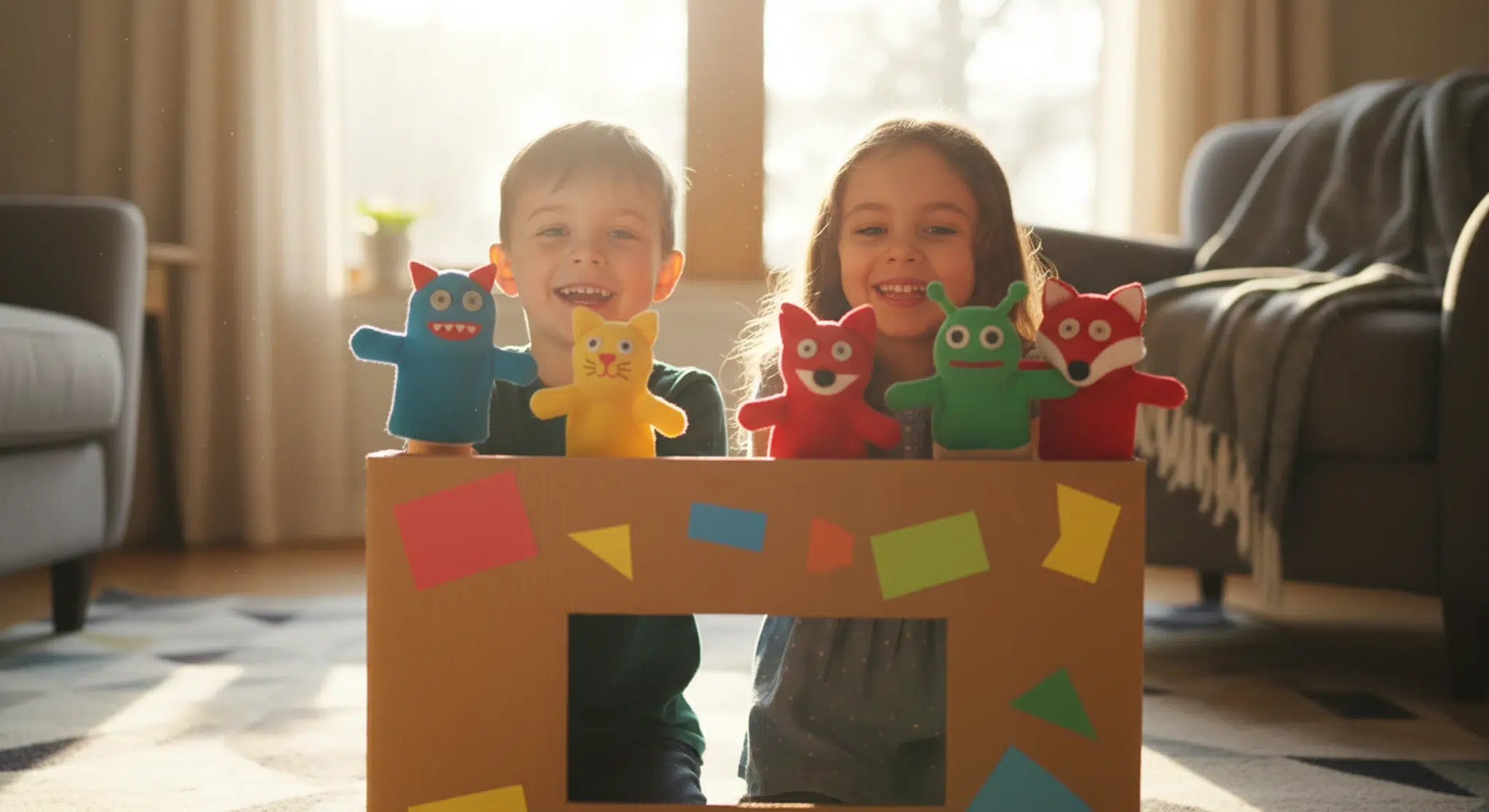
Sock puppets: a lost sock becomes a mouth-moving character with buttons or felt for eyes.
Paper bag puppets: the fold of a lunch bag makes a built-in moving mouth, perfect for younger kids.
Paper plate puppets: tape a craft stick to a decorated plate for a quick, sturdy face.
Craft-stick or spoon puppets: draw a face and add yarn hair for a five-minute puppet.
Finger puppets: cut the fingers from an old glove, or roll small paper tubes for tiny casts.
Cardboard-tube puppets: a paper-towel roll makes a tall, easy-to-hold character.
Keep a simple craft kit on hand with googly eyes, yarn, markers, glue, felt scraps, and pipe cleaners, and you can conjure a whole puppet cast in an afternoon. For more no-cost creative play, our roundup of indoor activities for kids has plenty of rainy-day companions.
How to Build a Puppet Theater in Minutes
The stage can be as fancy or as simple as you like, and kids rarely care about polish. The goal is just a spot for the puppeteer to hide and the puppets to pop up. Here are the easiest theaters, from thirty-second to weekend-project.
Doorway curtain: hang a sheet or towel across a doorway with a tension rod, and the puppeteers crouch behind it.
Table drape: throw a blanket over a table and have kids kneel behind it, puppets peeking over the top.
Cardboard box stage: cut a window in a large box, decorate it, and set it on a table.
Sofa back: the simplest of all, kids duck behind the couch and raise their puppets over the cushions.
Shoebox theater: for tiny finger-puppet shows, cut a stage opening in a shoebox and add a paper backdrop.
Add a shoebox spotlight with a small flashlight, tape up a colorful backdrop, and make simple paper tickets to hand out. Suddenly a corner of the living room is a real theater, and the anticipation alone will keep kids busy for an hour.
Simple Puppet Show Ideas and Story Prompts
The hardest part for many kids is deciding what the show is about, so it helps to offer a few starting points. You can retell a story everyone knows, act out a familiar routine, or invent something brand new together. Keep first shows short, just a few minutes, so the win feels easy.
Retell a fairy tale like The Three Little Pigs, Goldilocks, or Little Red Riding Hood.
Act out a favorite picture book, with each puppet playing a character.
Stage an everyday adventure: a trip to the park, a lost puppy who finds home, a birthday surprise.
Put on a silly talk show where puppets interview each other with goofy questions.
Create a mystery: a missing cookie and two puppet detectives who crack the case.
Make a musical by adding a familiar song and letting the puppets dance.
Older kids keep you busy by day, little ones keep you up at night.
If a younger sibling is still fighting sleep, our free two-minute quiz builds a personalized plan.
For younger children, skip the script entirely and let the story flow through free play. For older kids, encourage them to jot a few lines, plan a beginning, middle, and end, and rehearse once before the big performance. Both approaches are correct, because the point is the play, not a perfect production.
Puppet Shows by Age
Age
What Works Best
Try This
2 to 3
Watching and simple hand puppets
You perform a short show; let them make one puppet talk and wave.
4 to 5
Paper bag and sock puppets, free play
Retell a favorite story together with no script.
6 to 8
Building a theater, planning a short show
Let them write a few lines and perform for the family.
9 and up
Full productions with props and music
Encourage a written script, tickets, and a rehearsed performance.
A quick guide to matching puppet play to your child’s stage, adjusted to their interest and readiness.
As with any activity, follow your child’s lead. A four-year-old obsessed with dinosaurs may happily run a ten-minute show, while an older child might prefer to keep it loose and improvised. Let the enthusiasm set the length.
Tips for a Show-Stopping Performance
Give each puppet a distinct voice, even a simple high or low one, to help kids stay in character.
Keep the first show under five minutes so finishing feels like a triumph.
Assign roles for group shows: director, puppeteers, narrator, and ticket-taker.
Add sound effects and a familiar song to bring the story to life.
Applaud loudly and ask questions afterward, since the encore is where confidence grows.
Take a photo or short video so your performer can watch their own show later.
Most of all, resist the urge to correct or direct too much. A wobbly, improvised, slightly chaotic puppet show is exactly what it should be. Your job is to be the delighted audience, and your applause is the best prop in the house.
Making Puppet Play Part of the Routine
Puppets are wonderful for more than a one-off show. Many families keep a puppet on hand as a gentle helper for everyday moments, since a friendly character can coax a reluctant toddler through cleanup, calm a nervous child before a doctor visit, or make a hard conversation feel safe. Early-childhood educators use puppets for exactly these reasons, because children often open up to a puppet more easily than to an adult.
A short puppet story can also become a soothing part of winding down, especially for a child who resists a straight bedtime. If evenings tend to get bumpy, a calm, predictable routine helps, and a five-minute puppet tale can be a lovely bridge into bedtime stories and a settled night. Keep the pre-sleep version quiet and cozy rather than high-energy, so it signals rest rather than more play.
Frequently Asked Questions
How do you make a simple puppet show for kids?
Start with three easy pieces: a puppet, a stage, and a story. Make a quick puppet from a sock, a paper bag, or a decorated paper plate on a stick. Create a stage by hanging a sheet across a doorway or draping a blanket over a table so the puppeteer can hide behind it. Then pick a short, familiar story to act out, like The Three Little Pigs, and keep the first show to just a few minutes. The setup can take as little as ten minutes, and the play can last all afternoon.
What are good puppet show ideas for young children?
For younger kids, keep it simple and skip the script. Retell a favorite fairy tale or picture book, act out an everyday adventure like a trip to the park, or stage a silly talk show where puppets interview each other. Toddlers and preschoolers do best with free play, letting the story wander wherever their imagination goes. Older children enjoy planning a short show with a clear beginning, middle, and end, and even writing a few lines to rehearse.
How do you make an easy puppet at home?
The easiest puppets use things you already have. Slide a sock onto your hand and add felt or button eyes for an instant mouth-moving puppet. A paper lunch bag has a built-in moving mouth in its fold, and a paper plate taped to a craft stick makes a quick face on a handle. Finger puppets can be cut from an old glove or rolled from small paper tubes. Set out googly eyes, yarn, and markers, and children can create a whole cast in an afternoon.
What can I use as a puppet theater?
Almost anything that lets the puppeteer hide while the puppets pop up. Hang a sheet or towel across a doorway with a tension rod, drape a blanket over a table and kneel behind it, or simply duck behind the back of the sofa and raise the puppets over the cushions. For a sturdier stage, cut a window in a large cardboard box and decorate it. Add a paper backdrop, a small flashlight spotlight, and homemade tickets to make it feel like a real theater.
What age is a puppet show good for?
Puppet shows work from toddlerhood all the way up. Around ages two to three, children love watching a short show and making a puppet wave and talk. From four to five, they enjoy free-play stories with sock and paper-bag puppets. From six to eight, they can help build a theater and plan a short performance, and by nine and up, kids can write a script, add props and music, and stage a full production. Follow your child’s interest and let their enthusiasm set the length.
Fun for them, rest for you.
Betteroo helps the whole family sleep better. Take the free two-minute quiz for a plan tailored to your child.