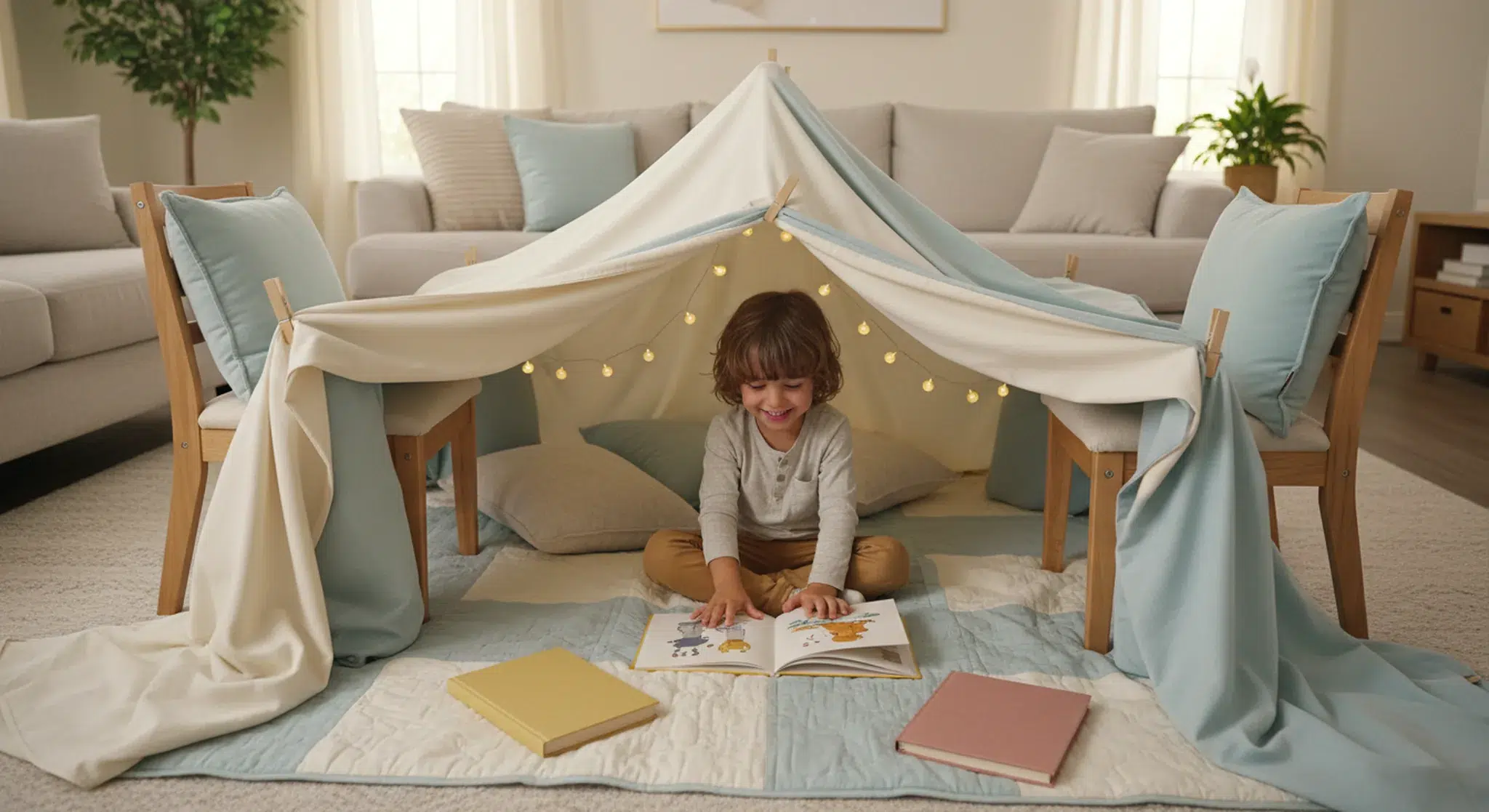
The best fort ideas use what you already own: chairs, a couch, or a table for the frame, light sheets for the roof, and clothespins or binder clips to hold it all together.
A fort turns a rainy afternoon into an event. It costs nothing, it works for a 2 year old and a 12 year old, and building it is half the fun.
Here are 35 fort ideas for indoors and outdoors, a step by step basic blanket fort, a supplies table, the tricks that keep a roof from sagging, and the safety rules to know before the first sheet goes up.
Key Takeaways
A basic blanket fort needs four chairs, a light flat sheet, and clothespins or binder clips.
Put the lightest fabric on top and heavy blankets on the floor.
No chairs? Use a table, the couch, a drying rack, or a tension rod in a doorway.
Use battery lights, never candles, and keep fabric away from heaters and lamps.
Babies under 12 months should not sleep in a fort, and toddlers need supervision.
Table of Contents
How to Build a Basic Blanket Fort
Quick Answer
The simplest of all fort ideas: set four chairs back to back about a sheet’s width apart, drape a light flat sheet over the top, and pin it with clothespins or binder clips.
Step 1: Pick the spot: a corner gives you two free walls. Move anything breakable.
Step 2: Set the frame: arrange four sturdy chairs in a rectangle with the backs facing in, or use the couch plus two chairs.
Step 3: Add the roof: drape your lightest flat sheet over the frame and pull it gently taut.
Step 4: Anchor it: clip the sheet to each chair back, and tuck loose edges under chair legs or couch cushions.
Step 5: Hang the walls: clip a second sheet to the sides, and leave one side open as the door.
Step 6: Make it cozy: lay a quilt on the floor, add pillows, and switch on battery lights.
Fort Supplies: What You Need and What to Use Instead
Item
What it is for
What to use instead
Flat bed sheets
A light roof
Thin tablecloths, large scarves
Sturdy chairs
The frame
A table, the couch back, a drying rack
Clothespins
Clipping fabric to the frame
Binder clips, chip clips, hair clips
Quilts and pillows
Floor, seats, and soft walls
Sleeping bags, couch cushions, towels
String or clothesline
A ridge line
A tension rod, a jump rope
Battery lights
Light without heat
Flashlights, a battery lantern, glow sticks
Fort building supplies and easy household substitutes.
Indoor Fort Ideas
1. Classic chair fort: four chairs, one sheet, endless variations.
2. Fitted sheet dome: stretch a fitted sheet over four chair backs. The elastic corners grip on their own.
3. Couch cushion fort: stand the cushions on edge as walls and lay a sheet across the top.
4. Couch lean-to: pull the couch out from the wall and run a sheet from the couch back to the floor.
5. Pillow fort: stack pillows into low walls. Great for toddlers: nothing is overhead.
6. Table fort: throw a large sheet over the dining table. It never collapses.
7. Coffee table hideout: the toddler-size table fort.
8. Bottom bunk fort: tuck a sheet under the top bunk mattress so it hangs like a curtain.
9. Bed canopy: tie a line from the headboard to a chair at the foot of the bed and drape a sheet over it.
10. Doorway fort: put a tension rod in a doorway at kid height and hang a sheet from it.
11. Hallway tunnel: stretch sheets down a hallway between two tension rods or two rows of chairs.
12. Indoor clothesline tent: tie a line between two sturdy points, drape a sheet over it, and weigh the edges down with books.
13. Drying rack A-frame: an open clothes drying rack plus a sheet makes a fort with no chairs at all.
14. Umbrella fort: open two or three umbrellas on the floor and cover them with a sheet.
15. Corner fort: clip a sheet between two pieces of furniture across a corner, so the walls do half the work.
16. Big box fort: one appliance box, a cut-out door and window, and a pack of crayons.
17. Box tunnel maze: tape several open boxes end to end and crawl through.
18. Play couch fort: foam play couch pieces stack into walls and a roof that are soft if they fall.
33. Art studio: paper taped inside a cardboard fort, with washable crayons.
34. Secret clubhouse: a password, a handmade sign, and a members-only snack.
35. Ice cave: white sheets, cool-white battery lights, and paper snowflakes.
Fort Engineering Tips That Actually Work
Lightest fabric on top: heavy blankets sag and pull the frame over. Save quilts for the floor.
Clip, do not just drape: clothespins and binder clips hold far better than gravity.
Anchor low: pin edges under chair legs, tuck them into couch cushions, or weigh them down with books on the floor, never on a shelf overhead.
Use tension: pull the sheet gently taut between anchors. A slack roof droops.
Add a ridge line: a string or tension rod under the middle of the sheet makes a peaked roof with headroom.
Build wide, not tall: low, wide forts survive excited kids.
The Best Forts by Age
Toddlers (about 2 to 3): keep it low and open: a table fort or pillow fort. You build, they move in. Stay close.
Ages 4 to 7: chair, couch, and box forts. Let them direct the design while you handle the clips.
Ages 8 to 12: hand over the supplies and step back. Multi-room forts and sleepovers are fair game.
Fort Safety Rules
No flames or heaters: use battery lights, never real candles. The U.S. Fire Administration says to keep anything that can burn at least 3 feet from heat sources such as space heaters and candles. Keep fabric away from lamps and outlets too.
Check the lights: pick cool-running LED lights, keep cords and strings out of reach of young children, and take lines down after play. The Consumer Product Safety Commission (CPSC) warns that a swallowed button battery can burn through a child’s throat in as little as two hours, so any battery compartment should screw shut.
Nothing heavy overhead: no stacked chairs, and no heavy books holding the roof down from above.
Skip unstable furniture: do not tie sheets to TVs, lamps, shelves, or curtain rods. The CPSC’s Anchor It campaign says to anchor furniture with drawers, doors, or shelves to the wall, and kids should not climb it.
Keep the air moving: leave a door open and never seal a fort with plastic sheeting or bags.
Babies do not sleep in forts: the American Academy of Pediatrics (AAP) recommends that babies under 12 months sleep on their back on a firm, flat surface with no pillows or blankets. If a baby dozes off, move them to their crib. See our guide to a safe sleep environment.
Supervise toddlers: and keep small parts out of their forts.
Snow forts: Montreal Children’s Hospital’s trauma team warns that snow forts and tunnels can collapse and trap children. Build walls only, supervise, and stay well clear of roads, snowbanks, and snowplows.
Fort sleepovers are fine for older kids: switch off anything plugged in and leave the door open.
For cleanup, agree before you build on how long the fort can stay up. Then make takedown a game: race a timer, give each child one job, and keep the clips and lights in a “fort kit” bag for next time.
Why Fort Building Is Good for Kids
A fort is play in its purest form: kids plan it, build it, argue about it, fix it, and then invent a world inside it. The AAP’s 2018 clinical report, The Power of Play, describes play as brain building and a key to executive function skills. It also says play helps children learn language, math, and social skills, lowers stress, and builds the bond between parent and child.
The report does not study forts specifically, but planning a build, negotiating who gets which room, and trying again after a collapse fit that description well.
You do not need a kit or a plan to make a great fort. Keep the roof light, the lights battery powered, and the furniture steady, then let the kids take over.
Frequently Asked Questions
What are some easy fort ideas for kids?
The easiest fort ideas use furniture you already have. Throw a sheet over the dining table, stand couch cushions on edge with a sheet on top, or set four chairs back to back and clip a light sheet across them.
How do you make a blanket fort without chairs?
Use a table, the back of the couch, a bunk bed, or an open clothes drying rack as the frame. You can also put a tension rod in a doorway, or tie a line between two sturdy points and drape a sheet over it.
How do you keep a blanket fort from falling down?
Use light sheets for the roof instead of heavy blankets, and clip the fabric to the frame with clothespins or binder clips. Pull the sheet taut, tuck the edges under chair legs or couch cushions, and build low and wide.
What do you put inside a fort?
Start with a soft floor made from a quilt or sleeping bags, then add pillows, battery fairy lights or flashlights, books, and a few stuffed animals. Card games, riddles, and a simple snack turn a fort into a place kids will happily stay.
Can kids sleep in a blanket fort?
Older kids can, and a fort sleepover is a great weekend treat. Turn off anything plugged in, use only battery lights, and leave a door open for airflow. Babies under 12 months should never sleep in a fort among pillows and blankets.
Why is building forts good for kids?
Fort building is open-ended play that asks kids to plan, cooperate, and solve problems. The American Academy of Pediatrics describes play as brain building and a key to executive function skills, and says it helps children learn language, math, and social skills.
Gentle changes, peaceful nights.
Betteroo builds a personalized sleep plan for your baby or toddler. Take the free two-minute quiz to get started.