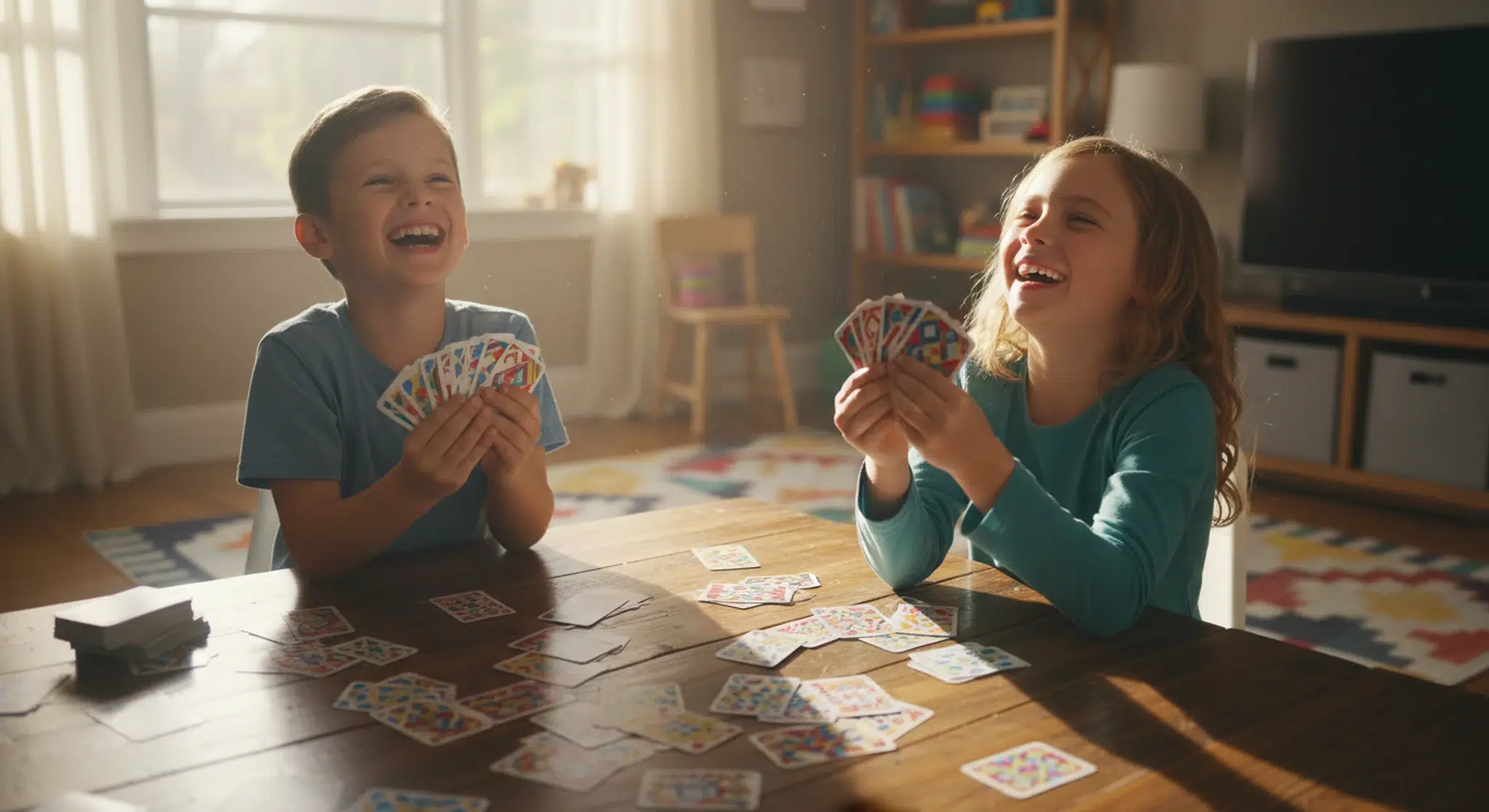
A single deck of cards can entertain a preschooler and a preteen alike. The best card games for kids build counting, memory, turn-taking, and good sportsmanship, and most need nothing more than a standard 52-card deck.
Card games are the ultimate screen-free family entertainment: cheap, portable, endlessly replayable, and packed with quiet learning. Whether you are filling ten minutes at a restaurant, surviving a rainy afternoon, or building a weekly game-night tradition, the right card game keeps kids happily engaged while sharpening real skills.
This guide rounds up the best card games for kids by age, from gentle matching games for preschoolers to fast-paced strategy games for older children. We will also highlight games that sneak in math and memory practice, and share simple tips for teaching new rules so the first game goes smoothly.
Key Takeaways
Most classic card games need only a standard 52-card deck and grow in complexity as kids age.
Ages 3 to 5 do best with matching games like Go Fish, Snap, Old Maid, and Memory.
Ages 6 to 8 are ready for Crazy Eights, Uno, Slapjack, Spoons, and beginner Rummy.
Ages 9 and up enjoy strategy and speed games like Hearts, Speed, and President.
Card games quietly build math, memory, turn-taking, and how to win and lose gracefully.
Table of Contents
Why Card Games Are Great for Kids
A simple deck of cards is one of the best value toys you will ever own. Card games quietly build a stack of skills while children think they are just having fun: counting and number recognition, matching and memory, taking turns, coping with winning and losing, and reading faces for a bluff. They are portable, screen-free, and endlessly replayable, which makes them perfect for restaurants, road trips, waiting rooms, and rainy afternoons.
Best of all, most classic card games scale with your child. The same deck that teaches a four-year-old to match suits will run a fast-paced strategy game for a ten-year-old a few years later. Start with the gentle games below and add complexity as your child grows. For more indoor fun, pair cards with our party games for kids and rainy-day activities.
Best Card Games for Ages 3 to 5
Preschoolers are ready for short games with simple, visual rules and lots of turns. Keep rounds quick, expect help with holding the cards, and celebrate participation over winning. These first games build number sense and matching without any reading required.
Go Fish: ask other players for cards to collect matching pairs, a gentle intro to asking, matching, and memory
Snap: flip cards and shout snap when two match, brilliant for quick reactions and matching
Old Maid: match pairs and avoid being left holding the single card, full of giggles and suspense
Memory or Concentration: lay cards face down and flip two at a time to find pairs, a pure memory workout
War: each player flips a card and the higher one wins, a no-strategy game that teaches which numbers are bigger
With the youngest players, feel free to play with cards face up at first, or as a cooperative team, so the focus stays on learning the rules rather than the competition.
Best Card Games for Ages 6 to 8
Early elementary kids can handle a few more rules, longer games, and the beginnings of strategy. This is the sweet spot for the family classics that get requested again and again. Many of these use a standard deck, so they cost nothing extra to learn.
Crazy Eights: match the top card by number or suit and be first to empty your hand, the grandparent of Uno
Uno: play matching colors and numbers with wild action cards, a reliable crowd-pleaser
Slapjack: race to slap the pile when a jack appears, fast, loud, and full of laughs
Spoons: swap cards fast to collect four of a kind, then grab a spoon before they run out
Rummy or Gin Rummy: collect sets and runs, a first taste of planning a hand
Games like Spoons and Slapjack bring energy and silliness, while Rummy introduces gentle strategy. Mixing an active game with a thinking game keeps a game night balanced.
Best Card Games for Ages 9 and Up
Older kids are ready for real strategy, bluffing, and faster play. These games reward planning ahead and reading other players, and many are genuinely fun for adults too, which makes them ideal for family game night.
Speed: race head-to-head to shed your cards as fast as possible, pure reflex and pattern spotting
Egyptian Rat Screw: a fast slapping and sequence game that rewards attention and quick hands
Hearts: avoid winning penalty cards in this classic trick-taking game of careful strategy
President (also called Scum): shed cards in ranked combinations, a lively group game with shifting fortunes
Solitaire: a satisfying single-player game of sequencing that a child can play anywhere, anytime
At this age children can also learn to shuffle properly, deal fairly, and even teach the rules to younger siblings, which reinforces their own understanding and builds patience.
Card Games That Teach Math and Memory
If you want screen-free learning that does not feel like homework, cards deliver. Several classics are quietly packed with math practice and memory training, and you can lean into that with a few small tweaks.
War builds instant number comparison, and a variation where players add or multiply two cards turns it into arithmetic practice
Go Fish and Memory sharpen recall and concentration through repeated matching
Rummy and Gin Rummy reward pattern recognition, sorting, and planning several moves ahead
Blackjack, played for points rather than money, is excellent adding-to-a-target practice for older kids
Uno reinforces color and number matching for the youngest players
Older kids keep you busy by day, little ones keep you up at night.
If a younger sibling is still fighting sleep, our free two-minute quiz builds a personalized plan.
Most of these games need nothing more than a standard 52-card deck, and a few branded games like Uno come with their own cards. Buy a couple of cheap decks so a bent or lost card does not end a game, and consider a pack with large, easy-to-read faces for younger children. A small tin or zip bag keeps a deck ready for outings.
When teaching a new game, explain just the core rule, play a practice round with hands face up, then start for real. Keep first games short, let children win sometimes without making it obvious, and stop while everyone is still having fun. For more family fun ideas, try our indoor activities for kids and would you rather questions.
Turning Card Games Into a Family Tradition
Card games earn their keep because they grow with your family. A weekly game night gives children something to look forward to, a screen-free way to connect, and a safe place to practice winning graciously and losing without a meltdown. Those emotional skills, built one hand at a time, matter as much as the counting and strategy.
Keep a deck in the car, in your bag, and in the kitchen drawer, and you will always have a way to fill ten spare minutes or a long wait. As bedtime approaches, wind down with a calm game rather than a loud one, then move into your usual routine so the excitement does not spill into a late night.
Frequently Asked Questions
What is the best card game for young kids?
For preschoolers aged three to five, Go Fish is one of the best starting points because it teaches matching, asking, and memory with lots of turns and no reading. Snap, Old Maid, and Memory are also excellent first games. With the youngest players, try playing with cards face up or as a cooperative team at first so the focus stays on learning the rules rather than competing.
What card games can you play with a regular deck of cards?
A standard 52-card deck covers a huge range of games: Go Fish, Snap, Old Maid, War, and Memory for little ones; Crazy Eights, Slapjack, Spoons, and Rummy for early elementary kids; and Speed, Hearts, President, and Solitaire for older children. Only branded games like Uno need their own special cards, so one or two cheap decks unlock dozens of games.
What card games teach math?
War is a natural for number comparison, and a version where players add or multiply the two flipped cards turns it into arithmetic practice. Rummy and Gin Rummy reward sorting and pattern recognition, while Blackjack played for points is great adding-to-a-target practice for older kids. Go Fish and Memory build the recall and concentration that underpin math learning.
How do you teach a child a new card game?
Explain only the core rule first, then play a practice round with everyone’s hands face up so children can see how it works. Once they have the idea, start a real game, keep it short, and let them win sometimes without making it obvious. Stop while everyone is still enjoying it. Breaking the rules into small steps and modeling good sportsmanship makes learning stick.
What age can kids start playing card games?
Many children can enjoy simple matching games like Go Fish or Memory from around age three or four, especially with a grown-up helping to hold the cards. By five or six they can manage games with a few more rules, and by nine or ten they are ready for real strategy and bluffing. Choose a game that matches your child’s attention span and number skills and adjust as they grow.
Fun for them, rest for you.
Betteroo helps the whole family sleep better. Take the free two-minute quiz for a plan tailored to your child.