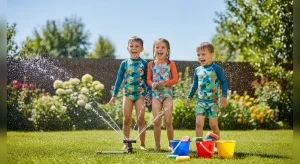
The best field day games are simple enough to explain in ten seconds and fun enough that kids beg to go again.
Whether you are organizing a school field day, running a station as a volunteer, or planning a backyard version for a birthday or a summer weekend, this list has you covered. We have gathered 40 tried and tested field day games and activities: classic races, team relays, water games for hot days, minute to win it stations, gentle options for preschoolers, and non-competitive activities for kids who would rather create than compete.
At the end you will find a simple planning template for stations, timing, and supplies, plus the safety basics that keep everyone cool and happy.
Key Takeaways
Mix races, relays, water games, and calmer stations so every child finds something they enjoy.
For young children, skip elimination and keep turns short. Everyone should succeed at least once.
Plan one more station than you have teams so there is always a water or rest stop.
Rotate every 8 to 15 minutes depending on age, with a clear signal and a posted map.
Heat is the biggest risk: shade, water every 15 to 20 minutes, and sunscreen are non-negotiable.
Offer non-running roles and non-competitive activities so every child is included.
Table of Contents
Classic Field Day Races
Every good field day has a core of races. They are cheap, easy to explain in ten seconds, and work for almost any age if you adjust the distance.
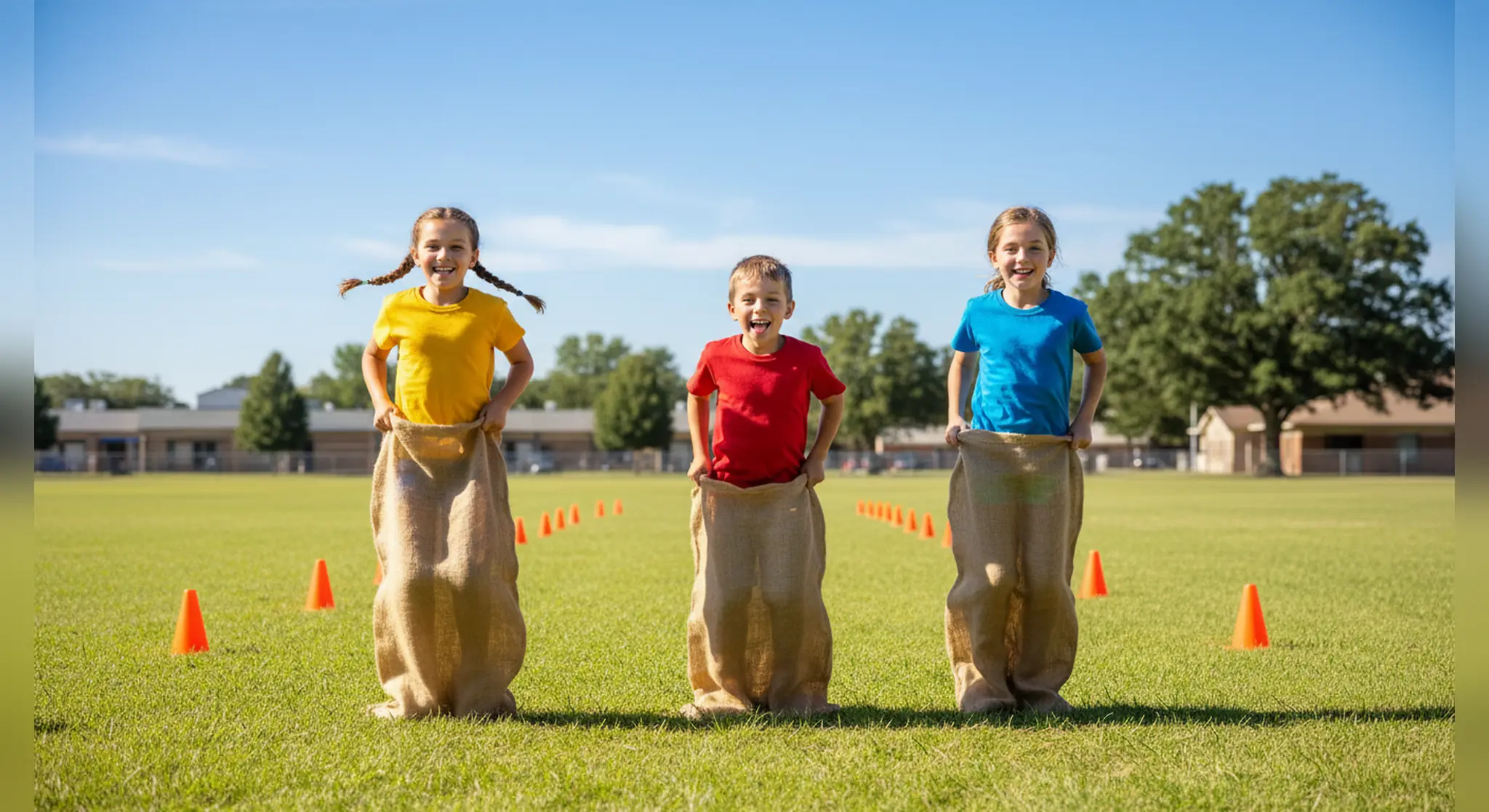
Sack race: Kids step into a pillowcase or burlap sack, hold the top, and hop to the finish. Use pillowcases for little ones; they are softer when kids tumble.
Three-legged race: Pairs tie their inside ankles together with a soft scarf or bandana and run as one. Practice a “middle leg first” count before the whistle to cut the falls in half.
Egg and spoon race: Balance an egg (or a plastic egg, a potato, or a ping pong ball) on a spoon and walk to the line. Drop it and you go back to the start.
Wheelbarrow race: One child walks on their hands while a partner holds their ankles. Best for ages 7 and up, on grass, over a short distance.
Crab walk race: Hands and feet on the ground, tummy up, racing backward or sideways. Silly, exhausting, and great for all ages.
Backward race: A regular sprint, but backward. Keep it short and on soft ground.
Leapfrog race: Teams leapfrog one another down the course. Pairs work for younger kids; lines of four or five work for older ones.
Relay Races and Team Challenges
Relays turn a race into a team game, which means every child gets a turn and slower runners are not left standing alone at the finish.
Classic baton relay: Pass a baton, a pool noodle, or a rolled-up newspaper. Four runners per team is the sweet spot.
Dress-up relay: Each runner races to a pile of oversized clothes, puts on a hat, jacket, and shoes, runs back, and tags the next person, who has to wear them next.
Hula hoop pass: Teams hold hands in a line and pass a hula hoop from one end to the other without letting go. A surprisingly good teamwork game.
Over-under relay: Teams stand in a line and pass a ball over the head of the first player, between the legs of the next, and so on to the back.
Tug of war: Use a thick rope with a flag tied in the middle, and match teams by size and number. Supervise closely and stop if anyone wraps the rope around a hand.
Human knot: Groups of eight to ten grab hands across a circle and try to untangle into a ring without letting go. No equipment, lots of giggling.
Parachute games: A play parachute or a big bedsheet: make waves, bounce balls, or call two names and have them swap places underneath. Perfect for preschoolers.
Water Field Day Games
On a hot day, water stations are the most popular part of field day by a mile. Set them up on grass, away from paths, and keep towels close. For even more ideas, see our full list of water games for kids.
Fill the bucket: Teams use sponges to carry water from a full bucket to an empty one. First to fill a line on their bucket wins.
Drip drip drop: Like duck duck goose, but the tapper carries a cup of water and dumps it on the chosen player’s head.
Water balloon toss: Pairs toss a water balloon and step back after every catch. The last pair with an unbroken balloon wins.
Leaky cup relay: Poke holes in a plastic cup, fill it, and race to empty what is left into a team bottle.
Sprinkler limbo: Limbo under a stream from a hose held by an adult. Lower it every round.
Pass the water: Kids pass a cup of water over their heads down the line and pour it into a bucket at the end.
Big days of play go better with a good night of sleep.
Got a little one at home too? Our free two-minute quiz builds a gentle, personalized sleep plan for babies and toddlers.
These quick challenges are ideal for station rotations and for older kids who like beating a clock. Set a timer for one minute at each station and let every child compete against their own score.
Cup stack: Stack 10 or 15 plastic cups into a pyramid and back down before time runs out.
Cookie face: Place a cookie on the forehead and wiggle it into the mouth without hands. Check for allergies first.
Ping pong bounce: Bounce a ping pong ball into a cup. Count how many land in one minute.
Hula hoop count: Count how many spins you can keep going in one minute.
Penny drop: Drop pennies from waist height into a cup of water.
Nose the ball: Push a cotton ball or light ball across a table using only your nose.
Field Day Games for Preschoolers
Children under five do best with short turns, simple rules, and plenty of success. Skip elimination games and anything with a complicated scoring system.
Bean bag toss: Throw bean bags into a laundry basket or through a hula hoop. Move the target closer for the littlest players.
Follow the leader obstacle course: Crawl through a tunnel, hop over a pool noodle, walk a chalk line. Adults lead.
Bubble chase: An adult blows bubbles and kids race to pop them all. Toddlers love it.
Red light, green light: A classic listening game with built-in breaks for tired legs.
Animal races: Hop like a bunny, waddle like a penguin, stomp like an elephant. Everyone wins.
Ball in the tub: Carry one ball at a time from a pile to a tub. It is a relay without the pressure.
Not every child enjoys racing, and a good field day has somewhere to go for the kids who would rather build than beat. Mix a few of these field day activities into the rotation.
A sidewalk chalk mural station where each class or family adds to one big picture.
Giant bubbles made with two sticks, string, and a tray of bubble mix.
How to Plan a Field Day: Stations, Schedule, and Supplies
The difference between a chaotic field day and a great one is almost always organization. Whether you are a teacher, a PTA volunteer, or a parent running a backyard version for a birthday or a neighborhood block party, these steps keep things moving.
Plan item
What works best
Group size
Teams of 6 to 10 kids, each with an adult or older student as a leader
Station time
8 to 10 minutes per station for younger kids, 12 to 15 for older kids
Number of stations
One more station than you have teams, so there is always a rest or water stop
Total length
90 minutes for preschool, 2 to 3 hours for elementary school
Signal
A whistle, bell, or air horn to rotate, with the order posted on a big map
Scoring
Participation ribbons or team points. Skip individual rankings for younger ages
A simple field day planning template
A basic supply list covers most of the games above: cones or markers, pillowcases, spoons and plastic eggs, hula hoops, a long rope, sponges, buckets, plastic cups, water balloons, bean bags, a parachute or bedsheet, sidewalk chalk, bubbles, a stopwatch, and a first aid kit. Label a bin for each station the day before and assign one adult per bin.
Keeping Field Day Safe (and Fun for Everyone)
Field day falls at the warmest end of the school year, so heat is the main risk. Build in shade and water breaks every 15 to 20 minutes, apply broad-spectrum sunscreen of SPF 30 or higher before starting, and reapply after water games. Watch for heat illness: a child who becomes dizzy, unusually tired, nauseated, or stops sweating needs to rest in the shade with water and an adult’s attention right away.
Run races on grass, not asphalt, and clear the course of sticks and holes.
Pair children of similar size for wheelbarrow and three-legged races.
Check food allergies before cookie face or any snack-based game.
Offer an alternative role, such as timekeeper or cheer captain, for children who cannot run or would rather not.
Give every child something to take home: a sticker, ribbon, or high five counts.
After a big day outside, expect tired kids. A calm evening, an early dinner, and an earlier bedtime help them recover, especially younger children who may skip a nap on field day.
Beyond the fun, field day gives children the kind of active, social, outdoor play that the American Academy of Pediatrics describes as essential for development. The CDC recommends at least 60 minutes of moderate to vigorous activity every day for children ages 6 to 17, and preschoolers should be active throughout the day. Team games also build turn-taking, cooperation, and the ability to lose gracefully, skills that transfer straight back to the classroom and the playground.
Frequently Asked Questions
What are good field day games for kids?
Good field day games include sack races, three-legged races, egg and spoon races, relay races, tug of war, water balloon toss, fill the bucket, bean bag toss, parachute games, and minute to win it challenges like cup stacking. Mix fast races with team games and calmer stations so every child finds a favorite.
What are fun field day activities that are not races?
Sidewalk chalk murals, giant bubbles, face painting, a photo booth, parachute games, and a shaded station with card or paper games are all popular field day activities that do not involve competing. They give kids who do not enjoy racing a way to join in and a place to cool down.
How do you organize a field day?
Divide children into teams of 6 to 10 with an adult leader, set up one more station than you have teams, rotate every 8 to 15 minutes with a clear signal, and post a station map. Prepare a labeled supply bin for each station ahead of time and build in water and shade breaks.
What field day games work for preschoolers?
Preschoolers do best with simple, non-elimination games: bean bag toss, bubble chasing, animal races, red light green light, a follow-the-leader obstacle course, and parachute games. Keep turns short, targets close, and celebrate every effort.
How long should a field day last?
About 90 minutes is plenty for preschoolers. Elementary school field days usually run two to three hours, with a water or snack break every 15 to 20 minutes and shaded rest areas throughout.
Gentle changes, peaceful nights.
Betteroo builds a personalized sleep plan for your baby or toddler. Take the free two-minute quiz to get started.