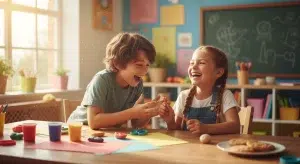
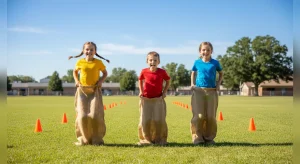
The best after school activities for kids combine a snack, active play and a calm activity in a predictable rhythm, helping kids reach CDC’s goal of 60 minutes of daily physical activity.
These after school activities for kids are written for parents of children ages 5 to 13: 60 ideas sorted into organized clubs and classes, screen-free activities at home, outdoor play, quiet wind-down time and free options.
You will also find activities by age, signs a schedule is too full, a sample after-school routine with homework, and what the AAP and CDC say about sleep, screens and daily activity.
Key Takeaways
A snack, active play and a calm activity in a predictable order makes afternoons smoother.
CDC recommends 60 minutes or more of moderate-to-vigorous activity daily for ages 6 to 17.
One or two organized activities plus a few unscheduled afternoons suits many families.
The AAP suggests keeping homework time, meals and the hour before bed screen-free.
Protect sleep: 9 to 12 hours for ages 6 to 12 and 8 to 10 hours for teens.
As an Amazon Associate, Betteroo earns from qualifying purchases.
Table of Contents
After School Activities for Kids: The Quick Answer
Quick Answer
The best after school activities for kids follow a simple rhythm: a snack, some active play, then something calm before homework or dinner. CDC says children and teens ages 6 to 17 need 60 minutes or more of moderate-to-vigorous physical activity every day, so an after-school hour of play does real work. Below are 60 ideas: organized clubs and classes, screen-free activities at home, outdoor play, quiet wind-down ideas and free options, plus activities by age, a sample routine and how to avoid overscheduling.
A child who sat still all day may need to run first; another may need 20 quiet minutes. Plan around how your child comes through the door.
Organized After School Activities: Sports, Arts, STEM and Clubs
Organized activities give kids a coach, peers and a skill that builds over a season. Costs vary by area, so the table shows a rough cost level, not prices; programs set their own minimum ages.
Activity
Typical starting age
What it builds
Cost level
1. Team sports (soccer, basketball, baseball, softball)
5+
Teamwork, coordination, vigorous activity
Low to medium
2. Swimming lessons or swim team
4+
Water safety skills, endurance
Medium
3. Gymnastics or tumbling
4+
Strength, balance, body awareness
Medium to high
4. Martial arts
5+
Focus, self-control, vigorous activity
Medium
5. Dance classes
4+
Rhythm, coordination, performance confidence
Medium
6. Music lessons (piano, guitar, strings, voice)
5+
Patience, practice habits, listening
Medium to high
7. School band, orchestra or choir
8+
Ensemble skills, commitment
Low
8. Art or pottery class
5+
Creativity, fine motor skills
Low to medium
9. Drama or theater club
7+
Public speaking, memory, cooperation
Low to medium
10. STEM, robotics or coding club
7+
Problem solving, persistence, teamwork
Medium to high
11. Chess club
6+
Planning, focus, handling losses
Low
12. Scouting-style youth groups
5+
Outdoor skills, service, leadership
Low to medium
13. Language class or heritage language school
5+
A second language, cultural connection
Low to medium
14. Cooking class
8+
Kitchen skills, measuring, independence
Medium
15. Running, cycling or hiking club
8+
Endurance, time outdoors
Low
16. Library clubs (reading, writing, maker or game clubs)
5+
Reading habits, friendships
Low (often free)
Organized after school activities for kids, with typical starting ages and rough cost levels.
Start with one active option and, if your child wants it, one creative one. CDC lists martial arts, soccer, basketball, swimming and tennis as vigorous-intensity activities, so a sport or movement class covers much of the daily activity goal on practice days.
Screen-Free After School Activities at Home
Keep a small bin of paper, tape, markers and cards so kids can start without asking.
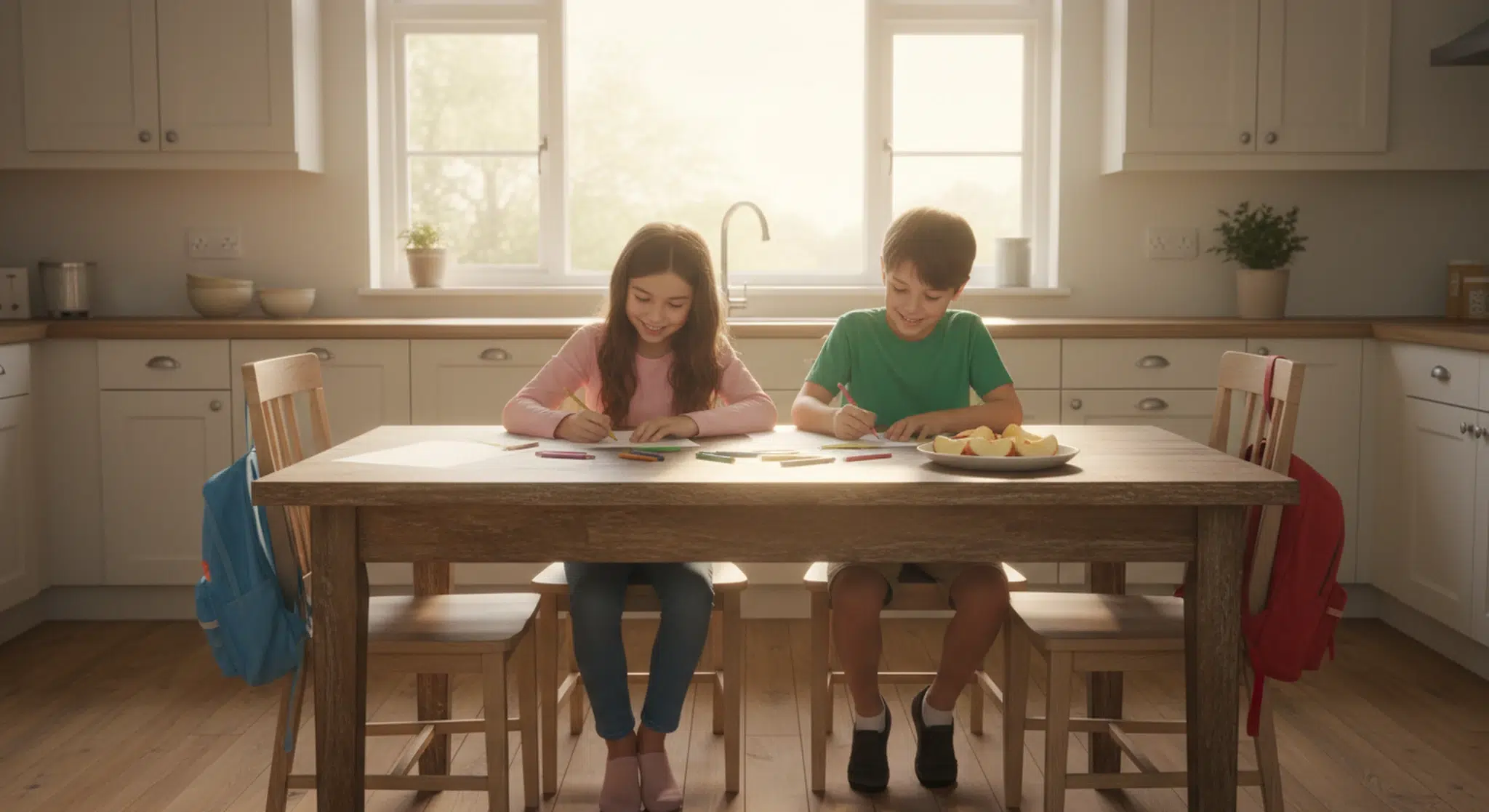
17. Snack and talk: fruit or crackers at the table and one easy question before anything else.
18. Dance party: three songs, full volume. CDC counts vigorous dancing as vigorous activity.
19. Kitchen helper: washing vegetables or setting the table. Our chores for kids by age guide shows what fits each age.
20. Card game round: quick games while dinner cooks, from our card games for kids list.
CDC’s guidance for ages 6 to 17 asks that, as part of the daily 60 minutes, kids get vigorous activity, muscle-strengthening activity and bone-strengthening activity (such as running and jumping) on at least 3 days a week. Ordinary play covers all three.
32. Playground stop on the way home: CDC counts playground climbing as muscle-strengthening.
33. Bike or scooter ride: with a helmet, and an adult nearby for younger kids.
34. Jump rope: CDC counts it as vigorous and bone-strengthening.
35. Sidewalk chalk games: hopscotch or a chalk maze on the driveway.
36. Tag and chasing games: freeze tag or red light green light. More in outdoor games for kids guide.
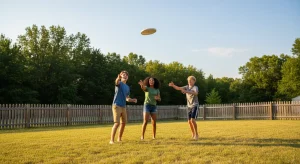
37. Backyard lawn games: bocce or ladder toss; see backyard games for rules.
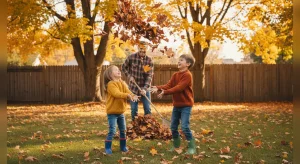
38. Nature scavenger hunt: something red, something smooth, three kinds of leaves.
39. Gardening: water, weed or plant seeds and track them.
40. Walk the dog or a neighborhood loop: CDC counts brisk walking as moderate activity.
41. Shoot hoops or kick a ball: a few minutes of practice in the driveway.
42. Tug of war: CDC names it as muscle-strengthening.
43. Bubble chase or water play: a sprinkler or bubble wand on warm days.
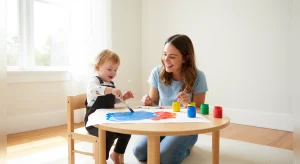
44. Outdoor art: leaf rubbings or rock painting.
Big days go better with a good night of sleep.
Got a little one at home too? Our free two-minute quiz builds a gentle, personalized sleep plan for babies and toddlers.
For kids who come home drained. These also work before bed.
45. Reading time: library books, comics or a parent reading aloud.
46. Audiobook and drawing: listen while coloring.
47. Journaling: a sentence or sketch about the day.
48. LEGO-style free building: no instructions, no goal.
49. Stretching or kids yoga: CDC counts some yoga as muscle-strengthening.
50. Calm sensory bin or play dough: for younger kids who come home wound up.
51. Origami or paper crafts: at the kitchen table.
52. Listening to music: their own playlist.
53. Brain teasers and riddles: one at snack time.
54. Sorting a collection: rocks, cards or shells sorted and labeled.
After School Activities by Age
Use this as a starting point, then follow your child’s lead.
Age
Good fits
Tips
5 to 7
Swimming, dance, tumbling, beginner soccer, library story time, art class, playground time, forts and building
Keep classes short and close to home; lots of free play still matters at this age
8 to 10
Team sports, music lessons, chess, drama, scouting-style groups, coding or robotics club, cooking, magic tricks
Let them try a season before committing to more
11 to 13
School band or choir, competitive or club sports, robotics teams, theater productions, volunteering, running club, learning a language
Offer choices and some independence
After school activities by age group. Ages are general guides, not rules.
For teenagers, see our guide to activities for teens, which covers ideas for older kids at home, outdoors and with friends.
How Many After School Activities Is Too Many?
There is no magic number, but more is not always better. In its clinical report on play, the American Academy of Pediatrics (AAP) noted that many children have less time for free, child-driven play because of busier family schedules and more focus on academics and enrichment activities. The same report says organized activities can support healthy development, and that a loss of free time combined with a hurried lifestyle can be a source of stress for some children.
The AAP’s 2018 report The Power of Play describes play as brain building and a central part of healthy development, and it cautions that time spent on electronic media takes away time for real play.
Signs a schedule may be too full:
Your child is often tired, irritable or complains of stomachaches before activities.
Homework runs late and bedtime keeps slipping.
There is no unscheduled afternoon in the week for free play.
Your child says they do not want to go, week after week, to something they once enjoyed.
A practical rule: keep at least two weekday afternoons unscheduled.
Homework Rhythm and a Sample After School Routine
A predictable order (snack, move, homework, free time) cuts down on arguments. This example is for a child home by 3:30 PM.
Time
What happens
Why it helps
3:30 PM
Arrive home, unpack bag, wash hands, snack and talk
Food and connection first
3:50 PM
Active play outside or a dance party (30 to 45 minutes)
Counts toward the 60 daily minutes CDC recommends
4:35 PM
Homework or reading at a set spot, screens off
AAP suggests homework time as a screen-free zone
5:15 PM
Free play or a quiet activity
Child-chosen time
5:45 PM
Help with dinner or a small chore
Builds independence
6:15 PM
Family dinner
Screen-free table
7:00 PM
Wind-down: bath, reading, prepare tomorrow’s bag
Screens off at least an hour before bed (AAP)
8:00 to 8:30 PM
Bedtime for most 6 to 10 year olds
Allows 9 to 12 hours of sleep with a typical school wake-up
A sample after school routine. This is an example schedule, not a medical recommendation; only the activity minutes and screen guidance come from CDC and AAP.
On practice days, practice replaces active play and homework moves before or after it.
Sleep and Screen Time After School
Sleep. The American Academy of Sleep Medicine recommends 9 to 12 hours of sleep per 24 hours for children ages 6 to 12, and 8 to 10 hours for teens ages 13 to 18, as summarized by CDC. The AAP supports these guidelines. Work backward from wake-up time: a 6:45 AM wake-up means asleep by 9:45 PM at the latest for 9 hours. See how much sleep kids need and how much sleep teenagers need for full charts.
Screens. The AAP suggests every family make a media plan, with screen-free zones such as the dinner table, homework time and the time before bed, and with room for outdoor play and family games so screens do not crowd out other experiences. The AAP also recommends keeping screens out of children’s bedrooms at night and turning them off at least 60 minutes before bedtime. Its free online Family Media Plan tool builds one for you.
A simple rule: screens come after homework and active play, and end before dinner.
Free and Budget-Friendly After School Ideas
These cost little or nothing:
55. Public library programs: many run free story times, clubs and maker spaces; check your branch calendar.
56. Parks and recreation classes: city and county departments often offer lower-cost seasonal classes.
57. School clubs: ask which clubs meet after the final bell.
58. Neighborhood playgroup: trade afternoons with one or two families.
59. Free family nights: museums and nature centers sometimes offer free days.
60. Volunteer together: a park cleanup or helping an elderly neighbor.
How to Choose an After School Activity Your Child Will Enjoy
Start with what they already love: A child who builds nonstop may love a robotics club.
Ask, then listen: Offer two or three options and let your child choose.
Try before you commit: Look for trial classes or short sessions first.
Check the logistics: Distance, practice times, cost and gear matter too.
Mix structure and freedom: Balance scheduled activities with free afternoons.
Expect some quitting: Finish the season, then decide together.
The best after school activities for kids are the ones that fit your child’s energy and your family’s week: a snack, some active play, a calm activity and homework in a predictable order. CDC recommends 60 minutes or more of moderate-to-vigorous activity daily for ages 6 to 17, and an afternoon of play is one of the easiest ways to get there.
Choose one or two organized activities your child is excited about, protect a few unscheduled afternoons, keep screens out of homework and bedtime, and guard sleep: 9 to 12 hours for ages 6 to 12. If your child seems constantly tired or stressed, scale back before adding more.
Frequently Asked Questions
What are good after school activities for kids?
Good after school activities for kids include team sports, swimming, dance, martial arts, music lessons, art classes, drama, coding or robotics clubs and library programs. At home, try card games, building challenges, simple science experiments, outdoor play, reading and helping with dinner. A mix of active play and calm time usually works best.
How many after school activities should a child do?
There is no set number. Many families find one or two organized activities per child works well, with at least a couple of weekday afternoons left free. If homework runs late, bedtime keeps slipping or your child often seems tired or stressed, the schedule may be too full and it is worth scaling back.
What should kids do right after school?
Most kids do best with a snack and a few minutes to talk, followed by active play outside or indoors. After moving, many children focus better on homework. Save screens for later, after homework and chores, and keep the hour before bedtime calm and screen-free so sleep is not pushed later.
How much physical activity do kids need each day?
CDC says children and teens ages 6 to 17 need 60 minutes or more of moderate-to-vigorous physical activity each day. On at least 3 days a week this should include vigorous activity, muscle-strengthening activity such as climbing, and bone-strengthening activity such as running or jumping. Children ages 3 to 5 should be active throughout the day.
Should kids do homework right after school?
It depends on the child. Some kids focus best right after a snack, while others need active play first to burn off energy from sitting all day. Try both orders for a week each and watch which leads to less arguing and better focus. Keep homework at a set spot with screens off.
What are free after school activities for kids?
Free options include public library programs such as story times, reading clubs and maker spaces, school clubs, playground time, bike rides, nature scavenger hunts, sidewalk chalk games, card games and board games at home, volunteering together and trading afternoons with neighbor families. Parks and recreation departments often offer low-cost classes.
Gentle changes, peaceful nights.
Betteroo builds a personalized sleep plan for your baby or toddler. Take the free two-minute quiz to get started.
Related reading: A filling snack makes the jump from school to activities much easier. For grab-and-go ideas kids can manage on their own, see 30 After-School Snacks Kids Can Grab Themselves.