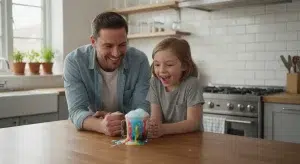
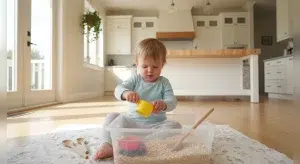
The best activities for 2 year olds are simple, hands-on games with household items, like pouring and scooping, finger painting, block towers, ball play, dress-up, picture books and small helping jobs.
Looking for activities for 2 year olds that hold attention for more than a minute? At this age children run, kick, scribble, join two words and start to pretend, so the best play is short, physical and hands-on. Cups, boxes, crayons and a ball go a long way.
Below are more than 50 ideas sorted by type, each with what you need, how to do it and the skill it builds, plus a sample weekly plan, a zero-prep list and the CDC, AAP and CPSC safety rules that matter most at this age.
Key Takeaways
Two year olds learn by doing: pouring, stacking, kicking, pretending and copying you.
Household items beat special kits. Cups, pots, boxes, crayons and a ball cover most activities.
Pick one active, one hands-on and one quiet activity a day, and protect naps.
Keep small parts, balloons and button batteries away, and stay within arm’s reach of any water.
The same activities suit every 2 year old. Choose by your child’s interests.
As an Amazon Associate, Betteroo earns from qualifying purchases.
Table of Contents
Activities for 2 Year Olds at a Glance
Quick Answer
The best activities for 2 year olds are simple and hands-on: pouring and scooping, finger painting, block towers, ball play, dress-up, picture books, action songs and small jobs like carrying napkins to the table. Follow your child’s lead and keep choking hazards out of reach.
Hand control, curiosity, early math words (full, empty)
Art
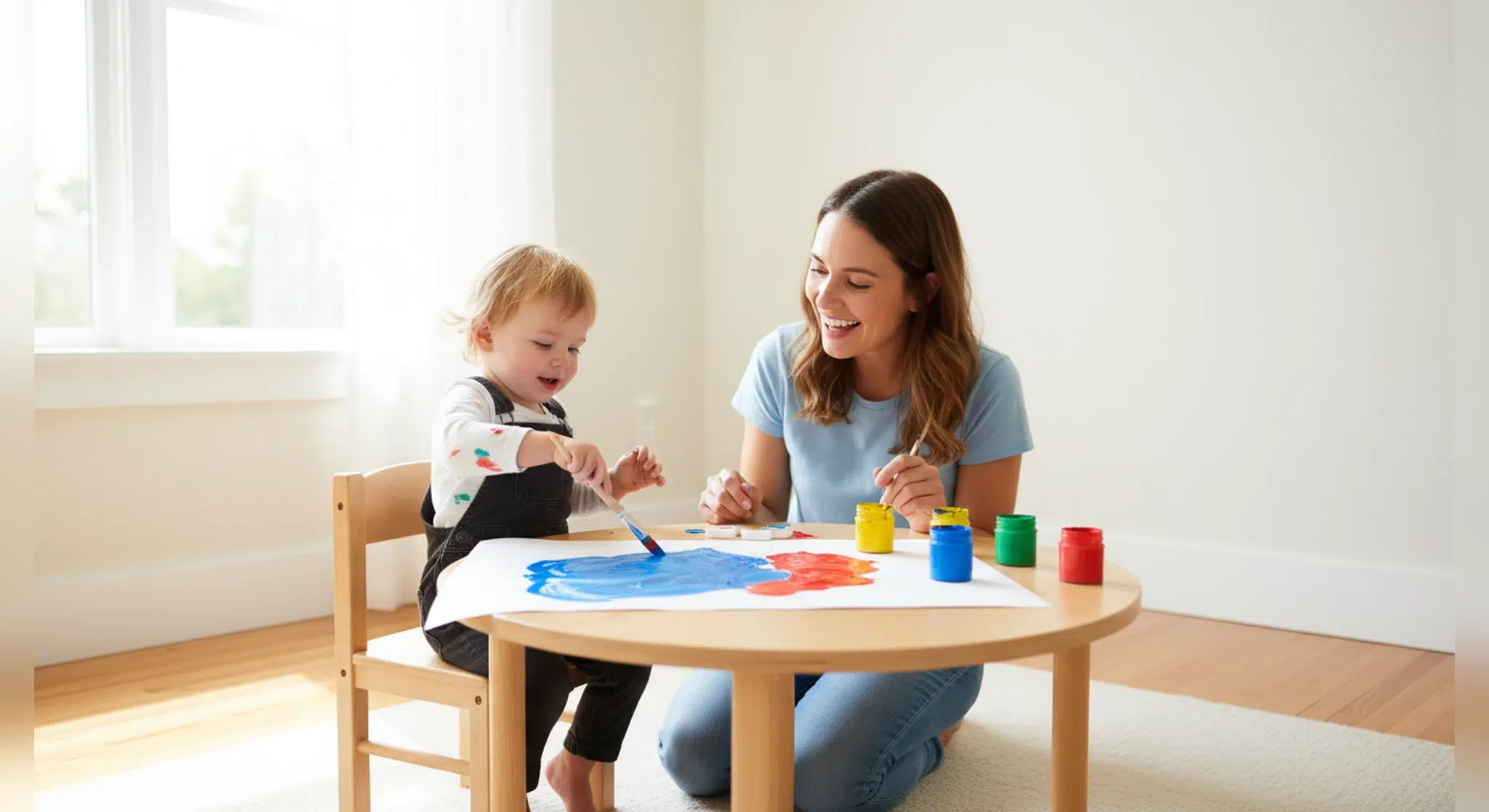
Finger paint on a big sheet of paper
Grip, hand strength, self-expression
Fine motor
Stacking blocks, peeling stickers
Hand-eye coordination, problem solving
Gross motor
Kicking, rolling and throwing a ball
Balance, coordination, energy release
Pretend play
Toy food on a toy plate, dress-up
Imagination, imitation, language
Books and music
Point-and-name books, body-part songs
Vocabulary, listening, memory
Kitchen helper
Washing vegetables, carrying cups
Independence, following directions
Quiet time
Simple puzzles, looking at books
Focus, calming down
Types of activities for 2 year olds and the skills each builds.
What 2 Year Olds Are Learning Through Play
The CDC’s “Learn the Signs. Act Early.” checklist lists things most children do by 2 years, including kicking a ball, running, walking up a few stairs, eating with a spoon, saying at least two words together (“more milk”), pointing to things in a book when asked, and playing with more than one toy at once, like putting toy food on a toy plate.
The American Academy of Pediatrics (AAP) adds that 2 year olds scribble, build towers of four blocks or more, begin to sort by shape and color, begin make-believe play, imitate adults and older children, and follow simple instructions. HealthyChildren.org describes a vocabulary of 50 or more words at two, with sentences growing toward four to six words over the year.
Good activities practice those skills. The AAP suggests “simple and safe items, like plastic cups and plates, pots and pans, books, blocks, play tools, and crayons,” plus time with water, sand and boxes, and letting your child guide the play. Expect parallel play: the CDC notes that children this age play next to each other but do not yet know how to share, so stay close at playdates. Our 2 year old milestones guide has the full list.
Scoop and pour bin: dry pasta or large pom poms, cups and spoons. Fill and dump. Builds hand control and words like full and empty.
Dishpan water play: an inch of water, cups, a funnel, a sponge. Squeeze and pour. Builds grip. Stay within arm’s reach and empty it after.
Sand or tub digging: the CDC suggests sand toys, containers, spoons or a funnel in the tub or sandbox. Bury a toy and dig it out. Builds problem solving.
Foam on a tray: a baking tray and a little shaving cream. Draw lines with a finger. Builds pre-writing motions. Skip it if hands still go in the mouth.
Texture walk: a towel, foil and a rubber mat on the floor. Walk barefoot and name each: soft, crinkly, bumpy. Builds describing words.
Ice cube rescue: a toy frozen in a cup of water, warm water, a spoon. Pour to free it. Builds patience.
Sound shakers: two plastic bottles, lids taped shut, one with large pasta, one with water. Shake and compare. Builds listening.
Art and Fine Motor Activities
The CDC suggests simple art together, like spreading finger paint and making dots. These ideas build the hand strength your child will later use for pencils and buttons.
Finger painting:washable paint, a big sheet taped down. Spread and dot. Builds hand strength and color words.
Chunky crayon scribbles: thick crayons and paper. Take turns making lines and circles. Builds grip.
Sticker peel: large stickers and paper. Lift the edge at first. Builds pincer grasp.
Block towers: the CDC suggests taking turns building towers and knocking them down. Builds coordination and turn taking.
Shape puzzles: a chunky shape, color or animal puzzle. The CDC suggests naming each piece as it goes in. Builds problem solving.
Lid matching: plastic containers with easy lids. Match and close. Builds the two-handed skill the CDC lists by age 2.
Mail slot drop: a box with a wide slot and old envelopes. Post them. Builds aim.
Color sort: two bowls, large toys in two colors. Sort together. Builds the early sorting the AAP describes.
Tape pull: painter’s tape stuck lightly on a tray. Peel it off. Builds finger strength.
Play dough: dough, a rolling pin, cookie cutters. Roll, poke and cut. Builds hand strength. Keep it out of mouths.
Big days go better with a good night of sleep.
Got a little one at home too? Our free two-minute quiz builds a gentle, personalized sleep plan for babies and toddlers.
Gross Motor and Outdoor Activities for 2 Year Olds
Give that running and climbing a daily outlet. The CDC suggests balls to kick, roll and throw, plus trips to the park, walks or a bus ride.
Ball games: a soft ball. Roll, kick to a wall, toss into a laundry basket. Builds coordination.
Ready, set, go: the CDC suggests pulling a swing back, saying “Ready, set…” and waiting for your child to say “Go.” Builds anticipation and words.
Cushion path: couch cushions on the floor. Walk, crawl and hop across. Builds balance.
Animal moves: stomp like an elephant, hop like a bunny. Builds body control.
Follow the leader: march, tiptoe, freeze. Builds listening and imitation.
Bubble chase: bubbles to pop with claps or stomps. Builds tracking and jumping.
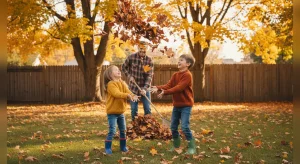
Nature walk: a bucket for leaves and sticks (skip pebbles if your child mouths things). Builds observation.
Sidewalk chalk: thick chalk. Draw roads for toy cars or circles to jump into. Builds whole-arm movement.
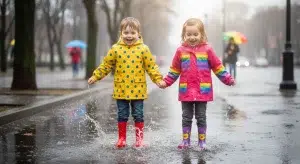
Puddle stomp: rain boots and a shallow puddle, with you right there. Builds jumping.
Pretend Play, Language, Books and Music
The AAP lists make-believe and copying adults as hallmarks of age two, and the CDC suggests dress-up with grown-up shoes, hats and shirts.
Dress-up basket: old hats, shoes and scarves. Play doctor or chef. Builds imagination.
Tea party: plastic cups, plates, play food. Serve each other and name foods. Builds the multi-toy play the CDC describes.
Feed the animals: a stuffed animal and a spoon. Feed it and put it “to bed.” Builds empathy.
Box car: a big box and a paper plate wheel. Drive to the store. Builds imagination.
Car wash: toy cars, a damp cloth, a towel. Wash and dry. Builds two-step directions.
Point-and-name books: HealthyChildren.org recommends short, activity-based books that invite pointing, naming and repeating. Ask “Where is the dog?” Builds vocabulary.
Word stretching: when your child says “nana,” the CDC suggests answering “You want more banana.” Builds sentences.
Library trip: the AAP suggests visiting places tied to your child’s interests, like the library. Builds a love of books.
Body-part songs: the CDC suggests singing, touching each body part, and pausing so your child fills in the word. Builds memory. Favorites: kids songs.
Kitchen band: pots and wooden spoons. Play loud, soft, fast, slow. Builds rhythm.
Freeze dance: dance, freeze when the music stops. Builds self-control.
Silly rhymes: HealthyChildren.org notes rhymes and silly sounds get fun later in the year. Rhyme family names. Builds sound awareness.
Kitchen Helper and Everyday Chore Activities
The CDC suggests letting your child carry plastic cups or napkins to the table, put toys or laundry in a basket, and help open a drawer or door. Praise the helping.
Set the table: cups, napkins, spoons, one at a time. Builds following directions.
Wash vegetables: a step stool at the sink with you beside, a colander. Rinse and rub. Builds hand skills.
Stir and pour: a bowl and pre-measured dry ingredients. Keep away from the stove, hot liquids and knives. Builds coordination.
Sock toss: clean socks and a basket. Toss, then match pairs. Builds matching.
Clean-up song: a bin. Sing while putting toys away. Builds routine.
For snack activities, follow the AAP: chop round, firm foods like grapes into tiny pieces, spread nut butter thinly, and skip popcorn, whole nuts, hard candy and raw carrot sticks.
Book basket: familiar books to flip through. Builds independence.
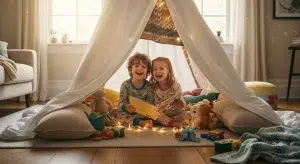
Sheet fort: chairs and a sheet for daytime play (never in a crib). Read inside. Builds calm focus.
Flashlight hunt: shine a flashlight on objects in a dim room and name them. Builds vocabulary.
Calm-down bottle: water and food coloring in a bottle, lid taped shut. Shake, watch, breathe. Builds self-calming.
Photo talk: family photos. Name each person. Builds memory.
Indoor no-prep list:
Hide a toy under one of three cups.
Walk a tape line like a balance beam.
Drop clothespins into a jug.
Push a laundry basket “train” of stuffed animals.
Play peekaboo behind a curtain.
Sort pots and lids by size.
Roll a ball down a cushion ramp.
A Simple Weekly Activity Plan for Your 2 Year Old
Pick one active, one hands-on and one quiet idea per day, built around naps and meals. The CDC notes that children this age need 11 to 14 hours of sleep a day, including naps, so protect those sleep times first (see our 2 year old sleep schedule).
Choking hazards: under the CPSC small parts rule, children’s products intended for children under 3 cannot contain small parts, measured with a test cylinder that approximates the fully expanded throat of a child under three. Homemade setups are untested, so check them yourself. The AAP lists coins, marbles, small balls, pen caps and button batteries (which can also burn internally if swallowed) as hazards, and warns balloons pose a choking risk up to age 8.
Read the age labels: the AAP advises following the age recommendations on toy packages, and CPSC requires choking hazard warnings on certain products that contain small parts, balloons, small balls or marbles.
Water: the AAP warns that young children can drown in as little as an inch or two of water, quickly and silently. Stay within arm’s length with full attention, never leave a filled open container unattended, and empty buckets, dishpans and wading pools right after play.
Screens: the CDC advises limiting screen time (TV, tablets, phones) to no more than 1 hour a day of a children’s program with an adult present. If you use shows, our best shows for toddlers list can help you choose.
The best activities for 2 year olds are ordinary ones done together: pouring, scribbling, stacking, kicking, pretending, reading and helping. Rotate favorites, keep small objects and standing water out of reach, and stop when the fun fades.
Activities for a 2 year old boy and a 2 year old girl are the same list, so pick by interest. If your child is not reaching the CDC’s age-2 milestones, or you often feel bored or anxious with your toddler (the AAP encourages talking with your pediatrician about that), bring it up at the next checkup.
Frequently Asked Questions
What are good activities for 2 year olds at home?
Good activities for 2 year olds at home include scooping dry pasta with cups, finger painting, stacking blocks, simple shape puzzles, dress-up with grown-up clothes, picture books you point at together, body-part songs, and small jobs like carrying napkins to the table. Most use things you already own.
How do I keep my 2 year old busy without screens?
Rotate simple setups through the day: an active game in the morning, painting or a scoop bin after nap, and books or songs before bed. Store toys where your child can see and reach them, join in when you can, and let your child lead. Short, repeated play is normal.
What should a 2 year old be learning?
By age 2, the CDC lists skills such as kicking a ball, running, eating with a spoon, saying at least two words together and pointing to pictures in a book. The AAP adds scribbling, building towers of four or more blocks, starting to sort by shape and color, beginning make-believe play and following simple instructions.
How much screen time is OK for a 2 year old?
The CDC advises limiting screen time, including TV, tablets and phones, to no more than 1 hour a day of a children’s program with an adult present. It notes that children this age learn by talking, playing and interacting with others, so hands-on play and conversation should fill most of the day.
What games can I play with my 2 year old?
Try ball rolling and kicking, ready set go races, follow the leader, freeze dance, hide a toy under a cup, peekaboo, bubble chasing and animal moves like stomping like an elephant. Keep the rules simple, take turns, and expect your child to want the same game many times in a row.
Are activities for a 2 year old boy different from a girl?
No. Activities for a 2 year old boy and a 2 year old girl are the same, because the skills being practiced, such as running, scribbling, talking and pretend play, are the same at this age. Choose activities by your child’s interests and energy level rather than by gender.
Gentle changes, peaceful nights.
Betteroo builds a personalized sleep plan for your baby or toddler. Take the free two-minute quiz to get started.