Sensory activities for toddlers are simple play ideas that let little kids explore through touch, sight, sound, smell, taste, and movement.
You do not need expensive kits for great sensory play. A tub of oats, a pot and a wooden spoon, or a bowl of cooked pasta can hold a toddler’s attention longer than most toys, and it builds real skills along the way.
Below you will find more than 40 easy sensory activities for toddlers organized by sense, a sensory bin guide by age and safety, movement ideas for busy kids, and the essential safety rules, including the one popular sensory material you should never use.
Key Takeaways
Sensory play builds fine motor skills, language, early science concepts, and self-regulation.
Toddlers have eight senses to feed, including balance (vestibular) and body awareness (proprioception).
For children under 3, keep materials taste-safe and too big to choke on; never use water beads.
Water play needs constant, arm’s-length supervision.
Heavy work like pushing and carrying tends to calm toddlers, which helps before naps and bedtime.
Respect your child’s preferences: offer, do not force.
Table of Contents
What Are Sensory Activities (and Why Do Toddlers Need Them)?
Sensory activities are any play that invites a child to explore with their senses: touch, sight, sound, smell, and taste, plus two senses parents often forget, the vestibular sense (balance and movement, from the inner ear) and proprioception (body awareness, from muscles and joints). When a toddler squishes play dough, splashes water, spins in a circle, or pushes a heavy laundry basket, they are gathering information their brain uses to understand the world and their own body.
That is why pediatric and early-childhood experts describe play itself as the main way young children learn. Sensory play in particular supports:
Fine motor skills: scooping, pouring, pinching, and squeezing build the hand strength later needed for crayons and spoons.
Language: it gives you natural words to name together: squishy, cold, bumpy, loud, sticky.
Early science and math: full and empty, sink and float, more and less, heavy and light.
Calm and focus: many toddlers settle noticeably with water, sand, or heavy work, which makes sensory play a great tool before naps and bedtime.
Tolerance of new textures: repeated, pressure-free exposure can help picky eaters and kids who dislike messy hands.
Sensory Activity Safety Rules for Toddlers
Toddlers explore with their mouths, so safety comes first. A few rules keep sensory play fun:
Watch for choking hazards. For children under 3, avoid anything small enough to fit through a toilet paper tube, including dried beans, beads, small pompoms, and marbles, unless you are right there and they have stopped mouthing.
Never use water beads. The U.S. Consumer Product Safety Commission has warned that swallowed water beads can expand inside a child’s body and cause dangerous blockages. They do not belong in toddler sensory bins.
Skip button batteries and small magnets in any homemade sensory toy or bottle.
Supervise water play every second. A toddler can drown in a few inches of water. Empty bins and buckets when you are done.
Use taste-safe bases for mouthers: cooked pasta, oats, yogurt, pudding, or crushed cereal.
Seal sensory bottles with strong glue or tape so lids cannot come off.
Touch: Tactile Sensory Activities
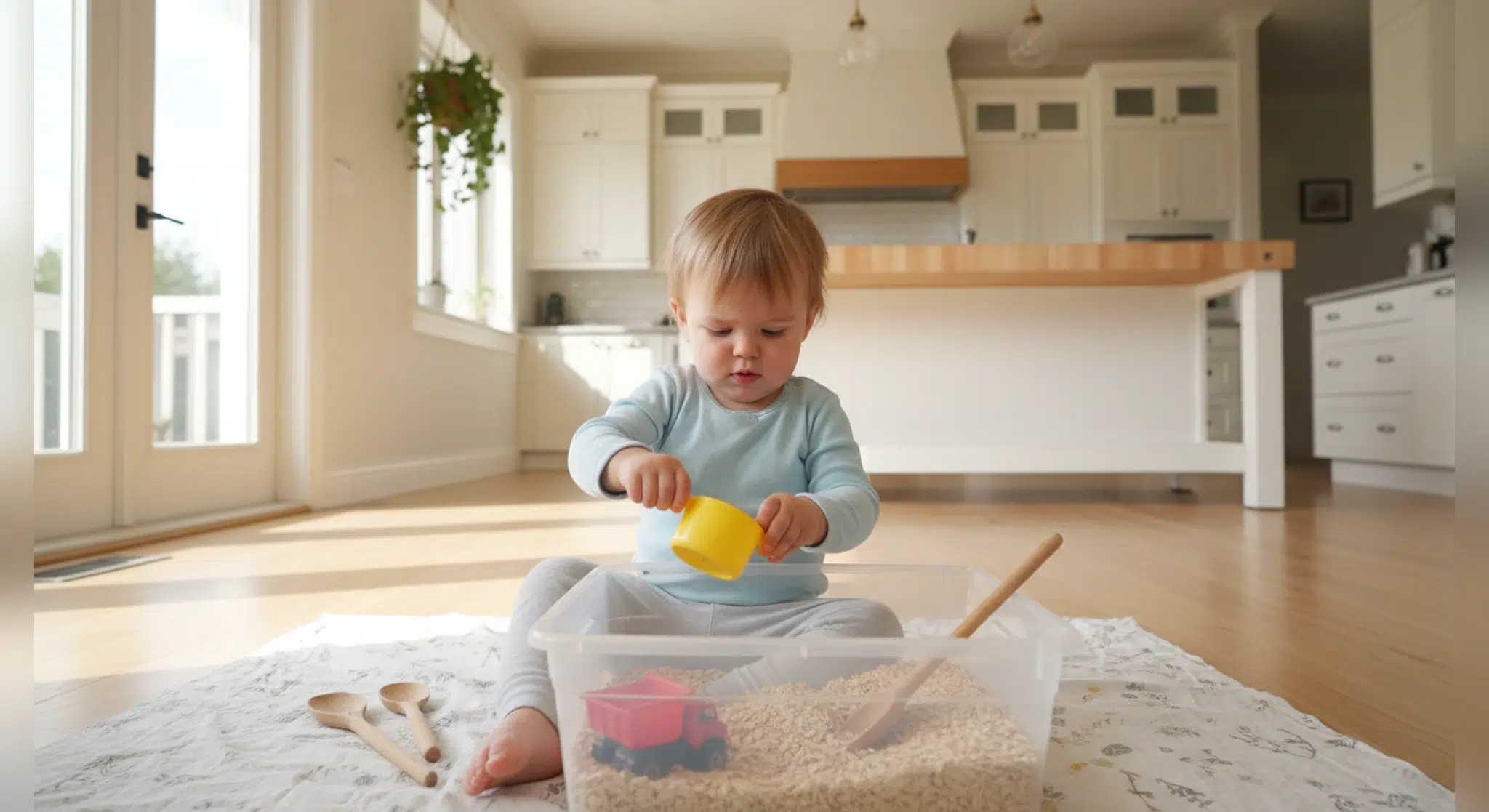
Taste-safe sensory bin: Fill a shallow tub with dry oats or crushed cereal, add scoops, cups, and a few large toys to bury and find.
Cooked pasta play: Toss cooked spaghetti with a drop of oil and a little food coloring. Slippery, stretchy, and fine if it ends up in the mouth.
Play dough: Homemade or store-bought. Add cookie cutters, a rolling pin, and chunky stamps.
Shaving cream or yogurt painting: Squirt on a high-chair tray or a baking sheet and let them draw with fingers. Use yogurt for kids who still mouth everything.
Texture board or path: Glue squares of bubble wrap, felt, sandpaper, a sponge, and corrugated cardboard to a board, or tape them to the floor as a barefoot walk.
Squish bags: Hair gel or thick paint sealed in a zip bag (double-bagged and taped to the table). Mess-free finger drawing.
Ice exploration: Freeze small toys in ice, then let your toddler melt them out with warm water and spoons.
Sensory Bins for Toddlers: Easy Ideas by Base
A sensory bin is simply a container filled with a base material and tools. Rotate one every week or two to keep it fresh.
Base
Good for
Add these
Dry oats or crushed cereal
All toddlers, including mouthers
Measuring cups, funnel, toy trucks
Water (a few inches)
12 months and up, always supervised
Cups, sponges, bath toys, a colander
Cooked pasta or rice noodles
Mouthers and messy-play lovers
Tongs, bowls, animal figures
Kinetic or play sand
Around 2 and up
Molds, shovels, shells (large)
Snow or crushed ice
Winter fun, short sessions
Mittens, scoops, food coloring
Dry rice or beans
Around 3 and up, or no longer mouthing
Tweezers, spoons, hidden treasures
Shredded paper
All ages
Big toys to hide and find
Sensory bin bases by age and safety
Put a sheet or an old shower curtain under the bin, set a timer if you need a clear end point, and let your toddler help with clean-up, which is sensory play too.
Big days of fun go better with a good night of sleep.
Got a little one at home too? Our free two-minute quiz builds a gentle, personalized sleep plan for babies and toddlers.
Sensory bottles: Fill a sturdy plastic bottle with water, a little clear glue or oil, and glitter or large sequins. Glue the lid shut. Toddlers love to shake them, and they work as a calm-down tool.
Light play: Shine a flashlight on the ceiling in a dark room, or put colored cellophane over a flashlight for rainbow circles.
Shadow puppets: Use your hands or cut-out shapes against a lamp.
Bubble chasing: Blow bubbles for them to watch, track, and pop.
Color hunts: Pick a color and find everything in the room that matches.
Sound: Auditory Sensory Activities
Kitchen band: Pots, wooden spoons, and plastic containers make an instant drum kit.
Homemade shakers: Seal rice or large pasta inside two taped-together plastic cups or a sealed bottle.
Sound walks: Stand still outside and name what you hear: birds, cars, wind, a dog.
Loud and quiet game: Sing a song loudly, then in a whisper. Great for self-regulation practice.
Music and movement: Freeze dance, marching, and songs with actions. Our lullabies list is perfect for the wind-down end.
Smell and Taste Sensory Activities
Smell jars: Put cinnamon, a lemon slice, vanilla, mint leaves, or coffee beans in small containers with holes poked in the lid. Sniff and guess.
Scented play dough: Add a pinch of cinnamon, cocoa powder, or a few drops of vanilla.
Taste test: Offer tiny, age-safe tastes of sweet (banana), sour (plain yogurt or a lemon wedge to lick), and crunchy (a puffed snack), and talk about each one.
Herb garden: Let your toddler touch and smell basil, mint, and rosemary. Watering it counts too.
If your child is a selective eater, messy food play away from mealtime is a low-pressure way to build comfort with new textures. See our toddler meal ideas for easy wins at the table.
Movement and Heavy Work: Vestibular and Proprioceptive Activities
These are the senses that often make the biggest difference for busy, crashing, or easily overwhelmed toddlers. Movement wakes the body up, and heavy work (pushing, pulling, carrying) tends to calm it down.
Swinging, rocking, and spinning (gently, and let them stop when they want).
Pushing a laundry basket full of books or toys across the floor.
Every child has their own sensory preferences. Some toddlers crave input: they crash into furniture, chew on everything, and love being squeezed and swung. Others avoid it: they hate messy hands, cover their ears at loud sounds, or melt down over sock seams. Both are often within the normal range, and your child’s preferences may shift as they grow.
Meet them where they are. Offer a paintbrush or a spoon to a child who dislikes touching goo, and let them watch before joining. Offer heavy work and crash pads to a child who seeks input. Never force a sensory experience, since pressure usually backfires.
Mention it at your next checkup if your toddler’s sensory reactions are intense enough to disrupt daily life, such as meltdowns over most clothing, eating only a handful of foods, extreme fear of everyday sounds, or seeking so much input that they are often hurt. The same goes for a toddler who seems unusually unaware of pain, or has delays in speech, play, or motor skills. Your pediatrician can screen development and refer you to an occupational therapist if needed. Sensory differences are common, and early support helps.
Frequently Asked Questions
What are sensory activities for toddlers?
Sensory activities for toddlers are play experiences that engage the senses, such as squishing play dough, splashing water, shaking a sensory bottle, smelling spices, or pushing a heavy basket. They help toddlers learn about the world and build motor, language, and self-regulation skills.
What are some examples of sensory activities?
Popular examples include oat or cereal sensory bins, cooked pasta play, yogurt finger painting, sensory bottles, kitchen band music, smell jars, texture walks, ice melts, bubble chasing, and heavy work like pushing a laundry basket or doing animal walks.
What are some activities for sensory-seeking toddlers?
Sensory seekers often do well with heavy work and movement: pushing and pulling heavy objects, pillow crash pads, animal walks, swinging, jumping on a mini trampoline with supervision, and deep-pressure play like being rolled in a blanket burrito. Chewy snacks and textured bins help too.
At what age can toddlers do sensory bins?
Toddlers can start sensory bins around 12 months with taste-safe, large materials like oats, cooked pasta, or a few inches of supervised water. Small items like dried rice and beans are better saved for age 3 and up, or once your child has stopped putting things in their mouth.
Are water beads safe for toddlers?
No. The U.S. Consumer Product Safety Commission has warned that water beads can expand inside the body if swallowed and cause serious intestinal blockages. They should not be used in toddler sensory play.
Gentle changes, peaceful nights.
Betteroo builds a personalized sleep plan for your baby or toddler. Take the free two-minute quiz to get started.
Yogman M, Garner A, Hutchinson J, et al. The Power of Play: A Pediatric Role in Enhancing Development in Young Children. Pediatrics. 2018. https://pubmed.ncbi.nlm.nih.gov/30126932/