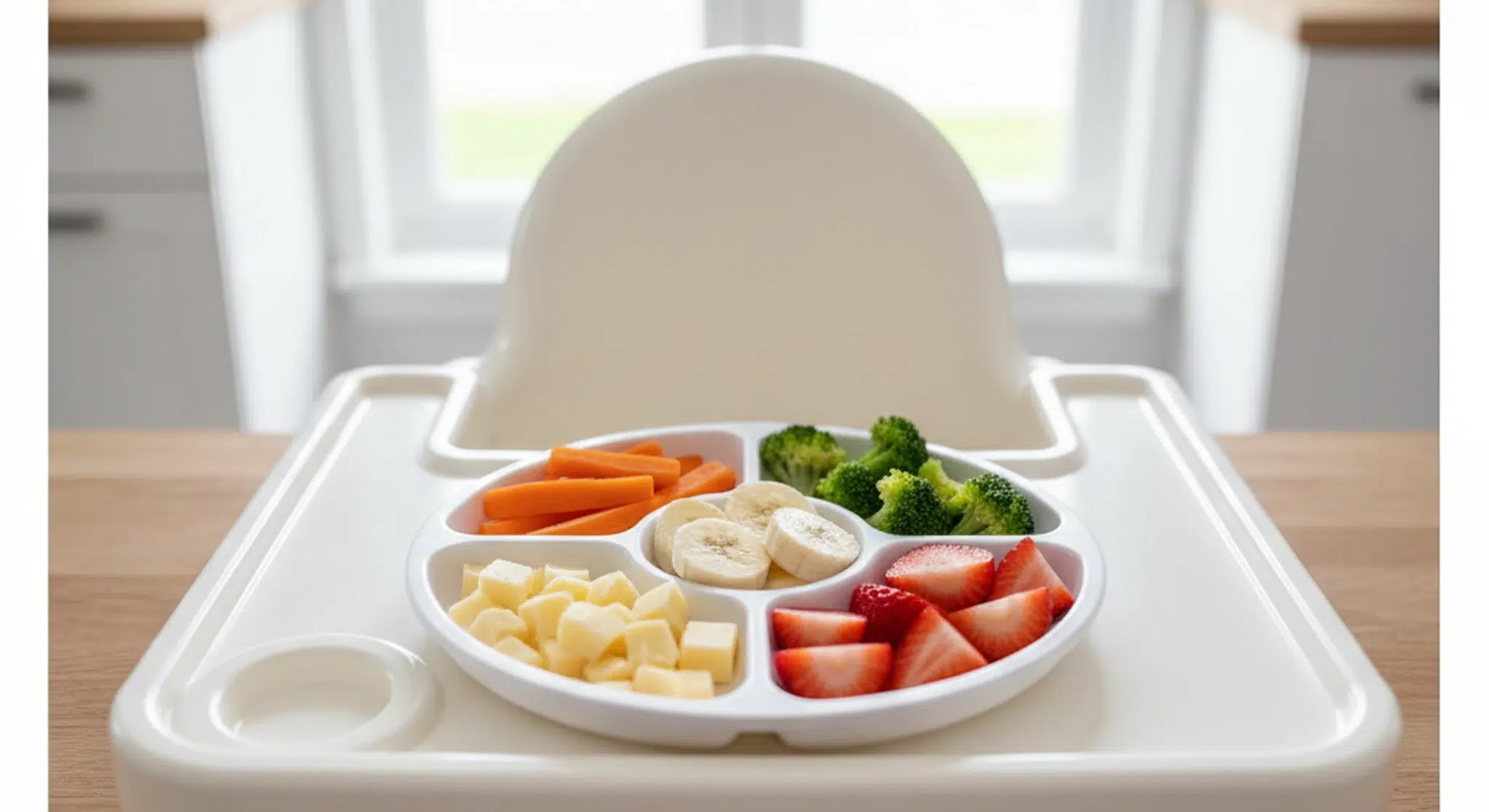


These toddler meal ideas give you a full day of easy, balanced meals and snacks for ages 1 to 3, built from a simple four-part plate formula and realistic, toddler-sized portions.
Some days your toddler devours everything on the tray, and other days a single cracker feels like a win. That swing is completely normal between ages 1 and 3, when growth slows down and appetites turn wonderfully unpredictable. The good news is that feeding a toddler well does not require fancy recipes or a short-order kitchen. It comes down to a simple, repeatable plate formula and a rotating bank of go-to ideas you can lean on when your brain is tired.
Below you will find dozens of concrete toddler meal ideas for breakfast, lunch, dinner, and snacks, plus a sample one-day menu, honest portion sizes, and gentle strategies for the pickiest little eaters. Everything here follows guidance from the American Academy of Pediatrics (AAP) and the Centers for Disease Control and Prevention (CDC),13 and every idea is prepped to be soft, small, and safe to eat.
Key Takeaways
- A balanced toddler plate has four small parts: a protein, a grain or starch, a fruit or vegetable, and a source of fat or dairy.
- A good starting portion is about one tablespoon of each food per year of age, roughly one-quarter of an adult serving. Offer more if your child is still hungry.
- Aim for three small meals plus two snacks a day, with water in a cup at meals and whole milk capped around 16 to 24 ounces so it does not crowd out food.
- Use the division of responsibility: you decide what and when, your toddler decides whether and how much. Keep offering new foods without pressure.
- Prevent choking by cutting round foods like grapes and cherry tomatoes lengthwise into quarters, slicing cheese and hot dogs into strips (never coins), and skipping whole nuts, popcorn, and hard raw chunks.
Table of Contents
What a Balanced Toddler Plate Looks Like
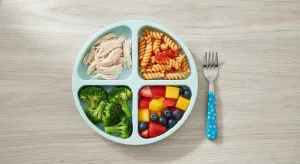
A balanced toddler plate is simpler than it sounds. At most meals, aim for four small parts: a protein (eggs, beans, shredded chicken, tofu, or yogurt), a grain or starch (bread, pasta, rice, oats, or potato), a fruit or vegetable (ideally one of each somewhere across the day), and a source of fat or dairy (cheese, whole milk, avocado, or nut butter spread thin). You do not need all four at every single meal, but hitting them across the day keeps things balanced without any counting.
Keep every portion small. The AAP notes that a toddler serving is roughly one-quarter of an adult portion, and a helpful starting rule is about one tablespoon of each food per year of age.1 So a 2-year-old might begin with two tablespoons of pasta, two of peas, and two of chicken, then get seconds of whatever they are still reaching for. You are offering, not enforcing. Plan on three small meals plus two snacks spaced through the day, offer water in an open or straw cup with meals, and cap whole milk around 16 to 24 ounces daily so it does not crowd out food or iron. For more on amounts, see our guide to how much a toddler should eat.
| Food group | Toddler starting portion |
|---|---|
| Protein (meat, fish, egg, tofu) | 1 oz meat, or 1/2 egg, or 2 tbsp ground meat |
| Beans or legumes | 2 to 3 tablespoons, cooked and soft |
| Grains | 1/4 to 1/2 slice bread, or 4 tbsp cooked pasta or rice |
| Vegetables (cooked) | 1 tablespoon per year of age |
| Fruit | 1/4 cup canned, or 1/2 piece fresh, cut small |
| Dairy | 1/2 cup milk, 1/2 oz cheese (1-inch cube), or 1/3 cup yogurt |
Easy Toddler Meal Ideas for Breakfast
Breakfast for a toddler can be as easy as reheating last night’s leftovers, but a short rotation keeps mornings from feeling repetitive. Aim for a mix of protein, produce, and a whole grain, and let warm foods and finger foods both earn a spot. Follow your toddler’s lead on how much they want, and do not worry if some mornings are bigger than others; it tends to balance out over a day or a week.
- Scrambled eggs with soft-cooked spinach and toast fingers
- Whole-milk yogurt topped with mashed berries and a sprinkle of oats
- Oatmeal stirred with mashed banana and a thin swirl of peanut butter
- Whole-grain pancake strips with unsweetened applesauce for dipping
- Cottage cheese with soft diced peaches
- Whole-grain toast with mashed avocado and a little grated cheese
- Overnight oats with grated apple and a pinch of cinnamon
- Mini omelet muffins baked with finely chopped vegetables
- Soft French toast fingers with a fruit puree to dip
- Cream of wheat or baby-friendly porridge with mashed pear
More Toddler Meal Ideas: Lunches and Snacks
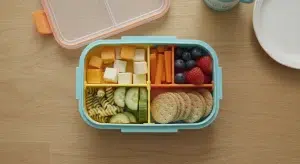
Lunch is a great place to serve a small version of a family favorite or repurpose last night’s dinner. Keep the plate colorful and the pieces soft and small. Snacks are mini-meals, not treats, so treat them like another chance to fill nutritional gaps with protein, fruit, veggies, or whole grains rather than reaching for packaged snacks by default.
- Soft cheese quesadilla triangles with mashed avocado
- Whole-grain pasta with marinara and finely shredded chicken
- Hummus with soft-steamed veggie sticks and pita strips
- Well-mashed egg or tuna salad on soft bread with the crusts trimmed
- Lentil or vegetable soup with small soft-cooked pasta
- Baked sweet potato mashed with black beans
- Soft scrambled tofu with rice and peas
Feeding a toddler feels like a full-time job
Betteroo turns your child’s age into simple, doable meal ideas and daily routines, so you spend less time guessing and more time actually at the table.
For snacks, keep a few grab-and-go options ready so a hungry, cranky toddler is never waiting long. Aim to pair two food groups when you can, like fruit plus dairy or a whole grain plus a protein.
- Ripe banana or very soft pear, sliced
- Whole-milk yogurt or a cheese stick cut lengthwise into strips
- Soft-steamed carrot or green bean sticks with hummus
- Unsweetened applesauce or a fruit puree pouch
- Whole-grain crackers with a thin layer of nut butter
- Halved blueberries or quartered strawberries
- Soft, nut-free oat energy bites
Healthy Toddler Dinner Ideas
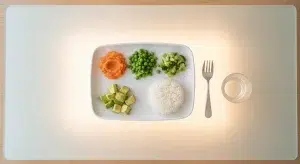
When dinnertime rolls around, the same plate formula holds: a soft protein, a starch, and a vegetable or fruit, all in toddler-sized amounts. Serving a small, deconstructed version of the family meal is usually easier than cooking separately, and it gives your toddler repeated exposure to the foods you eat. Many toddlers prefer foods not touching, so put the components on the tray a little separated at first. For a bigger rotation of evening options, browse our toddler dinner ideas.
- Baked mini meatballs (soft) with whole-grain pasta and marinara
- Flaked salmon over mashed potato and peas
- Slow-cooked shredded chicken with soft rice and steamed carrots
- Turkey and vegetable mini muffins with roasted sweet potato
- Deconstructed bean and cheese burrito bowl
- Baked cod fingers with mashed cauliflower
- Whole-grain pasta with a pureed butternut squash sauce
- Lentil dhal with soft rice
- Finely chopped tofu stir-fry with soft noodles
A Sample One-Day Toddler Menu
Seeing it all together helps. Here is a realistic one-day menu for a toddler, modeled on AAP sample menus and portion guidance.1 Treat every amount as a starting point and let your child ask for more. Remember that intake usually balances out across a week rather than a single day, so a light lunch is nothing to stress over.
| Meal | Example plate |
|---|---|
| Breakfast | Scrambled egg, 2 to 3 tbsp soft fruit, 1/2 cup whole milk |
| Morning snack | 1/3 cup yogurt with mashed berries, water in a cup |
| Lunch | Cheese quesadilla triangle, 1 to 2 tbsp steamed veggies, halved blueberries |
| Afternoon snack | Soft pear slices and a cheese strip, water |
| Dinner | Mini meatball, 4 tbsp soft pasta, 2 tbsp peas, 1/2 cup milk |
| Before bed (optional) | Small cup of whole milk |
Feeding a Picky Toddler (and Saving Time)
Picky eating peaks in the toddler years, and pressure almost always backfires. A helpful framework from feeding experts is the division of responsibility: you decide what food is offered and when, and your toddler decides whether and how much to eat.2 Your job is to keep serving a variety of foods in a calm, no-pressure way; their job is to explore at their own pace. It can take 10 or more exposures before a child accepts a new food, so keep offering rejected items alongside familiar favorites without commentary or bribery. Staying neutral, even when nothing gets eaten, keeps the pressure off and the curiosity on.
- Serve at least one familiar, accepted food at every meal so there is always something to eat
- Offer new foods next to accepted ones, and let your toddler touch, smell, and play with food without pressure
- Eat together and model tasting the same foods yourself
- Keep mealtimes short (about 20 to 30 minutes) and screen-free
- Batch-cook and freeze meatballs, pancakes, soups, and veggie muffins for fast plates later
- Pre-cut fruit and steam veggie sticks at the start of the week to save daily prep
- Prevent choking: cut round foods like grapes and cherry tomatoes lengthwise into quarters, slice cheese and hot dogs into strips (never coins), and skip whole nuts, popcorn, and hard raw chunks34
- Honey is fine for toddlers over age 1, but never give honey to a baby under 12 months because of the risk of infant botulism4
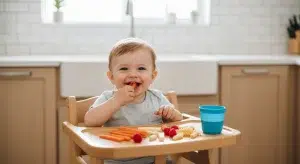
- Always seat your toddler upright and supervise every meal and snack
When to Talk to Your Pediatrician
- Your child is losing weight or not gaining as expected
- Very few accepted foods (for example, fewer than 10 to 20), or a shrinking list over time
- Gagging that tips into choking, coughing, or frequent vomiting with meals
- Signs of a food allergy such as hives, swelling, or trouble breathing
- Ongoing constipation, diarrhea, or a very limited, beige-only diet
- Mealtimes that consistently end in tears or cause daily distress
Extreme picky eating, meals that reliably end in a battle, or any worry about growth are all good reasons to check in. Your pediatrician can rule out medical causes, check iron levels, and refer you to a feeding therapist or registered dietitian if your toddler needs extra support.
Frequently Asked Questions
What should a toddler eat in a day?
Aim for three small meals and two snacks that together cover the food groups: some protein, a grain or starch, fruits and vegetables, and dairy or another fat source. A rough starting portion is about one tablespoon of each food per year of age, with whole milk capped around 16 to 24 ounces a day so it does not crowd out food. Offer water in a cup with meals and let your toddler decide how much to eat.
What are some easy toddler meal ideas?
Easy toddler meal ideas include scrambled eggs with toast fingers, yogurt with mashed berries and oats, cheese quesadilla triangles, whole-grain pasta with marinara and shredded chicken, baked mini meatballs with soft pasta, and hummus with soft-steamed veggie sticks. Serving a small version of the family dinner is often the simplest option of all.
What are healthy toddler dinners?
Healthy toddler dinners pair a soft protein with a starch and a vegetable in small amounts: baked mini meatballs with soft pasta and peas, flaked salmon over mashed potato, shredded chicken with rice and steamed carrots, or a deconstructed bean and cheese bowl. Keep pieces soft and small, and offer a familiar food alongside anything new.
How do I feed a picky toddler?
Use the division of responsibility: you choose what and when, your toddler chooses whether and how much. Keep offering rejected foods next to favorites without pressure, since it can take 10 or more tries before a child accepts something new. Eat together, model tasting, keep meals short and screen-free, and avoid becoming a short-order cook.
How much should a 1-year-old eat compared with an 8-month-old?
A 1-year-old eats mostly table foods across three meals and two snacks, with whole milk replacing formula, while an 8-month-old still gets most nutrition from breast milk or formula with solids as a complement. See our guide to how much baby food an 8-month-old needs for the earlier stage.
Take the guesswork out of mealtimes
Get simple, age-based meal ideas and daily routines built around your toddler, so every day at the table feels a little easier.
Related Betteroo Guides
- a 1 year old feeding schedule
- toddler lunch ideas
- protein for kids
- Can Babies Have Cinnamon?
- Toddler Vitamins: Do They Need Them?
5 Sources
- American Academy of Pediatrics, HealthyChildren.org, “Serving Sizes for Toddlers”
https://www.healthychildren.org/English/ages-stages/toddler/nutrition/Pages/serving-sizes-for-toddlers.aspx - American Academy of Pediatrics, HealthyChildren.org, “Ask the Pediatrician: How do I help my choosy eater try more healthy foods?”
https://www.healthychildren.org/English/tips-tools/ask-the-pediatrician/Pages/How-Do-I-Help-My-Picky-Eater-Try-More-Foods.aspx - Centers for Disease Control and Prevention, “Choking Hazards”
https://www.cdc.gov/infant-toddler-nutrition/foods-and-drinks/choking-hazards.html - Centers for Disease Control and Prevention, “Foods and Drinks to Avoid or Limit”
https://www.cdc.gov/infant-toddler-nutrition/foods-and-drinks/foods-and-drinks-to-avoid-or-limit.html - American Academy of Pediatrics, HealthyChildren.org, “Sample Menu for a One-Year-Old”
https://www.healthychildren.org/English/ages-stages/baby/feeding-nutrition/Pages/Sample-One-Day-Menu-for-a-One-Year-Old.aspx