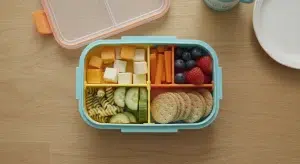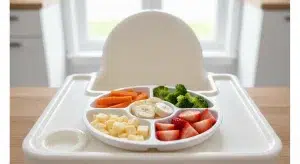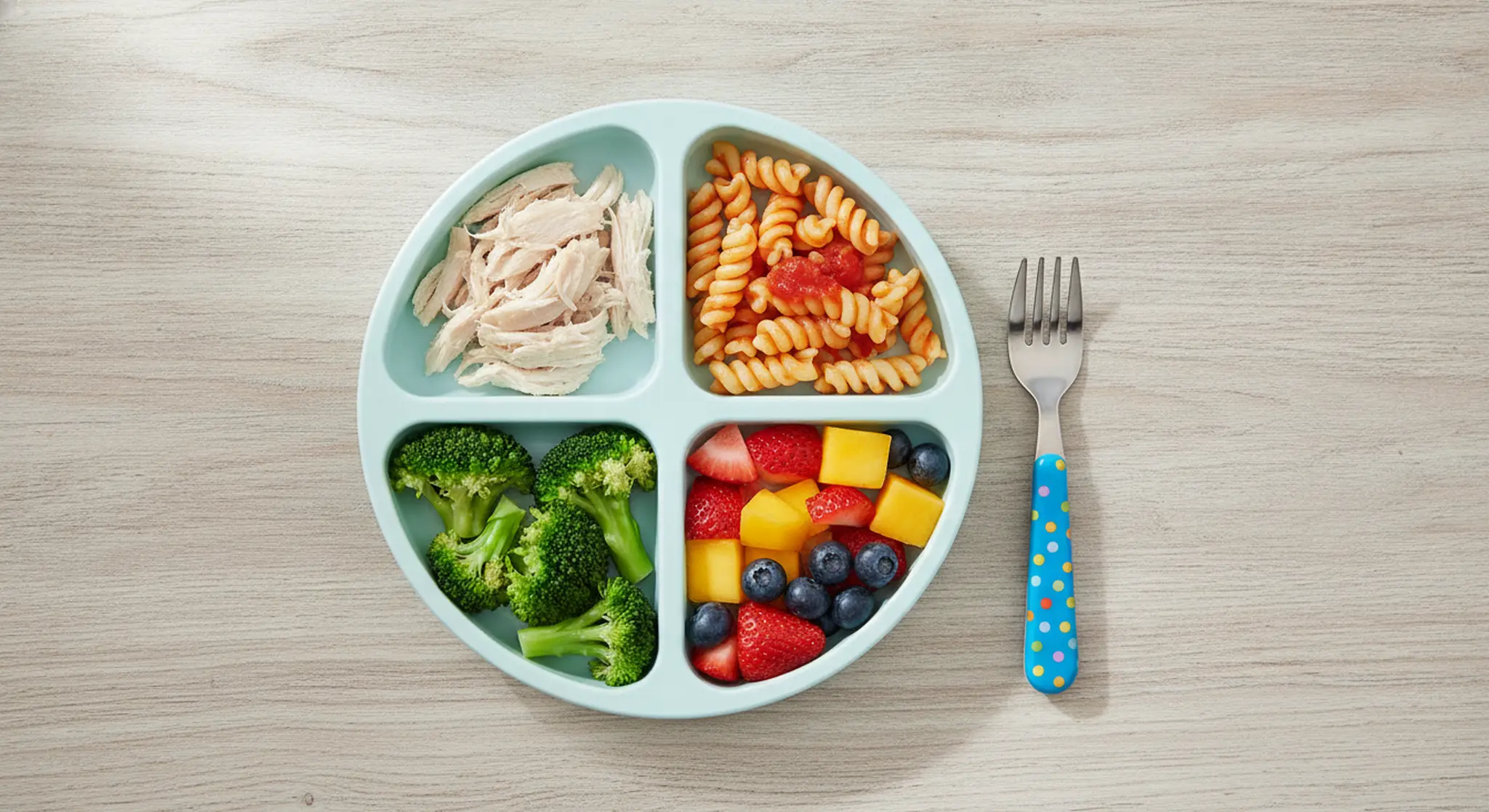


The best toddler dinners are small versions of what the rest of the family eats: a protein, a carbohydrate, a fruit or vegetable, and a healthy fat, served in soft, easy-to-grab pieces without pressure to clean the plate.
Feeding a toddler dinner can feel like a nightly negotiation. One day they inhale broccoli, the next they refuse the food they loved yesterday. The reassuring news is that a good toddler dinner does not need to be elaborate, and it does not need to be a separate meal from yours. Your job is to offer a balanced spread of safe, simple foods; their job is to decide how much to eat.
This guide gives you practical, balanced toddler dinner ideas you can rotate through the week, a formula for building a plate, no-cook options for hard nights, and strategies that lower the stress of feeding a picky eater.
Key Takeaways
- Build each dinner from a protein, a carbohydrate, a fruit or vegetable, and a healthy fat.
- Serve toddler versions of family meals rather than cooking separate ‘kid food’.
- Offer soft, cut, age-safe textures and let your toddler decide how much to eat.
- Expect day-to-day swings in appetite and interest; this is normal toddler eating.
- Keep mealtimes calm and pressure-free, which supports better eating over time.
Table of Contents
A Simple Formula for a Balanced Toddler Dinner
Instead of hunting for recipes every night, use a plate formula. Pick one from each column and you have a balanced meal in minutes. Aim for variety across the week rather than perfection at any single dinner.
| Protein | Carbohydrate | Fruit or veg | Healthy fat |
|---|---|---|---|
| Shredded chicken | Soft pasta | Steamed broccoli | Avocado |
| Scrambled eggs | Brown rice | Roasted sweet potato | Olive oil |
| Black beans | Whole grain toast | Soft pear slices | Nut or seed butter (thin) |
| Flaked salmon | Couscous | Peas | Full-fat yogurt |
| Tofu cubes | Quinoa | Cucumber sticks | Cheese |
Portions are small. A rough starting point is about one tablespoon of each food per year of age, then offer more if your toddler is still hungry. Serving small and refilling is less overwhelming than a big plate.
Easy Toddler Dinner Ideas by Type
Here are realistic dinners that reheat well, use pantry staples, and can be adapted from whatever the adults are having.
- Mini pasta with marinara, soft peas, and grated cheese.
- Scrambled eggs with soft-cooked spinach and buttered whole grain toast strips.
- Soft chicken and vegetable stir fry over rice, cut small.
- Black bean and cheese quesadilla triangles with avocado.
- Flaked salmon, mashed sweet potato, and steamed broccoli trees.
- Lentil and vegetable soup with soft bread for dipping.
- Turkey and cheese roll-ups with cucumber sticks and soft fruit.
- Mini meatballs with couscous and roasted zucchini.
Batch-friendly dishes like soups, pasta, and meatballs are your friend. Cook once, portion into small containers, and dinner on a chaotic night is a two-minute reheat.
No-Cook and Emergency Dinner Nights
Some nights nobody has the energy to cook, and that is fine. A ‘snack plate dinner’ of several small, balanced foods is a perfectly good meal, and toddlers often love the variety.
- Full-fat yogurt with soft fruit and a sprinkle of crushed cereal.
- Cheese cubes, soft crackers, cucumber, and halved (quartered lengthwise) grapes.
- Nut or seed butter thinly spread on toast fingers with banana.
- Hummus with soft pita and steamed veggie sticks.
- Hard-boiled egg, avocado, and berries.
There is no rule that dinner must be hot or cooked. A balanced cold plate covers the same bases with zero stovetime.
Choking Safety and Toddler Textures
Toddlers are still learning to chew, so texture and size matter as much as nutrition. A few foods are common choking hazards and need to be modified or avoided.
- Cut round foods lengthwise: grapes, cherry tomatoes, and hot dog-shaped foods into quarters, not coins.
- Avoid whole nuts, popcorn, hard raw vegetable chunks, and hard candy.
- Spread nut or seed butter thinly rather than serving in a thick glob.
- Cook firm vegetables until soft, and cut everything into small, manageable pieces.
- Always stay with your toddler while they eat and keep them seated.
For more on safe early eating, see our guides to baby-led weaning and how much a toddler should eat.
Mealtime chaos wearing you down?
Betteroo supports the whole toddler routine, from dinner to bedtime. Take the free quiz for a plan that fits.
Feeding a Picky Toddler Without the Battle
Picky eating peaks in toddlerhood for developmental reasons. Toddlers are wired to be wary of new foods, and this usually eases with time and repeated, low-pressure exposure. The most effective approach is to divide responsibility: you decide what is offered and when, your toddler decides whether and how much to eat.
- Serve at least one food you know your toddler usually accepts alongside new foods.
- Offer new foods many times without pressure. It can take ten or more exposures.
- Eat together and model eating the same foods, since toddlers copy what they see.
- Avoid bribing, forcing, or making a separate ‘safe’ meal on demand.
- Keep dinner short and calm, and end it without a fight if they are done.
Growth over weeks and months matters far more than any single meal. If your toddler is growing well and has energy, a light dinner here and there is nothing to worry about.
When to Talk to Your Pediatrician
- Your toddler is losing weight or not growing along their curve.
- Eating is extremely limited, such as only a handful of foods, or getting narrower over time.
- Meals involve frequent gagging, choking, or pain, or your child cannot manage textures peers handle.
- You are worried about iron, since toddlers are prone to low iron; ask about iron-rich foods.
- Mealtimes cause significant distress for your child or your family.
Everyday pickiness is normal, but a shrinking list of accepted foods, poor growth, or feeding that seems physically hard is worth a professional look. Your pediatrician can check growth and refer you to a feeding specialist or dietitian if needed.
Frequently Asked Questions
What should I feed my toddler for dinner?
Aim for a small, balanced plate with a protein, a carbohydrate, a fruit or vegetable, and a healthy fat, served in soft, cut, age-safe pieces. Toddler versions of the family meal work well, like mini pasta with peas and cheese, or flaked salmon with mashed sweet potato and broccoli.
How much dinner should a toddler eat?
A useful starting portion is about one tablespoon of each food per year of age, then offer more if they are still hungry. Appetite swings a lot day to day, so let your toddler decide how much to eat rather than pushing a set amount.
What are quick toddler dinners with no cooking?
A balanced snack plate is a great no-cook dinner: yogurt with soft fruit, cheese and soft crackers, thin nut butter on toast with banana, or hummus with soft pita and veggie sticks. Cold, balanced plates cover the same nutrition as a hot meal.
Which foods are choking hazards for toddlers?
Common hazards include whole grapes and cherry tomatoes (cut them lengthwise into quarters), hot dog coins, whole nuts, popcorn, hard raw vegetables, and thick globs of nut butter. Cut round foods lengthwise, cook firm foods soft, and always supervise seated eating.
How do I get my picky toddler to eat dinner?
Serve one familiar food alongside new ones, offer new foods repeatedly without pressure, eat the same foods together, and skip bribing or forcing. Picky eating is a normal toddler stage that usually eases with calm, repeated exposure.
Can toddlers eat the same dinner as the family?
Yes, and it is encouraged. Serve a toddler-sized, texture-safe version of the family meal rather than separate kid food. This exposes your toddler to variety and makes cooking far simpler.
Want calmer meals and calmer nights?
Betteroo helps parents build routines that reduce daily battles. Take the free quiz for a plan tailored to your toddler.
Related Betteroo Guides
Related reading: For more mealtime inspiration, see 30 no-fuss toddler dinner ideas.
3 Sources
- American Academy of Pediatrics, HealthyChildren.org. Feeding and Nutrition tips.
https://www.healthychildren.org/English/ages-stages/toddler/nutrition/Pages/default.aspx - U.S. Department of Agriculture, MyPlate. Toddler (12 to 23 Months).
https://www.myplate.gov/life-stages/toddlers - American Academy of Pediatrics, HealthyChildren.org. Choking Prevention.
https://www.healthychildren.org/English/health-issues/injuries-emergencies/Pages/Choking-Prevention.aspx