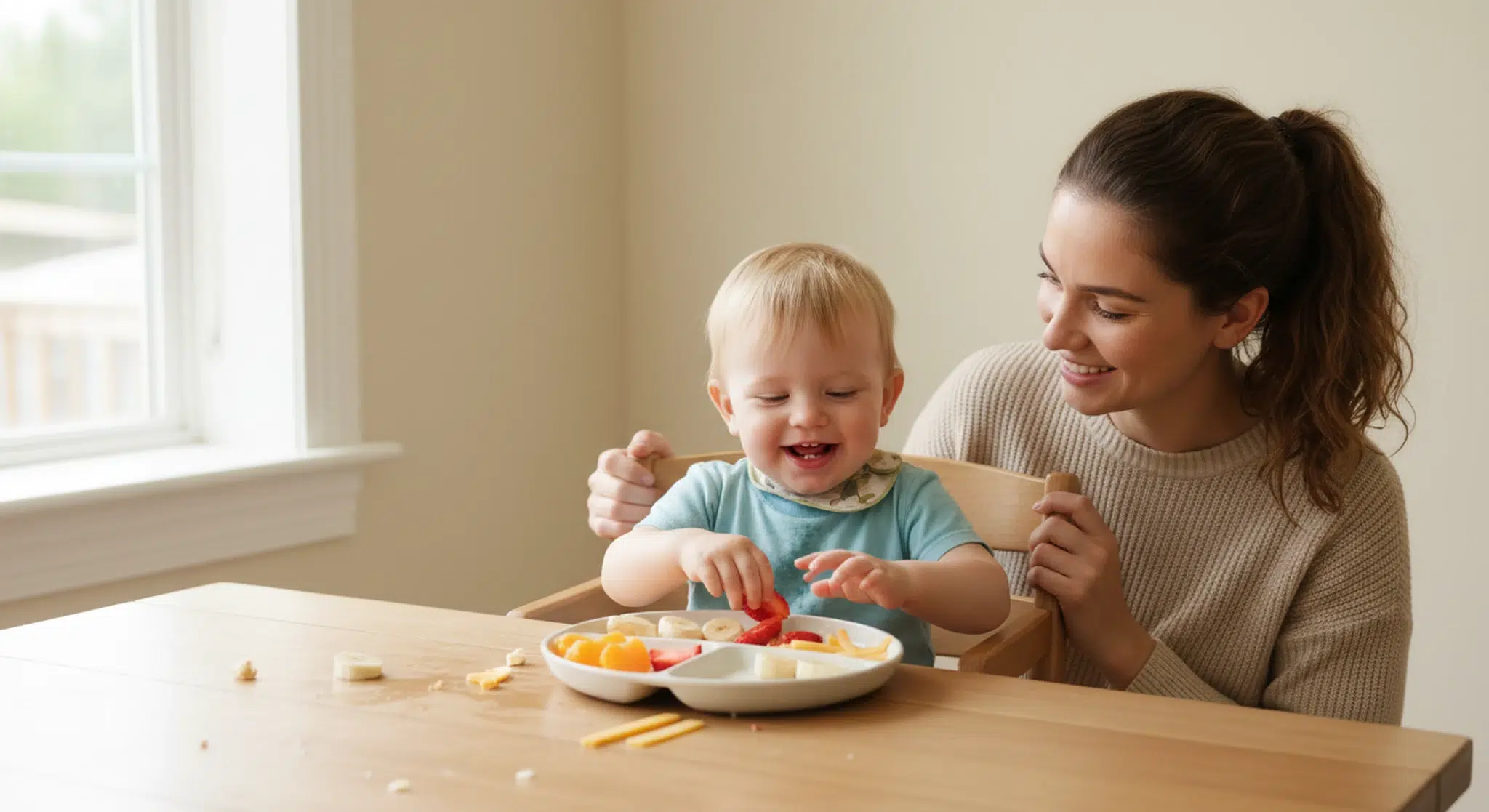
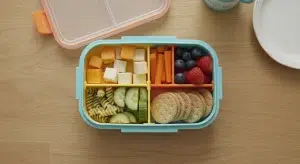
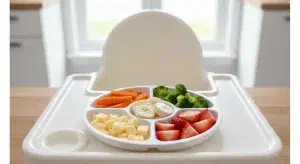
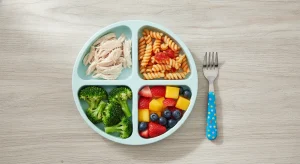
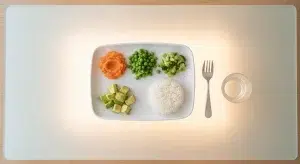
The best toddler snacks are small, planned mini meals of whole foods from two food groups, offered two or three times a day between meals and prepared so they are soft, small and choking-safe.
Toddler snacks can feel like a full-time job: the same crackers every day, a child who skips lunch and wants a snack ten minutes later, and a nagging worry about grapes and nuts.
Below are 56 snack ideas grouped by food type, plus how many snacks toddlers need, portion sizes, choking-safe prep, drinks, and tips for picky eaters, daycare and car trips, based on guidance from the AAP, CDC, KidsHealth and the Dietary Guidelines for Americans.
Key Takeaways
Most toddlers do well with three meals and two or three planned snacks a day (KidsHealth).
Toddler portions are about one quarter of an adult portion (KidsHealth).
Before age 4, skip popcorn, whole nuts, whole grapes and hard raw vegetables; cut food to 1/2 inch or smaller (AAP).
No added sugars before 24 months (CDC); the 2025 to 2030 Dietary Guidelines say to avoid them through early childhood.
Water and plain milk are the best snack drinks; juice is not needed (CDC).
As an Amazon Associate, Betteroo earns from qualifying purchases.
Table of Contents
Toddler Snacks: How Many a Day and What Counts
Quick Answer
Most toddlers do well with three meals and two or three planned snacks a day (KidsHealth). The American Academy of Pediatrics (AAP) says one year olds need about 1,000 calories a day split among three meals and two snacks. Build each snack from two food groups, keep portions small, serve water or milk, and make every food choking-safe: no whole grapes, whole nuts, popcorn or raw carrot chunks.
A toddler snack is a small, planned mini meal, not a treat. KidsHealth suggests mid-morning, mid-afternoon and after dinner if needed.
Planned snacks, eaten sitting down at set times, work better than grazing. Pairing two food groups (fruit with yogurt, crackers with cheese) makes a snack more filling than one food alone. For the meals around these snacks, see our toddler meal ideas and 1 year old feeding schedule.
Snack Portion Sizes for Toddlers
KidsHealth says toddler portions should be about one quarter the size of adult portions. A snack might be a few small pieces of fruit with a little cheese, or two crackers with a spoonful of hummus.
The AAP notes a sharp drop in appetite after the first birthday because growth slows, so a one year old needs less food than many parents expect. Big days and two-bite days are both normal.
Start small: offer a little and give more if your child asks.
Let your child stop: turning away or playing with food means snack time is over.
Offer two or three choices: KidsHealth suggests letting your toddler pick from a few healthy options.
Choking Safety: How to Prepare Snacks Before Age 4
Toddlers are still learning to chew, and many classic snacks are the right size and shape to block a small airway. The AAP advises keeping high-risk foods from children until 4 years of age or older, depending on development, and cutting food into pieces no larger than one-half inch.
Risky snack food
Safer way to serve it
Whole grapes, cherry tomatoes, berries
Quarter grapes and tomatoes; cut or flatten berries
Raw carrots, celery, raw apple chunks
Cook soft, grate, or use applesauce
Whole or chopped nuts and seeds
A thin spread of nut or seed butter
Nut butter by the spoonful
Spread thinly on toast or crackers
Cheese chunks, string cheese
Thin strips, small pieces or shredded
Hot dogs, sausages, meat sticks
Quarter lengthwise, then slice small (AAP), or skip
Popcorn, chips, pretzels
Avoid before age 4
Raisins and other dried fruit
Soft fresh fruit instead
Gummies, fruit snacks, marshmallows, hard candy
Skip them
Whole beans, whole corn kernels
Mash beans; skip corn kernels
Granola bars, cookies, seeded crackers
Plain crackers without seeds
Toddler snack choking hazards and safer swaps. Sources: AAP HealthyChildren.org, CDC (USDA WIC list) and KidsHealth.
How your child eats matters too. The AAP says children should sit down to eat and never run, walk, play or lie down with food in their mouths, always with an adult supervising. The CDC adds: no eating in a car seat or stroller. The AAP also flags a cause many parents miss: older siblings handing dangerous foods to a younger child. Tell big kids that the toddler’s snacks come from a grown-up, and consider a certified CPR and first aid course, which the AAP recommends.
Feeding and sleep go hand in hand.
Our free two-minute quiz builds a gentle, personalized sleep plan around your baby’s feeds.
Each idea below comes with the prep that makes it safer for a 1 to 3 year old.
Fruit
How to prepare it
Banana
Ripe, thin rounds, quartered for young toddlers
Grapes
Never whole: quarter lengthwise
Blueberries
Halved, quartered or flattened
Strawberries
Pieces no larger than 1/2 inch
Ripe pear
Soft, peeled, diced small
Apple
Cooked soft or finely grated, never raw chunks
Unsweetened applesauce
By the spoon or as a dip
Melon
Soft, ripe, seeded, small pieces
Mango or peach
Very ripe or canned in juice, diced
Avocado
Soft cubes or mashed on toast
Fruit snack ideas for toddlers.
Vegetable
How to prepare it
Carrots
Steamed soft or grated, never raw sticks
Sweet potato
Roasted soft, small cubes
Broccoli or cauliflower
Cooked until fork-tender
Green beans
Cooked soft, short pieces
Cherry tomatoes
Always quartered
Peas
Cooked soft, lightly smashed
Zucchini
Steamed or roasted soft
Beets
Cooked soft, diced small
Spinach
Cooked and chopped into eggs or muffins
Vegetable snack ideas for toddlers.
Vegetables are a harder sell. Serve a soft cooked vegetable with a favorite dip like hummus or plain yogurt, and eat it yourself. The Dietary Guidelines for Americans 2025 to 2030 note it may take 8 to 10 exposures before a young child is willing to try a new food.
Protein, Dairy and Grain Snacks for Toddlers
Protein and dairy keep a snack from being all carbohydrate, so it lasts until the next meal.
Protein
How to prepare it
Hard-boiled egg
Chopped or mashed
Scrambled egg
Soft curds or thin strips
Chicken or turkey
Shredded or chopped small
Soft meatballs
Cut into small pieces
Tofu
Soft small cubes
Beans
Mashed, not whole, or as a dip
Hummus
Thin on toast or as a dip
Nut or seed butter
Once introduced; spread thinly
Flaked fish
Soft cooked, checked for bones
Lentil patties
Soft and cut small
Protein snack ideas for toddlers.
Dairy
How to prepare it
Plain yogurt
Full-fat, with mashed fruit stirred in
Cheese strips
Thin strips, pasteurized, not chunks
Shredded cheese
Easy pincer practice
Cottage cheese
Plain, with soft fruit
Ricotta
Spread on toast strips
Milk
A cup alongside counts as part of the snack
Dairy snack ideas for toddlers.
Grain
How to prepare it
Whole grain toast strips
Lightly toasted, topped thinly
Plain whole grain crackers
No seeds or nuts on top
Low-sugar whole grain cereal
Dry or with milk
Oatmeal
Soft, or baked into small squares
Mini whole grain pancakes
Made ahead, cut into strips
Whole grain pasta shapes
Cooked soft, warm or cold
Whole grain English muffin
Toasted, small strips
Graham crackers
Occasionally; check added sugar
Whole grain snack ideas for toddlers.
The CDC advises choosing pasteurized cheeses and yogurts and avoiding unpasteurized (raw) milk products, which can carry harmful bacteria.
Snack Combos, Make-Ahead Snacks and On-the-Go Snacks
Combos make toddler snacks easy. Each pairs at least two food groups.
Snack combo
Food groups
Prep
Crackers and cheese
Grain + dairy
No prep
Crackers and hummus
Grain + protein
No prep
Yogurt with mashed berries
Dairy + fruit
No prep
Toast, thin nut butter and banana
Grain + protein + fruit
No prep
Hummus with soft cooked veggies
Protein + vegetable
Make ahead
Mini egg and spinach muffins
Protein + vegetable
Make ahead, freezes
Bean and cheese quesadilla wedges
Grain + protein + dairy
Quick
Avocado toast strips
Grain + healthy fat
No prep
Banana oat bites, no added sugar
Grain + fruit
Make ahead
Cottage cheese with diced peaches
Dairy + fruit
No prep
Yogurt and fruit smoothie in an open cup
Dairy + fruit
Quick
Applesauce with cheese strips
Fruit + dairy
On the go
Pasta shapes, peas and shredded cheese
Grain + vegetable + dairy
Make ahead
Easy toddler snack combos.
Make ahead. On the weekend, steam carrots and sweet potato, hard-boil a few eggs and bake egg muffins or oat bites, so a weekday snack takes 30 seconds.
Daycare. Ask about snack rules first, since some centers are nut-free. Cut food choking-safe at home, label containers and pack a cold pack. Our toddler lunch ideas include more lunchbox options.
Travel. Because the CDC advises against eating in a car seat or stroller, plan snacks for stops. Unsweetened applesauce, plain crackers and dry cereal travel well; cheese and soft fruit need a cold pack.
Snacks for 1 Year Olds vs 2 to 3 Year Olds
1 year olds
2 to 3 year olds
Texture
Mashed or small, easily chewable pieces (AAP)
More textures, still cut small; high-risk foods wait until 4 (AAP)
Snacks per day
Two, plus three meals (AAP)
Two or three, plus three meals (KidsHealth)
Milk
Whole milk once formula stops at 12 months (Dietary Guidelines)
Plain, unflavored milk (CDC); ask your pediatrician about lower-fat milk
Added sugar
None before 24 months (CDC)
Avoid through early childhood (Dietary Guidelines)
Crackers and hummus, quesadilla wedges, egg muffins
Toddler snacks by age. Sources: AAP HealthyChildren.org, KidsHealth, CDC, Dietary Guidelines for Americans 2025 to 2030.
Many baby-led weaning favorites, like soft avocado, sweet potato and toast strips, carry straight into the toddler years.
Healthy Snacks for Toddlers: Added Sugar, Salt and Labels
Healthy snacks for toddlers are defined mostly by what is left out. The CDC says children should have no added sugars before 24 months, and the Dietary Guidelines for Americans 2025 to 2030 advise avoiding added sugars during infancy and early childhood (birth to 4 years). Fruit snacks, yogurt drinks, cookies and bars often contain added sugar.
Read the ingredients: the Dietary Guidelines suggest looking for “sugar,” “syrup” or words ending in “-ose,” and note added sugars hide under names like fruit juice concentrate and honey.
Use the label benchmarks: for snack foods, the Dietary Guidelines point to FDA “healthy” claim limits: no more than 5 grams of added sugar per 3/4 ounce whole grain equivalent for grain snacks like crackers, and 2.5 grams per 2/3 cup equivalent for dairy snacks like yogurt.
Watch the salt: the CDC advises avoiding high-sodium foods such as some canned foods, processed meats and frozen dinners, and choosing low-sodium or no-salt-added versions.
No honey before 12 months: the CDC warns it can cause botulism.
Make most snacks simple whole foods, and read labels on the rest.
What Should Toddlers Drink With Snacks?
The CDC says the best drinks for young children are water and plain, unflavored milk without added sugars.
Water: an easy default at every snack, in an open or straw cup.
Milk: cow’s milk is not for babies under 12 months (CDC); the Dietary Guidelines say to stop formula at 12 months and give whole milk. See how to transition from formula to milk.
Juice: not needed. The CDC says no juice before 12 months and cites the AAP limit of 4 ounces of 100% fruit juice a day for ages 1 to 3; whole fruit is better. See when babies can have juice.
Sugary and caffeinated drinks: the CDC lists soda, flavored milk, sports drinks and fruit drinks as drinks to avoid, and says no caffeinated drinks before 24 months.
Allergens, Picky Eaters and Snack-Only Toddlers
Allergens. The Dietary Guidelines advise introducing allergenic foods, including nut butters, eggs, shellfish and wheat, at about 6 months, and asking your child’s health care professional about allergy risk. If your toddler has not had peanut or egg yet, talk with your pediatrician first; see how to introduce peanut butter. With a known allergy, check every label and brief every caregiver.
Picky eaters. Snacks are a low-pressure time to try new foods. Put one new item beside a favorite, let your child skip it, and offer it again another day. See toddler meals for picky eaters.
The snack-only toddler. If your child refuses lunch and begs for crackers an hour later, snacks may be too close to meals or too big. KidsHealth recommends scheduled snacks, not all-day eating. Keep times consistent, offer water in between, and make snacks look like small meals. Leftovers from toddler dinner, cut small, make easy snacks too.
Call 911 if your child is choking and cannot breathe, cough or cry, or shows signs of a severe allergic reaction. The AAP says that for anaphylaxis, epinephrine should be given right away, followed by a call to 911.
Call your pediatrician if:
You see food allergy signs: the AAP lists hives, itchy rash or swelling; wheezing, coughing or throat tightness; vomiting, diarrhea or belly pain; and pale skin or feeling faint.
Coughing continues after a choking episode: the AAP says to watch your child closely.
Growth worries you: weight loss, eating very little for days, or slow growth mentioned at a checkup.
Eating is a constant struggle: frequent gagging or vomiting with most textures, or a very short list of accepted foods.
You are unsure about allergens: especially with eczema or a past reaction.
This article is general education, not medical advice.
Frequently Asked Questions
How many snacks should a toddler have a day?
KidsHealth says most toddlers do well with three meals and two or three planned snacks a day, offered mid-morning, mid-afternoon and after dinner if needed. The American Academy of Pediatrics says one year olds need about 1,000 calories a day divided among three meals and two snacks.
What are good toddler snacks for a 1 year old?
Good toddler snacks for a 1 year old are soft and easy to chew: ripe banana, avocado, plain yogurt, shredded cheese, steamed carrots or sweet potato, chopped egg and soft toast strips. The American Academy of Pediatrics says to mash food or cut it into small, easily chewable pieces.
What snacks should toddlers avoid?
Avoid choking hazards such as whole grapes, nuts and seeds, popcorn, chips, hard raw vegetables, chunks of cheese or meat, hot dogs, spoonfuls of nut butter, hard candy and gummies. The CDC also says children under 24 months should have no added sugars and advises limiting high-sodium processed foods.
Can toddlers eat popcorn?
Not yet. The American Academy of Pediatrics lists popcorn among high-risk choking foods and advises keeping high-risk foods from children until 4 years of age or older, depending on development. For crunch, try low-sugar whole grain cereal, which KidsHealth lists as a toddler snack, or lightly toasted bread strips.
Should toddlers have a snack before bed?
They can if they are hungry. KidsHealth suggests planned snacks mid-morning, mid-afternoon and again after dinner if needed. Keep a bedtime snack small and simple, such as plain yogurt or fruit with cheese, serve it at the table, and brush teeth afterward.
What if my toddler only wants snacks and refuses meals?
Make snacks smaller and keep them at set times, with water in between, so your child comes to meals hungry. KidsHealth recommends scheduled snacks rather than grazing. The American Academy of Pediatrics notes appetite drops after the first birthday, and new foods can take 8 to 10 tries.
Calmer days, better nights.
Betteroo builds a personalized sleep plan for your baby. Take the free two-minute quiz and have it ready before the newborn weeks.
U.S. Department of Health and Human Services and U.S. Department of Agriculture. Dietary Guidelines for Americans, 2025 to 2030. https://cdn.realfood.gov/DGA.pdf