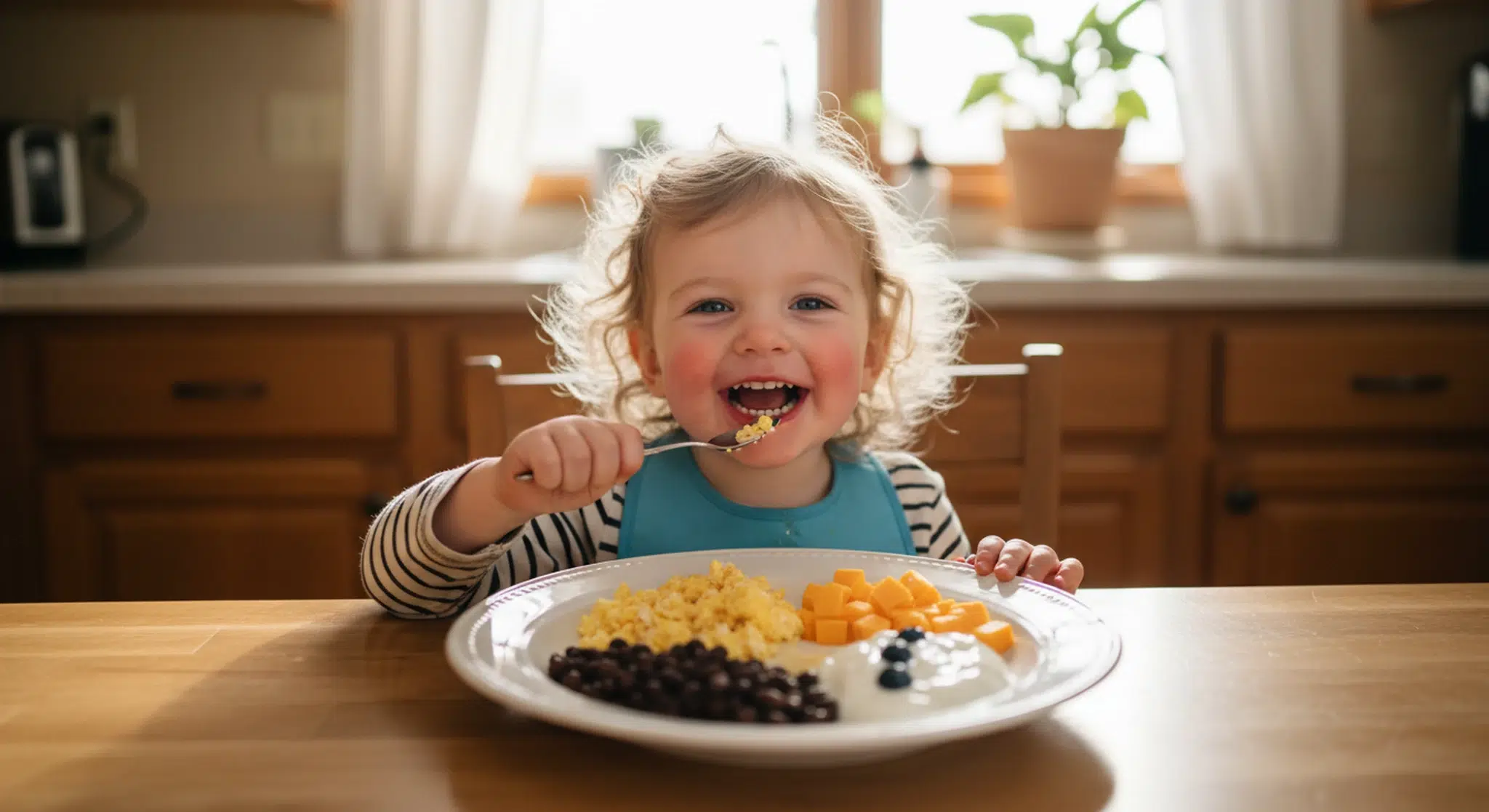
Most kids need far less protein than parents expect, and the vast majority already get plenty from everyday foods like milk, eggs, beans, yogurt, and chicken. This guide breaks down how much protein kids need by age, the best animal and plant sources, easy high-protein meals and snacks, and how to keep picky and vegetarian eaters well fed.
Protein is the nutrient parents worry about most and need to worry about least. It builds muscle, supports growth, and keeps kids full and steady, and it is found in so many common foods that true deficiency is rare. Understanding protein for kids is less about hitting a number and more about weaving good sources into meals your child already likes.
Below we cover realistic daily targets by age, the best complete and plant-based sources, high-protein meals and snacks that kids will actually eat, strategies for picky and vegetarian eaters, and the marketing myths worth ignoring. By the end you will see just how easy it is to keep a growing child well fueled.
Key Takeaways
Kids need modest amounts of protein, roughly 13 grams a day for toddlers rising to around 34 grams by the tween years.
A single cup of milk and one egg already cover most of a toddler’s daily protein target.
Offer a mix of animal sources (eggs, dairy, poultry, fish) and plant sources (beans, tofu, nut butters, whole grains).
Picky and vegetarian kids get plenty of protein from eggs, dairy, beans, and nut butters; forcing bites backfires.
Healthy children almost never need protein powders or shakes; whole foods are better and safer.
Table of Contents
How Much Protein Do Kids Actually Need?
Here is the reassuring headline: most children in the United States get plenty of protein, often more than they need, without any special effort. Protein needs are modest and rise slowly with age and size. The worry that a child is not getting enough protein is common, but true protein deficiency is rare in kids who eat a reasonably varied diet.
As a rough guide, protein needs land around 1.5 grams per kilogram of body weight per day in the toddler years and drift down toward about 1 gram per kilogram through the school years, before rising again in the teen growth spurt. Translated into everyday amounts, that is a smaller number of grams than most parents expect. A single cup of milk and one egg already covers a big share of a toddler’s daily target.
Age
Approx. Daily Protein
What That Looks Like
1–3 years
about 13 grams
1 cup milk + 1 egg gets you most of the way
4–8 years
about 19 grams
1 cup milk, 1 egg, and a spoon of nut butter
9–13 years
about 34 grams
Add a serving of chicken, beans, or yogurt
14–18 years
about 46–52 grams
Spread across three meals with a protein each
Approximate daily protein targets by age. Individual needs vary with size and activity, so use this as a guide, not a strict quota.
The practical takeaway is that you do not need to count grams. If your child eats a protein-containing food at most meals and snacks, they are almost certainly covered.
The Best Protein Sources for Kids
Protein comes in two broad families, and a healthy diet for kids draws from both. Variety matters more than any single super-food, because different sources bring different vitamins, minerals, and fiber along for the ride.
Animal-based proteins are complete, meaning they contain all the essential amino acids. Great options for kids include eggs, dairy like milk, yogurt, and cheese, poultry, fish that is low in mercury such as salmon, and lean meats. Fish and eggs also deliver brain-supporting nutrients, and dairy adds calcium for growing bones.
Plant-based proteins bring fiber, iron, and healthy fats. Beans, lentils, chickpeas, tofu, edamame, peas, nut and seed butters, whole grains, and quinoa are all excellent. Most plant foods are lower in one or two amino acids, but eating a mix across the day, for example beans with rice or hummus with bread, easily provides everything a child needs. You do not have to combine them at the same meal.
Eggs (about 6 g each), a flexible favorite for any meal
Greek yogurt (about 15 g per cup) and milk (about 8 g per cup)
Beans, lentils, and chickpeas (about 7–9 g per half cup)
Chicken, turkey, or fish (about 20 g per palm-sized piece)
Nut and seed butters (about 7 g for two tablespoons)
Tofu and edamame (about 8–10 g per half cup)
Cheese sticks and cottage cheese, easy grab-and-go options
If you are just moving your little one from purees toward family meals, our guides on baby-led weaning and baby’s first foods show how to offer soft, safe protein from the start.
High-Protein Meals and Snacks Kids Will Actually Eat
The goal is not to load up on protein, it is to weave a protein source naturally into the meals and snacks your child already enjoys. A little protein at each eating occasion also steadies energy and helps kids feel full between meals.
Breakfast: scrambled eggs, Greek yogurt with berries, oatmeal stirred with a spoon of nut butter or milk, or a smoothie with yogurt and a banana.
Lunch and dinner: a bean and cheese quesadilla, pasta with lentil or meat sauce, chicken and veggie skewers, salmon cakes, tofu stir-fry, or a classic nut-butter sandwich on whole grain bread.
Snacks: cheese sticks, hummus with soft pita or cucumber, yogurt tubes, edamame, hard-boiled eggs, or a small handful of an age-appropriate nut or seed butter on crackers.
Growing bodies do their best learning after a full night of sleep.
If naps or bedtime are a struggle, our free two-minute quiz builds a gentle, personalized plan.
For more ways to get balanced, protein-rich food onto a small plate without a battle, see our toddler meal ideas and toddler dinner ideas, which are full of simple, kid-tested combinations.
Protein for Picky Eaters and Vegetarian Kids
Picky eating is a normal developmental stage, and it can make parents worry most about protein. The good news is that some of the most kid-friendly foods are protein powerhouses. If your child refuses meat, they can thrive on eggs, dairy, beans, and nut butters instead.
For a child who will not eat meat, lean on yogurt, cheese, milk, eggs, smooth nut and seed butters, beans blended into sauces or soups, tofu crumbled into familiar dishes, and whole grains. Offering the same food several times without pressure, and pairing a new protein with a favorite food, tends to work far better than bargaining or forcing bites.
Vegetarian and vegan kids can absolutely meet their protein needs with a thoughtful mix of beans, lentils, tofu, soy milk, whole grains, and nut and seed butters. Vegan children need particular attention to vitamin B12, iron, zinc, and vitamin D, so it is worth checking in with your pediatrician or a registered dietitian to make sure those bases are covered.
If solids and mealtimes feel like a constant struggle, our guide on baby purees and starting solids can help you build a positive foundation before the picky stage even arrives.
Common Myths About Protein and Kids
A lot of protein anxiety is fueled by marketing rather than nutrition science. Clearing up a few myths takes the pressure off.
Myth: kids need protein powders or shakes. Healthy children almost never need supplements. Whole foods provide protein plus the vitamins and fiber that powders lack, and some products contain added sugar or ingredients not meant for children.
Myth: more protein builds bigger, stronger kids. Beyond a child’s needs, extra protein is simply used for energy or stored. It does not accelerate growth, and very high intakes can crowd out other important foods.
Myth: only meat counts as real protein. Eggs, dairy, beans, tofu, and nut butters are all excellent, complete or easily combined sources.
Myth: my picky eater must be protein-deficient. Because needs are modest and dairy and eggs are so protein-dense, most picky eaters still get plenty.
When to Talk to Your Pediatrician or Dietitian
Protein deficiency is genuinely uncommon in children who eat a varied diet, so most families never need to give it a second thought. That said, it is worth a conversation with your pediatrician if your child follows a very restrictive diet, refuses entire food groups for a long stretch, is not growing along their usual curve, seems unusually tired, or is being raised vegan without a clear plan for B12, iron, and vitamin D.
A registered dietitian can be a huge help for extreme picky eating, food allergies, or plant-based diets, offering practical, no-pressure strategies tailored to your child. And remember that appetite is closely tied to rest: a well-rested child eats more predictably and is more willing to try new foods, while an overtired one is far more likely to melt down at the table. Protecting sleep is one of the quietest ways to support healthy eating.
Frequently Asked Questions
How much protein does my child need per day?
Protein needs are modest and rise with age: roughly 13 grams a day for children 1 to 3 years, about 19 grams for ages 4 to 8, and around 34 grams for ages 9 to 13, before climbing in the teen years. Those amounts are easy to reach. A cup of milk and one egg already provide most of a toddler’s daily target, so counting grams is rarely necessary.
What are the best high-protein foods for kids?
Excellent complete sources include eggs, milk, yogurt, cheese, poultry, fish, and lean meat, while plant sources like beans, lentils, tofu, edamame, nut and seed butters, and whole grains add fiber and iron. A varied mix across the day is ideal. Kid-friendly favorites like Greek yogurt, cheese sticks, hummus, and nut butter are especially protein-dense.
How do I get protein into a picky eater?
Lean on the protein-rich foods most picky kids already accept, such as yogurt, cheese, milk, eggs, and smooth nut butters, and blend beans or tofu into familiar sauces and soups. Offer new proteins repeatedly without pressure and pair them with a favorite food. Because protein needs are small and dairy and eggs are so dense, most picky eaters still get enough.
Can vegetarian or vegan kids get enough protein?
Yes. Vegetarian kids meet their needs easily with dairy, eggs, beans, lentils, tofu, nut butters, and whole grains, and vegan children can too with a thoughtful mix of plant proteins. Vegan diets need extra attention to vitamin B12, iron, zinc, and vitamin D, so it is worth checking in with your pediatrician or a registered dietitian to plan those nutrients.
Do kids need protein powder or shakes?
Almost never. Healthy children get all the protein they need from whole foods, which also supply vitamins, minerals, and fiber that powders lack. Some protein products contain added sugar or ingredients not intended for children. Unless a doctor or dietitian recommends a supplement for a specific medical reason, skip the powders and focus on balanced meals.
Full plates, peaceful nights.
Betteroo builds a personalized sleep plan for your child. Take the free two-minute quiz to get started.