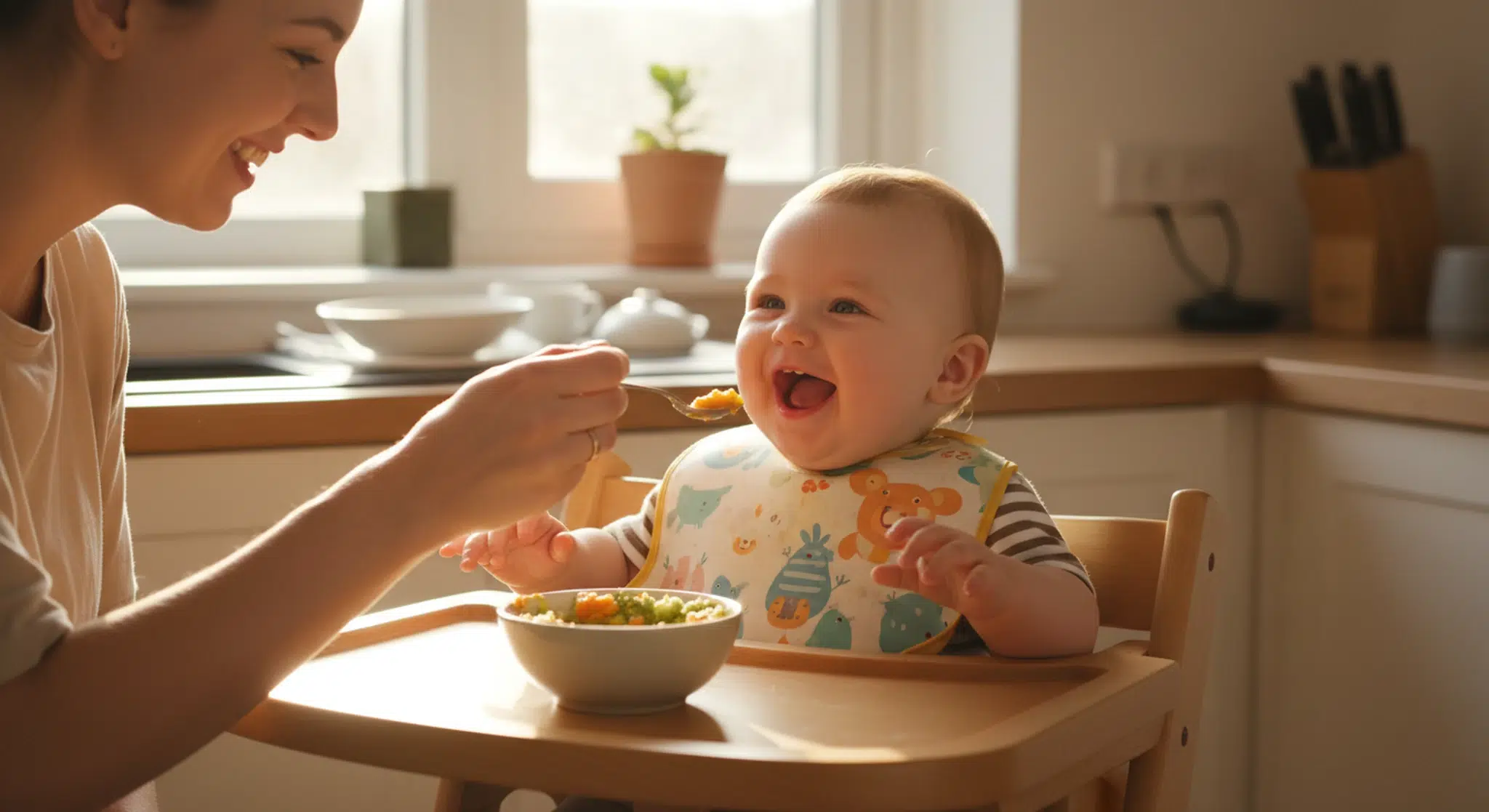
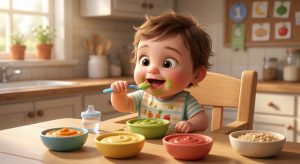
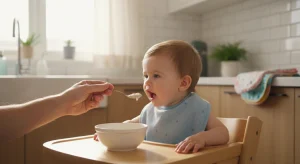
Baby first foods at 4 to 6 months are best kept simple: wait for real signs of readiness, start with iron-rich single foods, introduce common allergens early, and let breast milk or formula stay the main event while your baby learns to eat.
Starting solids is one of the most exciting and slightly nerve-wracking milestones of the first year. This guide walks you through exactly when babies are ready, which first foods give the most nutritional bang, how purees and baby-led weaning compare, how to introduce allergens the modern way, which foods to avoid, and how much to actually offer.
Throughout, remember the golden rule of the 4 to 6 month window: these meals are practice and exposure, not calories. Milk feeds still do the heavy lifting all year.
Key Takeaways
Most babies are ready for solids around 6 months, with the earliest reasonable start at 4 months, based on readiness signs, not age alone.
The best first foods are rich in iron and zinc, since a baby’s iron stores start to fall around 6 months.
Purees and baby-led weaning are both safe, and you can mix the two.
Introduce common allergens like peanut and egg early, around the start of solids, to lower allergy risk.
Avoid honey and cow’s milk as a drink before 12 months, and cut or cook foods to remove choking hazards.
Table of Contents
When Is a Baby Ready for First Foods?
Most babies are ready to start solid foods around 6 months, and the window for getting started falls between 4 and 6 months. Age is only part of the picture. The clearest green light comes from your baby’s body, not the calendar, so it helps to watch for a cluster of readiness signs rather than a single one.
Your baby is likely ready for first foods when they can hold their head steady and sit upright with little or no support, when the early tongue-thrust reflex that pushes food back out has faded, when they can bring objects to their mouth, and when they show real interest in what you are eating by watching, leaning in, or reaching for your plate. Starting before 4 months is not recommended, because a younger baby’s digestive system and swallowing coordination are not ready and early solids do not help babies sleep through the night, despite the old myth.
Sits upright and holds their head steady on their own
Has lost the tongue-thrust reflex that pushes food out
Opens their mouth and leans forward when food comes near
Brings hands and toys to their mouth with some accuracy
Seems hungry after a full day of breast milk or formula
The Best First Foods at 4 to 6 Months
There is no single perfect first food, but the most useful ones early on are rich in iron and zinc, because a baby’s natural iron stores begin to run low around 6 months. Breast milk and formula stay the main source of nutrition through the first year, so these early meals are about practice, exposure, and topping up key nutrients, not about filling your baby up.
Good first foods include iron-fortified infant cereal mixed with breast milk or formula, pureed or well-mashed meats, mashed beans and lentils, and soft cooked vegetables and fruits. Single-ingredient foods make it easier to spot any reaction, and there is no need to introduce them in any particular order. Variety and texture progression matter more than the exact sequence.
First food
Why it helps
How to serve
Iron-fortified infant cereal
Tops up iron as birth stores fall
Mixed thin with breast milk or formula
Pureed meat, chicken, or beans
Iron and zinc plus protein
Smooth puree or soft mash
Avocado, banana, sweet potato
Easy first tastes, good texture
Mashed or soft finger-sized strips
Cooked carrot, pea, squash
Vegetable variety early
Soft-cooked puree or spears
Full-fat plain yogurt
Dairy protein and fat for the brain
Plain, unsweetened, by spoon
Nutrient-dense first foods that work well from 4 to 6 months.
Whichever route you take, offer a wide range of flavors and colors in these first weeks. Early, repeated exposure to vegetables in particular is linked with better acceptance later, so keep offering foods even after an initial no.
Purees or Baby-Led Weaning?
You do not have to choose one camp. The two popular approaches are traditional spoon-fed purees and baby-led weaning, where your baby feeds themselves soft finger foods from the start, and many families happily blend both. Purees give you more control over how much goes in and can feel less messy at first. Baby-led weaning lets your baby set the pace, practice self-feeding, and join family meals early.
Both are safe when the food textures suit your baby’s stage and you always supervise meals. If you spoon-feed, move toward thicker textures and soft lumps within a few weeks rather than staying on thin puree for months. For a deeper look at each path, see our guides to baby purees and baby-led weaning, or the full method breakdown in baby-led weaning (BLW).
Starting solids is a big milestone, and so is sleep.
When you are ready, our free two-minute quiz builds a gentle, personalized sleep plan for your baby.
Guidance on food allergens has flipped from the advice of a decade ago. Rather than delaying peanut, egg, and other common allergens, current recommendations are to introduce them early, around the time your baby starts solids and generally before 9 to 12 months, because early introduction can actually reduce the risk of developing a food allergy. Babies with severe eczema or an existing egg allergy are a special case and should be discussed with your pediatrician first.
Introduce the common allergens one at a time, at home, earlier in the day so you can watch for a reaction. Use safe textures: thin, smooth peanut butter stirred into cereal or warm water rather than spoonfuls of thick peanut butter or whole nuts, which are choking hazards. Once a food has been tolerated, keep it in the rotation, since regular exposure helps maintain tolerance.
Peanut (thinned smooth peanut butter, never whole nuts)
Egg (well-cooked, mashed or scrambled)
Dairy (plain yogurt or cheese, not cow’s milk as a drink yet)
Wheat, soy, and tree nut butters (thinned and smooth)
Fish and shellfish (cooked, flaked, and boneless)
Foods to Avoid in the First Year
A few foods are genuinely off the menu for now. Honey is the big one: it can carry spores that cause infant botulism and should be avoided completely until after the first birthday. Cow’s milk should not be given as a main drink before 12 months, though small amounts cooked into food or a little plain yogurt are fine. Skip added salt and added sugar, and avoid unpasteurized foods.
Choking hazards deserve real attention. Avoid whole grapes, whole nuts, popcorn, hard raw vegetables, chunks of hot dog, hard candy, and globs of thick nut butter. Cut round foods lengthwise into small pieces, cook hard vegetables until soft, and always stay within arm’s reach and seat your baby upright for every meal.
How Much and How Often to Feed
Start small. One food, once a day, a few spoonfuls is plenty in the first week, offered after a milk feed when your baby is content rather than starving. Over the following weeks you can build toward two and then three small meals a day as your baby shows they want more. Let your baby lead: turning the head away, closing the mouth, or losing interest all mean done.
Stage
Meals per day
What it looks like
First 1 to 2 weeks
1
A few spoonfuls of one smooth food
Weeks 3 to 6
2
Two small meals, more variety and texture
Toward 6 to 8 months
2 to 3
Three small meals plus milk feeds
A gentle ramp from one taste a day to regular small meals.
Signs It Is Going Well, and When to Call the Doctor
A good start looks messy and unhurried. Your baby explores, gags occasionally as they learn to move food around, and gradually takes more over days and weeks. Gagging is loud and self-correcting and is not the same as choking, which is silent and needs immediate help, so it is worth learning the difference and taking an infant first-aid refresher before you begin.
Call your pediatrician if your baby consistently refuses all solids past about 6 months, is not gaining weight well, or shows signs of an allergic reaction such as hives, swelling, vomiting, or trouble breathing after a new food. A reaction that involves breathing or widespread swelling is an emergency. Otherwise, trust the slow build: these first months are about learning to eat, not hitting a quota.
Frequently Asked Questions
What are the best first foods for a baby at 4 to 6 months?
The best first foods are rich in iron and zinc, because a baby’s iron stores begin to run low around 6 months. Good choices include iron-fortified infant cereal, pureed or mashed meats and beans, and soft vegetables and fruits like avocado, sweet potato, and banana. Offer single-ingredient foods at first so any reaction is easy to spot, and include a wide range of flavors.
Can I start solids at 4 months?
You can start as early as 4 months if your baby shows clear readiness signs, such as sitting with support, steady head control, and interest in food, but around 6 months is the more common recommendation. Do not start before 4 months, since a younger baby is not developmentally ready and early solids do not help with sleep.
Should I do purees or baby-led weaning?
Both are safe and effective, and many families combine them. Purees give you more control at the very start, while baby-led weaning lets your baby self-feed soft finger foods and set the pace. Whichever you choose, progress the texture over a few weeks, use age-appropriate shapes and softness, and always supervise meals.
How do I introduce allergens like peanut and egg?
Introduce common allergens early, around the time solids begin and generally before 9 to 12 months, since early introduction can lower the risk of a food allergy. Offer them one at a time, at home, earlier in the day, using safe textures such as thinned smooth peanut butter and well-cooked mashed egg. Talk to your pediatrician first if your baby has severe eczema or a known egg allergy.
What foods should babies avoid in the first year?
Avoid honey until after the first birthday because of the risk of infant botulism, and do not give cow’s milk as a main drink before 12 months. Skip added salt and sugar, and remove choking hazards by cutting round foods lengthwise, cooking hard vegetables until soft, and avoiding whole nuts, popcorn, and hard candy.
Better days, better nights.
Betteroo builds a personalized plan for your baby’s sleep. Take the free two-minute quiz to get started.