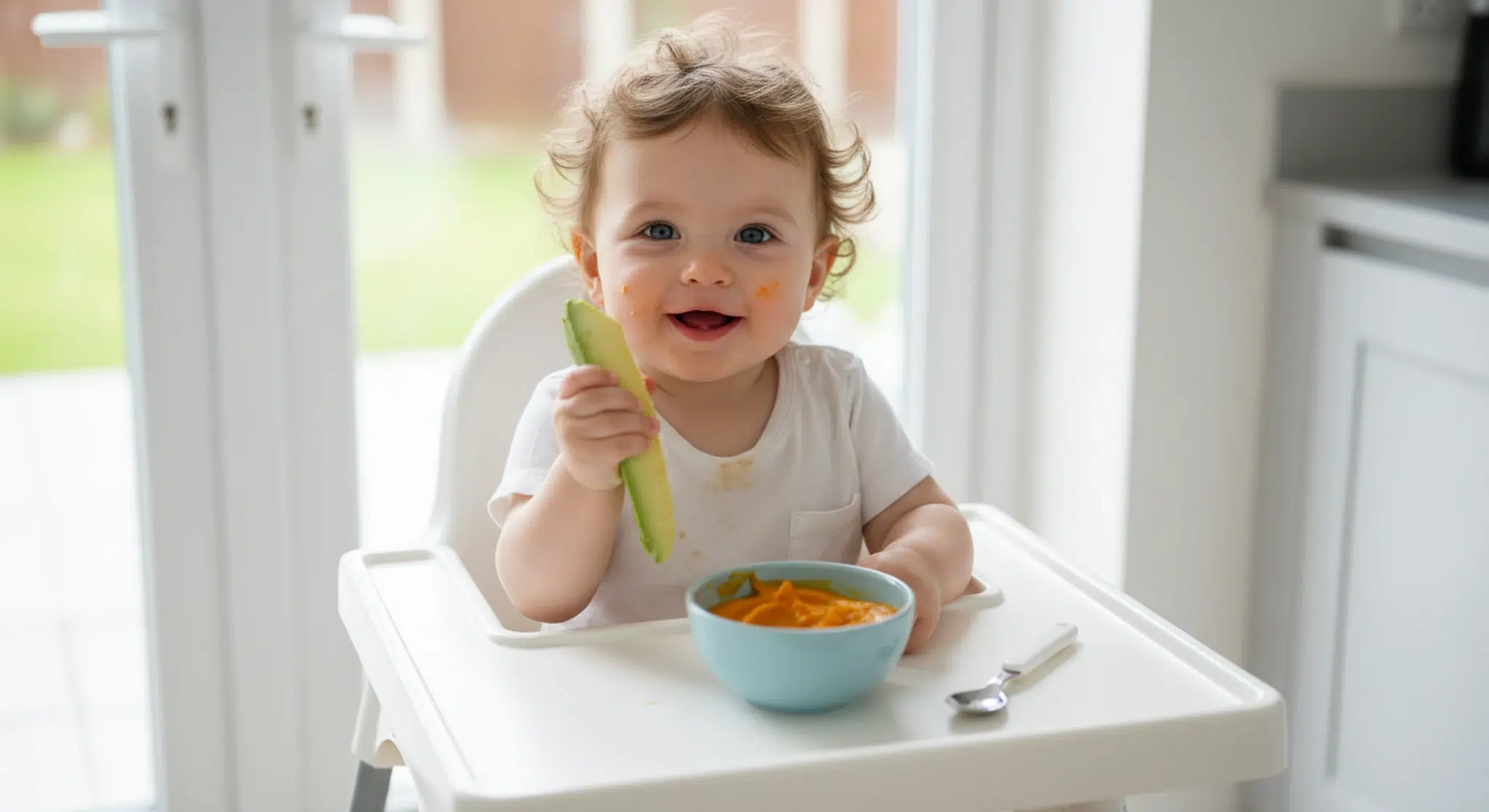
Baby-led weaning vs purees is not a pass-or-fail choice: both are safe, healthy ways to start solids, and many families use a mix.
Starting solids comes with a surprising amount of debate. Some parents swear by handing over a strip of avocado at 6 months; others prefer the familiar spoon and smooth purees. Both camps have good reasons.
This guide compares baby-led weaning vs purees side by side, covering benefits, choking and gagging, iron, allergens, mess, and cost, what the research actually shows, and how to combine the two approaches safely.
Key Takeaways
Both baby-led weaning and purees are healthy ways to start solids around 6 months.
A 2016 randomized trial found babies on a modified baby-led approach did not choke more than traditionally fed babies.
Gagging is common and normal early on; choking is silent and needs immediate help.
Plan iron-rich foods at most meals with either method, and introduce allergens like peanut and egg early.
Combining the two (preloaded spoons plus finger foods) is a practical, well-supported option.
Table of Contents
Baby-Led Weaning vs Purees: The Quick Answer
Both approaches work. Baby-led weaning (BLW) means skipping spoon-feeding and offering soft, graspable pieces of family foods from the start, so your baby feeds themselves. Traditional purees mean spoon-feeding smooth mashed foods and moving to lumpier textures and finger foods over the next few months. Many families land on a mix of both, and the American Academy of Pediatrics (AAP) supports flexibility.
What matters most is not the method but the basics: starting around 6 months when your baby shows signs of readiness, offering iron-rich foods early, introducing common allergens, progressing through textures, and following safe choking-prevention practices. For the fundamentals, see our baby-led weaning guide and our baby purees guide.
Smooth single-ingredient purees, then mashed and lumpy textures
Starting age
Around 6 months, with good sitting and hand control
Around 6 months (sometimes 4 to 6 months with doctor guidance)
How much baby eats early on
Often very little at first; lots of exploring
Usually more volume early
Mess
Very messy
Less messy
Iron intake
Needs planning; iron-rich finger foods at most meals
Easier to add iron-fortified cereals and pureed meats
Gagging
More common early (a normal safety reflex)
Less early; may appear later when textures change
Family meals
Baby eats modified versions of family food
Separate baby food, unless you puree family meals
Cost and prep
Low; uses family food
Store-bought jars cost more; homemade takes prep time
How baby-led weaning and purees compare.
Benefits of Baby-Led Weaning
Builds self-feeding skills early: picking up food practices the pincer grasp and hand-eye coordination.
Lets babies set their own pace: some research suggests BLW may help babies respond to their own hunger and fullness cues, though studies are limited.
Family meals together: your baby eats what you eat (salt-free and modified), which can make meals simpler.
Early exposure to textures and flavors: babies experience real food shapes and tastes from the start.
The AAP notes that there are very few studies on the long-term health advantages of baby-led weaning, so these benefits are promising rather than proven.
Benefits of Purees
Easier to track intake: you can see how much your baby eats, which reassures many parents.
Simple to boost iron: iron-fortified cereals and pureed meats, beans, and lentils are easy to serve.
Less gagging early on: smooth textures can feel less stressful for parents at the start.
Helpful for some babies: babies with developmental delays, low muscle tone, or medical conditions may do better starting with purees. Your pediatrician can guide you.
The key with purees is to not stay on smooth textures too long. Moving to thicker, lumpier foods and soft finger foods by around 8 to 9 months helps babies learn to chew.
Tired nights don’t have to last forever.
Our free two-minute quiz builds a gentle, personalized sleep plan for your baby’s age and temperament.
This is the biggest worry for most parents. The best evidence so far is reassuring. In a randomized trial of more than 200 New Zealand families published in Pediatrics in 2016, babies following a modified baby-led approach (with education on safe foods and iron) did not choke more often than babies fed traditionally. The AAP also notes that some studies suggest baby-led weaning does not pose higher choking risks than traditional feeding.
It helps to know the difference between gagging and choking:
Gagging: noisy, with coughing, sputtering, and watery eyes. It is a normal reflex that pushes food forward. Stay calm and let your baby work it out.
Choking: silent or nearly silent, with difficulty breathing, a weak cry, or turning blue. This is an emergency that needs immediate infant first aid.
Whatever method you choose, consider taking an infant CPR and choking course before starting solids.
Choking Safety Rules for Any Method
Always seat your baby upright in a high chair, and stay with them for every bite.
Offer foods that squish easily between your thumb and finger.
Serve finger foods in strips about the length of an adult finger for young babies, then smaller pieces once they develop a pincer grasp.
Avoid round, coin-shaped slices. Quarter grapes and cherry tomatoes lengthwise, and never serve hot dog rounds.
Skip high-risk foods: whole nuts, popcorn, hard raw vegetables, raw apple chunks, hard candy, and thick globs of nut butter.
Never feed a baby in a car seat, stroller, or while lying down.
The AAP’s choking-prevention guidance recommends keeping the highest-risk foods away from children until at least age 4.
Iron: The Nutrient to Watch
Babies’ iron stores drop around 6 months, so iron-rich foods matter with either approach. With BLW, plan an iron source at most meals: soft-cooked meat strips, shredded chicken, egg strips, beans mashed onto toast, lentil patties, or iron-fortified cereal cooked into pancakes. With purees, iron-fortified cereals, pureed meats, and lentils are easy wins.
Allergens and Both Approaches
Current guidelines, including those from the National Institute of Allergy and Infectious Diseases, support introducing common allergens like peanut and egg early, around 6 months, once your baby has started other solids. Babies at high risk (severe eczema or an egg allergy) may need to start around 4 to 6 months after talking with their pediatrician. Baby-led weaning does not make this harder, but you may need to flex: thinned peanut butter swirled into oatmeal or spread thinly on a toast strip is safer than a spoonful.
Combining Baby-Led Weaning and Purees
Many families find a combination the most practical, sometimes called combination feeding or baby-led feeding. For example:
Offer a preloaded spoon of thick puree and let your baby bring it to their mouth.
Serve a soft finger food alongside a puree at the same meal.
Use purees for iron-rich foods and allergens, and finger foods for exploration.
Let your baby lead on busy days and spoon-feed when you need a quicker meal.
There is no rule that says you must pick one lane. Watching your baby’s cues and progressing textures matters more than the label.
How to Tell Your Baby Is Ready for Solids
Whichever approach you choose, look for these signs, usually around 6 months:
Sits upright with little or no support and has good head control
Shows interest in food and opens their mouth when food comes near
Has lost the tongue-thrust reflex that pushes food back out
Can bring objects to their mouth (especially important for BLW)
Check in with your pediatrician before starting solids, especially if your baby was premature, has reflux, swallowing or feeding difficulties, developmental delays, low muscle tone, or a family history of food allergies. Your doctor can help you choose the right starting approach, plan for iron, and create a safe plan for introducing allergens.
Frequently Asked Questions
Is baby-led weaning better than purees?
Neither is clearly better. Baby-led weaning builds self-feeding skills and family meal habits, while purees make it easier to track intake and add iron. Research on long-term benefits is limited, so choose what fits your baby and family, or combine both.
Is baby-led weaning safe?
Baby-led weaning is safe when babies are developmentally ready, seated upright, supervised, and offered soft, appropriately shaped foods. A 2016 randomized trial found no increase in choking compared with traditional spoon-feeding.
Can you do baby-led weaning and purees together?
Yes. Many families combine them by offering preloaded spoons of thick puree alongside soft finger foods. The AAP encourages flexibility, and combining approaches can make it easier to include iron-rich foods and allergens.
What age should you start baby-led weaning?
Start baby-led weaning around 6 months, when your baby can sit upright with little support, has good head control, brings objects to their mouth, and shows interest in food.
What are the best first foods for baby-led weaning?
Good first foods include ripe avocado strips, banana with some peel left on for grip, soft-steamed broccoli florets, sweet potato wedges, strips of omelet, and soft shredded chicken or beef.
Calmer days, better nights.
Betteroo builds a personalized sleep plan for your baby. Take the free two-minute quiz to get started tonight.