Feeding · Months 6 to 36
The best high chairs, matched to how you eat and what you’ll spend.
Two everyday chairs, one that grows with your child for years and one that costs less, with a seat pad you can machine-wash. Plus an optional seat for eating out.
- 2 chairs + a travel seat
- Recall-checked Oct 2026
- Includes the $0 option
Independent picks. If you buy through our Amazon links we may earn a commission; as an Amazon Associate, Betteroo earns from qualifying purchases. It never decides what makes the list. How we choose
The short answer
Most families need one everyday chair, and that’s the whole decision. Get the Abiie Beyond Junior if you want one chair for years. Get the Ingenuity Proper Positioner to spend less, with an adjustable footrest and a seat pad that goes in the washing machine. Add the Inglesina Fast Table Chair only if you eat out or travel often: a second seat, not your main one, because the AAP says a hook-on chair isn’t a substitute for a freestanding one. A booster isn’t a required next step; see Leaving the high chair.
Most babies are ready for solids around six months (AAP). Put your baby in a high chair once they have strong head and neck control and can sit up on their own, and use the harness, including the crotch strap, every time (AAP). The tray is not a restraint.
At a glance
Two everyday chairs and a travel seat
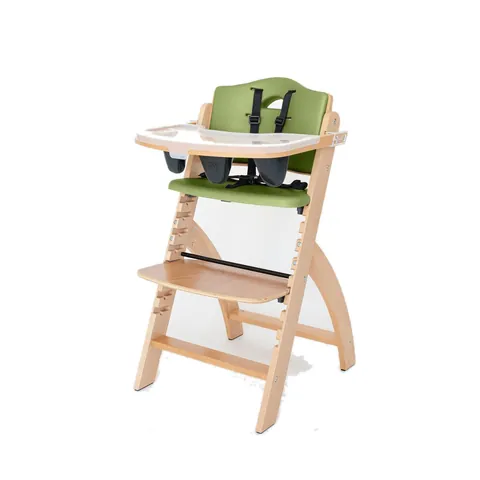
Abiie Beyond Junior
Adjusts from a high chair to a child’s chair at your table.
Price band: Premium Check price Why it made the list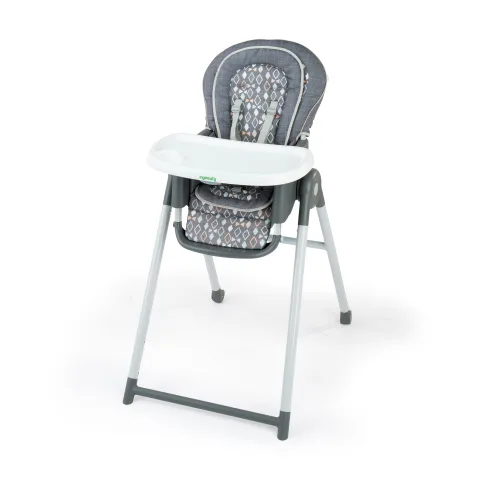
Ingenuity Proper Positioner 7-in-1 High Chair
An adjustable footrest, so their feet are supported, and a seat pad you can machine-wash.
Price band: Premium Check price Why it made the list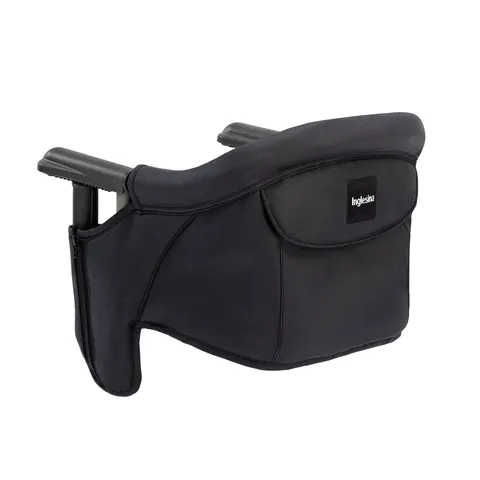
Inglesina Fast Table Chair
Clamps onto the table and folds into its own bag.
Price band: Mid-range Check price Why it made the listBefore you buy
What a high chair actually has to do
A common mistake is buying only for the baby in front of you. A six-month-old needs support and a surface you can wipe. A two-year-old needs a seat that still fits at the family table. Buy for both, or plan to buy twice.
We assess both everyday chairs on the same four things: an upright seat, a seat depth and footrest that support the legs, a tray that sits close to the body, and a harness a caregiver can do up correctly at every meal. The side-by-side table shows how each one measures up.
Fits your child
An upright seat, support under the feet, and a tray close to their body. Seat and footrest that adjust keep that fit as they grow.
A harness you use every time
A 5-point harness, or a waist and crotch strap, done up at every meal, and a chair that can’t tip easily. The AAP’s checklist is short and worth reading.
Fits your kitchen
Measure the floor space, and for a hook-on seat, your table’s thickness. Wipeable surfaces help between meals.
The picks
Why each one made the list
Abiie Beyond Junior
Adjusts from a high chair to a child’s chair at your table.
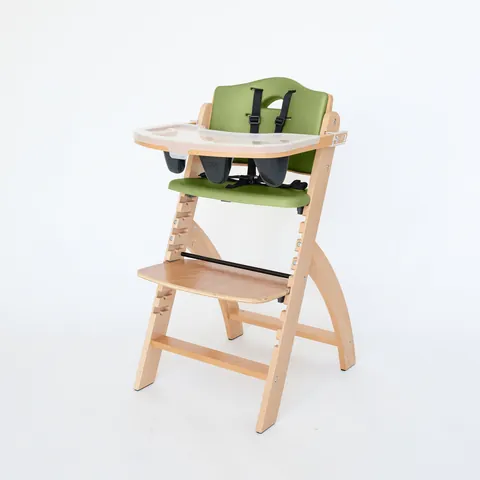
A wooden convertible chair whose seat and footrest adjust as your child grows (Abiie), so one frame covers the high-chair years and then becomes a child’s chair at the family table. The tray comes off when you’re ready to pull up to the table. We picked it for its balance of price and features: it costs the most here, and it is the only chair on this page rated from six months to adult.
Why it’s worth it
- Seat and footrest adjust as your child grows
- 5-point harness for the high-chair stage, 3-point once it converts to a chair
- Tray comes off, so it converts to a table chair
Key specs
- Age range
- 6 months to adult
- Max weight
- 250 lbs
- Harness
- 5-point, then 3-point as a chair
- Footrest
- Adjustable
- Tray
- Removable, dishwasher-safe cover
- Seat pad
- Water-resistant cushion, wipe clean
- Chair weight
- 18 lbs
- Folds
- No
From Abiie’s product page and the amazon.com listing, checked October 1, 2026.
Safety check
- No recalls found in the CPSC recall database (searched by product name, Oct 1, 2026).
- Abiie states it meets ASTM F404, the US high chair standard.
Ingenuity Proper Positioner 7-in-1 High Chair
An adjustable footrest, so their feet are supported, and a seat pad you can machine-wash.
It is built around posture: the multi-position footrest is there to stop feet dangling, and the seat is designed to keep hips, knees and ankles at right angles (Kids2). The seat pad comes off and goes in the washing machine. It starts with a newborn recline and a rocking infant seat, and ends as a toddler chair and booster. We picked it for families who want that footrest and a washable seat at a lower price than the Abiie.
Why it’s worth it
- Adjustable footrest, so their feet are supported
- Removable, machine-washable seat pad
- 5-point harness, then 3-point as a toddler chair
Key specs
- Age range
- 0 to 36 months
- Max weight
- 33 lbs
- Harness
- 5-point, then 3-point as a toddler chair
- Footrest
- Multi-position, adjustable
- Tray
- Wipe-clean tray
- Seat pad
- Removable, machine-washable
- Chair weight
- Not listed
- Folds
- Not listed
From Kids2’s product page and the amazon.com listing, checked October 1, 2026.
Safety check
- No recalls found in the CPSC recall database (searched by product name, Oct 1, 2026). Kids2’s past CPSC recalls were other products, including its Rocking Sleepers.
- Kids2 says it is third-party safety tested but doesn’t name the standard. Every high chair sold in the US must meet ASTM F404 (CPSC).
Optional
The travel seat: for eating out, not every day
A hook-on chair is a second seat. It is handy for restaurants, trips and visits, but the AAP says a chair that hooks onto a table is not a good substitute for a freestanding one. Buy one of the two chairs above first.
Inglesina Fast Table Chair
Clamps onto the table and folds into its own bag.
It hooks onto a sturdy table, so it goes to restaurants, trips and the grandparents’ house and takes no floor space. Use it as your second seat, not your only one: the AAP’s high chair advice is that a chair that hooks onto a table is not a good substitute for a freestanding one, and that for eating out and travel you should choose one that locks onto the table. This one does.
Why it’s worth it
- Folds flat into the included bag
- Locks onto tables from 0.8 to 3.5 inches thick
- Rated to 37 lbs, so it lasts into the toddler years
Key specs
- Age range
- 6 to 36 months
- Max weight
- 37 lbs
- Harness
- 3-point
- Footrest
- None
- Tray
- None; sold separately
- Seat pad
- Machine-washable seat cover
- Chair weight
- 4.2 lbs
- Folds
- Yes, into its bag
From Inglesina’s product page, FAQ and manual, checked October 1, 2026.
Safety check
- No recalls found in the CPSC recall database (searched by product name, Oct 1, 2026).
- Its manual cites ASTM F1235, the US hook-on chair standard.
Later, usually between 1 and 3 years
Leaving the high chair
Children usually move out of a high chair somewhere between one and three years. Go by signs, not a birthday: they climb, rock or try to stand in the chair, they reach its weight or height limit, or they can sit safely at the table.
What comes next is a choice, not a fixed path. Many children go straight to a regular chair at the table, or to an adjustable youth chair; the Abiie converts into one. A strapped booster on a dining chair is one convenient option, not a required step. If you choose one, check its own limits: ours is rated for 16 to 36 months and up to 33 lbs (Kids2).
Ingenuity SmartClean Toddler Booster Seat
One wipe-clean piece, with a foam insert for smaller toddlers.
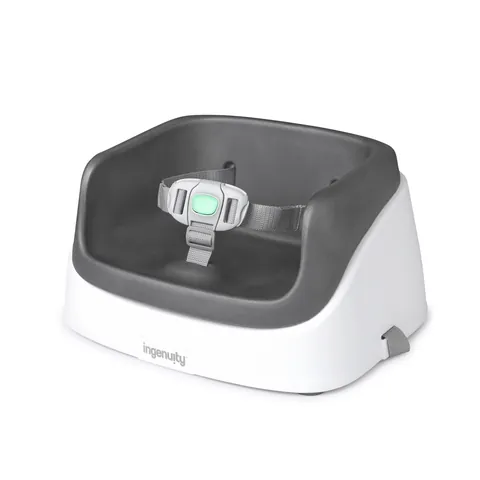
A molded plastic booster that wipes down with a damp cloth, with a foam insert that lifts out for a deeper clean. It straps to a dining chair in two places, around the bottom and around the back, and has a 3-point harness (Kids2).
Why it’s worth it
- No fabric or seams to trap food
- Removable insert adjusts the fit
- In our Budget band when we checked
Key specs
- Age range
- 16 to 36 months
- Max weight
- 33 lbs
- Harness
- 3-point, removable
- Footrest
- None
- Tray
- None listed
- Seat pad
- Removable foam insert, wipe clean
- Chair weight
- 1.6 lbs
- Folds
- No
From Kids2’s product page and the amazon.com listing, checked October 1, 2026.
Safety check
- No recalls found in the CPSC recall database (searched by product name, Oct 1, 2026).
- Every booster seat sold in the US must meet ASTM F2640 (CPSC); Kids2’s page doesn’t name it.
Side by side
How they compare
| | | |
|---|---|---|---|
| Type | Convertible wooden chair | Convertible high chair, 7 modes | Hook-on table seat |
| Use as | Everyday chair | Everyday chair | Second seat, for travel and eating out |
| Price band | Price band: Premium | Price band: Premium | Price band: Mid-range |
| Age and weight | 6 months to adult, up to 250 lbs | 0 to 36 months, up to 33 lbs | 6 to 36 months, up to 37 lbs |
| Footrest | Adjustable | Multi-position, adjustable | None |
| Tray | Removable, dishwasher-safe cover | Wipe-clean tray | None; sold separately |
| Harness | 5-point, then 3-point as a chair | 5-point, then 3-point as a toddler chair | 3-point |
| Seat pad | Water-resistant cushion, wipe clean | Removable, machine-washable | Machine-washable seat cover |
| Chair weight | 18 lbs | Not listed | 4.2 lbs |
| Folds | No | Not listed | Yes, into its bag |
| Floor space | A full chair | A full chair, 35 x 24.5 in.; no fold listed | None, locks onto the table |
Which one is yours
Start with your situation
You want one chair for yearsThe Abiie: seat and footrest adjust.
Their feet dangle in the chair you haveThe Proper Positioner: its footrest adjusts.
You want a seat pad you can machine-washThe Proper Positioner.
You eat out or travel a lotAdd the Inglesina as a second seat.
Not ready for solids yetWait. Ask your pediatrician if you’re unsure.
A second chair for grandparentsThe Inglesina, if their table suits it.
Climbing out, or past the chair's limitsTime to leave the high chair. See Leaving the high chair, above.
The $0 version
Wait. Most babies are ready for solids around six months, and there’s no prize for owning a high chair before then. A few weeks of watching how your kitchen actually works is better information than any review. Later on, check whether your high chair’s manual allows it to be used at the table without the tray. Some convertible chairs are designed for it, and it gives you much of what a booster does, harness included.
There is no developmental prize for owning a high chair early.
What we would skip
Four things we’d leave on the shelf
They get bundled onto this purchase. Here’s why we wouldn’t bother.
Add-on seat pads and cushion inserts
The extra pads sold separately to make a chair cozier. They add seams that trap food, and an add-on can change how the harness fits. Keep any padding that came with your chair, because the straps were designed around it. Just skip the extras.
The 40-piece first foods starter kit
You need a few soft-tipped spoons, one suction bowl and a bib with a pocket. The bundles add mesh feeders, food mills and freezer trays you may never need. Buy the basics and add more only when you actually miss something.
Floor seats put up on a chair
Only put a baby seat on a dining chair if its maker explicitly says it can be used there, and then follow its attachment and harness instructions exactly. Many foam floor seats are made for the floor only.
Skipping the harness because they are sitting nicely
A one-year-old can stand up in a second. The AAP’s advice is to use the safety straps, including the crotch strap, every time your child sits in the chair, and never to let them stand in it. The tray is not a restraint. That goes for boosters too.
Chairs we passed on
- Stokke Tripp Trapp. The best-known grow-with-them chair. Set up as a high chair it started at $296.65 on Stokke’s US site when we checked; the Abiie works on the same idea for $238.
- Cosco Simple Fold. The lowest price we looked at, but it has a 3-point harness, a leg rest with no adjustment listed, and a seat pad Cosco doesn’t describe taking off for a wash.
- Ingenuity Full Course SmartClean 6-in-1. No fabric seat, so it wipes clean, but no footrest is listed, and foot support is one of our four checks.
Questions parents ask
FAQ
When can a baby start using a high chair?
Around six months, once your baby has strong head and neck control and can sit up on their own. That’s also when most babies show signs of being ready for solids (AAP). Check the chair’s own limits too. The Proper Positioner also has newborn modes, a recline and a rocking seat, which are for awake time; use it for meals once your baby sits up.
Are clip-on high chairs safe?
The AAP says a chair that hooks onto a table is not a good substitute for a freestanding one. For eating out or travel, choose one that locks onto the table, use it only on a table heavy enough not to tip, and keep your child’s feet away from table legs. The Inglesina locks onto tables 0.8 to 3.5 inches thick (Inglesina).
What safety standard should a high chair meet?
Every high chair sold in the US must meet the federal high chair rule, which adopts ASTM F404, and carry a Children’s Product Certificate based on third-party testing (CPSC). Hook-on chairs have their own standard (ASTM F1235), and so do booster seats (ASTM F2640). Before buying, and especially second-hand, check the CPSC recall list.
When should a toddler move out of the high chair?
Usually between one and three years, by signs rather than age: climbing, rocking or trying to stand in the chair, going past its weight or height limit, or being able to sit safely at the table. What comes next is your choice: a regular chair at the table, an adjustable youth chair, or a strapped booster within its own limits. Our booster pick is rated for 16 to 36 months and up to 33 lbs (Kids2). In any seat with a harness, keep it on.
Do I need a high chair that reclines?
Not for eating. A baby eating solids should be sitting upright, which is why the chairs on this page are for babies who can already sit up.
What about the Stokke Tripp Trapp?
It’s the best-known chair of the grow-with-them kind: a wooden frame whose seat and footrest move as your child grows. The Abiie Beyond Junior works on the same idea. We picked the Abiie as the value call, not because it beats the Tripp Trapp: set up as a high chair, the Tripp Trapp started at $296.65 on Stokke’s US site when we checked, against $238 for the Abiie.
Why trust Worth It
How we choose
We don’t run a product lab, and we won’t pretend we do. Worth It picks are researched from makers’ instructions, retailer listings and official safety guidance, not lab-tested. Each is chosen for a specific age and a specific job, the way a friend a couple of years ahead of you would choose: a few products, each with a reason, and an honest note on what could go wrong.
We check every listing on amazon.com for a live US offer and sort it into a price band: Budget (under $30), Mid-range ($30 to $100) or Premium (over $100). We don’t print exact prices because they change daily. If you buy through our links we may earn a commission. That pays for this, and it never decides what makes the list.
For safety, we search the CPSC recall database by product name, and we note the US safety standard the maker says a product meets. Where the maker doesn’t say, we tell you what the law requires for that kind of product. The JPMA’s certification list (now run by the Baby Safety Alliance) isn’t publicly searchable, so we only mention certification when the maker states it. Specs come from the maker first, and the Amazon listing second.
Sources for this page
- AAP: 6 quick high chair safety tips
- AAP: starting solid foods
- CPSC: high chair requirements (ASTM F404)
- CPSC: booster seat requirements (ASTM F2640)
- CPSC recall database, searched by product name on October 1, 2026
- Abiie: Beyond Junior high chair
- Kids2: Ingenuity Proper Positioner 7-in-1 High Chair
- NIH Safe to Sleep: reduce the risk (sitting devices)
- Stokke: Tripp Trapp (US prices, checked October 1, 2026)
- Inglesina: Fast Table Chair
- Inglesina: Fast Table Chair FAQ
- Inglesina: Fast Table Chair manual
- Kids2: Ingenuity SmartClean Toddler Booster Seat
- Product listings on amazon.com, checked October 1, 2026
This page, every week, for your baby’s exact age.
Worth It is a weekly email matched to your baby’s age. Around month 5 it covers the high chair, around month 11 the booster question, and every week in between, something you’ll actually need.
- Two or three picks for what changes that week, from month 4 to month 24
- The free version and the skip list, every time
- Free, one email a week, unsubscribe in one click
Expecting? Add your due date, and Worth It starts when your baby turns four months. It runs until month 24.
By signing up you agree to get Worth It emails from Betteroo. Privacy policy.
Keep going