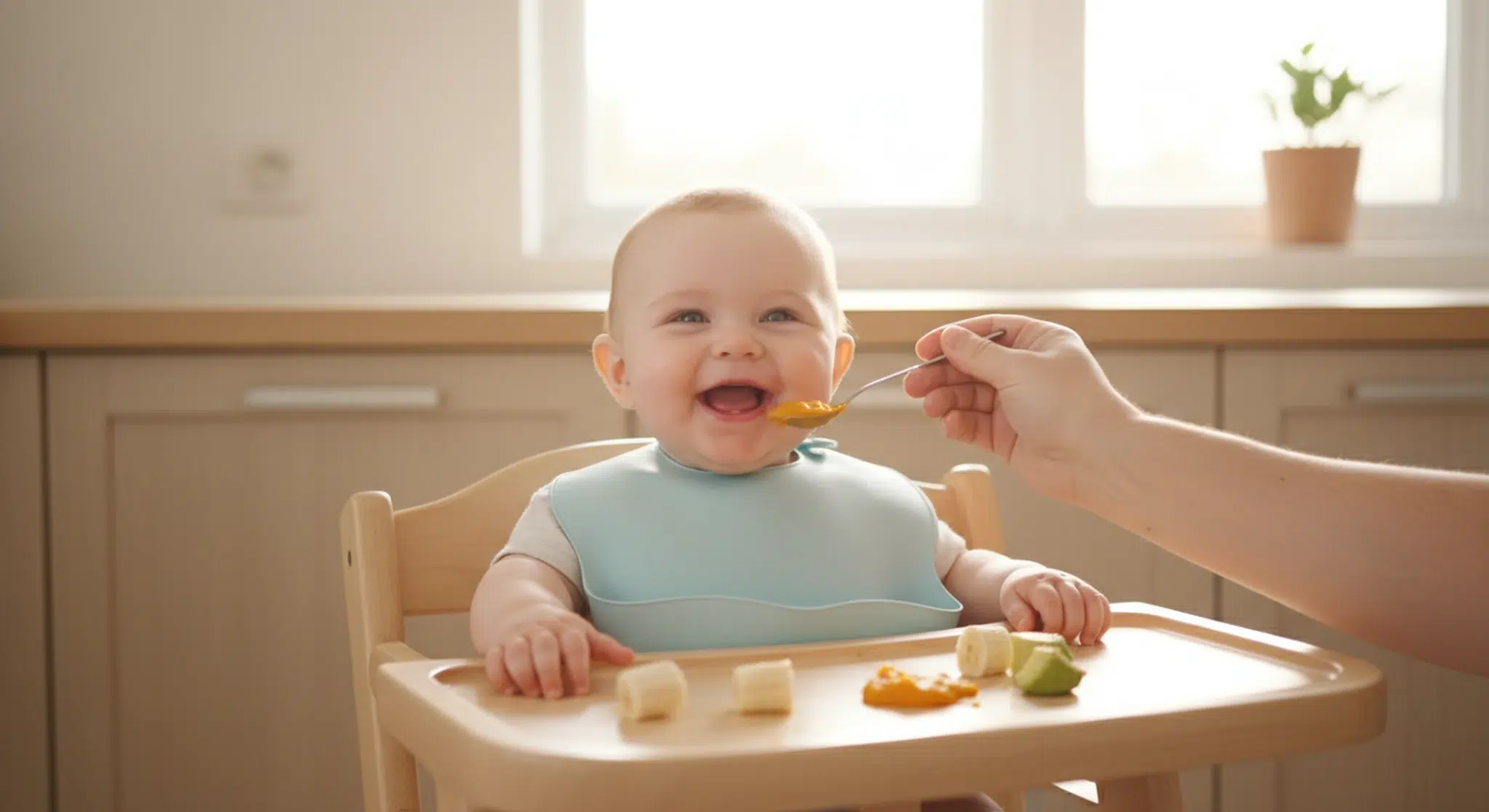
Most babies are ready to start solids around six months, once they can sit up steadily, hold their head well, and show real interest in food. Milk stays the main source of nutrition until age one, and the first bites are all about practice, iron, and variety.
Starting solids is one of the messiest, most exciting milestones of the first year, and also one of the most confusing. When exactly do you begin? Purees or finger foods? What about allergens, choking, and the endless online rules? The reassuring truth is that starting solids is simpler and more forgiving than it looks, and the current pediatric guidance is clear and flexible.
This guide walks through when to start, the readiness signs that matter most, how to choose between purees and baby-led weaning (spoiler: you can do both), the best iron-rich first foods, a gentle first-week plan, how to introduce allergens early and safely, and the critical difference between harmless gagging and real choking.
Key Takeaways
Start solids around six months, when readiness signs appear, while continuing breast milk or formula.
The key cues are sitting up with steady head control, losing the tongue-thrust reflex, and real interest in food.
Purees and baby-led weaning are both pediatrician-approved, and mixing them is fine.
Prioritize iron-rich first foods and introduce common allergens early to lower allergy risk.
Learn the difference between noisy, protective gagging and silent, dangerous choking before you begin.
Table of Contents
When to Start Solids
The American Academy of Pediatrics recommends starting solids at around six months of age, alongside continued breast milk or formula. Six months is a guideline, not a deadline, and the more reliable signal is your baby’s development. Some babies are ready a couple of weeks earlier and some a little later, and either is normal. What you are looking for is a baby whose body and reflexes have matured enough to handle food safely, not simply a baby who has hit a date on the calendar.
There are good reasons not to rush. Before about four months, a baby’s tongue still pushes food back out automatically (the tongue-thrust reflex), and the gut and swallowing coordination are not ready. Starting too early is linked to more choking and does not help babies sleep through the night, despite the old myth about cereal in a bottle. Starting much later than six months can make it harder to introduce textures and can leave gaps in iron. Around the half-year mark, with readiness signs present, is the sweet spot for most families.
Signs Your Baby Is Ready for Solids
Watch your baby, not just the clock. Pediatric guidance points to a short checklist of developmental cues, and the safest approach is to wait until your baby shows most of them together, not just one. If you are unsure, your pediatrician can confirm readiness at a well visit.
Sits up with little or no support and holds the head steady and upright
Has lost the tongue-thrust reflex, so food is not automatically pushed back out
Opens the mouth and leans in when food comes toward them
Can move food to the back of the mouth and swallow rather than just drool it out
Shows real interest in what you are eating, watching, reaching, or grabbing
Has roughly doubled birth weight and is around six months old
Reaching for your fork or chewing on toys are exciting, but on their own they are not proof of readiness. Sitting steadily and good head control are the cues that matter most for safety, because a baby who cannot hold an upright, stable posture cannot manage food in the mouth well. When the whole picture lines up, you are ready to begin.
Purees or Baby-Led Weaning: Which Approach?
There are two popular ways to start, and the good news is that the AAP supports both, and most families end up blending them. With traditional spoon-feeding you offer smooth purees and thin cereals and gradually thicken them and add lumps. With baby-led weaning you skip purees and offer soft, graspable pieces of food from the start, letting your baby self-feed. Both paths arrive at the same place: by the first birthday, a baby eating a wide variety of family foods.
Neither method is safer or smarter than the other when done correctly. A large randomized trial found that babies following a structured baby-led approach, paired with clear guidance on choking hazards, did not choke more often than spoon-fed babies. Baby-led eaters gagged a bit more at six months but less by eight months, as they learned to manage texture. Pick the approach that fits your comfort level and your baby’s temperament, and feel free to mix purees and finger foods in the same week. For the full comparison, see our guides to baby purees and baby-led weaning.
Spoon-fed purees
Baby-led weaning
Starts with
Smooth single-ingredient purees, thin cereal
Soft graspable strips and chunks
Who leads
The caregiver guides the spoon
The baby self-feeds
Best for
Parents who want control and easy tracking
Families comfortable with mess and gagging
Watch for
Moving on to textures so lumps are not refused later
Sizing and softness so pieces are safe to gum
Both approaches are pediatrician-approved, and a mix of the two is completely fine.
Best First Foods for Babies
The first bite matters less than the variety over the first few months. That said, iron is the nutrient to prioritize, because a baby’s iron stores from birth start to run low around six months and breast milk is naturally low in it. Good early choices are iron-rich foods paired with a range of vegetables, fruits, and healthy fats so your baby meets many flavors and textures early.
Iron-fortified infant cereal (oatmeal is gentle and easy to thin)
Well-cooked, mashed or pureed meat, poultry, beans, or lentils
Soft vegetables such as sweet potato, avocado, peas, and squash
Ripe soft fruits like banana, pear, and cooked apple
Full-fat plain yogurt and smooth, thinned nut or seed butters
There is no medical reason to start with vegetables before fruits or to follow a rigid order. Offer a rainbow, keep salt and added sugar out, and remember that milk (breast or formula) is still your baby’s main source of nutrition until twelve months. For a detailed 4-to-6-month menu, see our guide to baby’s first foods from 4 to 6 months.
How to Start: Your First Weeks
Keep the first sessions short, calm, and low-pressure. Pick a time when your baby is happy and alert but not starving, offer a small amount of one food, and let your baby set the pace. Most babies eat only a spoonful or two at first, and that is exactly right. Food before one is for practice and exploration, so a mostly-worn meal is still a win.
Introduce one new single-ingredient food at a time and wait about three to five days before adding the next. This spacing helps you spot any reaction and connect it to the right food. Start with once a day, build to twice, and by around eight to nine months most babies are working toward three small meals plus milk. Expect faces, spitting, and mess. Refusing a food today does not mean forever, and it can take ten or more exposures before a baby accepts something new.
Big feelings and big milestones are easier with rest.
When you are ready, our free two-minute quiz builds a gentle, personalized sleep plan for your baby.
Guidance has flipped from the old advice to delay allergens. Current pediatric recommendations are to introduce common allergenic foods early, around the time you start solids, because early and regular exposure lowers the risk of developing a food allergy, especially for peanut and egg. Waiting does not protect your baby and may do the opposite.
Offer allergens in a baby-safe form: a thin smear of smooth peanut butter mixed into cereal or thinned with water or milk, well-cooked scrambled egg, or a little yogurt. Never give a spoonful of thick nut butter or whole nuts, which are choking hazards. Introduce one allergen at a time at home, earlier in the day, so you can watch for a reaction. If your baby has severe eczema or a known food allergy, talk with your pediatrician first about a plan.
Choking Versus Gagging, and How to Keep Solids Safe
Gagging looks alarming but is a normal, protective reflex, especially in the early weeks. A gagging baby is loud: coughing, sputtering, going red, and pushing the food forward. Let them work through it. Choking is different and quiet: a choking baby cannot cough, cry, or make sound, may look panicked, and can turn blue. That is an emergency. Knowing the difference keeps you calm during the noisy, harmless moments and ready for the rare serious one.
Always seat your baby fully upright and stay within arm’s reach for every meal
Offer foods soft enough to squish easily between your finger and thumb
Avoid choking hazards under age four: whole grapes, nuts, popcorn, raw hard veg, hot dog coins, hard candy, chunks of nut butter
Cut round foods like grapes and cherry tomatoes into quarters lengthwise
Never prop a bottle or feed in a car seat, carrier, or while reclining
Consider taking an infant CPR and choking-response class before you begin
Solids, Milk, and Sleep in the First Year
Parents often hope that solids, and especially cereal, will finally deliver a full night of sleep. The evidence does not support it: starting solids early or adding cereal to a bottle does not make babies sleep longer and carries real risks. Sleep in the first year is driven far more by a baby’s developmental stage, routine, and self-settling skills than by what is in their tummy.
If your baby is waking often around the same time you are navigating new foods, the two are usually separate puzzles. A consistent, calm bedtime routine and an age-appropriate schedule tend to move the needle more than any meal. For where to begin, see our guides to baby sleep schedules by age and building a bedtime routine.
Frequently Asked Questions
When should I start my baby on solids?
Most babies are ready around six months, but readiness is about development, not just age. Look for the ability to sit up with steady head control, loss of the tongue-thrust reflex that pushes food out, and genuine interest in food. Continue breast milk or formula alongside solids, and check with your pediatrician if you are thinking about starting before four months, which is not recommended.
What foods should babies avoid before age one?
Avoid honey, which can cause infant botulism, and do not offer cow’s milk as a main drink before twelve months (small amounts in cooking or yogurt are fine). Skip added salt and sugar, and steer clear of choking hazards such as whole grapes, nuts, popcorn, raw hard vegetables, and hot dog coins. Cut round foods into small quarters and keep every food soft enough to squish easily.
Should I start with purees or baby-led weaning?
Either works, and the AAP supports both. Purees give you more control and easy tracking, while baby-led weaning lets your baby self-feed soft finger foods from the start. Research shows that a structured baby-led approach with good hazard guidance does not raise choking risk. Many families use a mix, and the right choice comes down to your comfort level and your baby’s temperament.
How much solid food should a baby eat?
Very little at first, and that is normal. Start with a spoonful or two of one food once a day, then build to twice a day, and by eight to nine months work toward three small meals. Until age one, milk remains the main source of calories and nutrition, so treat early solids as practice and exploration rather than a meal your baby must finish.
Do solids help babies sleep through the night?
No. Despite the popular myth, starting solids or adding cereal to a bottle does not make babies sleep longer, and doing it early carries real risks. Night sleep is driven more by developmental stage, routine, and self-settling skills than by what a baby eats. A consistent bedtime routine and an age-appropriate schedule help far more than any meal.
Better days, better nights.
Betteroo builds a personalized plan for your baby’s sleep. Take the free two-minute quiz to get started.