The best shows for toddlers are slow, gentle, and built around one idea per episode, and they work best in small doses that you watch together.
A little high-quality screen time is not something to feel guilty about, as long as it fits within sensible limits and you know what to look for. The right show can teach feelings, letters, and kindness; the wrong one just overstimulates.
This guide covers how much screen time is appropriate for toddlers according to the AAP, what actually makes a children’s show good, an expert-backed list of the best shows by age, and how to end screen time without a daily battle.
Key Takeaways
The AAP advises no screens before 18 months (except video chat), and about one hour a day of high-quality content for ages 2 to 5.
Co-viewing matters: toddlers learn much more when you watch and talk about a show together.
The best shows are slow-paced, repetitive, and focused on feelings and real-world situations.
Bluey, Daniel Tiger, Sesame Street, and Mister Rogers are consistent expert favorites.
Set the limit before you start and use the end of an episode as the natural stopping point.
Table of Contents
How Much Screen Time Is OK for Toddlers?
Before the show list, the guardrails. The American Academy of Pediatrics recommends no screen time before 18 months, with one exception: live video chat with family, which counts as connection, not media. Between 18 and 24 months, if you introduce screens, keep it to high-quality content and watch together rather than handing the device over. From ages 2 to 5, aim for about one hour a day of high-quality programming, ideally co-viewed.
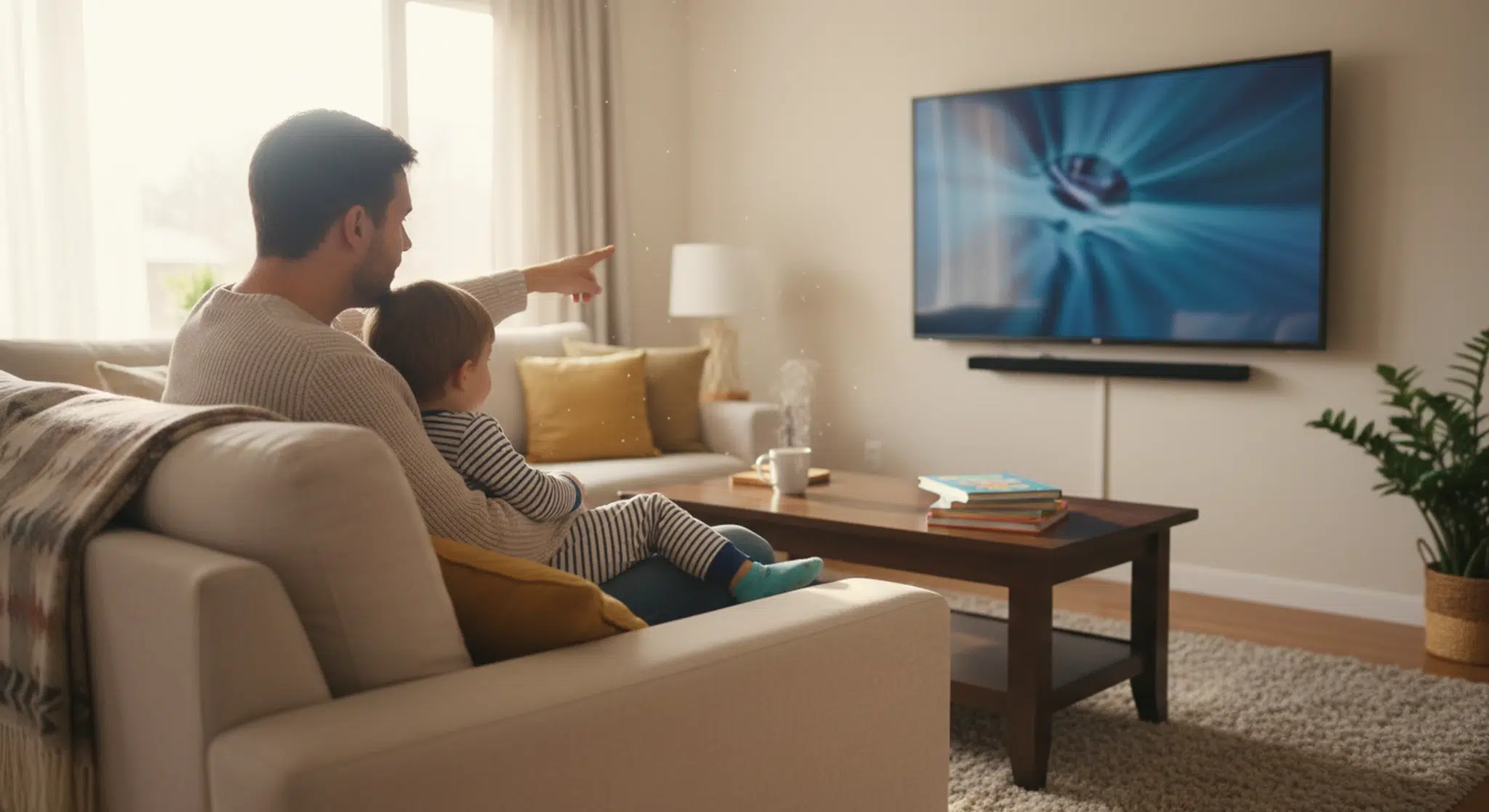
The word that matters most in all of that guidance is “co-viewing.” Toddlers learn far more when you watch with them and talk about what is happening (“He is sad, why do you think that is?”) than when they watch alone. Screens should not crowd out sleep, meals, active play, or unstructured time, and the bedroom and the dinner table are best kept screen-free.
What Makes a Show Genuinely Good for Toddlers
Not all children’s programming is created equal. The shows that actually help are slow-paced, gentle, and built around one clear idea per episode. Fast cuts, loud action, and constant scene changes can overstimulate young children and are harder for them to learn from. Look for calm pacing, repetition, real-world situations, and characters who name and manage their feelings.
Slow pacing with longer scenes, so toddlers can follow and absorb.
Repetition and songs that invite your child to join in.
Real-world settings a toddler recognizes, not nonstop fantasy chaos.
Content you are happy to watch and talk about together.
The Best Shows for Toddlers (Ages 1 to 4)
These titles are consistently recommended by pediatric and media-review experts for their pacing, warmth, and learning value. You do not need all of them; pick two or three your child loves and lean on those.
Show
Best for
Why it works
Bluey
2–5
Imaginative play, family relationships, short calm episodes
Daniel Tiger’s Neighborhood
2–4
Social-emotional skills and simple coping songs
Sesame Street
2–5
Letters, numbers, kindness, gentle humor
Mister Rogers’ Neighborhood
2–5
Slow pace, big feelings, reassurance
Puffin Rock
1–3
Very calm, soothing narration, nature
Curious George
2–4
Curiosity, cause and effect, problem-solving
Toddler-friendly shows favored by experts. Preview an episode yourself and confirm it fits your child.
Great days (and shows) start with good sleep.
A well-rested toddler handles screen-off transitions far better. Take our free quiz for a sleep plan built around your child.
Where and how your toddler watches matters as much as what. Autoplay is designed to keep the next episode rolling, which quietly turns “one show” into an hour, so turn it off in the app settings and you instantly regain control of the limit. On free, ad-supported apps, be aware that ads for other content and toys slip in between segments; a paid tier or a public-media app avoids most of that.
You do not need a pricey subscription to find great toddler content. PBS Kids offers many of the best-reviewed shows for free with no ads, and most libraries lend children’s DVDs and streaming passes at no cost. Whatever the platform, choose a specific show and start it yourself rather than letting an algorithm pick, download a few favorites for trips so you are not at the mercy of a signal, and keep the volume low and the screen at a comfortable distance.
Making Screen Time Work Without the Meltdowns
The hardest part of toddler screen time is usually turning it off. Set the expectation before you start (“two episodes, then we turn it off and have a snack”), use the built-in end of an episode as the stopping point rather than yanking mid-scene, and give a one-minute warning. A predictable next activity makes the transition land: a snack, a bath, or some hands-on play.
Keep screens out of the wind-down hour before bed, since the light and stimulation can delay sleep. If your toddler melts down every single time the screen goes off, that is often a sign of being overtired or of screens creeping past the recommended amount. Trade some of it for indoor activities and outdoor games, which burn energy and build skills at the same time.
A Balanced Take for Real Families
Guidelines describe the ideal, and real life includes a sick day, a work call, and a long flight. An occasional extra episode will not undo a healthy childhood. What matters is the overall pattern: screens as one small part of a day that is mostly filled with play, movement, sleep, and time with you.
Choose content deliberately instead of letting autoplay decide, watch together when you can, and keep screens out of bedrooms and away from bedtime. Those three habits do more for your toddler than hitting any exact number of minutes.
Frequently Asked Questions
How much screen time should a 2 year old have?
The AAP suggests about one hour a day of high-quality programming for children ages 2 to 5, ideally watched together. Under 18 months, the recommendation is to avoid screens apart from video chatting with family.
What is the best show for toddlers?
Bluey is a near-universal favorite for its calm pace and family themes, and Daniel Tiger’s Neighborhood is excellent for social-emotional skills. Sesame Street and Mister Rogers remain gold-standard picks. The best one is the calm, high-quality show your child engages with.
Is it bad for toddlers to watch TV?
A small amount of high-quality, co-viewed content is fine and can even teach useful skills. Problems come from too much, fast and overstimulating content, solo viewing, or screens replacing sleep, meals, and active play.
Why does my toddler melt down when I turn off the TV?
Transitions are hard, and toddlers struggle to stop something enjoyable. Warn before the end, stop at the natural end of an episode, and line up a next activity. Frequent meltdowns can also signal being overtired or too much total screen time.
Should toddlers watch TV before bed?
It is best to keep screens out of the hour before bed. The light and stimulation can delay sleep. Swap in a bath and a bedtime story instead.
A rested toddler is an easier toddler.
Good sleep makes screen-off transitions, and everything else, smoother. Take our free 3-minute quiz for a personalized sleep plan.