Flying with a baby is safe for most healthy, full-term babies after the first weeks of life, and it goes far more smoothly when you know the seat, security, and sleep rules before you reach the airport.
Most of the stress comes from not knowing the rules. Can a newborn fly? Is a lap infant safe? Will security take the breast milk?
This guide answers those questions with current guidance from the FAA, the TSA, the State Department, the CDC, Mayo Clinic, and the American Academy of Pediatrics, then covers ears, sleep, packing, and jet lag.
Key Takeaways
The AAP says it is ideal to wait until 2 to 3 months, though flying is generally safe after 7 days old. Airline minimum ages vary.
Children under 2 can fly as a lap infant, but the FAA and AAP say an approved car seat in their own seat is safest.
Formula, breast milk, toddler drinks, and baby food are exempt from the TSA 3.4 ounce liquid limit.
Feeding or a pacifier during takeoff and descent eases ear pressure.
Do not give medicine to make a baby sleep on a flight unless your pediatrician advises it.
As an Amazon Associate, Betteroo earns from qualifying purchases.
Table of Contents
When Can a Baby Fly?
Quick Answer
The American Academy of Pediatrics (AAP) says it is ideal to wait until your baby is 2 to 3 months old, although flying is generally safe once a newborn is at least 7 days old. Airlines set their own minimum ages, so check your airline before you book.
The reason to wait is germs. The AAP notes that air travel and crowded airports can raise a newborn’s risk of catching an illness, and suggests delaying a trip by a few weeks when you can. If flying with a newborn cannot wait, ask your pediatrician first.
Some babies need medical clearance. Mayo Clinic advises checking with a healthcare professional before flying if your baby was born early, because their lungs may still be maturing, and says any infant with heart or lung problems should be cleared for air travel.
Lap Infant or Own Seat? What the FAA Says
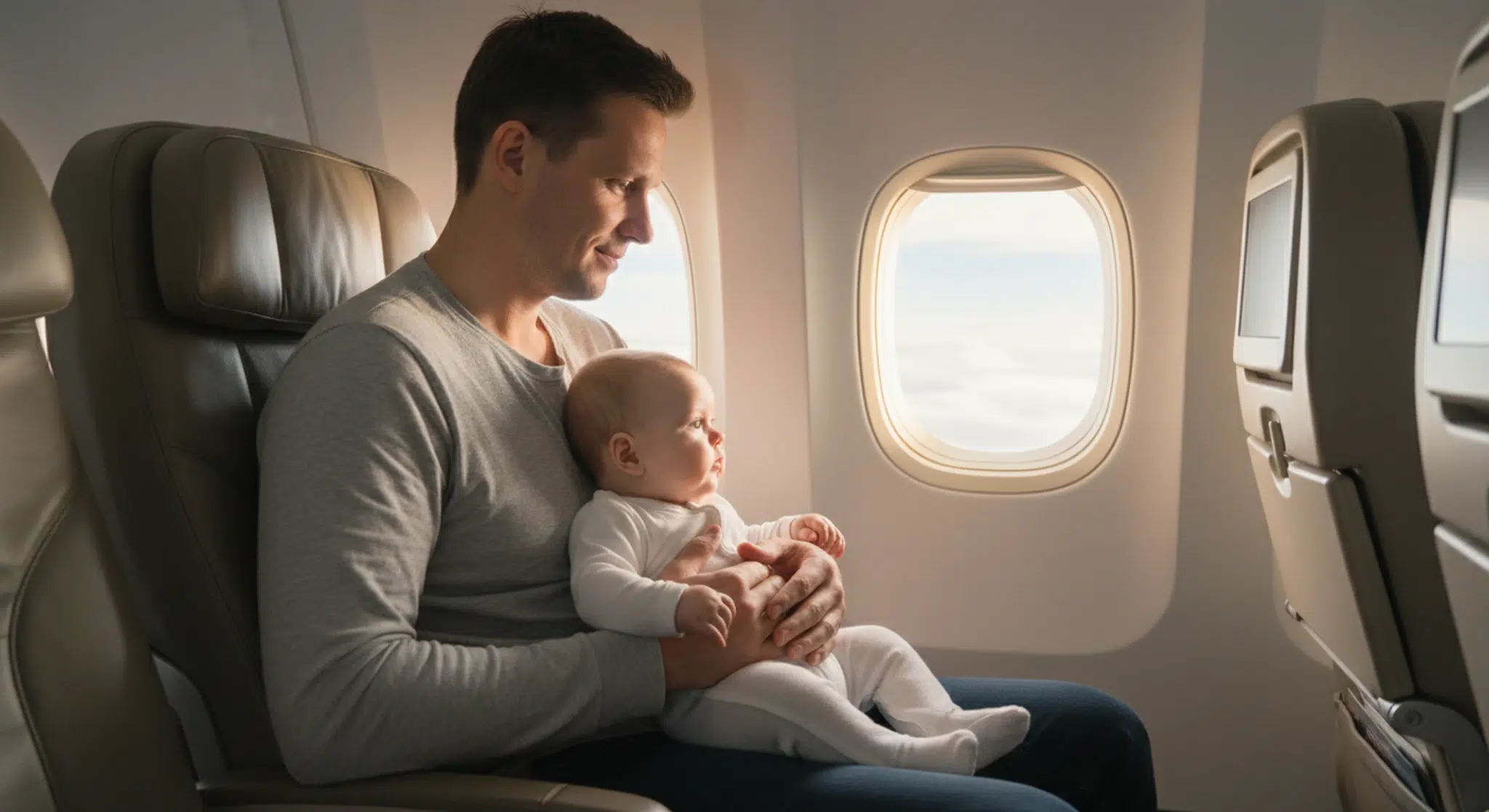
A child who has not reached their second birthday may fly as a lap infant, held by an adult, without a ticketed seat. It is allowed, but the Federal Aviation Administration (FAA) says the safest place for a child under 2 is in an approved child restraint system, not on your lap, because your arms cannot hold a child securely during unexpected turbulence. The FAA strongly urges an approved restraint for the whole flight, and the AAP agrees.
Check the label: a car seat must say “This restraint is certified for use in motor vehicles and aircraft.”
Follow the seat’s limits: install it rear-facing or forward-facing per the manufacturer’s instructions, the same as in a car. See what car seat comes after the infant seat.
Buy the seat: the FAA says a ticket is the only way to guarantee you can use a car seat. If your approved seat does not fit, the airline must accommodate it in another seat in the same class.
Pick the right row: car seats generally go in a window seat, and never in an exit row.
Know what is not allowed: the FAA prohibits baby carriers, booster seats, and backless restraints during taxi, takeoff, and landing.
Flying with a lap infant anyway? Tell the airline when you book, and ask at the gate whether an empty seat is available for your car seat.
ID and Documents for Flying With a Baby
Domestic flights: the Transportation Security Administration (TSA) does not require children under 18 to show identification when traveling within the United States.
Proof of age: your airline may ask for a birth certificate or passport, especially for a lap infant fare. Carry a copy.
International flights: every traveler needs a passport, including a newborn. The State Department requires children under 16 to apply in person with Form DS-11, generally with both parents or guardians present. A child’s passport is valid for 5 years and cannot be renewed.
For an international trip, the CDC recommends seeing your child’s doctor at least one month before you leave. One reason: babies 6 to 11 months old should get a dose of the measles, mumps, and rubella (MMR) vaccine before international travel, earlier than the usual schedule.
Tired nights don’t have to last forever.
Our free two-minute quiz builds a gentle, personalized sleep plan for your baby’s age and temperament.
Formula, breast milk, toddler drinks, and baby or toddler food (including puree pouches) are allowed in carry-on bags in quantities greater than 3.4 ounces (100 milliliters).
They count as medically necessary liquids and do not need to fit in the quart-sized bag of the 3-1-1 liquids rule.
Ice packs, freezer packs, and frozen gel packs needed to keep them cool are also allowed.
Your child does not need to be present or traveling with you, which matters if you are pumping on a work trip.
Take these items out of your bag for separate screening. Officers may test liquids, and clear bottles are easier to screen than bags or pouches. If you do not want milk or formula X-rayed or opened, tell the officer. The AAP calls this a reasonable quantities rule, so pack for the flight plus delays.
Strollers, Car Seats, and Airport Security
Strollers, baby carriers, and car seats go through the X-ray machine. You carry your baby through the metal detector, and TSA says infants may be carried in a sling or carrier for this step. Children are not separated from their parent or guardian.
Most airlines let you check a stroller and car seat at the gate. The AAP notes these items generally do not count as luggage and gate-checking usually costs nothing extra, but policies change, so confirm before you book.
Flying With a Baby by Age
Age
What to know
Best tip
Under 2 months
Flying with a newborn is generally safe after 7 days, but waiting until 2 to 3 months is ideal.
Ask your pediatrician first.
2 to 6 months
Some airlines offer bassinets, usually for babies under 6 months or 20 pounds.
Feed during takeoff and descent.
6 to 12 months
More alert and mobile. Puree pouches are exempt from the liquid limit.
Book a seat and bring the car seat.
12 to 24 months
Still allowed on your lap, but a wriggling toddler is hard to hold.
Pack new small toys and snacks.
2 years and up
Needs a ticketed seat. A car seat or the FAA-approved CARES harness (22 to 44 pounds, up to 40 inches tall) can be used.
Talk through the day beforehand.
Flying with an infant or toddler: what changes at each age.
When flying with a toddler, a familiar car seat helps them stay put and nap. Booster seats cannot be used during takeoff and landing. See our booster seat age guide.
Ears, Feeding, and Comfort in the Air
Pressure changes during takeoff and landing can make a baby’s ears uncomfortable. The AAP suggests letting your baby nurse, take a bottle, or suck on a pacifier at those times. Save part of a feed for the descent.
Dress your baby in layers.
Change the diaper right before boarding.
Noise-canceling headphones made for babies can soften cabin noise, which peaks during takeoff.
Choose a window or middle seat. The AAP warns that aisle seats expose babies to hot drinks, carts, and items falling from overhead bins.
Sleep on the Plane, and Keeping It Safe
A sleeping baby makes any flight easier, but safe sleep rules still apply in the air.
In a car seat: a baby buckled into an approved car seat is in the restraint the FAA recommends. Move them to a flat sleep surface once you arrive.
In your arms: the AAP says to stay awake and alert, and keep your baby’s face uncovered.
In an airline bassinet: some airlines offer flat bassinets on long flights. Keep it bare, with no blankets or pillows, and hold your baby during takeoff, landing, and turbulence.
Not on inflatables or the floor: inflatable beds and seat extenders are soft, air-filled surfaces, not the firm surface a baby under 12 months needs, and not all airlines permit them. Never lay a baby on the cabin floor.
Do not medicate a baby to sleep. The AAP says not to give diphenhydramine (Benadryl) without asking your doctor. It can have serious side effects, and it makes some children more alert. Mayo Clinic says the practice is not recommended.
What to Pack in Your Carry-On
Diapers for the travel day plus extras, wipes, a changing pad, and bags for dirty items. See our diaper bag essentials.
Formula, breast milk, or snacks for longer than the flight, with ice packs.
Two changes of clothes for your baby and a spare top for you.
A sleep sack or light layer, a few small toys, and board books.
Any medicine your child takes, plus proof of age or passports.
Flight Times, Naps, and Jet Lag
When you can, the AAP suggests flying at a time your baby naturally sleeps. A departure that lines up with a nap or bedtime often works. Your baby’s wake windows help you time the last feed before boarding.
Crossing time zones can disrupt a baby’s sleep just as it does yours. On a short trip, many families stay close to home time. On a longer one, shift to local time on arrival: get outside in daylight and keep your usual bedtime routine. The gradual approach in our time change guide works here too.
When Not to Fly, and When to Call Your Pediatrician
Talk to your pediatrician before flying if your baby:
Is younger than 2 to 3 months, was born prematurely, or has a heart or lung condition.
Has had an ear infection or ear surgery in the 2 weeks before the trip.
Is sick with a fever, a bad cold, or trouble breathing. See baby sleep when sick.
Is traveling abroad and may need vaccines early.
Frequently Asked Questions
How soon can a newborn fly on a plane?
The American Academy of Pediatrics says flying is generally safe once a newborn is at least 7 days old, but it is ideal to wait until 2 to 3 months because airports expose young babies to germs. Airlines set their own minimum ages.
What are the best tips for flying with a baby?
Book your baby their own seat and bring an aircraft-approved car seat, fly at a time your baby usually sleeps, feed or offer a pacifier during takeoff and descent, and pack more diapers, milk, and clothes than you expect to need.
Do babies need ID to fly?
For flights within the United States, the TSA does not require children under 18 to show identification. Your airline may ask for proof of age for a lap infant, such as a birth certificate. For international flights, every child needs a passport, including newborns.
Can I bring formula and breast milk through airport security?
Yes. The TSA allows formula, breast milk, toddler drinks, and baby food in carry-on bags in quantities over 3.4 ounces, and they do not need to fit in a quart-sized bag. Ice packs are allowed too, and your child does not need to be with you.
Does flying hurt a baby’s ears?
Pressure changes during takeoff and landing can make a baby’s ears uncomfortable. Nurse, offer a bottle, or give a pacifier at those times. If your baby had an ear infection in the 2 weeks before the trip, ask the doctor before flying.
Is it safe to fly with a baby on your lap?
It is allowed for children under 2, but it is not the safest choice. The FAA says your arms cannot hold a child securely during unexpected turbulence and strongly urges using an approved car seat in the child’s own seat for the whole flight.
Calmer days, better nights.
Betteroo builds a personalized sleep plan for your baby. Take the free two-minute quiz to get started tonight.