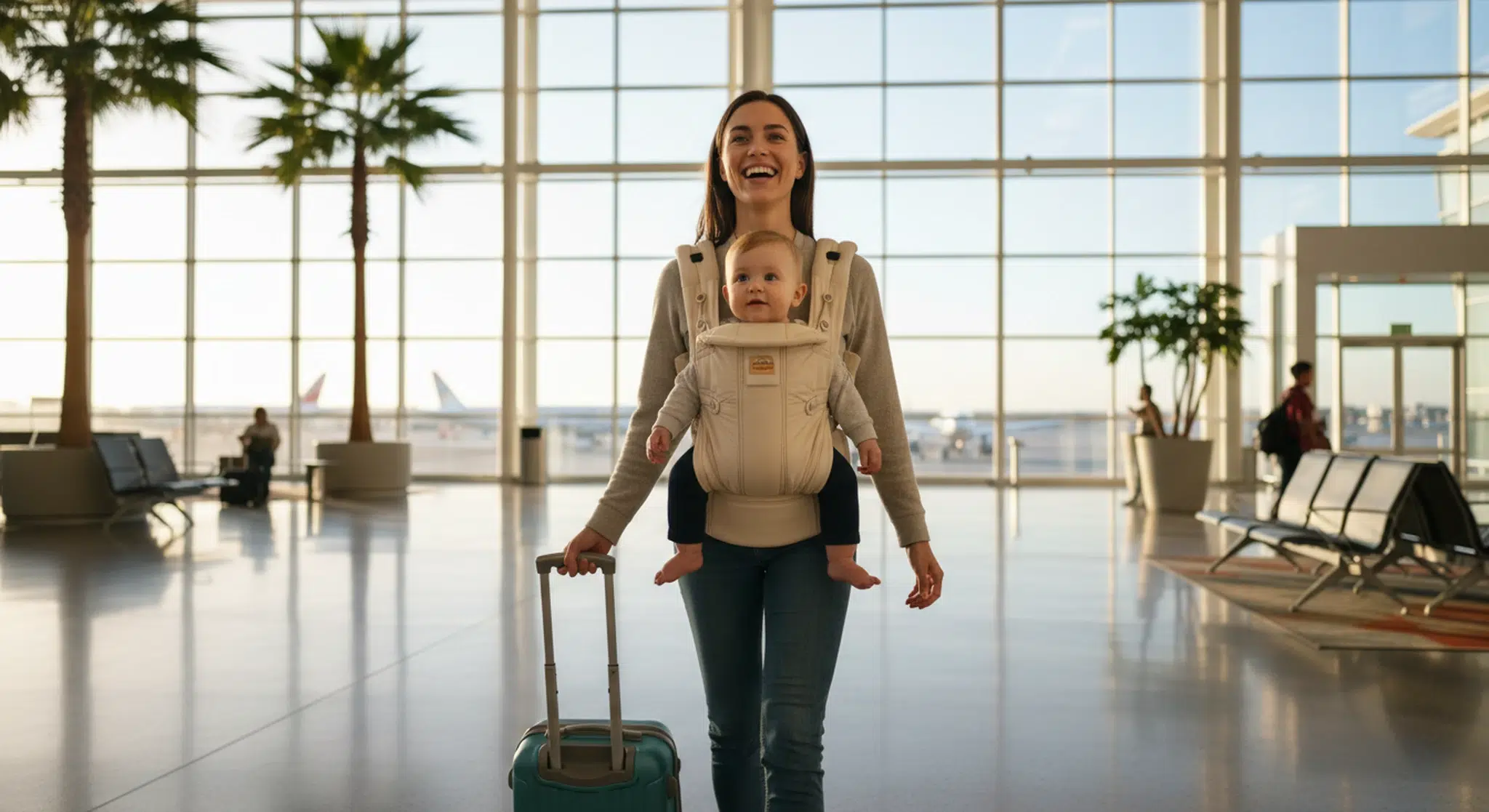
Traveling with a baby or toddler is absolutely doable, and the secret is not the destination, it is choosing the easy option, building in extra time, and protecting sleep.
Whether you are planning a first road trip, a flight to see family, or a beach week, travel with a little one comes down to a few safety rules and a lot of realistic pacing. Get those right and the trip is not just survivable, it is genuinely fun.
This guide covers when it is safe to travel, the best kinds of destinations for babies and toddlers, exactly how flying and TSA rules work, road-trip car seat safety and the two-hour rule, a lean packing list, and how to keep sleep from falling apart while you are away.
Key Takeaways
For newborns, road trips are often preferred over flying to limit exposure to crowds; ask your pediatrician if your baby was premature.
The easiest destinations have short travel time, a home base with a kitchen, and a slow, nap-friendly pace.
Breast milk and formula are exempt from TSA’s 3.4 oz liquid limit; declare them at screening.
The safest way for a child to fly is in an FAA-approved car seat in their own seat, not on your lap.
On road trips, follow the two-hour rule: stop to take your baby out of the car seat, feed, and change.
As an Amazon Associate, Betteroo earns from qualifying purchases.
Table of Contents
Is It Safe to Travel With a Baby? What the Experts Say
For most healthy, full-term babies, travel is fine once you feel ready, and many families take their first trip in the early months. Pediatric guidance leans toward road trips over flying in the newborn weeks, mainly because a car keeps your baby away from crowds and shared air while their immune system is still new. If your baby was premature or has a health condition, ask your pediatrician before you book.
The two rules that matter most do not change with distance: your child rides in a properly installed, rear-facing car seat for every mile in a vehicle, and you build in far more time than you think you need. A calm, unrushed pace is the single biggest predictor of a good trip with a little one.
Best Places to Travel With a Baby or Toddler
The best destination with a small child is not the most impressive one, it is the easiest one. Look for short travel time, a flexible base with a kitchen or kitchenette, and a slower daily rhythm that leaves room for naps. Stimulation your child can enjoy from a stroller or carrier beats anything that requires standing in long lines.
Beach towns: sand, shade, and water are endlessly entertaining, and a rental with a kitchen makes bottles and naps easy.
Lake houses and cabins: a private, baby-proof-able space with room to crawl beats a cramped hotel room.
Grandparents or family: built-in helping hands and a familiar-feeling home base take the pressure off.
Big city parks and zoos: toddlers love animals, fountains, and open green space, and a carrier handles the walking.
All-inclusive or family resorts: predictable meals, a pool, and on-site everything reduce daily logistics.
For a first trip, a two to three hour drive to a single destination will teach you more than an ambitious itinerary. Once you know how your child handles a change of scene, you can stretch the distance. Simple, stroller-friendly outdoor games and downtime beat a packed schedule every time.
Flying With a Baby: TSA Rules, Seats, and Ears
Air travel with a baby is very doable, and knowing the rules removes most of the stress. Breast milk, formula, water for mixing, and baby food are exempt from the 3.4 ounce liquid limit. You can bring a reasonable quantity in your carry-on (even without the baby present), along with ice packs to keep it cold. Tell the TSA officer at the start of screening, and expect these items to be screened separately.
On safety, the FAA and the AAP agree that the safest place for your child is buckled into an FAA-approved car seat in their own seat, not on your lap, even though children under two can legally fly as lap infants. Look for the label that says the seat is certified for use in aircraft. For ear pressure on takeoff and landing, offer the breast, a bottle, or a pacifier so your baby swallows; for toddlers, a snack or drink does the same job.
Situation
The rule
Parent move
Breast milk / formula
Exempt from 3.4 oz limit
Declare at screening, pack ice packs
Lap infant (under 2)
Legal, but not safest
Book a seat + FAA-approved car seat if you can
Ear pain on ascent/descent
Swallowing relieves pressure
Nurse, bottle, pacifier, or a toddler snack
Stroller / car seat
Gate-check free on most airlines
Use a travel bag to protect it
Key rules for flying with a baby. Policies vary slightly by airline, so confirm car seat and stroller rules when you book.
Road Trips: The Two-Hour Rule and Car Seat Safety
Car travel is often the simplest way to go with a baby, but the car seat comes with a caveat. Infants should not sit in a semi-reclined car seat for very long stretches, because the position can affect breathing in the youngest babies. The AAP and NHTSA support the “two-hour rule”: stop roughly every two hours to take your baby out of the seat, stretch, feed, and change them.
Travel throws sleep out the window. Get it back fast.
New room, new time zone, skipped naps: our free quiz builds a plan to reset your child’s sleep at home or on the road.
Plan long drives around sleep when you can, leaving near a nap or overnight so your child sleeps through part of the trip. Keep the infant rear-facing until they reach the top height or weight for their seat, and never leave a baby sleeping in a car seat outside the car once you arrive; move them to a flat, safe sleep surface.
What to Pack (and How to Keep Sleep on Track)
Pack light on gear and heavy on the essentials that are hard to buy on the road: enough diapers and wipes for the travel day plus a buffer, a change of clothes for baby and you, any medications, and familiar comfort items. Many big items (crib, high chair, stroller) can be rented at your destination or borrowed, which saves your back and the trunk.
Sleep is what makes or breaks a trip. Bring the sleep associations your child already knows: the sleep sack, a lovey (if age-appropriate), white noise, and a portable dark-out option for bright rooms. Keep the wind-down order identical to home even when the timing slides, and protect at least one solid nap a day. A short bedtime story in the new room re-creates the familiar cue that tells your child it is time to sleep.
Before You Go: A Quick Safety Checklist
A few minutes of prep prevents most travel-day problems. Confirm your car seat is installed correctly (a certified technician can check it for free), pack medications and a small first-aid kit in your carry-on, and bring your pediatrician’s number and your child’s insurance card. If you are crossing time zones or heading somewhere with different health risks, ask your pediatrician about timing and any precautions before you leave.
Above all, lower your own expectations for the schedule. Children feed off your stress. A trip built around naps, snacks, and unhurried transitions is safer and far more pleasant than one packed with must-do stops.
Frequently Asked Questions
When can I travel with a newborn?
Many families travel in the first months, but pediatricians often suggest waiting for the first round of vaccines and favoring car travel over flying early on to limit exposure to crowds. Check with your pediatrician, especially if your baby was premature.
Can I bring breast milk and formula through airport security?
Yes. Breast milk, formula, water for mixing, and baby food are exempt from the 3.4 ounce liquid limit, and you can carry a reasonable amount. Tell the TSA officer at the start of screening and expect separate screening of those items.
Does my baby need their own seat on a plane?
Children under two can fly as lap infants, but the FAA and AAP recommend a purchased seat with an FAA-approved car seat, which is much safer than holding your child. Look for the aircraft-certified label on the seat.
How do I protect my baby’s ears when flying?
Have your baby nurse, take a bottle, or use a pacifier during takeoff and landing so they swallow, which relieves ear pressure. For toddlers, a drink or chewy snack works the same way.
How do I keep my child’s sleep on track while traveling?
Bring familiar sleep cues (sleep sack, white noise, lovey, dark-out cover), keep the wind-down routine order identical to home, and protect at least one solid nap a day. Expect a day or two to adjust after you return.
Home again and sleep is a mess?
Travel scrambles naps and nights. Our free quiz builds a step-by-step plan to get your child’s sleep back on track fast.