California has the tallest trees on Earth, the hottest temperature ever recorded, and a Popsicle invented by an 11-year-old.
These California fun facts are perfect for school reports, road trips, and curious kids. They cover the state’s record-breaking nature, amazing animals, Gold Rush history, surprising inventions and foods, famous places, and official state symbols.
Every fact is checked against official sources like the National Park Service and the California State Library, and we added a quick-facts table at the top for fast homework help.
Key Takeaways
California became the 31st state on September 9, 1850, and its capital is Sacramento.
It has both the highest point in the lower 48 (Mount Whitney) and the lowest in North America (Badwater Basin).
The world’s largest tree (General Sherman) and tallest known tree (Hyperion) both grow in California.
California has nine national parks, more than any other state.
The Popsicle was invented by an 11-year-old in San Francisco.
Table of Contents
Quick California Facts for Kids
Fact
Answer
Statehood
September 9, 1850 (the 31st state)
Capital
Sacramento
Nickname
The Golden State
State motto
Eureka (Greek for “I have found it”)
Population
About 39 million people, the most of any state
Size
Third-largest state by area, after Alaska and Texas
Highest point
Mount Whitney, 14,505 feet
Lowest point
Badwater Basin in Death Valley, 282 feet below sea level
State flower
California poppy
State animal
California grizzly bear
California at a glance.
California Fun Facts About Nature
California has both the highest point in the lower 48 states (Mount Whitney) and the lowest point in North America (Badwater Basin), and they are only about 85 miles apart.
Death Valley holds the record for the hottest air temperature ever measured on Earth: 134°F at Furnace Creek on July 10, 1913.
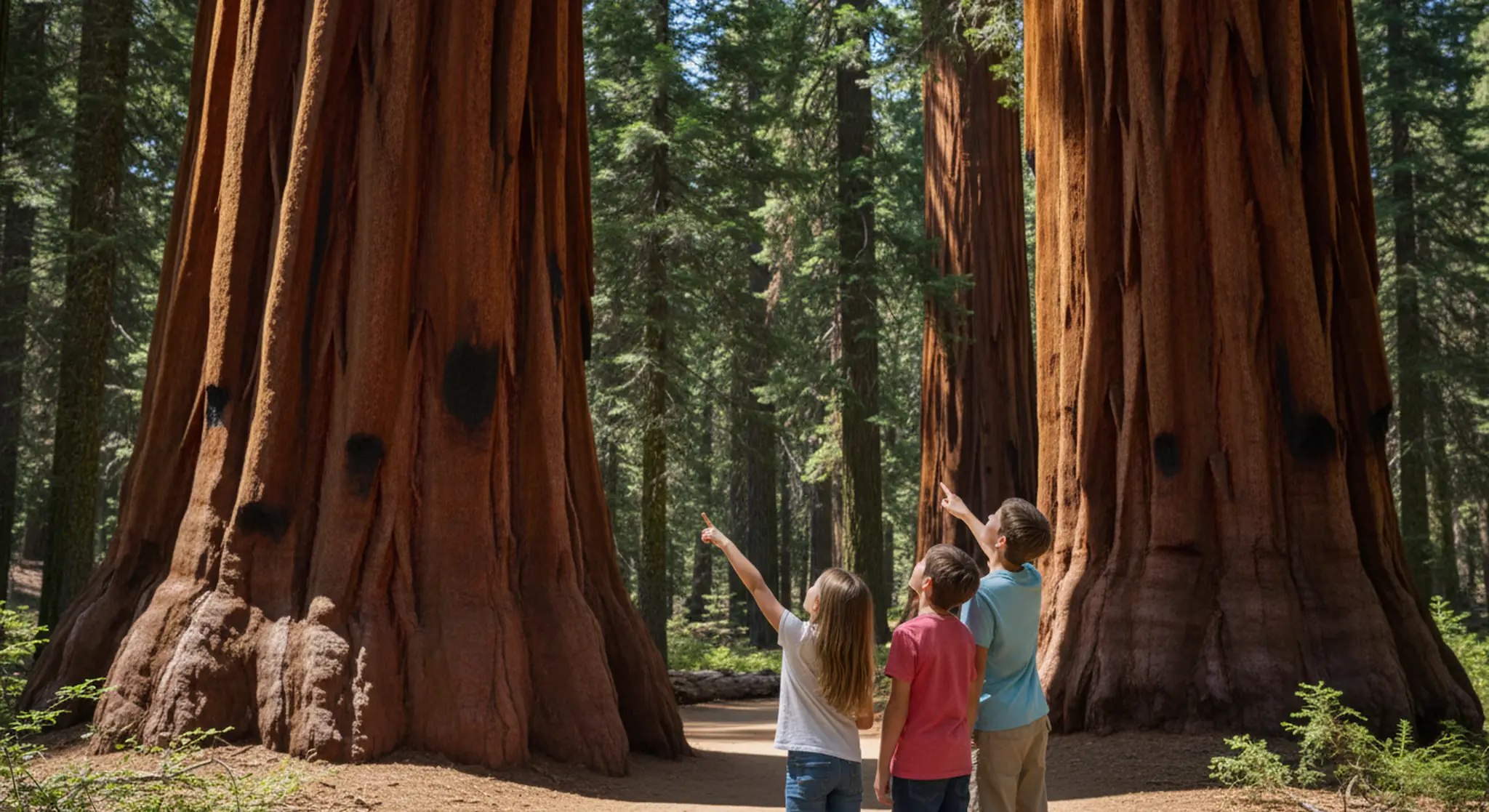
The General Sherman tree in Sequoia National Park is the largest tree on Earth by volume. It is a giant sequoia about 275 feet tall.
The tallest known living tree, a coast redwood nicknamed Hyperion, is about 380 feet tall. Its exact location is kept secret to protect it.
Some bristlecone pines in California’s White Mountains are more than 4,800 years old, among the oldest living trees in the world.
Yosemite Falls drops 2,425 feet, making it one of the tallest waterfalls in North America.
California has nine national parks, more than any other state: Channel Islands, Death Valley, Joshua Tree, Kings Canyon, Lassen Volcanic, Pinnacles, Redwood, Sequoia, and Yosemite.
Joshua trees are not really trees. They are a type of yucca plant.
Lake Tahoe is about 1,645 feet deep, making it the second-deepest lake in the United States after Oregon’s Crater Lake.
California’s coastline stretches roughly 840 miles along the Pacific Ocean.
Fun Facts About California Animals
The California grizzly bear is the state animal and appears on the state flag, but grizzlies have been gone from California since the 1920s.
The California condor is the largest land bird in North America, with wings that can stretch about 9.5 feet. In 1987 only 27 were left, and all were brought into a recovery program. Today there are more than 500.
Gray whales, the state marine mammal, swim past the California coast on one of the longest migrations of any mammal, traveling between Alaska and Mexico.
The state bird is the California quail, which has a funny curled feather on top of its head.
The state reptile is the desert tortoise, which can spend most of its life in underground burrows to escape the heat.
The California golden trout, the state fish, lives in high mountain streams in the Sierra Nevada.
Sea otters off the California coast float on their backs and use rocks as tools to crack open shellfish.
California History Facts
The name “California” comes from a fictional island ruled by a queen named Calafia in a Spanish adventure novel from the early 1500s.
Native peoples have lived in California for thousands of years, and it had one of the most diverse populations of Native nations and languages in North America.
On January 24, 1848, James Marshall found gold at Sutter’s Mill in Coloma. The Gold Rush that followed brought hundreds of thousands of people, nicknamed the “forty-niners” after 1849.
California became a state just two years after gold was discovered, skipping the usual step of being a U.S. territory first.
The state flag’s bear design comes from the 1846 Bear Flag Revolt in Sonoma.
In 1864, President Lincoln signed the Yosemite Grant, one of the first times the U.S. government set aside land to protect its natural beauty.
The Golden Gate Bridge opened in 1937. Its color is officially called “International Orange.”
Big days of fun go better with a good night of sleep.
Got a little one at home too? Our free two-minute quiz builds a gentle, personalized sleep plan for babies and toddlers.
In 1905, an 11-year-old San Francisco boy named Frank Epperson left a cup of soda with a stirring stick on his porch overnight. It froze, and years later he turned the idea into the Popsicle.
Blue jeans with metal rivets were patented in 1873 by Levi Strauss and Jacob Davis in San Francisco.
California grows more than three-quarters of the world’s almonds.
Castroville calls itself the “Artichoke Center of the World,” and California grows nearly all of the artichokes sold in the United States.
Fortune cookies are not from China. Most historians trace them to Japanese American bakers in California.
Many famous tech companies, including Apple and Google, started in California’s Silicon Valley.
Fun Facts About California Places
Disneyland opened in Anaheim on July 17, 1955.
The Hollywood Sign originally read “HOLLYWOODLAND” when it went up in 1923 to advertise new homes. The last four letters came down in 1949.
San Bernardino County is the largest county by area in the lower 48 states. It is bigger than several entire states.
If California were its own country, its economy would rank among the largest in the world.
Surfing is California’s official state sport.
California gets thousands of small earthquakes every year, but most are too tiny to feel. The San Andreas Fault runs roughly 800 miles through the state.
California State Symbols
Symbol
Official choice
Flower
California poppy
Bird
California quail
Animal
California grizzly bear
Tree
California redwood (coast redwood and giant sequoia)
Marine mammal
California gray whale
Reptile
Desert tortoise
Fish
California golden trout
Insect
California dogface butterfly
Fossil
Saber-toothed cat
Gemstone
Benitoite
Sport
Surfing
Official California state symbols.
How to Use These California Facts With Kids
School reports: Pick three facts from different sections (nature, history, animals) for a well-rounded report.
Road trip trivia: Quiz the family on the way to Yosemite, the beach, or Grandma’s house.
Fact of the day: Share one fact at breakfast. Our fact of the day page has more.
Map activity: Print a blank California map and mark Mount Whitney, Death Valley, Lake Tahoe, and the Golden Gate Bridge.
Would you rather: Would you rather visit the hottest place on Earth or the tallest tree?
Numbers like population and tree heights are updated over time as new measurements come in, so for a school report it is worth double-checking the latest figure on an official source such as the California State Library or the National Park Service. When talking about the Gold Rush and California history with older kids, it is also worth including the enormous harm it caused California’s Native peoples. It is a big part of the real story.
Frequently Asked Questions
What are some fun facts about California?
California has the largest tree on Earth by volume (General Sherman), the tallest known tree (a coast redwood called Hyperion), the hottest temperature ever recorded (134°F in Death Valley), more national parks than any other state, and the Popsicle, invented by an 11-year-old in San Francisco.
What is California known for?
California is known for the Gold Rush, Hollywood, Silicon Valley, the Golden Gate Bridge, Yosemite and its giant redwoods and sequoias, beaches and surfing, and growing much of the nation’s fruit, nuts, and vegetables.
When did California become a state?
California became the 31st state on September 9, 1850, just two years after gold was discovered at Sutter’s Mill.
What is the state animal of California?
The California grizzly bear is the state animal and appears on the state flag, although grizzlies have not lived in California since the 1920s.
How did California get its name?
The name comes from a fictional island ruled by Queen Calafia in a Spanish adventure novel written in the early 1500s. Spanish explorers used the name for the region.
Gentle changes, peaceful nights.
Betteroo builds a personalized sleep plan for your baby or toddler. Take the free two-minute quiz to get started.