Fun facts for kids are curiosity in a nutshell: a single surprising true fact can send a child running to tell someone, then straight into wanting to learn more.
The best facts are the ones that make a kid say “wait, really?” and then repeat them to everyone they meet for a week. They are perfect for the dinner table, the car, a waiting room, or any moment you want to spark a little wonder without a screen.
Below are 30 amazing, verified fun facts for kids, grouped by animals, space, the human body, and the wider world, so you always have a great one ready to share.
Key Takeaways
Surprising true facts spark the curiosity that drives real, self-directed learning.
Animal and space facts are the easiest way to hook a curious child.
Body facts amaze kids because the surprises are hiding inside them.
Use facts as conversation starters for car rides, meals, and waiting rooms.
Follow each fact with a question and gentle fact-checking to deepen curiosity.
Table of Contents
Fun Facts About Animals
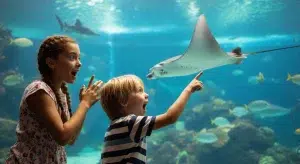
Animals are where most kids fall in love with facts, because the real world is stranger than any cartoon. Read a few of these at the dinner table and watch your child immediately want to tell someone else.
A group of flamingos is called a flamboyance.
Octopuses have three hearts and blue blood.
A snail can sleep for up to three years at a time.
Sea otters hold hands while they sleep so they do not drift apart.
A shrimp’s heart is in its head.
Cows have best friends and get stressed when they are separated.
Sloths can hold their breath longer than dolphins can, up to 40 minutes.
A hummingbird’s heart can beat more than 1,200 times per minute.
Fun Facts About Space
Space facts stretch a child’s imagination in the best way, because the numbers are so enormous they stop feeling like homework and start feeling like magic.
A day on Venus is longer than its year: Venus takes longer to spin once than to orbit the Sun.
There are more stars in the universe than grains of sand on all of Earth’s beaches.
Footprints left on the Moon will likely stay for millions of years, because there is no wind to blow them away.
The Sun makes up about 99.8 percent of all the mass in our solar system.
Neutron stars are so dense that a single teaspoon of one would weigh billions of tons.
It rains diamonds on Neptune and Uranus, scientists believe, deep beneath their clouds.
Curious kids who love space facts often love hands-on discovery too. Our science experiments for kids turn that curiosity into something they can build.
Fun Facts About the Human Body
The most surprising facts of all are the ones hiding inside your own body. Kids are amazed to learn how strange and busy they are on the inside.
Big kids keep you busy, little ones keep you up.
If a younger sibling is still fighting sleep, our free quiz builds a personalized plan in a few minutes.
Your body has about 60,000 miles of blood vessels, enough to circle the Earth more than twice.
You are about one centimeter taller in the morning than at night, because your spine compresses during the day.
The strongest muscle in your body for its size is the one in your jaw.
Your nose can remember around 50,000 different scents.
Babies are born with about 300 bones, but adults have only 206, because some bones fuse together as you grow.
Your heart beats roughly 100,000 times every single day.
Fun Facts About Food, Nature, and the World
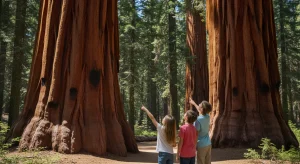
Everyday things turn out to be full of surprises once you look closely. These facts about food and the world around us are perfect conversation starters.
Honey never spoils: archaeologists have found 3,000-year-old honey in ancient tombs that was still edible.
Bananas are berries, but strawberries are not, botanically speaking.
A bolt of lightning is about five times hotter than the surface of the Sun.
The Eiffel Tower can grow more than six inches taller in summer, because the metal expands in the heat.
Wombat poop is cube-shaped, which stops it from rolling away.
There is enough water in Lake Superior to cover all of North and South America in a foot of water.
Facts like these are perfect for car rides and waiting rooms. Pair them with our jokes for kids and riddles for kids for a screen-free entertainment kit that fits in your head.
Why Sharing Fun Facts Helps Kids Learn
A surprising fact does something a textbook rarely manages: it makes a child want to know more on their own. That spark of curiosity is the engine of real learning, and every “wait, is that true?” is an invitation to look it up, ask a question, and discover that the world rewards a curious mind.
Facts also give kids a small social gift. A child who knows that octopuses have three hearts has something to share, and sharing knowledge builds confidence and connection. Encourage your child to collect facts the way some kids collect stickers, and to check them, because learning to ask “how do we know that?” is just as valuable as the fact itself.
How to Turn Fun Facts Into Real Curiosity
Follow the fact with a question. When your child is delighted by a fact about the Moon or the human heart, ask what else they wonder about it and look it up together. That small habit turns a one-time “wow” into the beginning of genuine inquiry, and it teaches kids that curiosity is something you act on, not just feel.
Teach gentle fact-checking. Not everything that sounds amazing is true, so model looking things up in a reliable source and celebrating when a fact holds up. Learning to separate a great story from a verified fact is one of the most useful skills a child can carry into a world full of information.
Frequently Asked Questions
What are some good fun facts for kids?
Kid-favorite facts include: octopuses have three hearts and blue blood, honey never spoils, a group of flamingos is called a flamboyance, and babies are born with about 300 bones while adults have 206. The best facts are short, surprising, and true, which makes kids want to repeat them right away.
What age are fun facts best for?
Fun facts work for kids of almost any age, but they are especially powerful from about age 5 through the tween years, when children are naturally hungry to understand how the world works. Adjust the topic and detail to the child: animals and space captivate younger kids, while body and world facts grab older ones.
Are these fun facts actually true?
Yes. Every fact on this list is drawn from reputable science and reference sources. It is worth teaching kids to fact-check surprising claims, though, because many popular “fun facts” online are exaggerated or false. Looking things up together in a reliable source is part of the fun and builds a valuable lifelong skill.
How do fun facts help children learn?
A surprising fact sparks curiosity, and curiosity is what drives kids to ask questions, look things up, and keep exploring on their own. Sharing facts also builds confidence and social connection, and encouraging children to verify what they hear teaches them to think critically about information.
Where can I find more fun facts to share with my kids?
Reliable children’s science and nature resources, library nonfiction books, and reputable museum and science-organization websites are great sources. When you find a fact that delights your child, use it as a springboard: look up one more detail together, which turns a single fun fact into a small adventure in learning.
Fun by day, rest by night.
Betteroo helps the whole family sleep better. Take the free two-minute quiz for a plan tailored to your child.