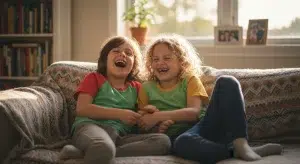
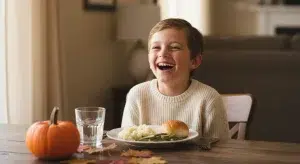
Jokes for kids are a parenting superpower: free, portable, screen-free, and guaranteed to turn a cranky car ride or a long wait into a fit of giggles.
Better still, learning to tell jokes is genuinely good for kids. It grows their vocabulary, teaches them that words can have double meanings, and builds the social confidence that comes from making other people laugh.
Below you will find more than 45 clean, funny jokes for kids, grouped from all-ages classics to knock-knock jokes, animal puns, and cleverer jokes for tweens. Steal them shamelessly.
Key Takeaways
The best kids’ jokes are short, clean, and built on a pun a child can actually get.
Knock-knock jokes give kids a script, which is why they are often the first jokes children tell.
Animal jokes and silly puns are the easiest way to hook younger kids.
Telling jokes builds vocabulary, language skills, and social confidence.
Introduce new jokes slowly so the fun lasts for weeks, not one afternoon.
Table of Contents
Best Jokes for Kids of All Ages
A good kids’ joke is short, clean, and lands on a pun a child can actually get. These are the reliable favorites, the ones that survive being retold forty times in one afternoon. Read them with a big grin and full commitment to the silliness.
Why did the scarecrow win an award? Because he was outstanding in his field.
What do you call a fish wearing a bowtie? So-fish-ticated.
Why did the cookie go to the doctor? Because it was feeling crummy.
What do you call a sleeping dinosaur? A dino-snore.
Why can’t a bicycle stand up by itself? It is two tired.
What do you call a pig that does karate? A pork chop.
Why did the math book look so sad? Because it had too many problems.
What is orange and sounds like a parrot? A carrot.
How does the ocean say hello? It waves.
Why are ghosts such bad liars? Because you can see right through them.
Knock-Knock Jokes for Kids
Knock-knock jokes are the first kind of joke most kids learn to tell themselves, because the back-and-forth format gives them a script. Expect your child to invent their own nonsense versions, that is the whole point and a real sign of language play.
Knock, knock. Who’s there? Lettuce. Lettuce who? Lettuce in, it is cold out here.
Knock, knock. Who’s there? Boo. Boo who? Don’t cry, it is only a joke.
Knock, knock. Who’s there? Tank. Tank who? You’re welcome.
Knock, knock. Who’s there? Olive. Olive who? Olive you and I miss you.
Knock, knock. Who’s there? Cargo. Cargo who? Car go beep beep.
Knock, knock. Who’s there? Harry. Harry who? Harry up, it is cold out here.
Animal Jokes and Silly Puns
Animal jokes are pure kid gold. They combine a familiar creature with an unexpected pun, which is exactly the recipe that makes a six-year-old fall over laughing. These pair perfectly with a trip to the zoo or a rainy afternoon of drawing animals.
Big kids keep you busy, little ones keep you up.
If a younger sibling is still fighting sleep, our free quiz builds a personalized plan in a few minutes.
What do you call a bear with no socks on? Bare-foot.
Why do bees have sticky hair? Because they use honeycombs.
What do you get from a pampered cow? Spoiled milk.
Why don’t elephants use computers? They are afraid of the mouse.
What time is it when an elephant sits on your fence? Time to get a new fence.
What do you call a dog magician? A labracadabrador.
Why did the frog take the bus to work? His car got toad away.
What is a cat’s favorite color? Purr-ple.
Jokes for Older Kids (Ages 9 to 12)
By the tween years, kids appreciate a joke with a smarter twist, a little wordplay they have to catch, or a punchline that plays with double meanings. They also love telling these to younger siblings and watching them slowly get it.
I told my computer I needed a break, and now it will not stop sending me KitKat ads.
Why did the student eat his homework? Because the teacher said it was a piece of cake.
What do you call fake spaghetti? An impasta.
Why did the golfer bring two pairs of pants? In case he got a hole in one.
How do you organize a space party? You planet.
What did the janitor say when he jumped out of the closet? Supplies!
Why is Peter Pan always flying? Because he Neverlands.
Telling jokes is a real developmental milestone. To land a pun, a child has to understand that a word can mean two things at once, which is a sophisticated leap in language. To deliver a knock-knock joke, they have to hold a small script in mind and wait for the right cue. And to enjoy the reaction, they read the room and connect with their audience.
Jokes also build social confidence. A child who can make the table laugh feels capable and included, and that is a skill worth encouraging even when the fortieth retelling of the dino-snore joke is testing your patience. Laugh anyway, it is an investment.
Tips for Keeping Kids’ Joke Time Fun
Let the delivery be imperfect. Young kids often blurt the punchline first, forget the setup, or laugh so hard they cannot finish. None of that matters. The joy is in the trying, and correcting the mechanics too much drains the fun. Just enjoy the wobbly version.
Rotate fresh material in slowly. Kids latch onto a favorite and repeat it endlessly, so drop in one or two new jokes at a time rather than a whole list at once. A small trickle of new material keeps the game alive for weeks instead of burning through it in an afternoon.
Frequently Asked Questions
What are the best clean jokes for kids?
Reliable favorites include “Why did the scarecrow win an award? Because he was outstanding in his field,” “What do you call a sleeping dinosaur? A dino-snore,” and “How does the ocean say hello? It waves.” Short, pun-based jokes land best because kids can understand and repeat them easily.
At what age do kids understand jokes?
Toddlers enjoy silly, absurd humor around age 2 or 3, but understanding puns and wordplay usually clicks around age 5 or 6, once a child grasps that words can have more than one meaning. By ages 7 to 9, most kids can tell structured jokes like knock-knocks and even craft their own.
Why do kids love knock-knock jokes so much?
Knock-knock jokes give children a predictable back-and-forth script, which makes them the easiest joke format to perform. Kids love the sense of control that comes from running the exchange, and they often invent their own nonsense versions, which is a healthy sign of language play and creativity.
Are jokes good for a child’s development?
Yes. Understanding and telling jokes strengthens vocabulary, reading comprehension, and the ability to hold ideas in mind. Making others laugh also builds social confidence and helps kids read and connect with an audience, all valuable skills that carry into school and friendships.
How can I encourage my child to tell jokes?
Model it by telling jokes yourself, laugh generously even at wobbly deliveries, and give them a short repertoire to start with. Avoid over-correcting the mechanics. The confidence to try matters far more than a perfect punchline, and that confidence grows every time the table laughs.
Fun by day, rest by night.
Betteroo helps the whole family sleep better. Take the free two-minute quiz for a plan tailored to your child.