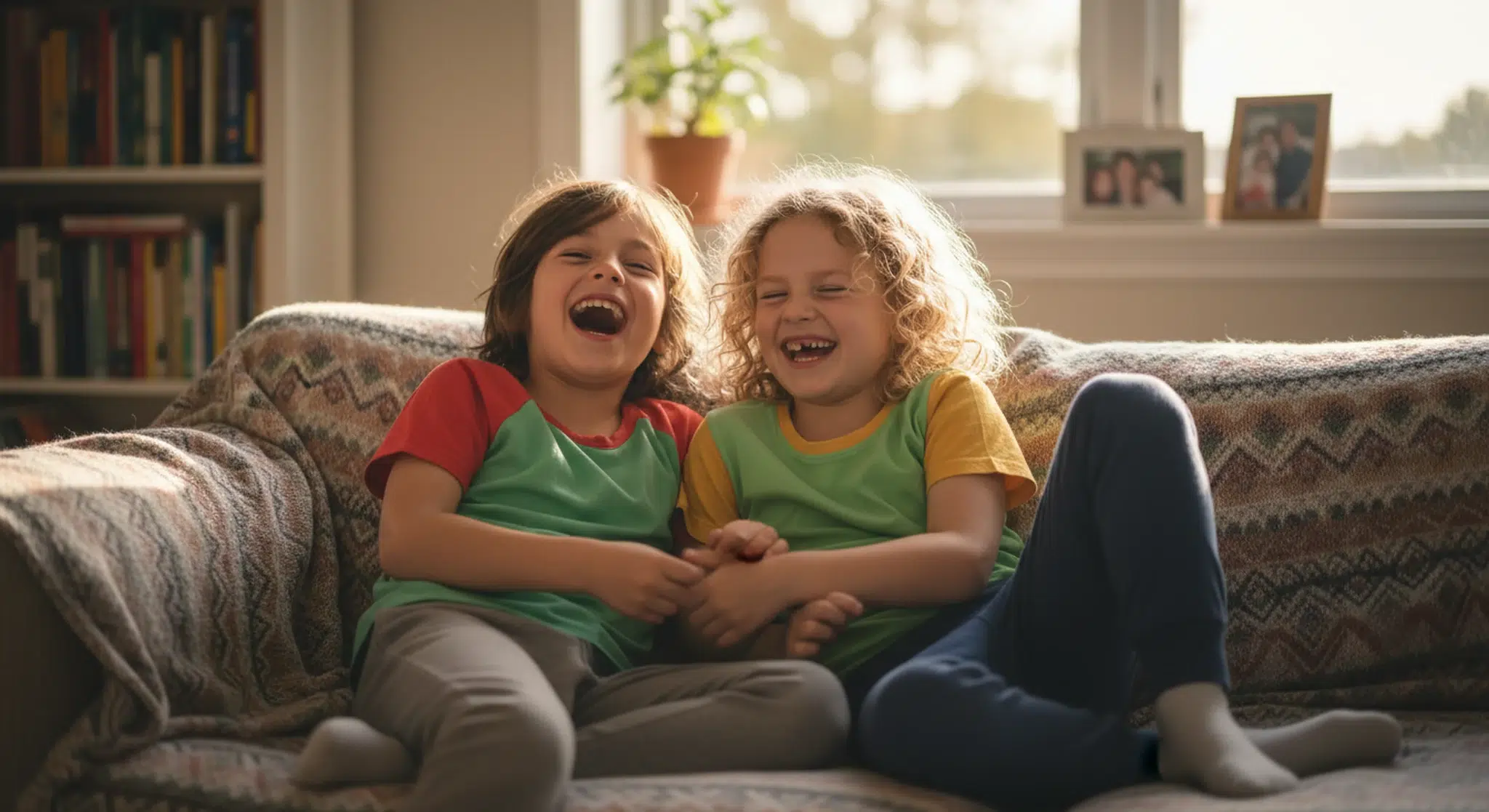
The best silly jokes for kids are clean, punny, and easy to picture, the kind that make a six year old snort and a ten year old groan and grin. They need no props, work anywhere, and quietly build language, confidence, and connection.
There is nothing quite like a kid delivering a truly terrible joke, pausing for effect, and then dissolving into their own laughter before the punchline lands. Silly jokes are a childhood staple for good reason: they are free, portable, endlessly repeatable, and they turn a grumpy car ride or a long dinner into a giggle fest.
Below are more than 150 clean, kid-tested silly jokes sorted by type, from animal jokes and food puns to knock-knocks, one-liners, and riddle jokes, plus a quick age guide and the surprising reasons this goofy game is genuinely good for your child. Bookmark it for the next lunchbox note, waiting room, or bedtime wind-down.
Key Takeaways
Silly jokes are clean, punny, and easy to picture, so kids of every age can enjoy them.
Match the humor to the age: knock-knocks for little ones, puns for the middle years, one-liners for tweens.
Getting a pun is a real language skill, since it means a child sees that a word has two meanings.
Telling jokes builds confidence, memory, and social awareness, and shared laughter deepens connection.
A couple of gentle jokes make a warm, screen-free end to the day.
Table of Contents
Silly Jokes for Kids
These are the everyday, giggle-first jokes that work at any age. The humor is gentle and absurd, the kind that makes a six year old snort and a ten year old groan and grin at the same time. Read them out loud, let the pause before the punchline do its job, and be ready to hear each one repeated a hundred times.
Why did the kid bring a ladder to school? Because they wanted to go to high school.
What do you call a sleeping dinosaur? A dino-snore.
Why did the cookie go to the doctor? Because it was feeling crummy.
What has hands but cannot clap? A clock.
Why did the bicycle fall over? Because it was two-tired.
What do you call cheese that is not yours? Nacho cheese.
Why can’t your nose be twelve inches long? Because then it would be a foot.
What did the ocean say to the beach? Nothing, it just waved.
Funny Animal Jokes
Animals are a kid comedy goldmine, because the sillier the picture the better. These lean on puns and impossible animal antics that fire up a child’s imagination as much as their funny bone.
What do you call a bear with no teeth? A gummy bear.
Why do cows wear bells? Because their horns do not work.
What do you call a fish with no eyes? A fsh.
How do you count cows? With a cow-culator.
What do you get when you cross a snowman and a dog? Frostbite.
Why are frogs so happy? They eat whatever bugs them.
What do you call a pig that does karate? A pork chop.
Where do cows go on Friday night? To the moo-vies.
Silly Food Jokes
Food jokes are perfect for the dinner table, and they turn a picky-eater standoff into a laugh. Serve one with the vegetables and watch the mood shift.
Why did the banana go to the doctor? Because it was not peeling well.
What do you call a fake noodle? An impasta.
Why did the tomato turn red? Because it saw the salad dressing.
What kind of vegetable is angry? A steamed carrot.
Why did the grape stop in the middle of the road? Because it ran out of juice.
What did the pizza say to the topping? I never sausage a beautiful face.
How do you fix a cracked pumpkin? With a pumpkin patch.
Knock-Knock Jokes for Kids
Knock-knock jokes are a rite of passage, and they teach the back-and-forth rhythm of a real joke. Younger kids adore the call-and-response even when the punchline makes no sense, so play along enthusiastically.
Knock knock. Who’s there? Lettuce. Lettuce who? Lettuce in, it’s cold out here.
Knock knock. Who’s there? Boo. Boo who? Don’t cry, it’s just a joke.
Knock knock. Who’s there? Cow says. Cow says who? No, a cow says moo.
Quick one-liners are the easiest jokes for kids to memorize and re-tell, which is exactly why they love them. These pack a whole laugh into a single line, perfect for the car, the lunch line, or a knock at the classroom door.
I used to hate facial hair, but then it grew on me.
What is orange and sounds like a parrot? A carrot.
Why did the math book look sad? It had too many problems.
What do you call a dinosaur that crashes cars? Tyrannosaurus wrecks.
How does the moon cut its hair? Eclipse it.
What did one wall say to the other? I’ll meet you at the corner.
Why did the scarecrow win an award? Because it was outstanding in its field.
If your kids cannot get enough, send them next to our giant lists of jokes for kids and riddles for kids for hundreds more.
Why Silly Jokes Are Good for Kids
Behind the groans, telling jokes does real developmental work. Getting a pun means a child has noticed that a word can mean two things, which is a genuine language and thinking skill. Delivering a joke, waiting for the punchline, and reading the room build confidence, memory, and social awareness. And shared laughter is one of the fastest ways to connect with a child and lift a grumpy mood.
Age
Jokes they love
Why
3 to 5
Knock-knock and silly sounds
They enjoy rhythm and repetition over logic
6 to 8
Puns and animal jokes
They start to get double meanings
9 to 12
One-liners and clever riddles
They can hold a setup and appreciate wordplay
Kids grow into different kinds of humor, so match the joke to the age for the biggest laugh.
A Few Giggles Before Goodnight
A couple of silly jokes are a lovely way to end the day, turning the bedtime wind-down into something warm and connected rather than a battle. Keep the last laughs low-key so you are calming your child down, not winding them up, and let the giggles fade into a quiet goodnight. It is a tiny ritual that many kids remember for years.
Of course, jokes only go so far when a child, or a younger sibling, is genuinely fighting sleep. A consistent, calm bedtime routine does the real work. For more screen-free wind-down ideas, browse our bedtime stories for kids and would you rather questions.
Frequently Asked Questions
What are some good silly jokes for kids?
Good silly jokes for kids are clean and easy to picture, like what do you call a sleeping dinosaur? A dino-snore. Or why did the cookie go to the doctor? Because it was feeling crummy. The best ones use a simple pun or an absurd image, land with a clear punchline, and are short enough for a child to memorize and re-tell to everyone they meet.
What age can kids understand jokes?
Around age three, kids love the rhythm of knock-knock jokes and silly sounds even before they grasp the logic. By six to eight they start to understand puns and double meanings, which is when animal and food jokes really click. By nine to twelve they can hold a longer setup and appreciate clever one-liners and riddles. Matching the joke to the age gets the biggest laugh.
Are jokes good for a child’s development?
Yes. Understanding a pun means a child has noticed that a single word can carry two meanings, which is a real language and thinking skill. Telling a joke, timing the punchline, and gauging the audience build confidence, memory, and social awareness. Shared laughter also strengthens the bond between a child and the people they are joking with.
What are the best jokes to tell at the dinner table?
Food jokes are perfect for the table and can defuse a picky-eater standoff, such as what do you call a fake noodle? An impasta. Or why did the banana go to the doctor? Because it was not peeling well. Keep them clean and quick, let each person take a turn, and use the laughs to keep a long meal light and connected.
Fun for them, rest for you.
Betteroo helps the whole family sleep better. Take the free two-minute quiz for a plan tailored to your child.