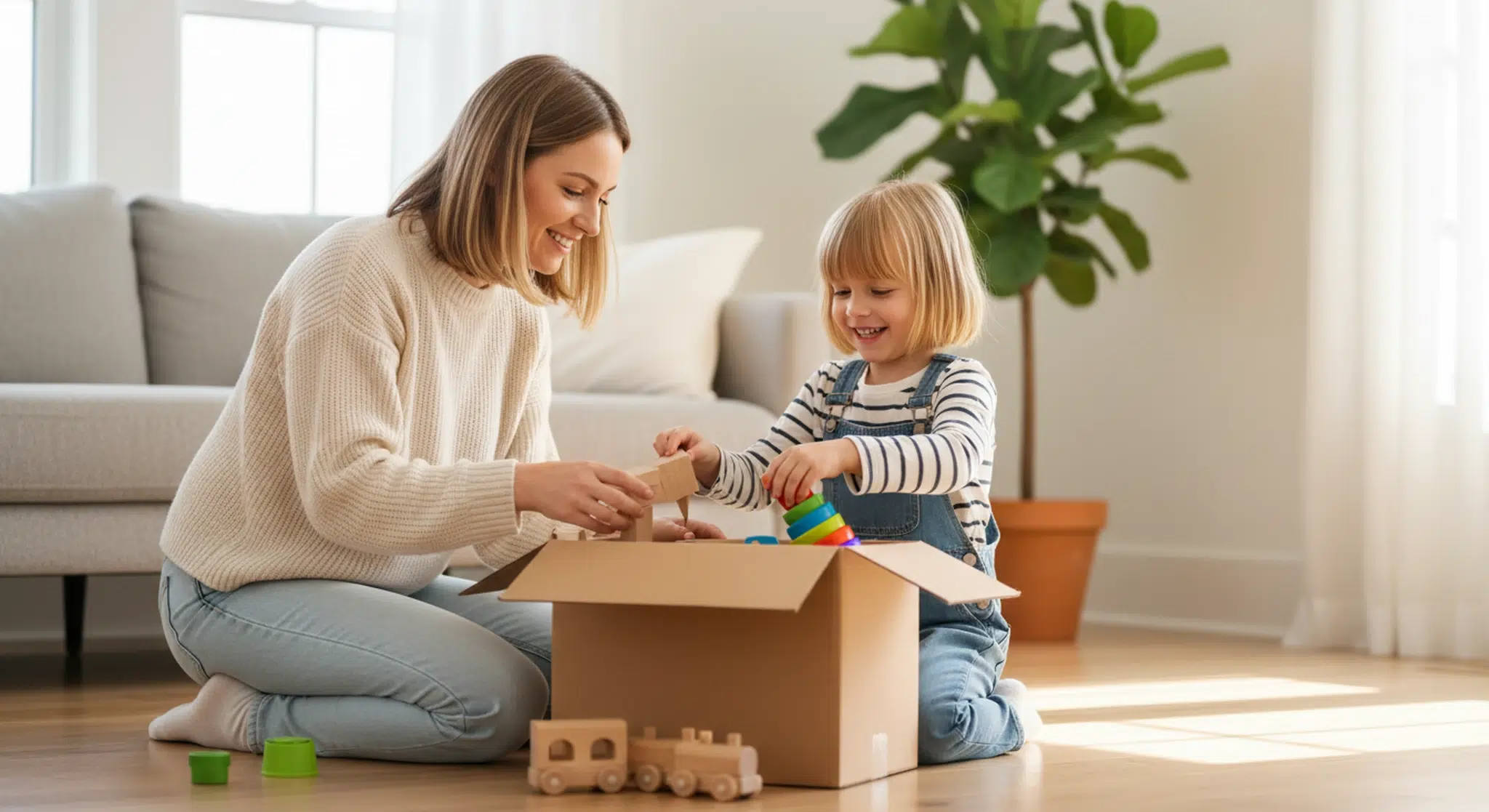
Where to donate toys depends on their condition: new, unwrapped toys go to Toys for Tots, Salvation Army Angel Tree and children’s hospitals, while clean, gently used toys go to thrift donation centers, Second Chance Toys, Buy Nothing groups and local programs.
If you are wondering where to donate toys your kids have outgrown, you have more options than the bin at the back of the closet. The catch is that every charity has different rules, and a box of toys a charity cannot use costs it time and money to throw away.
We checked each program’s official website in October 2026 for what it accepts. Below are 15 places that take toy donations, what they usually refuse, the safety checks to do first, how to clean toys, tax deduction basics and how to get your kids involved.
Key Takeaways
Holiday drives such as Toys for Tots and Angel Tree want new, unwrapped toys only.
Clean, complete used toys can go to thrift donation centers, Second Chance Toys (plastic only), Buy Nothing and Freecycle.
Many hospitals and Ronald McDonald House chapters take only new toys. Call first.
Check every toy for recalls at cpsc.gov/Recalls, and never donate broken toys or loose small parts.
A tax deduction requires a qualified charity and itemizing; get a receipt for gifts of $250 or more.
Table of Contents
Where to Donate Toys at a Glance
Quick Answer
The best places to donate toys depend on condition. New, unwrapped toys go to Toys for Tots, Salvation Army Angel Tree, Ronald McDonald House chapters and most children’s hospitals. Clean, gently used toys go to thrift donation centers such as Goodwill and The Salvation Army, Second Chance Toys (plastic only), Buy Nothing and Freecycle groups, and local daycares, shelters and foster care agencies that say yes first. Broken, recalled or worn-out toys should not be donated at all.
Acceptance rules below were checked on each program’s official website in October 2026. Rules change, and local chapters and stores set their own, so call or check the local page before you load the car.
Place
Takes new toys
Takes used toys
Good to know
Toys for Tots
Yes
No
New, unwrapped toys in local collection boxes, October to December
Salvation Army Angel Tree
Yes
Ask locally
Shop for a specific child’s wish list, drop off unwrapped
Operation Christmas Child
Yes
No
Pack a shoebox of gifts; used or damaged items not allowed
Ronald McDonald House
Yes
Usually no
Each chapter sets rules; many take only new toys
Children’s hospitals
Usually
Rarely
Call the child life or donations office first
Second Chance Toys
Yes
Yes
Clean, working, all-plastic toys only, in April and December drives
Goodwill
Yes
Yes
Depends on your local Goodwill
The Salvation Army thrift stores
Yes
Yes
Lists toys among accepted items; pickup in many areas
Buy Nothing groups
Yes
Yes
Give directly to neighbors, free
Freecycle
Yes
Yes
Free local giving network run by volunteers
Family and domestic violence shelters
Yes
Sometimes
Ask about privacy rules and current needs
Foster care agencies
Yes
Sometimes
Some match gifts to specific children
Daycares, preschools and Head Start
Yes
Sometimes
Durable, easy to clean toys are easiest to place
Libraries and schools
Yes
Sometimes
Books, puzzles and games for sales or classrooms
Churches and community groups
Yes
Sometimes
Many run holiday drives or family closets
15 places that accept toy donations, and what each usually takes.
National Programs That Take New Toys
Holiday toy drives want new toys because each gift goes straight to a child as a present.
Toys for Tots: run by Marines and volunteers. Its program overview asks for new, unwrapped toys, books and other gifts, left in collection boxes in your local area, and lists the collection period as October 1 to December 24. Donated gifts are sorted by age and gender before they go to families. Local chapters list drop box locations and set their own deadlines.
Salvation Army Angel Tree: each paper angel on a tree in a store or public place represents a child in need, with the child’s age, gender and wish list. The Salvation Army says recipients are typically 12 or under, and requests range from a winter coat, shoes and pajamas to books and toys. Bring gifts unwrapped to the drop-off location well before Christmas; the Salvation Army provides wrapping paper.
Operation Christmas Child: a Samaritan’s Purse project (a Christian ministry) that sends shoebox gifts to children overseas. Its packing list suggests one “wow” item such as a doll, stuffed animal, musical instrument or sports ball, plus small toys, school supplies and hygiene items. As of October 2026 it says not to include used or damaged items, scary or war-related toys such as toy guns or military figures, candy or other food, liquids, or breakable items.
Gently used toys have plenty of good homes, as long as they are clean, complete and safe. Start here:
Second Chance Toys: a nonprofit that keeps plastic toys out of landfills by delivering them to children in need. As of October 2026 its FAQ says it accepts plastic toys that are clean, in working order and have no missing or small parts (small meaning anything that fits through a toilet paper roll). Battery toys need working batteries or fresh ones included. It does not take toys that are not completely plastic, so no stuffed animals or books, and it collects only during its April and holiday drives. Find drop-off sites on its locations page.
Goodwill: Goodwill’s national site says what you can bring depends on the local Goodwill organization. Many local Goodwills accept toys, games and puzzles but refuse items that need repair, recalled items and baby gear such as car seats.
The Salvation Army thrift stores: the Salvation Army’s donation pickup site lists toys among accepted miscellaneous items, along with books, bicycles and sports equipment. You can schedule a pickup by ZIP code in many areas; acceptance varies by location.
Buy Nothing groups: the Buy Nothing Project is a community for giving and getting things completely free, organized as local groups in its app or on Facebook.
Freecycle: a nonprofit network where people give and get things for free in their own towns. Local groups are moderated by volunteers, and membership is free.
If you are on the receiving end right now, our guide to free baby stuff covers giveaways and swaps that work the other way.
Big days go better with a good night of sleep.
Got a little one at home too? Our free two-minute quiz builds a gentle, personalized sleep plan for babies and toddlers.
Some of the best places to donate toys near you never show up in a national directory. Each one sets its own rules, so always call first and ask what they need right now.
Ronald McDonald House: families stay here while a child is in the hospital nearby. Each chapter sets its own policy, and many take only new toys. As of October 2026, the Chicago-area chapter accepts new toys in their original packaging and does not accept used toys, games or stuffed toys, while the Oregon chapter asks for new, unwrapped toys, books and games.
Children’s hospitals: most hospitals have a child life or volunteer office that handles toy donations. Many accept only new toys, and some prefer specific items like craft kits or teen gifts. Ask for the current wish list.
Family and domestic violence shelters: children often arrive with very little. Shelters may keep their address private, so they may ask you to drop off at a separate office or donate through a partner.
Foster care agencies: some agencies match donated toys to specific children or keep a closet for kids entering care.
Daycares, preschools and Head Start programs: teachers often welcome durable toys that are easy to clean, such as blocks, puzzles, play kitchens and wooden or sturdy plastic toys.
Libraries and schools: libraries may take books, games and puzzles for a book sale, and teachers may want building sets or board games for indoor recess.
Churches and community groups: many run holiday toy drives, family closets or giving trees. Some serve their own members and others serve the wider community.
What Charities Usually Accept (and Refuse)
Usually accepted
Usually refused
New toys in original packaging
Recalled toys
Clean, complete puzzles and board games
Broken toys or toys that need repair
Sturdy plastic and wooden toys in working order
Toys with missing pieces or loose small parts
Children’s books in good shape
Used stuffed animals (at many hospitals and charities)
Battery toys with working batteries
Car seats, cribs and other baby gear (at many charities)
Art and craft supplies, unopened
Toy weapons (at some programs)
General patterns. Every program sets its own list, so check before you donate.
Stuffed animals are the most common question. Some thrift donation centers take them, but many hospitals and family programs accept only new plush toys. Second Chance Toys does not take them at all.
Car seats and cribs are a different topic from toys. The CPSC tells resellers, including thrift stores and charities, not to accept cribs that do not comply with the federal standard, and some local Goodwills refuse car seats and other baby gear because of recall concerns. If you have baby gear to pass on, check with the specific organization rather than leaving it in a toy bin.
Safety Checks Before You Donate Toys
Check for recalls: search the toy’s name and brand at the U.S. Consumer Product Safety Commission’s recall page (cpsc.gov/Recalls), and read reports of harm at SaferProducts.gov. The CPSC’s guide for resellers says it is illegal to sell any recalled product, and the guide applies to thrift stores, charities and people holding yard sales.
Watch for small parts: the CPSC says products intended for children under 3 are banned if they are, or have, small parts. Loose pieces, cracked toys that shed bits, and button batteries that are not secured behind a screw should not go to a family with a baby or toddler.
Look for wear: throw away toys with sharp edges, frayed cords or strings, peeling paint or exposed stuffing.
Make it complete: bag puzzle pieces and game parts, and tape the bag to the box. A puzzle missing three pieces is trash to a charity.
Check batteries: remove old batteries that might leak, or put in fresh ones if the program asks for working batteries.
How to Clean Toys Before Donating
Clean toys get used. Dirty ones get tossed. A simple routine is enough for most donations:
Wipe hard plastic and wooden toys with warm, soapy water, rinse with a damp cloth and let them air dry completely before you pack them.
Wash fabric toys and dress-up clothes according to the label, if the label allows machine washing, and dry them completely.
Pack everything in a clean bag or box, and label it by age range if you can (for example, “toddler toys”) so volunteers can sort it quickly.
Can You Get a Tax Deduction for Donating Toys?
Sometimes. This is general information, not tax advice, so check with a tax professional for your situation. According to IRS Publication 526:
The organization must qualify: you can deduct gifts only to qualified organizations. Ask the charity, or search the IRS online tool at IRS.gov/TEOS. Gifts to individuals, including a Buy Nothing neighbor, are not deductible.
You generally must itemize: the publication says you must itemize deductions on Schedule A (Form 1040) to deduct charitable contributions.
Condition matters: donated clothing and household items generally must be in good used condition or better.
Value is fair market value: the deduction for donated property is generally its fair market value at the time of the gift, not what you paid.
Get a receipt: the IRS says a written acknowledgment from the charity is required for any contribution of $250 or more, with a description (but not the value) of non-cash items.
Decluttering Toys With Kids: Let Them Help Choose
Kids are much more willing to give when they get a real say.
Use three boxes: keep, donate and recycle. Let your child sort, and only step in for safety items or things you know they love.
Talk about the next child: “Who do you think will play with this next?” turns letting go into giving.
Pick the timing: right before a birthday or the holidays, when new toys are coming, is the easiest moment for most kids.
Try a toy rotation first: if your child is not ready to part with something, store it out of sight for a few weeks. Many toys feel new again, and the rest are easy to let go.
Match the toy to the place: new, unwrapped toys to holiday drives, hospitals and Ronald McDonald House chapters; clean, complete used toys to thrift donation centers, Second Chance Toys, Buy Nothing, Freecycle and local programs that say yes first. Check recalls, clean everything and keep a receipt if you plan to deduct it. Most of all, let your kids help choose, so giving becomes part of how your family plays.
Frequently Asked Questions
Where to donate toys near me?
Start with your local Toys for Tots chapter or Salvation Army for new toys, and a Goodwill or Salvation Army donation center for clean used toys. Then call nearby children’s hospitals, shelters, foster care agencies, daycares and churches to ask about current needs, or post toys in a local Buy Nothing or Freecycle group.
Does Toys for Tots accept used toys?
No. Toys for Tots asks for new, unwrapped toys, books and other gifts, left in collection boxes during its holiday campaign. Its program overview lists collection from October 1 to December 24, and local chapters set their own drop box locations and deadlines. Give gently used toys to a thrift donation center or a local family instead.
Can you donate used stuffed animals?
Sometimes. Some local thrift donation centers accept stuffed animals, but many hospitals and family charities take only new plush toys, and some Ronald McDonald House chapters refuse used stuffed toys. Second Chance Toys takes only plastic toys. Wash a stuffed animal first and call the organization before you drop it off.
Do children’s hospitals accept used toys?
Rarely. Many children’s hospitals accept only new toys. Contact the hospital’s child life, volunteer or donations office before you shop, since many keep a current wish list and some prefer items such as craft kits, books or gifts for teenagers.
Can I get a tax deduction for donating toys?
Possibly. IRS Publication 526 says you must give to a qualified organization and generally must itemize deductions. Used household items generally must be in good used condition or better, valued at fair market value. You need a written acknowledgment for gifts of $250 or more. This is not tax advice.
What should you not donate to charity?
Skip recalled toys, broken toys, toys with missing pieces or loose small parts, and anything dirty or worn out. Many charities also refuse car seats, cribs and other baby gear. Check the CPSC recall list first, and ask each organization for its own list before you drop off.
Gentle changes, peaceful nights.
Betteroo builds a personalized sleep plan for your baby or toddler. Take the free two-minute quiz to get started.