Halloween is one of the most fun nights of the year for kids, and one of the busiest for emergency rooms.
A little planning goes a long way. These Halloween safety tips cover the risks that actually cause most injuries on October 31: costumes that trip or blind, streets full of excited kids and distracted drivers, and candy that is not safe for every age.
Below you will find costume safety, trick-or-treating rules, Halloween safety tips by age from babies to teens, how to check candy, how to handle food allergies, pumpkin carving safety, and how to prep your home, all based on American Academy of Pediatrics guidance.
Key Takeaways
Child pedestrian injuries are more likely on Halloween than any other night, so walk with young kids and use sidewalks and crosswalks.
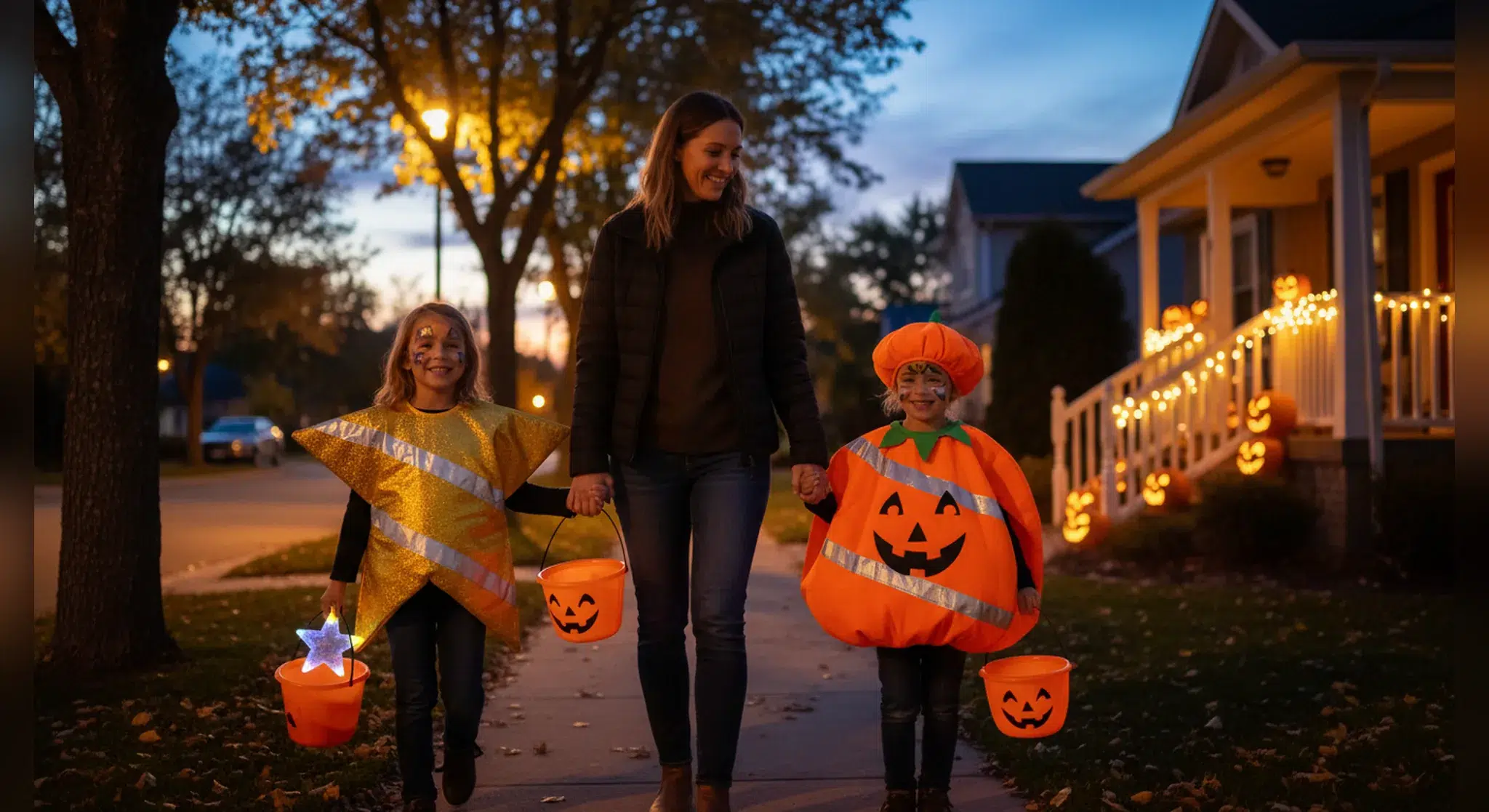
Choose well-fitting, bright, reflective costumes and face paint instead of masks.
Check all candy at home before eating, and keep hard, sticky and small candies away from babies and toddlers.
Never use decorative contact lenses without a prescription and eye exam.
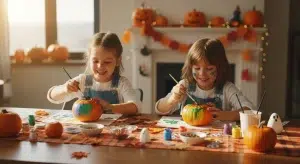
Let little kids decorate pumpkins while adults do the carving, and use flameless lights.
Table of Contents
Halloween Costume Safety Tips
Costumes are where most Halloween injuries start: tripping on long hems, masks that block vision, and dark outfits drivers cannot see. The American Academy of Pediatrics recommends:
Get the fit right: Costumes and shoes should fit well, with hems short enough to avoid tripping or catching on things.
Choose face paint over masks: Non-toxic makeup and hats are safer than masks that can block vision. Test makeup on a small patch of skin a few days ahead to check for a reaction.
Keep hats and wigs off the eyes: Nothing should slide down over your child’s eyes.
Skip sharp props: Avoid long or sharp swords, canes, and sticks that can hurt a child who stumbles.
Be bright and reflective: Add reflective tape to costumes and treat bags, and give each child a flashlight or glow stick.
Look for flame resistant labels: Check costumes, wigs, and accessories for “flame resistant” on the label, and keep kids away from open flames and candles.
No decorative contact lenses without a prescription: The FDA treats all contact lenses, including costume ones, as medical devices. Poorly fitted lenses bought without an eye exam can cause serious eye injury and vision loss.
Trick-or-Treating Safety Tips
The AAP notes that child pedestrian injuries are more likely on Halloween than on any other night of the year. A few street-smart rules cover most of the risk:
Always go with young children on their rounds.
Stay on well-lit streets and use sidewalks. If there are no sidewalks, walk at the far edge of the road facing traffic.
Cross as a group at corners and crosswalks. Avoid crossing mid-block, between parked cars, or out of driveways.
Do not assume drivers will stop. Make eye contact with drivers before crossing.
Put phones away while walking. Distracted walking is a real risk for older kids and adults alike.
Only visit homes with a porch light on, and never go inside a home or car for a treat.
Carry a flashlight and a charged phone.
Halloween Safety Tips by Age
Age
Main risks
Tips
Babies
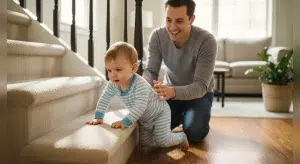
Car seats, overheating, choking on small items
Keep costumes simple and thin; never put a bulky costume under a car seat harness. Keep candy, wrappers and small props out of reach.
Toddlers (1 to 3)
Choking, tripping, wandering off
Hold hands, skip masks, and give them non-candy treats or soft options you pre-approve.
Preschool and early school age (4 to 7)
Traffic, costume trips, candy sampling
Walk with them, add reflective tape, and sort candy at home before eating.
Tweens (8 to 12)
Traffic, going without an adult for the first time
Decide together if they are ready. Agree on a route, a group, a return time, and when to call you.
Teens
Driving, distracted walking, parties
Set clear rules. Teen drivers should be extra cautious on Halloween night.
Tailor your plan to your child’s age and maturity.
There is no official age at which kids can trick-or-treat without an adult. Most families decide somewhere in the late elementary or middle school years, based on maturity, the neighborhood, and whether they will be in a group. Before the first solo outing, review the route, the return time, and what to do if they get separated or feel unsafe, including when and how to call 9-1-1.
Candy Safety: Checking Treats and Preventing Choking
Feed kids a good meal before trick-or-treating so they are less tempted to snack on the way.
Sort and check treats at home under good light before anything is eaten. Throw away anything unwrapped, torn, spoiled, homemade from strangers, or unfamiliar.
Be alert to products that only look like candy. Poison control centers have warned about cannabis edibles packaged to look like popular sweets. If you are not sure what something is, toss it. Call Poison Help at 1-800-222-1222 if a child eats something concerning.
For babies and toddlers, the AAP advises no hard candies, caramel apples, popcorn, gum, small candies like jelly beans, gummy candy, pumpkin seeds, or anything with whole nuts. Wrappers, stickers and small toys are choking hazards too.
Ration candy over the following days and weeks with calm, consistent rules. Brush teeth after sweets.
Big days go better with a good night of sleep.
Got a little one at home too? Our free two-minute quiz builds a gentle, personalized sleep plan for babies and toddlers.
The AAP calls Halloween one of the trickiest days of the year for children with food allergies, since even candy without the allergen may be made in a facility that processes it. Read every label, and consider trading candy for non-food treats at home. Many families use the Teal Pumpkin Project from FARE (Food Allergy Research and Education): a teal pumpkin on the porch signals that you offer non-food treats like glow sticks, stickers, pencils, bubbles, or bouncy balls. If your child has a prescribed epinephrine auto-injector, carry it on the trick-or-treat route.
Pumpkin Carving and Decoration Safety
Let small children decorate pumpkins with markers, paint or stickers, and leave carving to adults. Little ones can scoop out the seeds and pulp.
Use a battery-operated candle, flashlight or glow stick instead of a real candle in jack-o’-lanterns.
If you use a candle, keep lit pumpkins away from paths, porches where costumes brush past, curtains, and decorations.
Keep extension cords and fog machines away from walkways.
Getting Your Home Ready for Trick-or-Treaters
Clear tripping hazards from steps, porches and yards: hoses, toys, bikes and decorations.
Sweep wet leaves off sidewalks and steps.
Replace burned-out outdoor bulbs so the path is well lit.
Keep pets inside or restrained so they do not jump on or bite a visitor, and keep chocolate away from dogs.
Keeping Halloween Fun (and Bedtime Intact)
Late nights, sugar and excitement can make the days after Halloween rough, especially for little ones. If trick-or-treating starts after dark where you live, look for earlier daytime events, trunk-or-treats, or a short loop close to home so younger children can stay near their usual bedtime. A calm toddler bedtime routine afterward helps everyone come down from the excitement.
Call Poison Help (1-800-222-1222 in the U.S.) right away if your child eats something you are unsure about, including a cannabis edible, an unknown pill, or a non-food item. Call 9-1-1 for trouble breathing, a choking episode that does not clear, signs of a severe allergic reaction (use epinephrine first if prescribed), or a serious injury. See a doctor or eye care professional promptly for eye pain or redness after wearing costume lenses, and your pediatrician for any skin reaction to makeup that does not settle.
Frequently Asked Questions
What are the most important Halloween safety tips for kids?
Walk with young children, stay on lit sidewalks and cross at corners, choose bright costumes that fit and do not block vision, carry flashlights, check candy at home before eating it, and never go inside a stranger’s home or car.
What age can kids go trick-or-treating alone?
There is no official age. Many families decide in the late elementary or middle school years, based on maturity and the neighborhood. Kids should go in a group, follow an agreed route, check in by phone, and be home by a set time.
Is it safe for toddlers to eat Halloween candy?
Many Halloween candies are choking hazards for toddlers. The AAP advises no hard candies, gum, popcorn, caramel apples, small or gummy candies, pumpkin seeds, or whole nuts for babies and toddlers. Offer soft, age-appropriate treats instead.
How should I check my child’s Halloween candy?
Sort treats at home in good light. Throw out anything unwrapped, torn, homemade by strangers, unfamiliar, or that could be a cannabis edible made to look like candy. Check labels for allergens.
What is a teal pumpkin on Halloween?
A teal pumpkin, part of FARE’s Teal Pumpkin Project, signals that a home offers non-food treats like stickers, glow sticks or small toys, so children with food allergies can safely trick-or-treat.
Gentle changes, peaceful nights.
Betteroo builds a personalized sleep plan for your baby or toddler. Take the free two-minute quiz to get started.