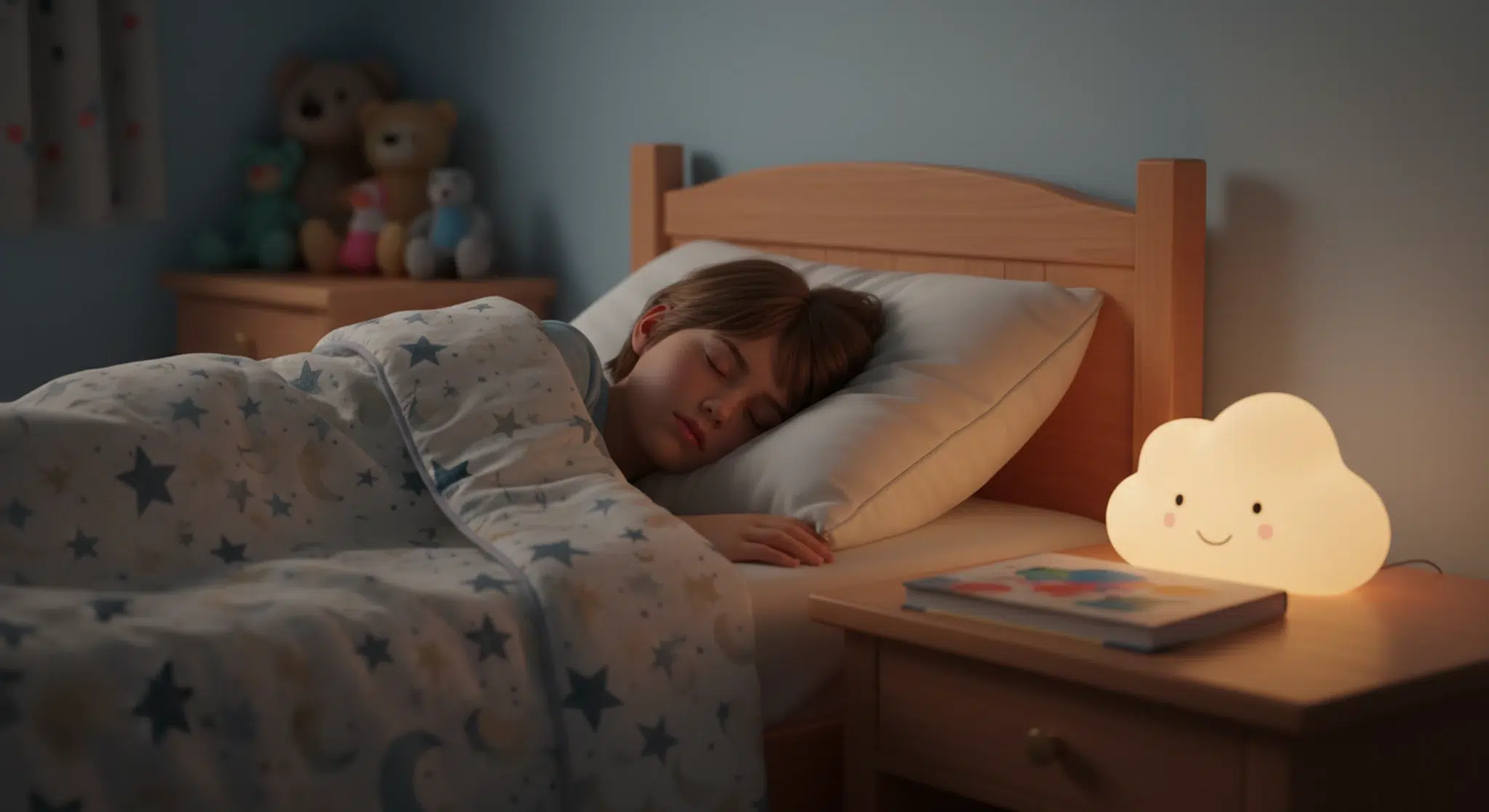


Most school-age kids need 9 to 12 hours of sleep a night, and preschoolers need 10 to 13 hours, including naps.
How much sleep do kids need? It is one of the most common questions parents ask, and the answer changes more than most people expect between the toddler years and the teens. Get it right and mornings, moods, and homework all get easier. Get it wrong, even by an hour a night, and it quietly shows up in behavior, attention, and health.
This guide gives you the pediatric sleep chart by age, a bedtime-by-age table you can match to your own wake-up time, age-by-age answers for 4 to 12 year olds, the signs a child is running short on sleep, and practical steps to help. Every number here follows the American Academy of Sleep Medicine and the American Academy of Pediatrics.
Key Takeaways
- Children 3 to 5 need 10 to 13 hours in 24 hours (including naps); 6 to 12 year olds need 9 to 12 hours; teens need 8 to 10.
- Pick bedtime by counting back from wake-up time, then subtract 15 to 20 minutes for falling asleep.
- Short sleep in kids often looks like hyperactivity, meltdowns, or trouble focusing rather than yawning.
- Screens off at least an hour before bed and a steady wake time, even on weekends, protect sleep the most.
- Loud snoring, breathing pauses, or daytime sleepiness despite enough hours are worth a call to your pediatrician.
Table of Contents
How Much Sleep Do Kids Need? Sleep Chart by Age
The most widely used answer comes from the American Academy of Sleep Medicine (AASM), whose pediatric sleep recommendations are endorsed by the American Academy of Pediatrics (AAP). The numbers below are total sleep in 24 hours, so if your child still naps, add the nap to their night sleep.
| Age | Recommended sleep per 24 hours | What that usually looks like |
|---|---|---|
| 4 to 12 months | 12 to 16 hours (including naps) | About 11 to 12 hours at night plus 2 to 3 naps |
| 1 to 2 years | 11 to 14 hours (including naps) | About 11 hours at night plus 1 to 2 naps |
| 3 to 5 years | 10 to 13 hours (including naps) | 10 to 12 hours at night; many drop the nap between 3 and 5 |
| 6 to 12 years | 9 to 12 hours | Usually all at night, no nap |
| 13 to 18 years | 8 to 10 hours | Usually all at night; body clocks shift later in puberty |
These are ranges, not targets to hit to the minute. Some children are naturally at the low end and wake up cheerful and alert; others need the top of the range to function. The best test is how your child acts during the day, which we cover below.
How Much Sleep Should a Child Get at Each Age?
Parents usually search by a specific age, so here is what the chart means year by year, along with what tends to change at each stage.
How much sleep should a 4 year old get?: 10 to 13 hours in 24 hours. Most 4-year-olds do best with about 11 to 12 hours at night. Some still take a nap or need a quiet rest in the afternoon, while many have dropped it altogether. If your 4-year-old has stopped napping, an earlier bedtime usually makes up the difference.
How much sleep should a 5 year old get?: Also 10 to 13 hours. Kindergarten is a big energy drain, and many 5-year-olds who seemed fine on 10 hours over the summer need closer to 11 once school starts. Afternoon meltdowns after school are often a sleep signal, not a behavior problem.
How much sleep should a 6 year old get?: 9 to 12 hours. Six is the age where the recommendation drops, but most first graders still need 10 to 11 hours at night.
How much sleep should a 7 year old get?: 9 to 12 hours. Ten hours is inside the healthy range for a 7-year-old, so if your child falls asleep easily, wakes on their own most days, and is in good spirits, 10 hours is enough.
How much sleep does an 8 to 10 year old need?: 9 to 12 hours. Activities, homework, and later bedtimes creep in during these years, so this is when many children quietly slip below 9 hours on school nights.
How much sleep does an 11 or 12 year old need?: Still 9 to 12 hours. Puberty often starts in this window and the body clock begins drifting later, which is why tweens can suddenly struggle to fall asleep at their old bedtime. For ages 13 and up, see our guide to how much sleep teenagers need.
For the younger years, we have detailed guides on how much sleep a 2 year old needs and how much sleep a 3 year old needs.
Bedtimes by Age: What Time Should Kids Go to Bed?
The right bedtime depends on one thing more than any other: what time your child has to wake up. Work backward from the wake-up time, subtract the hours of sleep your child needs, and then subtract another 15 to 20 minutes, because most children take that long to fall asleep once the lights go out.
| Age | Target night sleep | Wake at 6:30 a.m. | Wake at 7:00 a.m. | Wake at 7:30 a.m. |
|---|---|---|---|---|
| 3 to 5 years (no nap) | 11 to 12 hours | 6:15 to 7:15 p.m. | 6:45 to 7:45 p.m. | 7:15 to 8:15 p.m. |
| 6 to 8 years | 10 to 11 hours | 7:15 to 8:15 p.m. | 7:45 to 8:45 p.m. | 8:15 to 9:15 p.m. |
| 9 to 12 years | 9.5 to 10.5 hours | 7:45 to 8:45 p.m. | 8:15 to 9:15 p.m. | 8:45 to 9:45 p.m. |
| 13 to 18 years | 8.5 to 9.5 hours | 8:45 to 9:45 p.m. | 9:15 to 10:15 p.m. | 9:45 to 10:45 p.m. |
What time should a 4 year old go to bed?: For a 4-year-old who has dropped the nap and wakes around 6:30 to 7:00 a.m., lights out between about 7:00 and 7:45 p.m. works well. If your child still naps, bedtime can slide 30 to 60 minutes later.
What time should a 12 year old go to bed?: A 12-year-old who needs to be up at 6:30 a.m. for school should be asleep by roughly 8:45 to 9:15 p.m. to get 9 to 10 hours. Many tweens will resist this, which is a normal effect of their shifting body clock, but a consistent wind-down routine and screens off an hour before bed make it far easier.
Is 9 p.m. too late for a 6 or 7 year old?: On a school night, usually yes. If your child wakes at 7:00 a.m., a 9 p.m. bedtime only allows about 9.5 hours after they drift off, the very bottom of the range. Once in a while is fine; as a routine, most 6 and 7 year olds do better with lights out closer to 8:00.
How to Work Out Your Child’s Ideal Sleep Number
The chart gives a range. To find where your own child sits in it, try this simple two-week experiment during a normal routine (not a holiday):
- Pick a bedtime that allows sleep at the top of their age range and keep it for a week, including weekends (within about 30 to 60 minutes).
- Notice whether your child wakes on their own, or close to it, before the alarm.
- Watch the late afternoon: are they calmer, less weepy, and more patient than usual?
- If they lie awake for more than 30 minutes most nights, move bedtime 15 minutes later and watch for another week.
A child who is getting enough sleep can usually get up without a fight, stays alert in the car on short trips, and does not need to sleep in by two or more hours on weekends to catch up.
Big days go better with a good night of sleep.
Got a little one at home too? Our free two-minute quiz builds a gentle, personalized sleep plan for babies and toddlers.
Signs Your Child Isn’t Getting Enough Sleep
Tired children do not always look sleepy. In fact, many become more active, silly, or wound up when they are short on sleep, which parents can mistake for having too much energy. Common signs include:
- Being very hard to wake in the morning, or falling back asleep after being woken.
- Falling asleep in the car, in front of the TV, or at school during the day.
- Irritability, frequent meltdowns, or big emotions over small things, especially late in the day.
- Trouble paying attention, sitting still, or remembering instructions. Short sleep can look a lot like attention problems.
- Sleeping two or more hours later on weekends than on school days.
- Getting sick often, or clumsiness and more bumps and bruises than usual.
Why Sleep Matters So Much for Kids
The AASM panel that set these ranges reviewed hundreds of studies before publishing them. It found that children who regularly get the recommended amount of sleep have better attention, behavior, learning, memory, emotional regulation, and overall mental and physical health. Regularly sleeping less than recommended was linked with attention and behavior problems, more injuries, and, in teens, a higher risk of self-harm and depression. Sleep is also when the body releases much of its growth hormone and when the brain files away the day’s learning.
The flip side matters too: routinely sleeping far more than the recommended range can be a sign that sleep quality is poor or that something else is going on, which is worth mentioning to your pediatrician.
How to Help Kids Get the Sleep They Need
- Keep the schedule steady: Aim for the same bedtime and wake time every day, with weekends no more than about an hour different. A steady wake time sets the body clock more powerfully than anything else.
- Build a short wind-down routine: Twenty to thirty minutes of the same steps in the same order (bath or wash, pajamas, teeth, a story or chat, lights out) cues the brain that sleep is next. Our bedtime routine guide and bedtime stories for kids can help.
- Turn screens off an hour before bed: The AAP recommends keeping TVs, tablets, phones, and computers out of children’s bedrooms and switching all screens off at least an hour before bedtime.
- Make the room sleep-friendly: Cool, dark, and quiet. A night-light is fine for kids who are scared of the dark; keep it dim and warm-toned.
- Get outside in the daytime: Morning daylight and active play help set a healthy body clock and build sleep pressure for the evening.
- Watch hidden caffeine: Soda, iced tea, energy drinks, and even large servings of chocolate can keep kids awake. Children do not need caffeine at all.
- Handle stalling kindly but consistently: One more drink, one more hug, one more question: give a set number of “bedtime passes” and calmly walk your child back to bed when they are used up.
What About Naps?
Most children stop napping somewhere between 3 and 5 years old. When the nap goes, total sleep drops, so move bedtime earlier by 30 to 60 minutes for a few months to protect night sleep. A daily quiet time with books or calm play is a great bridge. Read more in our guide on when kids stop napping.
The 10-3-2-1-0 Rule (and a Kid-Friendly Version)
You may have seen the 10-3-2-1-0 sleep rule, which was written for adults: no caffeine 10 hours before bed, no big meals 3 hours before, no work 2 hours before, no screens 1 hour before, and zero snooze button presses. There are several variations floating around, but the idea is the same. For children, a simpler version works: no caffeine at all, a light snack rather than a big meal close to bed, homework finished before the wind-down routine, screens off an hour before lights out, and a consistent wake time every morning.
Related Betteroo Guides
- How much sleep do teenagers need
- How much sleep does a 3 year old need
- Toddler bedtime routine
- When do kids stop napping
- Night sweats in children
When to Talk to Your Pediatrician
Talk with your child’s doctor if your child snores loudly most nights, gasps or pauses in breathing during sleep, is very sleepy during the day even after enough hours in bed, regularly takes longer than 30 minutes to fall asleep, wakes often in the night, has frequent night terrors or sleepwalking, or complains of uncomfortable legs at bedtime. These can be signs of sleep apnea, insomnia, restless legs, or another treatable condition. Please check with your pediatrician before giving any sleep aid, including melatonin.
Frequently Asked Questions
How much sleep do kids need?
According to the American Academy of Sleep Medicine and the AAP, children 3 to 5 years old need 10 to 13 hours of sleep in 24 hours including naps, children 6 to 12 need 9 to 12 hours, and teens 13 to 18 need 8 to 10 hours.
How much sleep should a 5 year old get?
A 5-year-old should get 10 to 13 hours of sleep in 24 hours. Most 5-year-olds no longer nap, so that usually means 10 to 12 hours at night, with many kindergartners doing best at about 11 hours.
Is 10 hours of sleep enough for a 7 year old?
Yes, 10 hours is within the recommended 9 to 12 hours for children 6 to 12. If your 7-year-old wakes easily, is in a good mood, and stays alert through the day, 10 hours is enough.
What time should a 4 year old go to bed?
Most 4-year-olds who no longer nap and wake around 6:30 to 7:00 a.m. do well with lights out between about 7:00 and 7:45 p.m. Count back 11 to 12 hours from your child’s wake-up time, then subtract 15 to 20 minutes to fall asleep.
Is 9 p.m. too late for a 6 year old?
On school nights, usually yes. A 6-year-old waking at 7:00 a.m. who goes to bed at 9:00 p.m. gets only about 9.5 hours of sleep, the very bottom of the healthy range. A bedtime closer to 8:00 p.m. suits most children this age.
Gentle changes, peaceful nights.
Betteroo builds a personalized sleep plan for your baby or toddler. Take the free two-minute quiz to get started.
6 Sources
- Paruthi S, et al. Recommended Amount of Sleep for Pediatric Populations: A Consensus Statement of the American Academy of Sleep Medicine. J Clin Sleep Med. 2016;12(6):785-786.
https://jcsm.aasm.org/doi/10.5664/jcsm.5866 - American Academy of Pediatrics, HealthyChildren.org. Healthy Sleep Habits: How Many Hours Does Your Child Need?
https://www.healthychildren.org/English/healthy-living/sleep/Pages/healthy-sleep-habits-how-many-hours-does-your-child-need.aspx - Nemours KidsHealth. Kids and Sleep.
https://kidshealth.org/en/parents/sleep.html - Nemours KidsHealth. Common Sleep Problems.
https://kidshealth.org/en/parents/sleep-problems.html - Centers for Disease Control and Prevention. About Sleep.
https://www.cdc.gov/sleep/about/index.html - American Academy of Pediatrics, HealthyChildren.org. How to Make a Family Media Use Plan.
https://www.healthychildren.org/English/family-life/Media/Pages/How-to-Make-a-Family-Media-Use-Plan.aspx