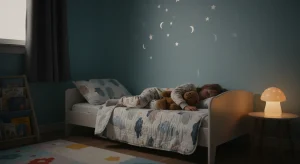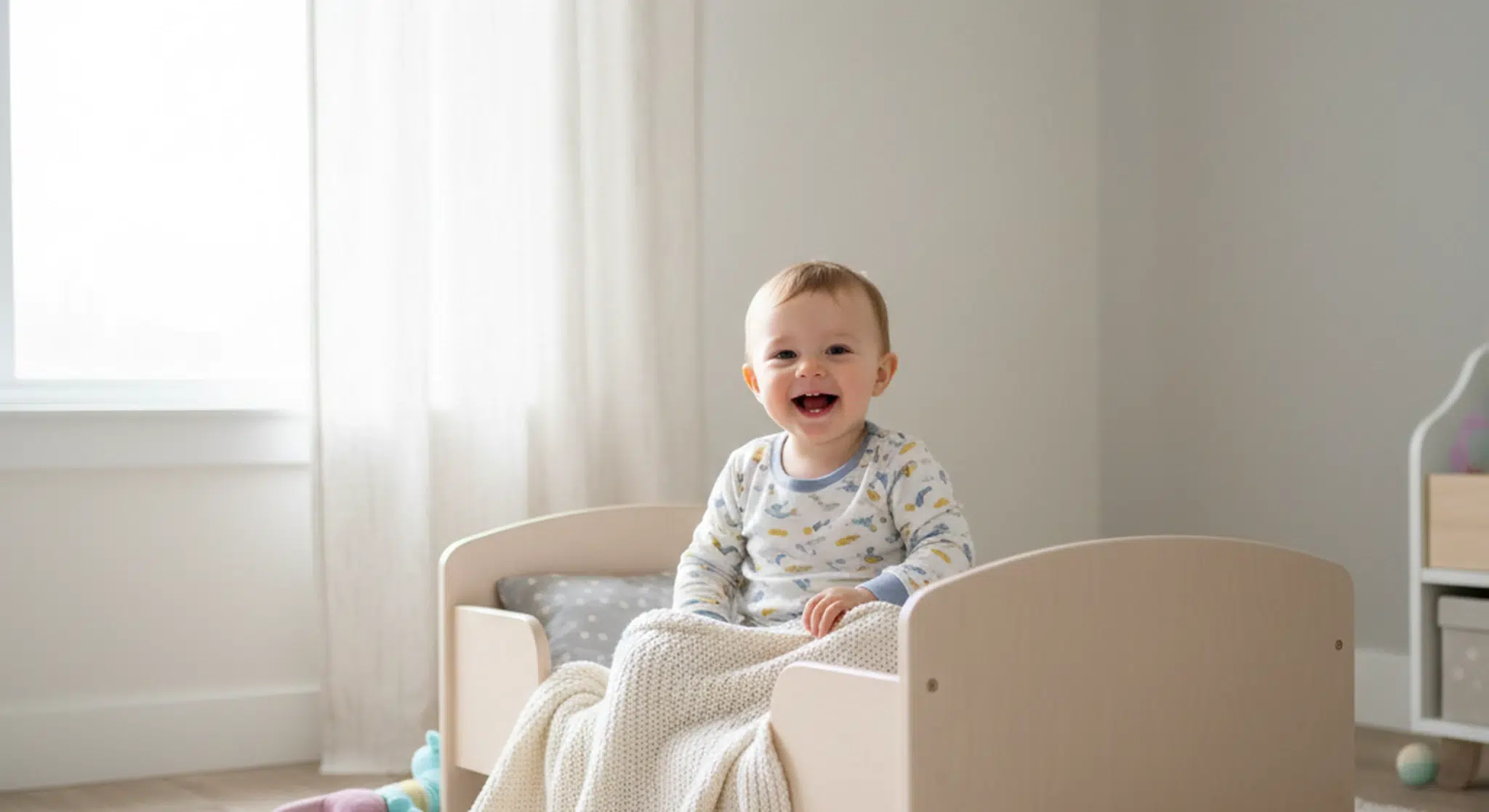


A 2 year old needs about 11 to 14 hours of sleep per 24 hours, including naps, according to the American Academy of Sleep Medicine consensus endorsed by the American Academy of Pediatrics. That usually breaks down into roughly 10 to 12 hours overnight plus one daytime nap of about 1 to 2 hours.
If you are wondering how much sleep does a 2 year old need, you are asking exactly the right question, because sleep at this age fuels your toddler’s fast-growing brain, mood, immune system, and even their eating. Two year olds are busy, opinionated, and full of feelings, and enough sleep is one of the biggest reasons a day goes smoothly instead of dissolving into tears before lunch.
The short answer is backed by clear guidance from the American Academy of Sleep Medicine and the American Academy of Pediatrics. In this guide you will get the exact numbers, a realistic sample daily schedule, the signs your toddler is or is not sleeping enough, and practical help with common bumps like the 2 year sleep regression, dropping naps, and setting a bedtime that sticks.
Key Takeaways
- A 2 year old needs about 11 to 14 hours of sleep per 24 hours, including naps, per AASM and AAP guidance.
- That typically means roughly 10 to 12 hours overnight plus one nap of about 1 to 2 hours.
- Most 2 year olds still take one nap a day; the switch to no naps usually comes later, often between ages 3 and 5.
- A consistent bedtime, often between 7 and 8 p.m., and a calm routine help toddlers fall asleep and stay asleep.
- The 2 year sleep regression is temporary; stay consistent and sleep usually settles again within a few weeks.
Table of Contents
How Much Sleep Does a 2 Year Old Need?
How much sleep does a 2 year old need? The answer is about 11 to 14 hours per 24 hours, including naps. This range comes from the American Academy of Sleep Medicine’s pediatric sleep-duration consensus, which was developed by a panel of sleep experts and endorsed by the American Academy of Pediatrics for children ages 1 to 2 years1. The Centers for Disease Control and Prevention lists the same 11 to 14 hour range for this age group2.
It helps to think of that total as two parts: a long overnight stretch and one daytime nap. Most 2 year olds sleep about 10 to 12 hours at night and nap for roughly 1 to 2 hours in the early afternoon. Your child might land at the higher or lower end of the range and still be perfectly healthy, because sleep needs vary from child to child. What matters most is that your toddler wakes rested, stays generally cheerful and engaged through the day, and is not relying on the car seat or stroller to catch up on missed sleep.
| Age | Total sleep per 24 hours | Typical overnight | Typical daytime naps |
|---|---|---|---|
| 1 to 2 years | 11 to 14 hours | 10 to 12 hours | 1 nap, about 1 to 2 hours |
| 3 to 5 years | 10 to 13 hours | 10 to 12 hours | 1 short nap or none |
Remember that the range is a healthy target, not a rigid rule. If your toddler consistently sleeps within it and seems happy and well rested, you are doing great. Consistent under-sleeping, on the other hand, tends to show up quickly in a toddler’s behavior, which is why the daytime signs below are so useful.
A Sample 2 Year Old Sleep Schedule
There is no single perfect schedule, but a predictable rhythm makes a huge difference at this age. Toddlers thrive on knowing what comes next, and a steady wake time actually anchors the whole day, including the nap and bedtime. Use the sample below as a starting point and shift the times to fit your family and your child’s natural clock. What time should a 2 year old go to bed? For most toddlers, a bedtime between 7 and 8 p.m. works well and supports that full 11 to 14 hours.
| Time | Activity |
|---|---|
| 6:30 to 7:00 a.m. | Wake up and breakfast |
| 12:30 to 1:00 p.m. | Lunch, then wind down for nap |
| 1:00 to 2:30 p.m. | Nap (about 1 to 2 hours) |
| 6:30 p.m. | Dinner finished, start calming down |
| 7:00 p.m. | Bath, pajamas, teeth, books |
| 7:30 to 8:00 p.m. | Lights out for the night |
Notice the gap between the end of the nap and bedtime. Two year olds generally need about 5 to 6 hours of awake time between the nap ending and lights out, so an early or very long nap can push bedtime later or lead to a toddler who is wired at night. If bedtime is becoming a struggle, gently capping the nap or nudging its start time earlier often helps more than moving bedtime around.
Want a schedule tailored to your toddler?
Betteroo builds a personalized, age-based sleep plan for your 2 year old so naps and bedtime finally line up.
Signs Your 2 Year Old Is (or Isn’t) Getting Enough Sleep
Is my 2 year old getting enough sleep? The clearest evidence is not the clock, it is your child’s daytime behavior and mood. A well-rested toddler generally wakes up on their own in a decent mood, stays engaged and curious through most of the day, handles small frustrations without melting down constantly, and settles at bedtime without an epic fight. Sleep debt, on the other hand, tends to look less like a sleepy child and more like an overwound one.
- Signs of enough sleep: wakes rested, generally cheerful, plays and focuses well, and falls asleep within about 15 to 30 minutes at bedtime.
- Crankiness and meltdowns: frequent tantrums, big emotions over small things, and general irritability can signal a tired toddler.
- Hyperactivity: overtired toddlers often get a second wind and seem wired, giddy, or bouncing off the walls rather than droopy.
- Early morning waking: rising very early and unhappy, or waking a lot overnight, can mean an overtired, overtired-by-bedtime cycle.
- Bedtime battles: a toddler who fights sleep hard is often overtired, so an earlier bedtime frequently helps rather than hurts.
If you see several of these signs together, try moving bedtime 15 to 30 minutes earlier for a week and protecting the daily nap. It sounds backward, but for toddlers, more sleep usually leads to easier bedtimes and later, calmer mornings, because a rested body settles more easily than an overtired one.
Do 2 Year Olds Still Nap?
Do 2 year olds still nap? Almost always, yes. The one-nap-a-day pattern is the norm at this age, and that single early-afternoon nap does a lot of heavy lifting to reach the full daily total. Most children keep napping well past age 2. The move to no naps at all is usually a later milestone, often somewhere between ages 3 and 5, and it happens gradually rather than overnight.
Be cautious about dropping the nap too early. Around this age you may hit stretches where your toddler resists the nap or skips it now and then, but a bumpy week or a nap strike is rarely a true sign they are done napping. More often it is a phase, a schedule that needs a small tweak, or a passing regression. If your toddler misses a nap, an earlier bedtime that same evening helps them recover and avoids a spiral of overtiredness. For the bigger-picture timeline, see our guide to when do kids stop napping.
- One nap a day, usually early afternoon, is normal and healthy for 2 year olds.
- Occasional nap refusals are common and usually temporary, not a sign to drop the nap.
- On a no-nap day, move bedtime earlier to make up the lost sleep.
- Keep the nap from starting too late in the afternoon so it does not steal from night sleep.
The 2 Year Sleep Regression and Other Disruptions
Right around this age, many families hit the 2 year sleep regression, a temporary stretch where a previously good sleeper suddenly resists bedtime, wakes overnight, or wakes early. It can feel like everything you built has fallen apart, but it is a normal developmental phase, not a permanent change. It often lines up with big leaps in language, imagination, independence, and boundary testing, plus new challenges like separation anxiety, molars coming in, or the arrival of a sibling.
The best response is calm consistency. Hold your routine and boundaries steady, keep bedtime at its usual time, and offer plenty of reassurance without introducing brand-new habits you will later have to undo. Most regressions ease within a few weeks once the developmental leap settles. For a deeper walk-through of causes and gentle strategies, read our full guide to the 2 year sleep regression.
Two other things commonly disrupt toddler sleep: screens and big transitions. Screen time close to bedtime is stimulating and the light can delay sleep, so the AAP recommends turning off screens well before bed and keeping them out of the bedroom. A sample calm wind-down, with the same soothing steps every night, teaches your toddler’s body that sleep is coming, much like the timing-and-routine approach in our sibling guide on how to put a baby to sleep fast.
- Turn off TV, tablets, and phones at least an hour before bedtime and keep them out of the bedroom.
- Keep a short, predictable wind-down: bath, pajamas, teeth, two books, lights out.
- During a regression, stay consistent and reassuring rather than starting new sleep crutches.
- Expect transitions (potty learning, a new sibling, travel) to ripple into sleep for a little while.
Toddler Beds and Safe Sleep at Age 2
Many 2 year olds are still perfectly happy and safe in a crib, and there is no need to rush the switch to a bed. A common time to move is when your toddler starts climbing out of the crib, which becomes a fall risk, or when they are getting close to potty training and need to get in and out on their own. If your child is not climbing out, staying in the crib a while longer is completely fine and often means better sleep. Our guide on when to transition to a toddler bed helps you time it well.
Once your toddler is over 12 months, a small pillow and a light blanket are generally considered safe, unlike for infants under one year who should always sleep on their back in a bare crib with only a fitted sheet. When you do move to a bed, keep the sleep space safe: use a low toddler bed or a floor bed, anchor dressers and bookcases to the wall, add a rail if needed, cover outlets, and do a quick sweep for anything a curious toddler could reach in the dark.
- A crib is fine until your toddler climbs out or clearly outgrows it.
- Over 12 months, a small pillow and light blanket are generally safe (infants under 1 still need a bare crib).
- Anchor furniture to the wall and remove hazards once your toddler can get up on their own.
- Keep the room dark, cool, and consistent to support the full 11 to 14 hours of sleep.
When to Talk to Your Pediatrician
- Your toddler snores loudly most nights, gasps, or seems to pause in breathing during sleep.
- Sleep is consistently far below the 11 to 14 hour range despite a steady routine and protected nap.
- Bedtime resistance or night waking is severe, long-lasting, and not improving with consistency.
- You notice unusual daytime sleepiness, restless legs, frequent night terrors, or new bedwetting after being dry.
- Sleep struggles are affecting your toddler’s growth, development, mood, or your family’s wellbeing.
This guide offers general information, not medical advice, and every child is different. Your pediatrician can check for medical causes such as sleep apnea, reflux, or iron levels and help you build a plan that fits your child. If something feels off or you are simply worn out, reach out. Getting support early is good for your toddler and for you.
Frequently Asked Questions
How many hours should a 2 year old sleep?
A 2 year old should sleep about 11 to 14 hours per 24 hours, including naps, according to the American Academy of Sleep Medicine consensus endorsed by the American Academy of Pediatrics. This usually breaks down into roughly 10 to 12 hours overnight plus one daytime nap of about 1 to 2 hours.
Is my 2 year old getting enough sleep?
Look at daytime behavior more than the clock. A well-rested toddler wakes in a good mood, plays and focuses well, and settles at bedtime without a long fight. Frequent tantrums, hyperactivity, very early waking, and bedtime battles often point to an overtired toddler who needs an earlier bedtime and a protected nap.
What time should a 2 year old go to bed?
Most 2 year olds do well with a bedtime between 7 and 8 p.m. The right time depends on when your child wakes and naps, since toddlers generally need about 5 to 6 hours of awake time between the end of the nap and lights out. A consistent bedtime supports the full 11 to 14 hours of daily sleep.
Do 2 year olds still nap?
Yes. Almost all 2 year olds still take one nap a day, usually in the early afternoon for about 1 to 2 hours. Most children keep napping past age 2, and the move to no naps typically happens later, often between ages 3 and 5. Occasional nap refusals are normal and usually temporary.
Why is my 2 year old suddenly not sleeping?
A sudden change is often the 2 year sleep regression, a temporary phase tied to developmental leaps, separation anxiety, molars, or big transitions like a new sibling. Stay consistent with your routine and boundaries, keep bedtime steady, and offer reassurance. Most regressions ease within a few weeks.
Give your 2 year old the rest they need with a plan made for them.
Betteroo turns your toddler’s age, nap, and bedtime into a simple, gentle sleep plan so everyone sleeps better.
Related Betteroo Guides
5 Sources
- American Academy of Sleep Medicine, Child Sleep Duration Health Advisory (Recommended Amount of Sleep for Pediatric Populations)
https://aasm.org/advocacy/position-statements/child-sleep-duration-health-advisory/ - American Academy of Pediatrics, AAP Endorses New Recommendations on Sleep Times
https://publications.aap.org/aapnews/news/6630/AAP-endorses-new-recommendations-on-sleep-times - HealthyChildren.org (AAP), Healthy Sleep Habits: How Many Hours Does Your Child Need?
https://www.healthychildren.org/English/healthy-living/sleep/Pages/healthy-sleep-habits-how-many-hours-does-your-child-need.aspx - Centers for Disease Control and Prevention, About Sleep (Recommended Hours by Age)
https://www.cdc.gov/sleep/about/index.html - Centers for Disease Control and Prevention, Positive Parenting Tips: Toddlers (1 to 2 Years)
https://www.cdc.gov/child-development/positive-parenting-tips/toddlers-1-2-years.html