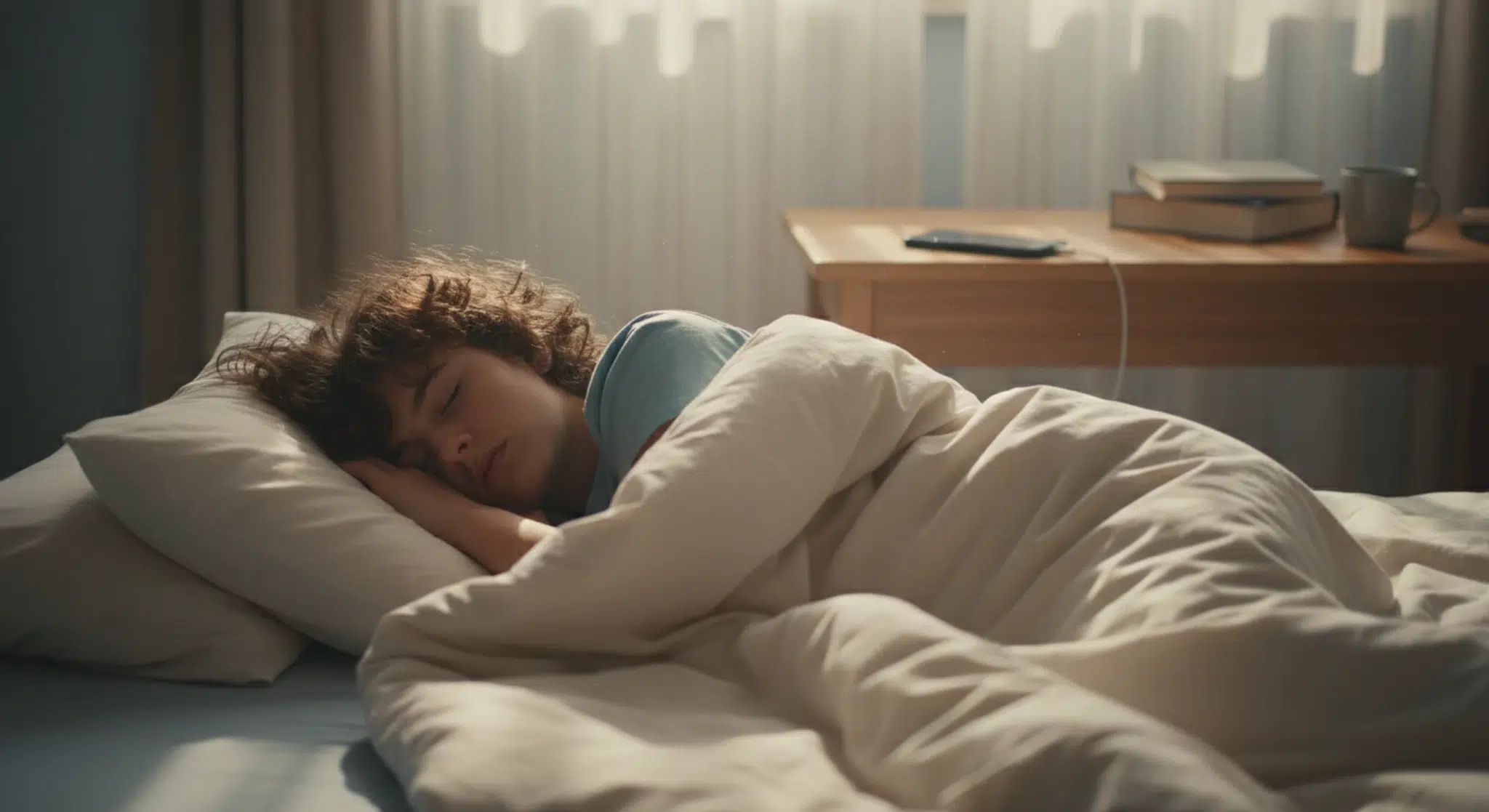
Teenagers need 8 to 10 hours of sleep every night, but most get closer to 7 on school nights.
How much sleep do teenagers need? More than most parents, and most teens, think. Pediatric sleep experts recommend 8 to 10 hours every night for 13 to 18 year olds, yet the teen years are exactly when sleep gets squeezed the hardest by early school start times, homework, activities, jobs, and phones.
This guide explains the recommended hours for each teen age, why teenagers naturally stay up later (it really is biology), what sleep loss does to mood, grades, and driving, the signs your teen is running on empty, and practical steps that actually work with teens rather than against them.
Key Takeaways
Teens 13 to 18 need 8 to 10 hours of sleep every 24 hours; 7 hours is not enough on a regular basis.
At puberty the body clock shifts up to two hours later, so late bedtimes are partly biological.
About 7 in 10 U.S. high schoolers do not get enough sleep on school nights.
Phones out of the bedroom, a steady wake time, and morning light are the most effective fixes.
Ongoing insomnia, extreme sleepiness, or sleep changes with low mood deserve a doctor visit.
Table of Contents
How Much Sleep Do Teenagers Need?
The American Academy of Sleep Medicine (AASM), with the endorsement of the American Academy of Pediatrics (AAP), recommends that teenagers 13 to 18 years old sleep 8 to 10 hours in every 24 hours on a regular basis. That range is the same whether your teen is 13 or 17.
Age
Recommended sleep
Asleep by (for a 6:30 a.m. alarm)
13 and 14 years
8 to 10 hours
About 8:30 to 10:30 p.m.
15 and 16 years
8 to 10 hours
About 8:30 to 10:30 p.m.
17 years
8 to 10 hours
About 8:30 to 10:30 p.m.
18 years and up
At least 7 hours (adult guideline); many young adults feel best with 8 or more
About 10:30 to 11:30 p.m. or earlier
Recommended teen sleep by age, based on the AASM consensus endorsed by the AAP.
So how much sleep should a 15 year old get? The same 8 to 10 hours as any other teen. A 14-year-old, 15-year-old, or 16-year-old who needs to wake at 6:30 a.m. should be asleep somewhere between about 8:30 and 10:30 p.m. to land in that range.
How Many Teens Actually Get Enough Sleep?
Not many. CDC analyses of national youth surveys have found that about 7 in 10 U.S. high school students do not get enough sleep on school nights, and most middle schoolers fall short too. Sleep tends to get shorter every year from about age 13 through the end of high school, just as academic, social, and driving demands go up.
The reasons are part biology, part schedule. That combination is why teen sleep is not simply a matter of willpower or discipline.
Why Teenagers Stay Up Late (It’s Biology, Not Just Phones)
The body clock shifts later: At the start of puberty, the sleep-wake cycle shifts up to two hours later, according to the AAP. The brain releases the sleep hormone melatonin later in the evening, so a teen who fell asleep easily at 9 p.m. at age 11 may not feel sleepy until 11 p.m. at 15.
Sleep pressure builds more slowly: The drive to sleep that builds up across the day accumulates more slowly in teens, so they can stay alert later in the evening.
School starts early: Many U.S. high schools start before 8 a.m. The AAP has recommended since 2014 that middle and high schools start at 8:30 a.m. or later, and California law now requires most public high schools to start no earlier than 8:30 a.m.
Schedules are packed: Homework, sports practices, part-time jobs, clubs, and a social life all push bedtime later.
Screens light up the evening: Phones deliver bright light and constant notifications right when the brain should be winding down, and group chats rarely go quiet at 10 p.m.
Put a later body clock together with an early alarm and you get a teen who is chronically short on sleep on weekdays and tries to catch up on weekends.
Big days go better with a good night of sleep.
Got a little one at home too? Our free two-minute quiz builds a gentle, personalized sleep plan for babies and toddlers.
Regularly sleeping less than 8 hours is linked with a long list of problems in teenagers:
Mood and mental health: More irritability, anxiety, and low mood. The AASM consensus statement links insufficient sleep in teens with an increased risk of depression and self-harm, so sleep is part of any conversation about teen mental health.
Learning and grades: Poorer attention, memory, and problem-solving. A tired brain does not store new learning as well.
Drowsy driving: New drivers are already at higher crash risk, and drowsiness slows reaction time much like alcohol does. Teens should never drive when they are very tired.
Sports and injuries: Short sleep is associated with slower reaction time and more injuries in young athletes.
Physical health: Insufficient sleep is associated with higher risks of obesity, high blood pressure, and diabetes, according to the AASM.
Risk-taking: Sleep-deprived teens are more likely to make impulsive decisions.
Signs Your Teen Needs More Sleep
Needing several alarms, or a parent, to get out of bed on school days.
Sleeping two or more hours later on weekends than on school days.
Dozing off in class, in the car, or while studying.
Relying on coffee, soda, or energy drinks to get through the day.
Moodiness, snapping at family, or seeming flat and unmotivated.
Taking long afternoon naps that then make it harder to fall asleep at night.
How to Help Your Teen Get More Sleep
Teens respond better to a plan they help build than to rules handed down. Share what you have learned about the teen body clock and ask them what would make evenings easier. Then try these changes together:
Park phones outside the bedroom: A family charging station in the kitchen is the single most effective change for many teens. The AAP recommends keeping screens out of bedrooms at night and turning them off at least an hour before bed. A family media use plan helps everyone agree on the rules.
Protect a consistent wake time: Keep weekend wake-ups within about 1 to 2 hours of school days. A small weekend sleep-in is fine; sleeping until noon resets the body clock even later and makes Monday morning brutal.
Get bright light in the morning: Opening the curtains, eating breakfast by a window, or walking to the bus helps pull a late body clock earlier.
Keep naps short and early: If your teen naps, 20 to 30 minutes before about 4 p.m. refreshes without wrecking night sleep.
Rethink caffeine and energy drinks: The AAP advises that energy drinks are not appropriate for children and teens. Limit other caffeine and avoid it in the afternoon and evening.
Plan the homework: A realistic after-school plan that finishes screens and studying before the wind-down stops the 11 p.m. assignment spiral.
Look at the whole schedule: If sports, a job, and advanced classes add up to a 6-hour night, something may need to give. Sleep is not the right thing to cut.
Model it: Teens notice when parents scroll in bed until midnight. Healthy sleep habits are easier when the whole household follows them.
Why Do Teenagers Sleep So Much?
If your teen sleeps until noon on Saturday, it is usually a sign of sleep debt from the school week, not laziness. Growth spurts and puberty also raise sleep needs. Occasional long weekend sleeps are normal. What deserves attention is a teen who sleeps 10 or more hours regularly and still feels exhausted, or who suddenly sleeps far more than usual along with changes in mood, appetite, or interest in friends, which can be a sign of depression or a medical problem.
Younger Kids in the House?
Sleep needs change a lot across childhood. For ages 3 to 12, see our sleep chart and bedtimes by age, and for the littlest ones, Betteroo’s free sleep quiz builds a personalized plan for babies and toddlers.
Reach out to your teen’s doctor if they regularly cannot fall asleep before the early hours even with good habits (a condition called delayed sleep-wake phase disorder is common in teens and treatable), snore loudly or stop breathing during sleep, fall asleep suddenly during the day or in unusual situations, or have sleep changes along with low mood, anxiety, or loss of interest in things they used to enjoy. If your teen ever talks about hurting themselves, contact their doctor right away or call or text 988 to reach the 988 Suicide and Crisis Lifeline.
Frequently Asked Questions
How much sleep do teenagers need?
Teenagers 13 to 18 years old need 8 to 10 hours of sleep every 24 hours, according to the American Academy of Sleep Medicine and the American Academy of Pediatrics.
How much sleep should a 15 year old get?
A 15-year-old should get 8 to 10 hours of sleep a night. If they need to wake at 6:30 a.m., that means being asleep by about 8:30 to 10:30 p.m.
Is 7 hours of sleep OK for a teenager?
Not as a regular habit. Seven hours is below the 8 to 10 hours recommended for teens. An occasional short night is fine, but routinely sleeping 7 hours or less is linked with poorer mood, attention, grades, and driving safety.
Why do teenagers sleep so much?
Teens often sleep late on weekends to pay back sleep debt from school nights, and puberty itself raises sleep needs and shifts the body clock later. If a teen sleeps a lot and still feels exhausted, or sleeps much more along with mood changes, talk to their doctor.
Should I let my teenager sleep in on weekends?
A little. Letting your teen sleep 1 to 2 hours later on weekends helps them recover without pushing their body clock much later. Sleeping until noon makes it harder to fall asleep Sunday night and to wake on Monday.
Gentle changes, peaceful nights.
Betteroo builds a personalized sleep plan for your baby or toddler. Take the free two-minute quiz to get started.
Paruthi S, et al. Recommended Amount of Sleep for Pediatric Populations: A Consensus Statement of the American Academy of Sleep Medicine. J Clin Sleep Med. 2016;12(6):785-786. https://jcsm.aasm.org/doi/10.5664/jcsm.5866