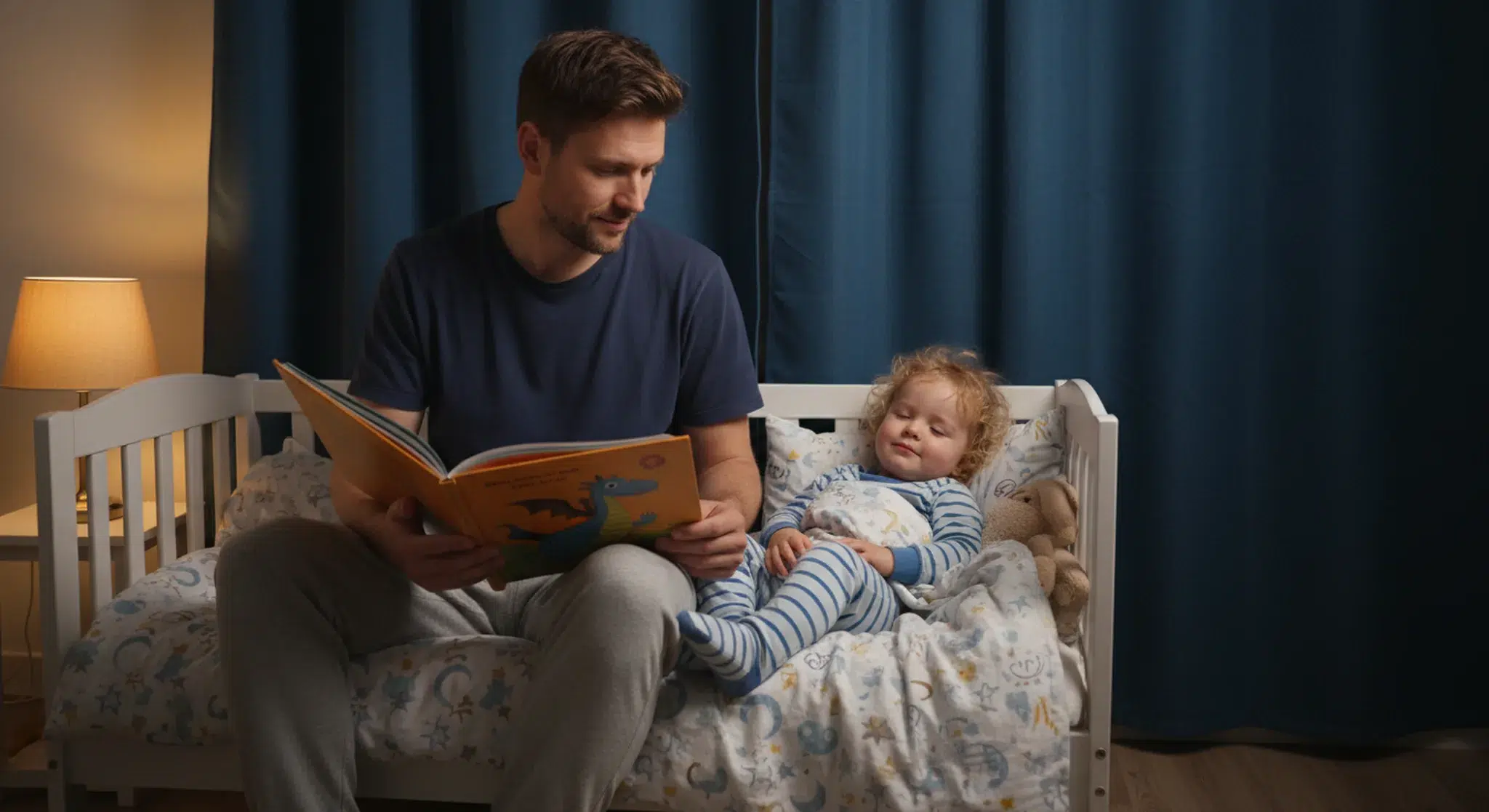
Melatonin for toddlers is not recommended as a first step, and most experts advise against any melatonin under age 3 without a doctor’s direction. The American Academy of Pediatrics urges caution at every age: behavioral changes (consistent schedule, wind-down routine, independent falling asleep) fix most toddler sleep problems better than any supplement, and melatonin should only enter the picture short term, at the lowest dose, with your pediatrician involved.
That caution is not reflexive. Melatonin is a hormone, not a vitamin. In the United States it is sold as a dietary supplement, which means no FDA drug-level oversight: studies have found actual melatonin content in gummies ranging from a small fraction of the label to several times it. Meanwhile pediatric melatonin ingestions reported to poison control rose more than 500 percent between 2012 and 2021, driven largely by candy-like gummies within toddler reach.
This guide lays out what parents actually need: when melatonin is and is not appropriate for a toddler, what the AAP says, evidence-based dosing if your pediatrician does recommend it, side effects and safety storage, and the behavioral playbook that outperforms supplements for garden-variety toddler bedtime battles.
Key Takeaways
Do not give melatonin to a child under 3 without explicit pediatrician direction; toddler sleep problems at this age are almost always behavioral and respond to routine changes.
The AAP advises using melatonin, if at all, short term, at the lowest effective dose, and only alongside a pediatrician conversation and a solid bedtime routine.
If a doctor does recommend it, typical starting doses are low: 0.5 to 1 mg given 30 to 90 minutes before bed; more is rarely better.
Supplements are loosely regulated: tested products have contained far more or less melatonin than labeled, so choose third-party verified brands (USP mark) if prescribed.
Store melatonin gummies like medicine, locked and out of sight: pediatric melatonin poison-control calls rose over 500 percent in a decade.
Table of Contents
What Melatonin Is (and What It Is Not)
Melatonin is the hormone your child’s brain releases in the evening as light dims, signaling that biological night has begun. Supplemental melatonin can shift the timing of sleepiness, which is why it has legitimate uses in specific circadian problems and in some children with autism or ADHD whose sleep-onset systems genuinely run late.
What melatonin is not: a sedative that keeps kids asleep, a fix for night waking, or a substitute for a bedtime routine. It nudges the clock; it does not do the parenting. A toddler who fights bedtime because they can, wakes at 2 a.m. wanting company, or has learned to fall asleep only while being rocked will get little from melatonin, because the problem is behavioral, not hormonal. Those situations are exactly what our guide to getting a toddler to sleep through the night is for.
Is Melatonin Safe for Toddlers? What the AAP Says
The American Academy of Pediatrics does not recommend melatonin for routine sleep problems in young children and encourages parents to talk with their pediatrician before giving it at any age. For children under 3, the guidance is stricter still: insomnia in this age group is almost always behavioral, so most sleep specialists will not reach for melatonin at all.
Safety data adds two more cautions. Short-term use in studied doses appears well tolerated, but there is little research on long-term use in young children, including theoretical questions about effects on puberty timing that remain unresolved. And because melatonin is a supplement rather than a regulated drug, dose accuracy is a real problem: one published analysis found products containing from under half to over 4 times the labeled amount, and some gummies contained other substances entirely.
The poison-control story deserves its own sentence: melatonin is now among the most common pediatric ingestions reported in the US, because gummies look and taste like candy. Whatever you decide about bedtime, store any melatonin in the house up, away, and out of sight.
If Your Pediatrician Recommends It: Dosing Basics
When a pediatrician does green-light melatonin for a young child (often for diagnosed circadian issues or in neurodevelopmental conditions), the evidence supports starting low and timing it right:
Start at 0.5 to 1 mg, given 30 to 90 minutes before target bedtime.
Most young children who respond do so at 3 mg or less; higher doses add side effects faster than benefits.
Use it short term, alongside behavior changes, with a plan to stop, not as a nightly forever habit.
Choose a third-party tested product (look for the USP Verified mark) to reduce dose roulette.
Possible side effects: morning grogginess, headache, vivid dreams, irritability, and increased bedwetting.
And a hard rule: melatonin is never a tool for making a toddler sleep on a schedule that suits adults (early flights, late parties). Hormones are not scheduling apps.
Try the fix that outperforms supplements
Betteroo’s free quiz builds a personalized toddler bedtime plan: schedule, routine, and script. No gummies required.
Behavioral sleep medicine beats melatonin for typical toddler insomnia in study after study, and its effects last after you stop trying. The core moves:
Right-size the schedule: toddlers need 11 to 14 hours per 24; protect 5 to 6 hours between nap end and bedtime so sleep pressure is real at lights out.
Run the same 20 to 30 minute wind-down every night, ending in bed drowsy but awake.
Kill evening light: screens off an hour before bed and dim the house; bright light suppresses your toddler’s own melatonin more powerfully than any gummy can replace it.
Make mornings bright and outdoors when possible: morning light anchors the clock from the other side.
Hold boring, consistent responses to bedtime callbacks and night wakings.
If bedtime resistance appeared suddenly around age 2 or 3, check our guide to the 3 year old sleep regression; short regressions resolve with consistency, not supplements. And if the problem is a wound-up evening household, the fix is environmental, not pharmacological.
Where Melatonin Genuinely Helps: Autism, ADHD, and Shifted Clocks
The strongest pediatric evidence for melatonin sits in specific populations. In children with autism spectrum disorder, sleep-onset insomnia is common and often biological: studies suggest differences in natural melatonin production, and controlled trials show supplemental melatonin meaningfully shortens time to fall asleep for many of these kids. Children with ADHD, particularly those on stimulant medication, can have genuinely delayed sleep clocks that respond similarly. In both cases, dosing, timing, and duration should be managed with the treating clinician, and behavior work continues alongside.
The other legitimate lane is a true circadian shift: an older child whose body clock has drifted so late that sleepiness arrives hours after a workable bedtime. There, small doses timed by a clinician can pull the clock earlier. Note what is absent from this list: the typical 2 year old who protests bedtime and wants one more story. That child has a negotiation strategy, not a hormone deficiency.
Raising Your Toddler’s Own Melatonin, for Free
Every toddler already owns a melatonin factory; the evening environment decides how well it runs. Bright household light in the hour before bed, and screen light in particular, suppresses natural melatonin release substantially in young children, whose large pupils and clear lenses let in more light than adult eyes. Practical translation: dim the main lights after dinner, switch to warm lamps, end screens at least an hour before bed, and keep the bedroom properly dark. In the morning, do the opposite: bright light, ideally outdoors, within an hour of waking anchors the clock so evening sleepiness arrives on schedule. Families who run this light routine for two weeks often find the melatonin question answers itself.
When to Talk to Your Pediatrician
Sleep problems persist after 2 to 4 weeks of consistent behavioral changes.
Your child has autism, ADHD, or another neurodevelopmental condition with entrenched sleep-onset trouble: this is where melatonin has its best evidence, under medical guidance.
Loud snoring, breathing pauses, gasping, or restless legs symptoms: these mimic insomnia and need evaluation, not melatonin.
Daytime sleepiness, behavior, or learning concerns tied to poor sleep.
Your toddler ate melatonin accidentally: call Poison Control at 1-800-222-1222; call 911 for breathing trouble or unusual drowsiness.
Frequently Asked Questions
Is melatonin safe for toddlers?
Not as a routine sleep aid. Most experts advise no melatonin under age 3 without a doctor’s direction, because toddler sleep problems are almost always behavioral. Short-term use in older children appears well tolerated in studies, but long-term safety in young children is not established, and supplement dosing is unreliable. Always involve your pediatrician first.
How much melatonin can I give a toddler?
Only what a pediatrician recommends. When doctors do use melatonin in young children, typical starting doses are 0.5 to 1 mg given 30 to 90 minutes before bedtime, and most responders need 3 mg or less. Choose a USP-verified product, use it short term, and pair it with schedule and routine fixes.
What does the AAP say about melatonin for kids?
The American Academy of Pediatrics does not recommend melatonin for routine childhood sleep problems. It advises addressing behavior and sleep habits first, consulting a pediatrician before any use, keeping doses low and short term when used, and storing melatonin securely because of the surge in pediatric ingestions.
Why won’t my toddler fall asleep without melatonin?
Habit and timing, usually. If a toddler falls asleep quickly with melatonin, the same result can typically be achieved with an earlier wind-down, dim evening light, a consistent routine, and independent falling asleep, because evening screen light suppresses natural melatonin and chaotic schedules mistime it. Taper off with your pediatrician and rebuild the routine.
What are the side effects of melatonin in toddlers?
Reported effects include morning grogginess, headaches, dizziness, vivid dreams or nightmares, irritability, and increased bedwetting. Accidental overdose from candy-like gummies is the bigger practical risk: keep bottles locked away and call Poison Control at 1-800-222-1222 after any unintended ingestion.
Better bedtimes without the gummies
Take Betteroo’s free 2 minute quiz for a personalized toddler sleep plan built on the methods pediatric sleep experts use first.