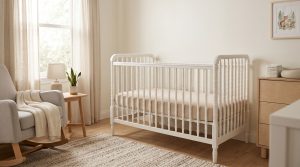
When it comes to sleep, the color of the light in your room matters more than most people realize.
The quick version: warm red and amber light are the best colors for sleep, while cool blue and white light are the most disruptive. That single choice, especially for a nursery night light or an overnight feed, can make winding down easier for the whole family.
Here is why color makes such a difference, how to read the color-temperature label on a bulb, the best light for a baby’s room and night feeds, and how daytime light fits into the picture. It comes down to one hormone, melatonin, and how different colors of light either protect it or shut it down.
Key Takeaways
Red light is best for sleep, followed by amber; cool blue and white light are the most disruptive.
Blue light most strongly suppresses melatonin, the hormone that signals your body to sleep.
For night lights, choose warm bulbs under about 2700K (ideally under 2000K) and keep them dim.
A dim red or amber night light is ideal for a nursery and overnight feeds.
Pair warm, dim light at night with bright, natural light by day to keep the body clock on track.
Table of Contents
The Short Answer: Red and Amber Light Are Best for Sleep
If you want a light on in the room at night, warm red or amber light is the best choice for sleep, and cool blue or white light is the worst. Red sits at the far end of the visible spectrum, has the least effect on the brain’s sleep signals, and is the gentlest color to have on while winding down or during a night feed. Amber and soft orange are close behind.
The reason comes down to a hormone called melatonin, which your brain releases in the evening to tell your body it is time to sleep. Light, especially bright and blue-toned light, suppresses melatonin and effectively tells the brain it is still daytime. Because red light has the least power to suppress melatonin, it lets the sleep signal build up the way it should.
This is true for adults and children alike, though babies and toddlers are still developing their internal clocks, so a calm, dim, warm-lit room supports the sleep routine you are trying to build.
Why Blue Light Keeps You Awake
Not all light affects sleep equally. Special receptors in the eye are most sensitive to short-wavelength blue light, the kind that dominates daylight, phone and tablet screens, LED bulbs, and cool white nightlights. When these receptors detect blue light in the evening, they send a strong wake-up signal to the brain’s master clock and blunt melatonin release.
Research on light and the body clock has shown that blue-toned light in the evening can delay the timing of sleep and suppress melatonin more than warmer light of the same brightness. That is why staring at a bright screen at bedtime, or having a cool white light glaring in the nursery, can make it harder for anyone in the house to settle.
Green and white light fall in the middle: less disruptive than pure blue, but still more alerting than red or amber. If a light looks crisp, cool, or bluish, treat it as a daytime light and keep it out of the bedroom in the hours before sleep.
Color Temperature: What to Look For on the Box
You do not need a special gadget to choose sleep-friendly lighting. Bulbs are labeled with a color temperature in kelvin (K), and lower numbers mean warmer, more orange light. Use this as your evening guide.
Color temperature
Appearance
Best for
Under 2000K
Deep warm amber / red
Night lights, night feeds, wind-down
2000–2700K
Warm white / soft orange
Evening lamps, bedtime routine
3000–4000K
Neutral white
General daytime rooms, not bedtime
5000K and up
Cool white / daylight blue
Daytime and focus, avoid before sleep
Lower kelvin numbers are warmer and better for sleep.
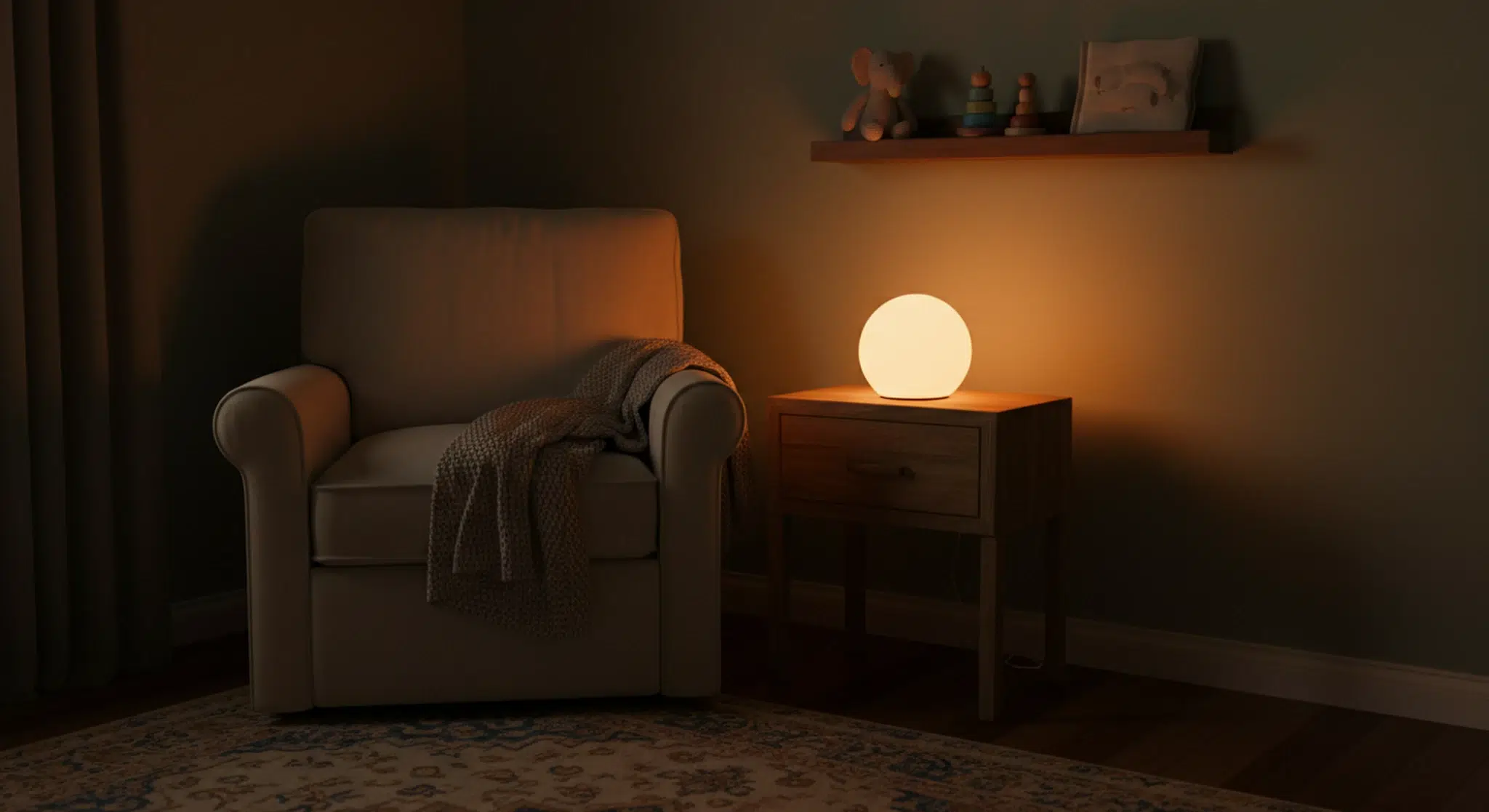
For a nursery or a child’s room, choose a night light rated under about 2700K in red or amber, and keep it as dim as you can while still being useful. A warm, low light is enough to handle a diaper change or a feed without fully waking your child or yourself.
The Best Light Colors for a Nursery and Night Feeds
During overnight wakeups, the aim is to see what you are doing without switching everyone’s brain into daytime mode. A dim red or amber night light is ideal because it preserves melatonin, keeps the room feeling like nighttime, and helps your baby learn that night is for sleeping, not playing.
Choose red or amber over white, blue, or green night lights.
Keep it dim. The light should be just bright enough to move around safely, not to read comfortably.
Point it down or to a wall, never directly at your baby’s eyes.
Avoid your phone during feeds, or use it on the lowest brightness with a warm or red filter, since screens are a major source of blue light.
Use blackout shades so early morning and streetlight do not cut the night short.
The right light helps little bodies wind down for sleep.
If your child is fighting bedtime, our free two-minute quiz builds a gentle, personalized plan.
Light is only one piece of a healthy sleep setup. Warm, dim evenings work best alongside a consistent routine and age-appropriate schedule, like the ones in our guide to baby nap length by age and our overview of when babies sleep through the night.
What About Green Light, Sunrise Alarms, and Smart Bulbs?
You may have seen sleep gadgets that use green light or color-changing bulbs. Green light is less alerting than blue but more alerting than red, so it is not the best choice for the deepest part of the night, though some toddler clocks use a green glow to signal that it is okay to get up in the morning, which is a helpful daytime cue rather than a sleep aid.
Color-changing smart bulbs can be genuinely useful: set them to a dim warm or red tone in the evening and a brighter cool white in the morning to reinforce the difference between night and day. Sunrise alarm clocks that gradually brighten with warm light can make morning wakeups gentler, especially in dark winter months. The key principle stays the same, which is warm and dim at night, bright and cool by day.
Light and the Body Clock Through the Day
Color at night is only half the story. Getting bright, natural light during the day, especially in the morning, is one of the most powerful ways to keep a child’s or adult’s body clock on track. Morning daylight anchors the internal clock, which in turn helps melatonin rise on time in the evening.
So the full recipe for good sleep is a rhythm: bright, cool, natural light in the morning and daytime, then a gradual shift to warm, dim, red-toned light in the last hour or two before bed. Seasonal shifts and clock changes can throw this off, which is why our guide to daylight saving time and baby sleep walks through easing the transition. And while lighting supports sleep, it is not a substitute for a solid routine; supplements like melatonin for toddlers should only ever be considered with your pediatrician.
A Note on Light, Screens, and Children’s Sleep
Pediatric sleep guidance is consistent on one point: screens and bright light in the hour before bed make it harder for children to fall asleep. The American Academy of Pediatrics recommends keeping screens out of the bedroom and powering them down at least an hour before bedtime, in part because their blue-toned light suppresses melatonin and delays sleep onset.
If your child needs a light to feel comfortable, a dim red or amber night light is the sleep-friendly choice. But no bulb replaces the fundamentals of good sleep, which are a predictable routine, an age-appropriate schedule, and a dark, cool, quiet room. Think of warm lighting as one supportive tool within that bigger picture.
Frequently Asked Questions
What color light is best for sleep?
Red light is best for sleep, with amber and soft orange close behind. Red sits at the far end of the visible spectrum and has the weakest effect on melatonin, the hormone that signals your body to sleep, so it lets the brain wind down naturally. Cool blue and white light are the most disruptive and should be avoided in the hour or two before bed.
Is red light or blue light better for sleep?
Red light is far better for sleep than blue light. Blue light most strongly suppresses melatonin and sends a wake-up signal to the brain, which is why screens and cool white bulbs can keep you awake. Red light barely affects melatonin, so it is the best choice for night lights and overnight feeds.
What color night light is best for babies?
A dim red or amber night light is best for babies. It gives you enough light for diaper changes and feeds without fully waking your baby or shifting their brain into daytime mode, and it helps reinforce that nighttime is for sleeping. Keep it dim and pointed away from your baby’s eyes, and avoid white, blue, or green night lights.
Does blue light really affect sleep?
Yes. Special receptors in the eye are most sensitive to blue light, and when they detect it in the evening they suppress melatonin and delay the body clock. Bright screens and cool white LEDs are strong blue-light sources, which is why using them close to bedtime can make it harder to fall asleep.
What color temperature bulb is best for a bedroom?
For evening and bedtime, choose warm bulbs rated under about 2700K, and ideally under 2000K for night lights, which look warm amber or orange. Save cool white or daylight bulbs of 5000K and up for daytime rooms, since their bluer light is more alerting and works against sleep.
Calmer bedtimes, better nights.
Betteroo builds a personalized sleep plan for your child. Take the free two-minute quiz to get started tonight.