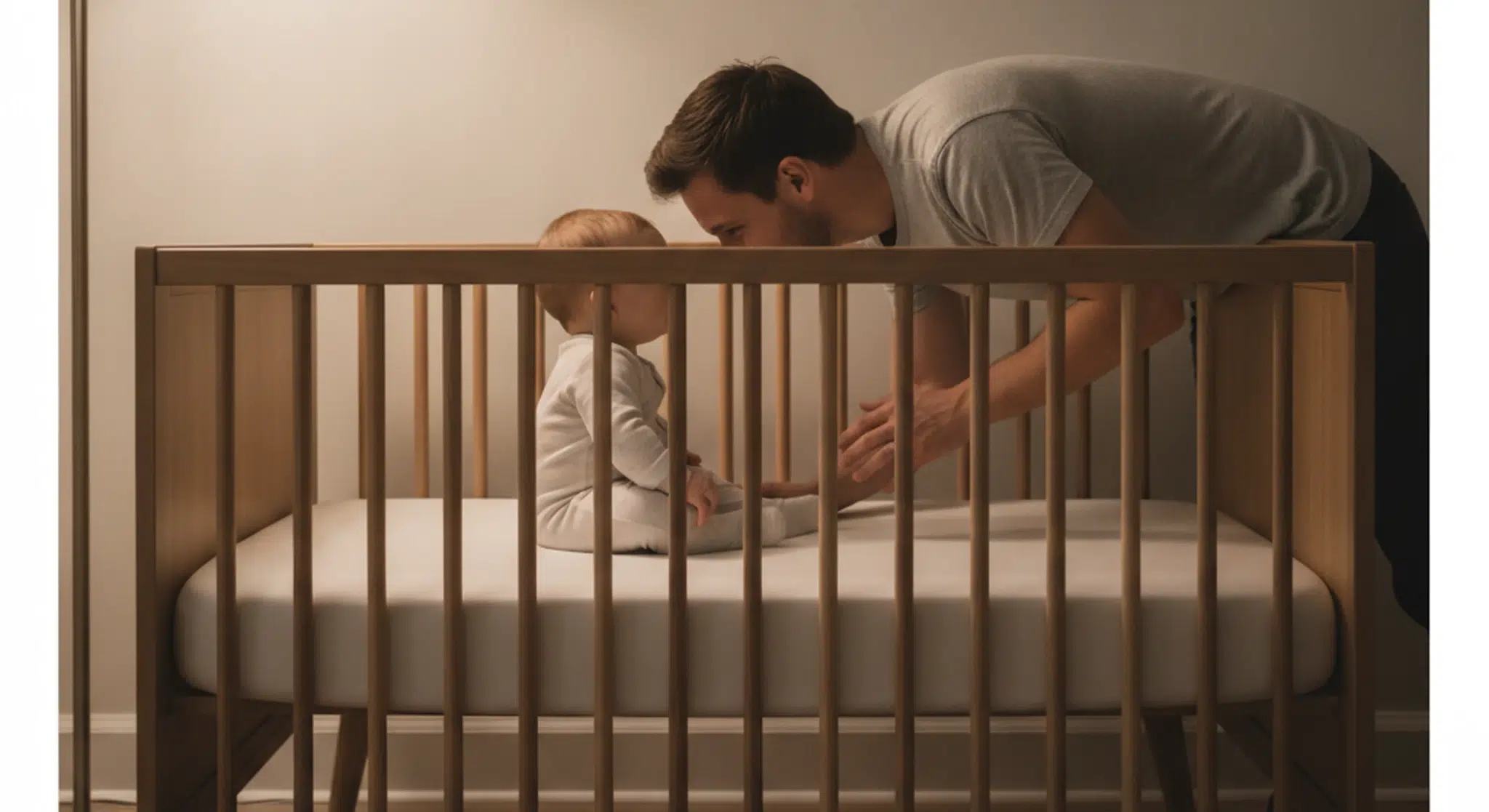
Separation anxiety is a normal developmental stage, not a setback, and it is one of the most common reasons bedtime protest and night wakings ramp up in the second half of the first year. It usually shows up as your baby realizes you still exist when you leave the room, which is actually a cognitive leap worth celebrating.
For most babies, separation anxiety begins around 8 to 9 months, often peaks somewhere between 10 and 18 months, and gradually eases by age 2 to 3. The nighttime version can look like sudden crying at bedtime, clinginess at every goodbye, and waking to check that you are still there.
This guide explains why separation anxiety disrupts sleep, and the gentle, consistent moves that help your baby feel secure enough to settle.
Key Takeaways
Separation anxiety typically starts around 8 to 9 months, peaks between 10 and 18 months, and eases by age 2 to 3.
It is driven by object permanence: your baby now knows you exist even when out of sight, so leaving feels like a loss.
Bedtime protest and more night wakings are common during this stage and are not a sign you did anything wrong.
Predictable routines, brief reassuring check ins, and a consistent response help far more than big changes.
This is temporary. Keeping the schedule steady usually helps sleep settle within a few weeks.
Table of Contents
Why Separation Anxiety Disrupts Sleep
The root cause is a wonderful milestone: object permanence. Once your baby understands that you continue to exist after you walk out, bedtime becomes a separation to protest rather than a neutral event. They are not manipulating you. They genuinely miss you and are learning that you always come back.
Because sleep requires letting you go for the night and surfacing alone between sleep cycles, this stage hits sleep directly. You may see longer bedtime resistance, crying the moment you leave, and more frequent wakings where your baby wants to confirm you are nearby.
From Betteroo’s State of Baby Sleep
You are not alone in the wakings. In our survey of thousands of families, the share of babies waking three or more times a night is highest around 7 to 9 months at 67.3%, which overlaps exactly with the start of separation anxiety, then falls to 60.5% by 10 to 12 months (n=5,002). Explore the full data →
When It Peaks
Most babies show the first clear signs around 8 to 9 months. Intensity often peaks somewhere between 10 and 18 months, with a common second surge around 15 to 18 months, and it fades as language and independence grow, usually settling by age 2 to 3. Every baby is a little different, and a temperament that is more cautious may feel it more strongly.
Gentle Ways to Help at Night
Consistency and predictability are your best tools. When your baby can predict what happens, the fear of the unknown shrinks.
Anchor a calm bedtime routine. The same short sequence every night signals safety. A predictable routine is one of the most evidence backed sleep tools there is.
Practice small separations by day. Leave the room briefly and return, and play peekaboo, which teaches that gone is never permanent.
Keep goodbyes short and confident. A long, anxious goodbye tells your baby there is something to fear. A warm, brief one reassures.
Offer brief check ins. If your baby cries at night, a calm, boring reassurance (a few words, a gentle hand) works better than a big intervention that becomes the new habit.
Consider a lovey once age appropriate. After 12 months, when the crib can hold a small comfort item, a familiar object can bridge the separation.
What Not to Do
Try not to sneak out, which can make your baby more vigilant and more anxious about losing track of you. Avoid starting brand new habits you cannot sustain, like rocking or feeding all the way to sleep every night, since those often outlast the anxiety. And resist overhauling the schedule. Big changes add uncertainty at exactly the moment your baby needs the familiar. Our overview of common sleep training methods includes gentle, gradual options that respect this stage.
Bedtime protest ramping up around 9 months?
Get a personalized plan built around your baby’s age, patterns, and temperament.
Separation anxiety is normal and rarely needs medical attention. Check in if the distress seems extreme or does not ease at all with time, if it comes with developmental concerns, or if it is severely affecting feeding, growth, or your family’s wellbeing. Otherwise, trust that this intense, clingy season is a sign of healthy attachment, and it passes.
When does separation anxiety start affecting sleep?
It usually begins around 8 to 9 months, when babies develop object permanence and realize you still exist when you leave. That is when bedtime protest and extra night wakings commonly appear.
When does separation anxiety peak?
Intensity often peaks somewhere between 10 and 18 months, with a common second surge around 15 to 18 months, and it typically eases by age 2 to 3 as language and independence grow.
How do I help a baby with separation anxiety at bedtime?
Anchor a calm, predictable bedtime routine, practice short separations during the day, keep goodbyes brief and confident, and offer calm, boring check ins if your baby wakes. Consistency helps far more than big changes.
Should I let my baby cry it out during separation anxiety?
This stage generally responds best to gentle, gradual, and consistent approaches rather than abrupt change, since predictability reduces the underlying fear. If you want structure, choose a method you can apply calmly and consistently, and check with your pediatrician if unsure.
Is separation anxiety a sleep regression?
Not exactly, but it can feel like one. It is a normal developmental stage that disrupts sleep and often overlaps with the 8 to 10 month regression window. Like a regression, it is temporary and usually settles within a few weeks of steady routines.
Understand your baby’s sleep
Get a personalized plan built around your baby’s age, patterns, and temperament.
Paruthi S, et al. Recommended Amount of Sleep for Pediatric Populations: A Consensus Statement of the American Academy of Sleep Medicine. Journal of Clinical Sleep Medicine, 2016. https://jcsm.aasm.org/doi/10.5664/jcsm.5866