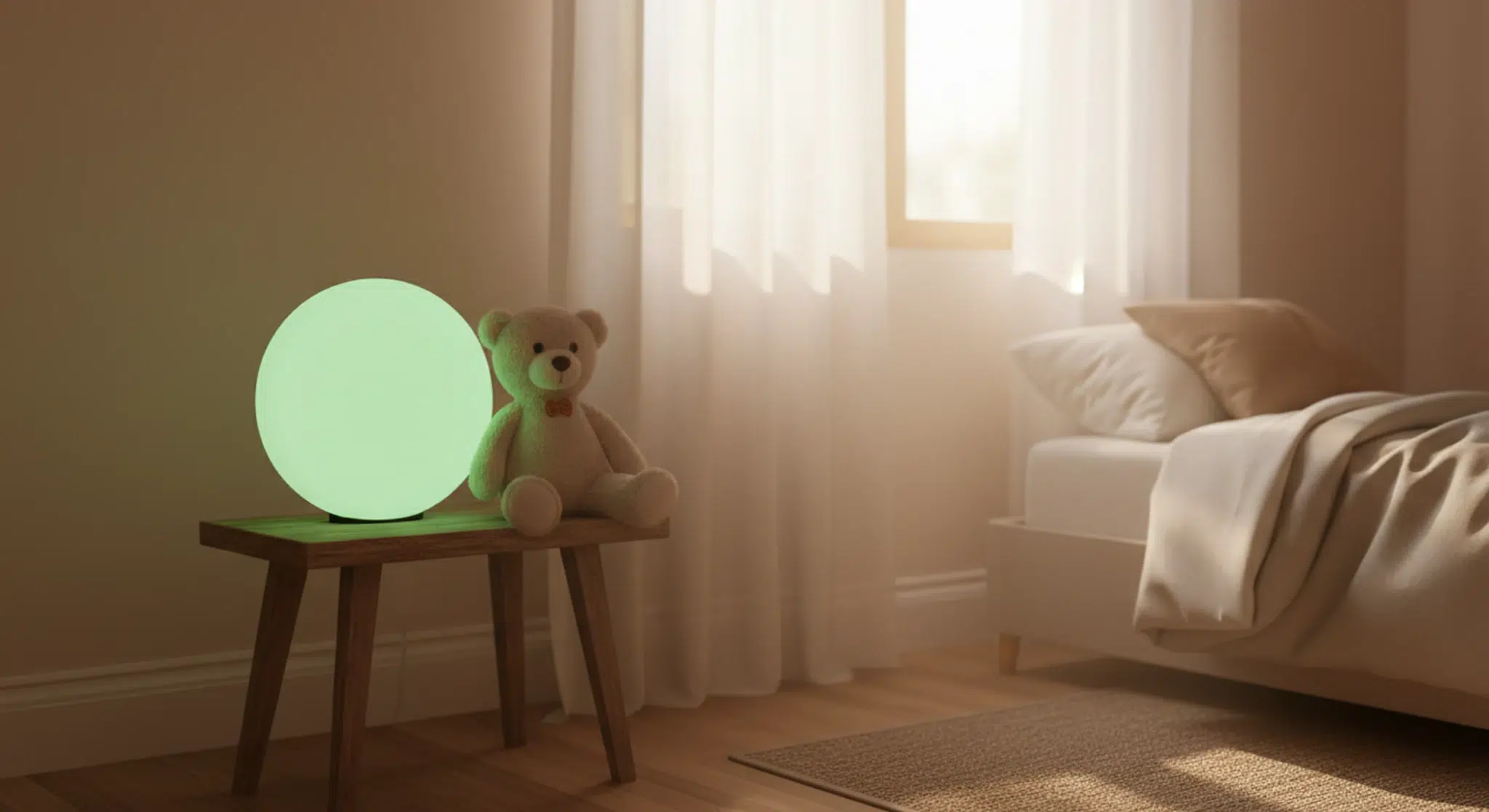
An OK-to-wake clock turns an abstract bedtime rule into a color your toddler can actually see and follow.
If your toddler is popping out of bed at 5:30 a.m. or turning bedtime into a negotiation, an OK-to-wake clock can give them a clear, visual boundary. These color-changing toddler clocks glow one color during sleep hours and switch to green at the wake time you choose, so your child knows exactly when it is okay to start the day.
Used consistently and paired with a good schedule, a toddler clock can smooth out early morning wakings, support the move to a big-kid bed, and take some of the guesswork out of “is it morning yet?” Here is how they work, when to start, and how to get the most out of one.
Key Takeaways
An OK-to-wake clock uses color (usually green) to signal when your toddler can get up.
It is a tool, not a cure: it works best with a consistent routine and an age-appropriate schedule.
Under age three, use it to build a simple cause-and-effect habit; from age three it can hold a real boundary.
Use red for the sleep glow (least disruptive to sleep) and green for wake time.
Set a realistic wake time of 6:00 to 7:00 a.m. and stay consistent for one to three weeks.
As an Amazon Associate, Betteroo earns from qualifying purchases.
Table of Contents
What Is an OK-to-Wake Clock?
An OK-to-wake clock, sometimes called a toddler clock, color-changing clock, or sleep training clock, is a simple visual tool that uses color to tell your child when it is time to stay in bed and when it is okay to get up. The clock glows one color during sleep hours (often red or off) and switches to another color, usually green, at the wake time you set. Instead of relying on a number a toddler cannot yet read, the color gives them a clear, concrete signal.
These clocks do not train sleep on their own, but they give toddlers something they crave: a predictable boundary they can see. Paired with a consistent routine, an OK-to-wake clock can ease early morning wakings, reduce bedtime negotiations, and help a child who has moved to a bed understand when the day actually begins.
Do OK-to-Wake Clocks Actually Work?
They work best as one piece of a bigger picture, not as a magic fix. Toddlers thrive on routine and clear limits, and a color-changing clock makes an abstract rule (stay in bed until morning) into something visible and consistent. When you use it the same way every day and hold the boundary calmly, most toddlers learn the pattern within one to three weeks.
What a clock cannot do is override biology. If your child is genuinely waking at 5:00 a.m. because of an early bedtime, a too-long or too-short nap, or a room full of morning light, the clock alone will not fix it. Address the underlying schedule first, then let the clock reinforce the expectation. Our guide on why your baby wakes up too early covers the common culprits.
The Best Age to Introduce a Toddler Clock
You can introduce a color-changing clock at almost any age, but how you use it depends on where your child is developmentally. For toddlers younger than about three, keep the goal simple: build a cause-and-effect association. Before you walk in each morning, make sure the light has already turned green, then point it out cheerfully: “Look, your light is green, it’s time to get up!” Over time, your child connects green with the start of the day.
Around age three, when children reliably know their colors and can follow a two-step expectation, the clock becomes far more powerful. Now you can teach the full rule: when the light is red, we stay in bed and rest or play quietly; when it turns green, we can get up. This is also a natural age to lean on the clock during the toddler bed transition, when a child who can climb out needs a clear reason to stay put.
How to Use an OK-to-Wake Clock: Step by Step
The clock only works if you use it consistently. Here is a simple setup that works for most families.
Introduce it during the day. Show your child the colors and practice like a game: pretend to sleep when it is red, then pop up to say good morning when it turns green.
Turn on the night color before bed. Set the sleep color during the bedtime routine so it becomes part of the wind-down cue.
Set a realistic wake time. For most young children a biologically appropriate wake time is between 6:00 and 7:00 a.m. Set the green light for a time your child can actually reach, then move it later in small steps.
Praise every success. When your child waits for the green light, make a big, warm deal of it. Positive attention is what cements the habit.
Stay consistent. Do not go in before the light is green, even for a few extra minutes, or you teach your child that the color does not really matter.
If your child wakes before the green light, keep your response calm and boring: a quiet reminder to rest until the light changes, then leave. Consistency, not a long conversation, is what teaches the boundary.
Which Color Should You Use?
Green is the most common choice for wake time because it is easy for kids to grasp: “green means go.” For the sleep hours, red is the best option if your clock doubles as a night light, because red light is the least disruptive to sleep, while blue and white light are the most stimulating. A simple rhyme helps it stick: “Red means bed, green means GO.”
If your clock lets your child pick the wake color, let them, since a little ownership makes them more invested in the routine. Just keep the sleep color dim and warm, or turn the light off entirely overnight if your child does not need a night light.
What to Look for in a Toddler Clock
There are dozens of OK-to-wake clocks on the market, and the right one depends on your child and your routine. A few features are worth weighing before you buy.
App or Bluetooth control lets you adjust the wake time from your phone without walking into the room, which is handy for early mornings.
Color choice and a red night-light option so the sleep glow stays sleep-friendly.
Separate nap and night settings if you want the clock to cover both.
A child lock so curious fingers cannot reprogram it or crank the brightness.
Dimmable brightness, so the light itself does not become the thing waking your child.
Extras like a built-in sound machine, a visible clock face for older kids, or battery backup.
Whichever you choose, keep your expectations realistic. Give your toddler a couple of weeks of consistent practice before you decide whether the clock is helping.
When a Clock Is Not Enough
If your toddler’s early wakings or bedtime battles persist despite consistent use of the clock, the issue is usually the schedule, not the tool. An overtired child from too-late a bedtime, or an undertired child from too-long a nap, will fight sleep no matter what color is glowing. Look at total sleep, nap timing, and room darkness first.
A clock also cannot resolve fears, separation anxiety, or a nap transition. If sleep has become a nightly struggle, a step-by-step plan tailored to your child’s age will do more than any single gadget. Consider pairing the clock with our free sleep quiz below.
Frequently Asked Questions
What age can you start using an OK-to-wake clock?
You can introduce one at almost any age. For children under about three, use it simply to build a cause-and-effect link (green means we get up). Around age three, when kids know their colors and can follow a two-step rule, the clock becomes much more effective at holding the stay-in-bed boundary.
Do OK-to-wake clocks really work?
For most toddlers, yes, when they are used consistently alongside a solid schedule. The clock turns an abstract rule into a visible signal. It will not fix wakings caused by an off schedule, too much morning light, or nap issues, so address those first and let the clock reinforce the expectation.
What color should the clock be at night?
Use red for sleep hours if the clock doubles as a night light, since red is the least disruptive to sleep, and green for wake time because green means go. Keep the night glow dim, or turn the light off overnight if your child does not need it.
What time should I set an OK-to-wake clock to turn green?
For most young children, set it between 6:00 and 7:00 a.m., a biologically appropriate wake time. Choose a time your child can realistically reach so the clock feels achievable, then shift it later in five to fifteen minute steps if you want a later start.
My toddler still gets up before the green light. What do I do?
Respond calmly and consistently: give a brief, boring reminder to rest until the light turns green, then leave. Avoid long conversations or bringing them out of the room early, and be sure the underlying schedule (bedtime, nap length, room darkness) is not causing the early waking.
Still fighting early wakings
Take our free 3-minute sleep quiz for a step-by-step plan matched to your toddler’s age and schedule.
Figueiro & Rea (2010), Effects of Red and Blue Lights on Circadian Variations in Cortisol, Alpha Amylase, and Melatonin https://doi.org/10.1155/2010/829351