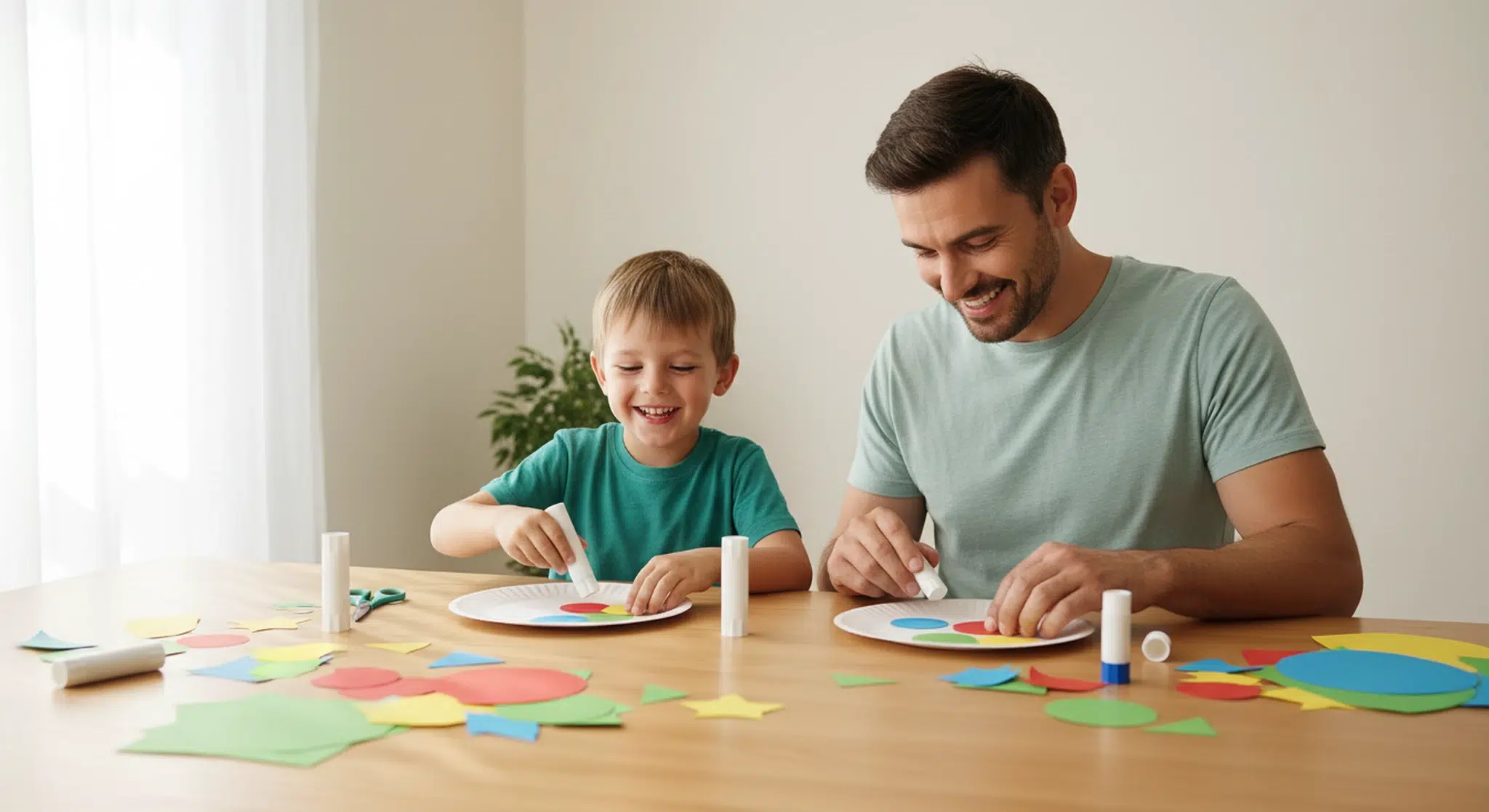
Easy crafts for kids use supplies you already have, like paper plates, cardboard tubes, yarn and washable paint, and the 40 original projects below are sorted by age and supply.
Looking for easy crafts for kids that don’t need a store run? Every project here starts with things most homes already have: paper, plates, tubes, egg cartons, tape, yarn, washable paint and a few leaves from the yard.
You’ll find a quick comparison table, ideas by age and supply, six step-by-step guides, 5-minute and rainy-day crafts, and the safety basics on choking hazards, art labels and homemade dough that many craft lists skip.
Key Takeaways
The easiest crafts use paper, paper plates, cardboard, yarn, paint and nature finds.
Toddlers enjoy the process; preschoolers start planning what they make.
Look for the ACMI AP Seal on art materials for children in sixth grade or younger.
Keep small parts, caps and balloons away from young children, and supervise scissors.
Homemade play dough and salt dough can harm children and pets if eaten.
As an Amazon Associate, Betteroo earns from qualifying purchases.
Table of Contents
Easy Crafts for Kids at a Glance
Quick Answer
The best easy crafts for kids use what is already in your kitchen and recycling bin: paper plates, scrap paper, cardboard tubes, egg cartons, yarn, washable paint and nature finds. Start with a paper plate animal mask, torn-paper mosaic, cardboard tube binoculars or coffee filter butterflies. Match the project to your child’s age, use non-toxic supplies, and keep small parts away from children under 3.
Craft
Ages
Time
Supplies
Mess
Torn-Paper Mosaic
2+
10 min
Paper, contact paper or glue stick
Low
Big Sticker Scene
2+
5 min
Paper, large stickers
Low
Bubble Wrap Prints
2+
15 min
Bubble wrap, paint, paper
High
Paper Plate Animal Mask
3+
20 min
Plate, paper, craft stick
Low
Cardboard Tube Binoculars
3+
15 min
2 tubes, tape, markers
Low
Coffee Filter Butterflies
3+
15 min plus drying
Filters, washable markers, clothespin
Medium
Leaf Rubbings
3+
10 min
Leaves, paper, crayons
Low
Pop-Up Card
5+
20 min
Paper, scissors, glue
Low
Cardboard Loom Weaving
6+
30 to 45 min
Cardboard, yarn
Low
Shoebox Diorama
6+
45 min or more
Shoebox, scraps, paint
Medium
Quick guide to 10 easy crafts by age, time, supplies and mess.
Easy Crafts for Kids by Age
Toddlers (2 to 3): process, not product. The American Academy of Pediatrics (AAP) notes that 3-year-olds are drawn to clay, paint, paper and crayons and play randomly with craft materials before planning projects. Tear, stick, stamp and scribble, with close supervision. See activities for 2-year-olds and sensory activities for toddlers.
Preschoolers (3 to 5): the AAP lists cutting with safety scissors, pasting and clay modeling among favorite activities at 4 and 5, when kids start deciding what to make before they begin. The CDC’s 4-year milestones include holding a crayon between fingers and thumb and drawing a person with three or more body parts.
School age (6 to 8): multi-step projects that work at the end, like a glider or woven mat.
Tweens (9 to 12): yarn crafts, dioramas, gifts and their own designs.
If you are doing most of the work, pick something simpler. The benefit comes from doing, not from a perfect result.
Your Basic Craft Kit: Supplies You Already Have
Paper: printer paper, magazines, coffee filters, plates and bags.
Recycling: tubes, cereal boxes, paper egg cartons and shoeboxes.
Sticky things: glue sticks (least mess), school glue, masking and painter’s tape.
Check the label. The Art and Creative Materials Institute (ACMI) gives its AP (Approved Product) Seal to art materials a toxicologist has found contain nothing in amounts that would harm people, including children. ACMI recommends AP products for children in sixth grade or younger and says never to give them products with its CL (Cautionary Label) Seal.
Big days go better with a good night of sleep.
Got a little one at home too? Our free two-minute quiz builds a gentle, personalized sleep plan for babies and toddlers.
Sturdy and already round, plates are the easiest start.
1. Paper Plate Fish Bowl: trim the top, color the water blue, add paper fish.
2. Paper Plate Animal Mask: any animal you like, with paper ears and a craft stick handle. Steps below.
3. Paper Plate Snail: color a rainbow spiral, cut along it, and add a paper head.
4. Paper Plate Pizza: toddlers tear yellow paper cheese and glue on circle toppings. Count them together.
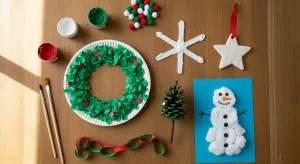
5. Season Wreath: cut out the center and glue tissue squares in spring, paper leaves in fall or cotton balls in winter.
6. Sun and Moon Spinner: paint one plate yellow and one dark blue, glue them back to back, and flip it at bedtime.
Paper Crafts: Fun Crafts With Plain Paper
7. Torn-Paper Mosaic: tearing and sticking, no scissors needed. Steps below.
8. Accordion Caterpillar: fold two strips over each other in a zigzag for a springy body, then add a face.
9. Paper Chain Countdown: write something to look forward to on each link and tear one off a day.
10. Paper Glider Contest: fold and decorate planes, then aim for a laundry basket.
11. Pop-Up Card: two snips on the fold make a pop-up for birthdays and thank yous. Steps below.
12. Paper Strip Sculpture: glue paper loops and arches onto a base to build a skyline.
13. Paper Bag Puppet: draw a face on the flap of a lunch bag so the mouth moves with your child’s hand.
Cardboard and Recycled Crafts to Do at Home
Save boxes and tubes for a week and you have plenty of crafts to do at home.
14. Cardboard Tube Binoculars: two tubes, tape and a bug hunt. Steps below.
15. Egg Carton Bug Family: paint paper carton cups as ladybugs and bees and add paper wings.
16. Cereal Box Puppet Theater: cut a window in a cereal box and tape on fabric scrap curtains. Pair it with our puppet show ideas.
17. Tube Car Ramp: tape halved tubes to a wall or big box and race toy cars down the track.
18. Big Box House: an adult cuts doors and windows; kids paint and move in.
19. Shoebox Diorama: build a tiny ocean, forest or story scene inside a shoebox on its side. Ages 6 and up.
20. Recycled Robot: tape boxes, tubes and lids together and draw buttons and dials on paper.
Nature Crafts
Collect only fallen leaves, sticks and loose petals, skip berries and mushrooms, and wash hands afterward. Keep small rocks from kids who still mouth things. More seasonal ideas are in our fall crafts for kids.
21. Leaf Rubbings: place leaves vein side up under thin paper and rub with the side of a peeled crayon.
22. Nature Walk Bracelet: wrap masking tape sticky side out around a wrist and collect petals and leaves on a walk.
23. Painted Rock Pets: paint smooth, washed rocks as animals or monsters.
24. Stick Raft: tie twigs together with twine, add a leaf sail, and test it in a tub of water.
25. Nature Paintbrushes: clip a pine sprig, grass top or leaf bundle into a clothespin and compare the marks each makes.
26. Pressed Flower Bookmark: press flowers in a heavy book for about a week, then seal them between clear contact paper.
Yarn, Paint and Dough Crafts
For a sparkly paint project, also try salt painting.
27. Yarn-Wrapped Letter: wrap a cardboard initial in yarn for bedroom door decor.
29. Fork Pom-Poms: wrap yarn around a fork, tie it tight in the middle, slide it off and snip the loops. Ages 7 and up.
30. Two-Stick Yarn Star: cross two craft sticks and wind yarn around each in turn to build a striped diamond.
31. Bubble Wrap Prints: paint bubble wrap and press paper on top for a dotted print.
32. Sponge Stamps: an adult cuts sponges into shapes; kids stamp patterns, flowers or a whole town.
33. Cotton Swab Dot Painting: fill a drawn outline with dots of color, which slows speedy painters down.
34. Salt Dough Handprint: a keepsake for older kids, with the safety rules below.
Homemade dough is not a snack. Vanderbilt’s poison control center found that one tablespoon of some homemade play dough recipes could put a child of about 22 pounds (10 kg) in the toxic range for salt. The National Capital Poison Center warns that raw flour can carry E. coli and Salmonella, and that playing with it and then putting hands in the mouth is a risk. Give toddlers store-bought dough labeled for their age, save salt dough for older kids who won’t taste it, and keep it away from dogs: Pet Poison Helpline warns salt dough can cause severe salt toxicity in pets.
35. Big Sticker Scene: draw grass and sky and hand over large stickers. Peeling is great finger work.
36. Coffee Filter Butterflies: markers, a spritz of water and a clothespin. Steps below.
37. Tape-Resist Painting: stick painter’s tape shapes on paper, paint over everything, and peel once dry to reveal white lines.
38. Paper Fortune Teller: fold a classic fortune teller and write silly fortunes inside. Ages 7 and up.
39. Rain Stick: add a foil spiral and a spoonful of rice to a paper towel tube and tape both ends very securely. Ages 4 and up, supervised.
40. Contact Paper Suncatcher: stick tissue squares between two sheets of clear contact paper, cut a shape, and tape it to a window.
Step-by-Step: 6 Easy Crafts for Kids
Paper Plate Animal Mask (3+)
Step 1. Mark eye spots while your child holds the plate up. An adult cuts the holes.
Step 2. Color it as a lion, cat or made-up creature and glue on paper ears and whiskers.
Step 3. Tape a craft stick to the bottom as a handle, not string around the neck.
Torn-Paper Mosaic (2+)
Step 1. Tape clear contact paper to the table, sticky side up.
Step 2. Tear colored paper into pieces together. Tearing is the activity.
Step 3. Press pieces on, then cover with a second sheet and hang it in a window.
Cardboard Tube Binoculars (3+)
Step 1. Decorate two toilet paper tubes with paper or markers.
Step 2. Tape them side by side at both ends.
Step 3. For kids 4 and up, an adult can add a loose ribbon strap, used only with supervision.
Coffee Filter Butterflies (3+)
Step 1. Color a flattened coffee filter all over with washable markers.
Step 2. Mist lightly with water and watch the colors blend. Let it dry completely.
Step 3. Pinch the middle into a clothespin body and add pipe cleaner antennae.
Pop-Up Card (5+)
Step 1. Fold paper in half. Make two parallel cuts about 1 inch long and 1 inch apart into the fold.
Step 2. Open it and push the strip inward so it forms a small box.
Step 3. Glue a drawing to the front of the box, then glue a folded cover sheet around the outside.
Cardboard Loom Weaving (6+)
Step 1. Cut notches about half an inch apart along the top and bottom of a notebook-size piece of cardboard.
Step 2. Wind yarn up and down through the notches and tape the ends on the back.
Step 3. Weave a second color over one strand and under the next, alternating each row and pushing rows down.
Step 4. Slip the loops off the notches and knot the ends for a small mat or wall hanging.
For a salt dough handprint, kids 6 and up mix 1 part salt, 2 parts flour and water into a stiff dough, press a hand in, and an adult bakes it until hard. Wash hands after.
Craft Safety, Setup, Cleanup and Display
Safety. The AAP lists balloons, coins, marbles, small balls, toys with small parts, pen and marker caps and button batteries as choking hazards, and warns that balloons are a risk up to age 8. In crafts, watch googly eyes, beads, pom-poms and caps around children under 3 or a mouthing sibling. Stay close while kids use blunt-tip scissors, and keep hot glue, craft knives and staplers in adult hands.
Setup and cleanup. Cover the table, use an old T-shirt as a smock, and pour paint into an egg carton so spills stay small. Set out only today’s supplies. Make cleanup part of the craft.
You do not need a full craft closet. Pick one easy craft that fits your child’s age, set out a few supplies on a covered table, and let them lead. Use AP-sealed materials, keep small parts from little ones, treat homemade dough as not-for-eating, and praise the process. A calm craft also makes a nice wind-down before bath.
Frequently Asked Questions
What are some easy crafts for kids to do at home?
Good easy crafts for kids at home include paper plate masks, torn-paper mosaics, cardboard tube binoculars, coffee filter butterflies, leaf rubbings, paper bag puppets and tape-resist painting. Each uses paper, cardboard, tape, washable markers or paint you probably already have, and most take 15 to 20 minutes from start to finish.
What crafts can a 2 year old do?
Two-year-olds do best with simple, process-focused crafts: tearing paper and sticking it to contact paper, peeling large stickers, stamping with sponges, painting with big brushes and scribbling with chunky crayons. Expect short attention spans, avoid small loose parts like googly eyes and pom-poms, and stay right beside your child the whole time.
What can kids make with paper?
Plain paper becomes paper chains, accordion caterpillars, paper airplanes, pop-up cards, fortune tellers, strip sculptures, mosaics and puppets. Add a glue stick, crayons and child-safe scissors and you can fill an afternoon. Construction paper is sturdier for younger kids, while printer paper folds more crisply for planes and cards.
How do you keep kids’ crafts from getting messy?
Cover the table with a vinyl cloth or paper, put kids in an old shirt as a smock, and pour only small amounts of paint at a time into an egg carton or muffin tin. Choose glue sticks over liquid glue for little ones, set out only today’s supplies, and keep a damp cloth nearby for quick wipes.
Is homemade play dough safe for kids?
Not if it gets eaten. Poison control experts warn that homemade play dough can contain enough salt to be toxic to a small child, and that dough made with raw flour can carry E. coli and Salmonella. Give toddlers store-bought dough labeled for their age, and keep homemade dough away from pets.
What are the benefits of arts and crafts for kids?
Crafts give children practice with small hand movements used for writing, buttoning and eating, along with planning, following steps, patience and pride in finishing something. The American Academy of Pediatrics notes that cutting with safety scissors, pasting and clay modeling are favorite activities for many 4- and 5-year-olds as hand control grows.
Gentle changes, peaceful nights.
Betteroo builds a personalized sleep plan for your baby or toddler. Take the free two-minute quiz to get started.