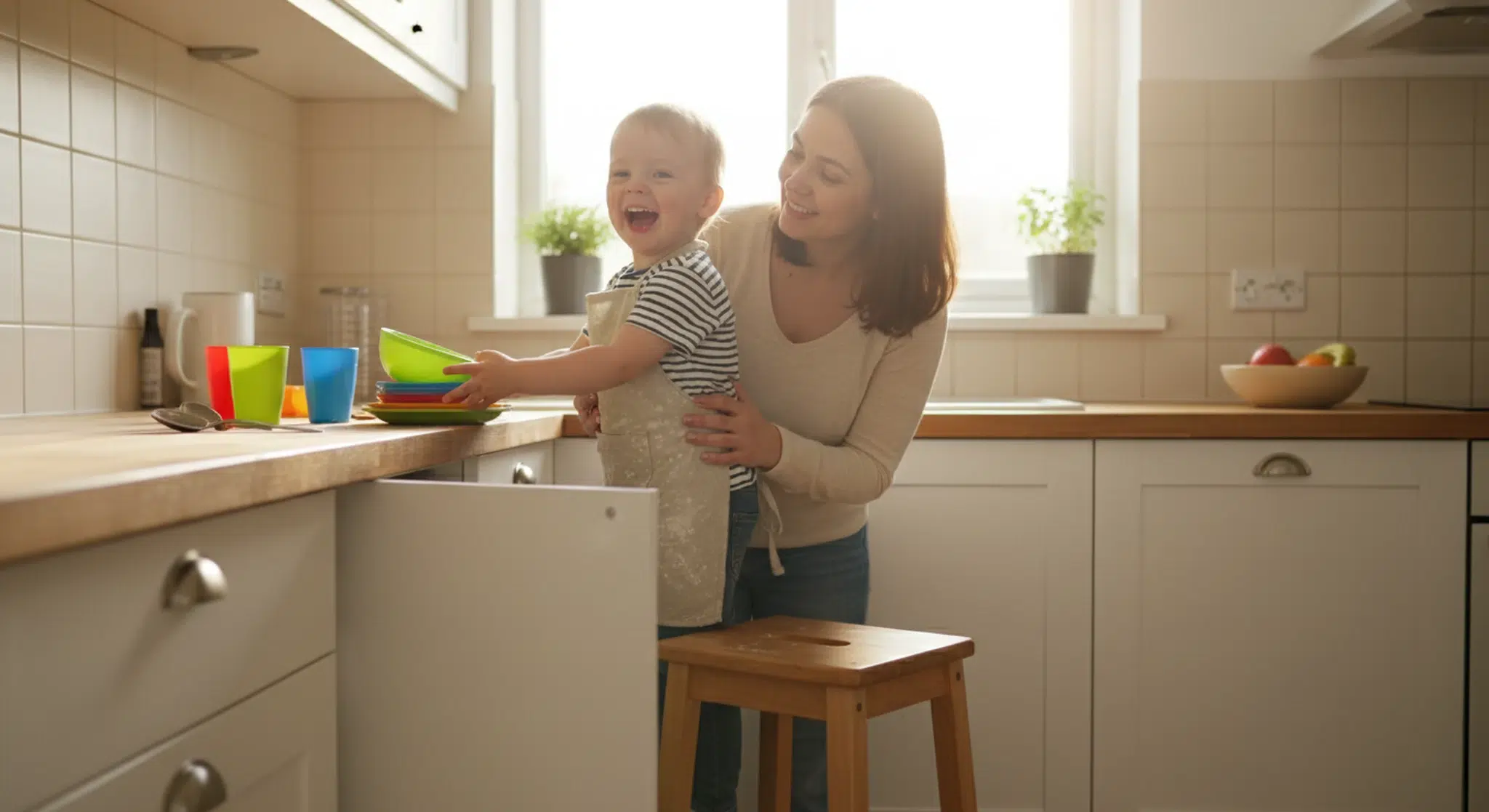
Children can start helping around the house as early as age two, and age-appropriate chores build responsibility, confidence, and real life skills. Here is a simple by-age guide to what kids can handle, how many chores to give, and how to make them stick.
Getting kids to help at home is one of the most common parenting struggles, and it is easy to give up and do it all yourself. Yet the effort pays off in ways that last well beyond a tidy room. Children who do regular chores tend to be more responsible, more capable, and better at handling the ordinary frustrations of life.
The key is matching chores to your child’s age and stage, then keeping expectations realistic and consistent. This guide walks through age-appropriate chores from toddlers through teens, answers the big questions about how many chores to assign and whether to pay for them, and shares practical tips for turning chores into a habit instead of a nightly battle.
Key Takeaways
Kids can begin helping around age two, when the goal is a helping mindset, not a finished job.
Match chores to age and readiness, expanding responsibility as skills grow.
Aim for consistency over volume: one reliable daily chore beats a long list that collapses.
Whether to pay for chores is a family choice; be clear and consistent either way.
Be specific, praise effort over perfection, and avoid redoing their work in front of them.
Table of Contents
Why Chores Matter More Than a Clean House
It can feel faster to do everything yourself, and in the short term it usually is. The long game is different. Decades of research on family life point to a simple pattern: children who help around the house from an early age tend to grow into more responsible, capable, and resilient adults. Chores teach that a home runs on shared effort, not on one person quietly doing it all.
Chores also build practical skills you cannot teach in a worksheet. Sorting laundry sharpens categorizing, following a two-step task strengthens working memory, and finishing a job that is a little bit boring builds the frustration tolerance that school and friendships demand later. The point is not a spotless kitchen. The point is a child who knows how to pitch in, sees themselves as a helper, and feels the quiet pride of contributing to the family.
When Can Kids Start Doing Chores?
Earlier than most parents expect. As soon as a toddler can walk steadily and grasp objects, usually around eighteen months to two years, they can start helping. At this age the goal is not a finished task, it is the habit of helping. A two-year-old who drops toys into a bin alongside you is learning that cleanup is simply part of playing, long before it becomes something to argue about.
The trick is to lean into the natural toddler urge to copy grown-ups and to say yes when they want to help, even when it slows you down. A child who is welcomed as a helper at two rarely has to be convinced to help at eight. Start small, keep it cheerful, and expand the list as their skills grow.
Chores for Toddlers (Ages 2 to 3)
Toddler chores are really guided helping. Keep each task to a single step, do it together, and celebrate the effort rather than the result. Expect a wobbly, half-finished job and praise it anyway, because you are building the habit, not the outcome.
Put toys and books back in a bin or on a low shelf
Drop dirty clothes into the hamper
Help wipe a small spill with a cloth
Put their own shoes by the door
Hand you items while you unload groceries or laundry
Feed a pet from a pre-measured scoop with help
Chores for Preschoolers (Ages 4 to 5)
Preschoolers love feeling grown-up and can follow two-step directions, so this is a wonderful window to expand responsibility. They can start a chore, stick with it for a few minutes, and take real pride in a job that is theirs. Keep expectations gentle and offer a quick demonstration when a task is new.
Make their bed, even if it stays lumpy
Set the table with napkins and unbreakable items
Clear their own plate after meals
Water plants with a small watering can
Match clean socks and sort laundry by color
Dust low surfaces with a cloth
Feed pets and help refill the water bowl
Chores for Early Elementary (Ages 6 to 8)
School-age children can handle multi-step chores and begin doing them with less supervision. This is a good age to introduce a simple routine or a chore chart so they can see what is expected and check tasks off themselves. Independence is the theme: your job shifts from doing the task with them to checking that it got done.
Make their bed and tidy their room
Set and clear the whole table
Load or unload parts of the dishwasher
Sort, fold, and put away their own laundry
Sweep floors and wipe counters
Take out small trash and recycling bins
Help pack their own school lunch or snack
Water outdoor plants and help in the yard
Chores for Older Kids (Ages 9 to 11)
By the tween years, children can manage chores that take longer, involve a bit of planning, and matter to the whole household. They can also learn tasks that build toward true independence, like the basics of cooking and managing their own belongings. Let them own a recurring job start to finish so they feel genuinely trusted.
Run a load of laundry from start to finish with reminders
Prepare a simple breakfast or pack a full lunch
Vacuum, mop, and clean the bathroom sink and mirror
Take out and bring in the trash and recycling on schedule
Wash dishes or fully load and run the dishwasher
Help with grocery lists and put groceries away
Rake leaves, sweep the porch, or wash the car
Care for a pet, including feeding and short walks
Chores for Teens (Ages 12 and Up)
Teenagers are capable of nearly any household task an adult does, and giving them real responsibility is part of preparing them to live on their own. Balance the load against their schoolwork and activities, and treat chores as their share of running a household rather than favors. Life skills like cooking, cleaning, and managing money are the goal here.
Cook a simple family meal once a week
Do their own laundry independently
Clean bathrooms, kitchens, and shared spaces
Mow the lawn and handle yard work
Wash the car and take out all trash and recycling
Babysit younger siblings for short stretches
Manage a personal budget or savings goal
Run small errands and help with grocery shopping
Older kids keep you busy by day, little ones keep you up at night.
If a younger sibling is still fighting sleep, our free two-minute quiz builds a personalized plan.
Put toys away, clothes in hamper, feed pet with help
4 to 5
Simple independence
Make bed, set table, match socks, water plants
6 to 8
Routine and follow-through
Clear table, sort laundry, sweep, take out small trash
9 to 11
Ownership and planning
Run laundry, simple cooking, clean bathroom, pet care
12 and up
Life skills
Cook a meal, own laundry, mow lawn, manage a budget
A quick reference for age-appropriate chores, adjusted to your child’s readiness.
Treat ages as a guide, not a rule. Every child develops at their own pace, so watch what your child can already do and stretch just past it. A capable seven-year-old may be ready for tasks on the nine-to-eleven list, while a busy week might mean scaling back for everyone.
How Many Chores Should a Child Have?
There is no magic number, but a useful guideline is roughly one age-appropriate chore per day for young children, building to two or three regular responsibilities as they get older. The aim is consistency over volume. A single chore done reliably every day teaches more than a long list that collapses by Wednesday.
Mix daily habits, like clearing a plate or making a bed, with a weekly job that rotates, such as taking out the trash or helping with laundry. Keep the total manageable alongside school and downtime, because children need free play and rest to thrive just as much as they need responsibility. When in doubt, start smaller than you think and add as the routine sticks.
Should You Pay Kids for Chores?
This is one of the most debated questions in parenting, and reasonable families land in different places. One camp keeps everyday chores unpaid, framing them as a normal part of belonging to a family, and uses an allowance separately to teach money skills. The other pays for chores to connect effort with reward. Many families blend the two: basic tasks are simply expected, while larger optional jobs, like washing the car or a big yard project, can earn extra money.
Whatever you choose, be clear and consistent so expectations do not shift week to week. If you do tie money to work, consider pairing it with lessons on saving, spending, and giving, so a chore becomes a first lesson in handling money rather than just a transaction. The core message stays the same: everyone contributes because we share a home.
How to Make Chores Actually Stick
Be specific: say clear the table and load your plate, not clean up
Demonstrate a new task, then let them try while you watch
Use a visual chart or checklist so young kids can track progress
Build chores into an existing routine, like tidying before dinner
Praise effort and improvement, not perfection
Resist redoing their work in front of them, which signals it did not count
Keep it calm: nagging turns chores into a power struggle
Rotate less-loved jobs so no one feels stuck with the worst one
Consistency and a light touch matter far more than any particular system. If chores become a nightly battle, scale back to one or two tasks, rebuild the habit, and grow from there. For rainy afternoons when the whole house needs a reset, pairing a short cleanup with some fun indoor activities can make the work feel like part of the day rather than a punishment.
A Note on Keeping Chores Positive
Chores work best when they feel like belonging rather than pressure. Tie them to the family rather than to rewards or threats, keep your tone warm, and let good-enough be good enough while skills develop. A child who feels capable and trusted will help far more willingly than one who feels criticized, so aim for encouragement over correction whenever you can.
Watch the overall load, too. Tired, overscheduled children struggle with even simple tasks, and a meltdown over the dishwasher is often really about needing rest. Protecting sleep and downtime is part of setting your child up to help cheerfully. If bedtime is a nightly fight and everyone is running short on patience, a calmer evening routine can make mornings and chores smoother for the whole family. Our guide to short brain breaks can also help a frazzled child reset before tackling a task.
Frequently Asked Questions
At what age should a child start doing chores?
Children can start helping as early as eighteen months to two years, as soon as they walk steadily and can grasp and carry objects. At this stage chores are really guided helping, like dropping toys in a bin or putting clothes in the hamper alongside you. The aim is to build a helping habit early, since a toddler welcomed as a helper rarely needs convincing to pitch in later. Keep tasks to one step, do them together, and praise the effort.
How many chores should a kid have?
There is no perfect number, but a helpful guideline is about one age-appropriate chore per day for young children, building to two or three regular responsibilities as they get older. Consistency matters more than quantity, so a single chore done reliably every day teaches more than a long list that falls apart midweek. Blend daily habits like clearing a plate with a rotating weekly job, and keep the total manageable alongside school, activities, and rest.
Should I pay my child for doing chores?
Families reasonably do this differently. Some keep everyday chores unpaid as a normal part of belonging to a household and use an allowance separately to teach money skills, while others pay to link effort with reward. A common middle path treats basic tasks as simply expected and lets larger optional jobs earn extra money. Whatever you choose, be clear and consistent, and if you tie money to work, pair it with lessons on saving and spending.
What chores can a 5 year old do?
Preschoolers can follow two-step directions and love feeling grown-up, so they can make their bed, set the table with napkins and unbreakable items, clear their own plate, water plants, match clean socks, dust low surfaces, and feed pets with a pre-measured scoop. Keep expectations gentle, demonstrate new tasks, and celebrate the effort rather than a perfect result. This is a great age to build genuine pride in a job that is theirs.
How do I get my child to do chores without a fight?
Be specific about what you want, demonstrate new tasks, and build chores into an existing routine such as tidying before dinner. Use a visual chart for younger kids, praise effort and improvement rather than perfection, and resist redoing their work in front of them. Keep your tone calm, since nagging turns chores into a power struggle. If chores become a nightly battle, scale back to one or two tasks, rebuild the habit, and grow from there.
Fun for them, rest for you.
Betteroo helps the whole family sleep better. Take the free two-minute quiz for a plan tailored to your child.