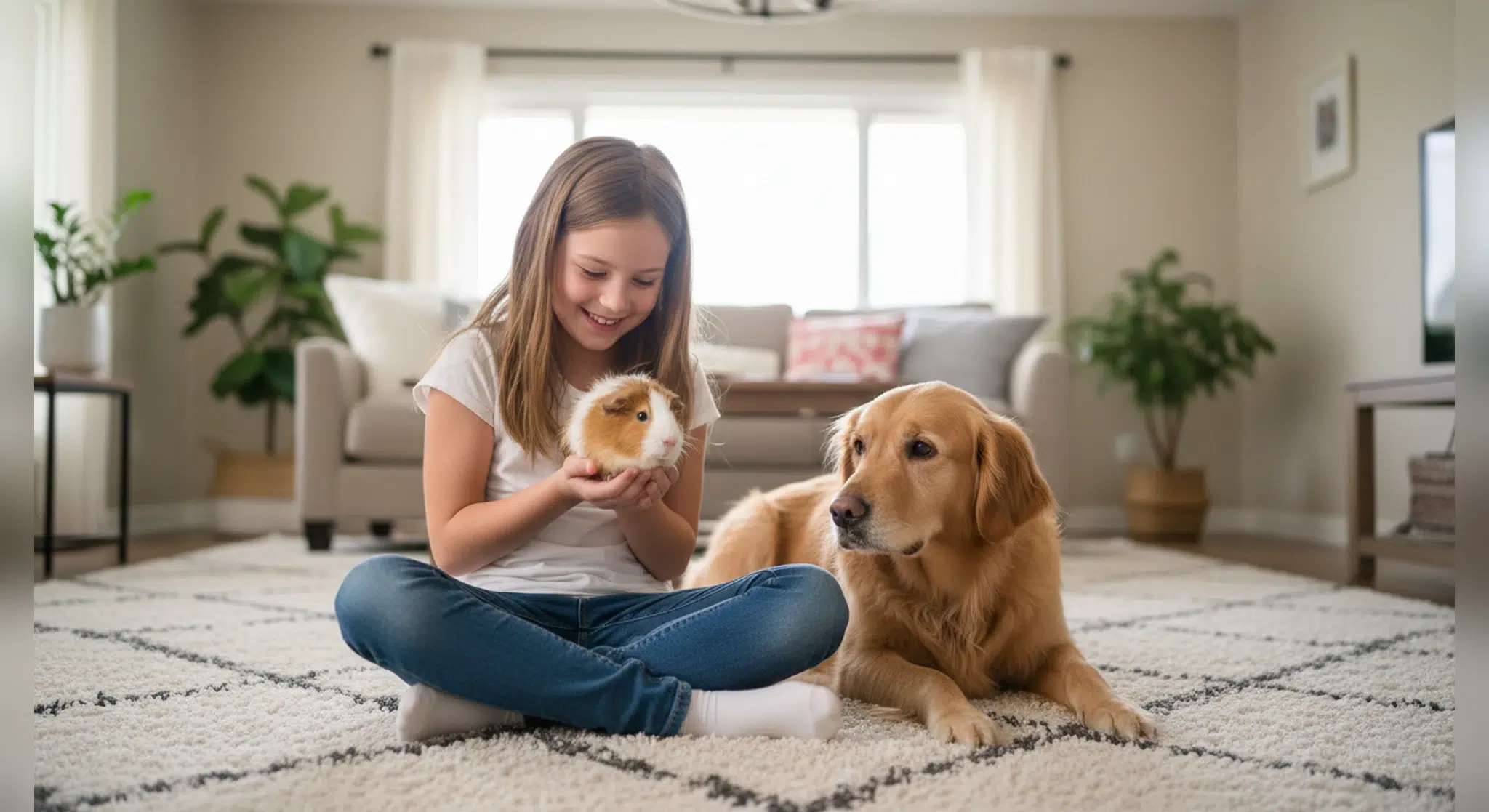
The best pets for kids are guinea pigs, fish, and a calm dog or cat for younger children, with rats, birds, and geckos better suited to kids 8 and up.
Few requests are as persistent as “Can we get a pet?” The right animal can teach responsibility, empathy, and routine, and give your child a best friend. The wrong one can mean a stressed animal and a parent doing all the work.
This guide ranks the best pets for kids by age, with honest notes on lifespan, handling, care, and cost, plus the health rules every family should know and the pets best left in the store.
Key Takeaways
The best pet is the one that fits your child’s age, your time, and your budget.
Guinea pigs are often the best small pet for young kids: sturdy, social, and awake during the day.
Fish are great first pets but need a filtered, heated tank, not a bowl.
Hamsters are usually better for kids 8 and up because they are nocturnal and may nip.
The CDC advises that children under 5 should not handle reptiles or backyard poultry because of Salmonella.
Until about age 10, a parent is the real owner, so choose a pet you would happily care for yourself.
Table of Contents
How to Choose the Best Pet for Your Kids
The best pet for kids is not a single animal. It is the animal that fits your child’s age, your family’s schedule, your home, and your budget. Before you fall for a fluffy face at the shelter, run through these five questions honestly:
Who will really do the care? Children can help, but until about age 10, a parent is the true owner. Choose a pet you would happily care for yourself.
How long will it live? A hamster lives about 2 to 3 years; a cat or tortoise can outlive childhood by decades.
Does your child want to cuddle or watch? Fish and geckos are fascinating to watch but not for holding. Guinea pigs and dogs are social and handleable.
Any allergies or health concerns? Spend time around the animal first, and ask your pediatrician if anyone has asthma or a weakened immune system.
What is the real cost? Food, bedding, vet visits, and habitat upkeep usually cost far more than the animal.
Best Pets for Kids at a Glance
Pet
Typical lifespan
Best starting age
Handling
Care level
Dog
10 to 13 years (varies by breed)
Any age with adult owner
High, very social
High
Cat
12 to 18 years
5 and up for gentle handling
Moderate
Moderate
Guinea pigs (a pair)
5 to 7 years
5 and up
High, gentle
Moderate
Betta or goldfish
Betta 3 to 5; goldfish 10+
3 and up with help
None
Low to moderate
Rats (a pair)
2 to 3 years
8 and up
High, clever
Moderate
Hamster
2 to 3 years
8 and up
Low, may nip
Moderate
Budgies (a pair)
5 to 10 years
8 and up
Moderate with training
Moderate
Leopard gecko
10 to 20 years
8 and up with strict handwashing
Low to moderate
Moderate
Rabbit
8 to 12 years
10 and up
Low, fragile
High
Kid-friendly pets compared (lifespans are typical ranges)
1. Dogs: Best for Active, Committed Families
Dogs are the classic family pet for good reason. They are affectionate, social, and wonderful for teaching empathy, routine, and responsibility, and a dog gets the whole family outside. Research on children and pets suggests that caring for an animal can support kids’ social skills and sense of responsibility.
The trade-off is time. Dogs need daily walks, training, grooming, and company. For families with toddlers, look for an adult dog with a known calm temperament rather than a puppy, which adds a second “baby” to the house. Popular family breeds include Labrador and golden retrievers, beagles, and many mixed-breed shelter dogs, but individual temperament matters more than breed.
Never leave a young child alone with any dog, no matter how gentle.
Teach kids to let a dog approach them, to avoid hugging dogs around the neck, and to leave dogs alone while eating or sleeping.
Kids can help with feeding, brushing, and filling the water bowl from about age 4 or 5.
2. Cats: Great for Calmer Households
Cats are more independent than dogs, which makes them a good fit for busy families. They do not need walks, they are usually litter-trained, and many cats become very affectionate with kids who learn to be gentle. Cats are best for children old enough to follow “gentle hands” rules, generally around 5 and up.
A calm adult cat from a shelter, whose personality is already known, is often a better bet than a kitten with sharp claws and endless energy. Keep litter boxes out of reach of toddlers, and remember that cat allergies are common, so visit a friend’s cat before committing.
3. Guinea Pigs: The Best Small Pet for Young Kids
If you want a handleable small pet for a young child, guinea pigs are often the top recommendation. They are larger and sturdier than hamsters, rarely bite, are active during the day, and chatter and squeak in a way kids adore.
Guinea pigs are social, so plan on a pair of the same sex.
They need a roomy enclosure, unlimited hay, fresh vegetables, and a source of vitamin C, since they cannot make their own.
Teach kids to sit on the floor and hold them in their lap, never standing up.
They typically live 5 to 7 years, a real commitment but not a lifetime one.
Big days of fun go better with a good night of sleep.
Got a little one at home too? Our free two-minute quiz builds a gentle, personalized sleep plan for babies and toddlers.
Fish are a great first pet for younger children and for families with allergies. Watching fish is calming, and kids can help with feeding and simple tank checks. The catch: fish are not as low-maintenance as their reputation. A tiny unfiltered bowl is not a humane home.
A betta fish is a popular single-fish choice. It needs a heated, filtered tank; many aquarists recommend at least 5 gallons.
Goldfish grow much larger and live much longer than most people expect, and they need big, filtered tanks.
Plan for regular partial water changes and a test kit, and let your child help measure and log.
Keep the tank lid closed and electrical cords out of reach of toddlers.
5. Rats: Surprisingly Great Pets for Older Kids
Pet rats surprise many parents. Domestic rats are intelligent, social, rarely bite, and can learn their names and simple tricks. They are awake at dusk and evening, which suits after-school time. They should be kept in same-sex pairs or groups and need a large, multilevel cage. Their short lifespan of about 2 to 3 years is worth discussing with children ahead of time.
6. Hamsters and Gerbils: Better for Older Kids Than You Might Think
Hamsters are often bought as “easy” first pets for small children, but they are not ideal for young kids. Most hamsters are nocturnal, so they sleep while kids are awake and may nip when woken. Syrian hamsters must live alone. They can be good pets for gentle children around 8 and up who are happy to observe more than cuddle. Gerbils are more active during the day and live in pairs, which makes them a nice alternative.
7. Birds: Budgies and Cockatiels
Budgies (parakeets) are small, colorful, social birds that can become tame with patient daily handling, and some learn to mimic words. They do best in pairs, need a large cage and daily time out of it in a bird-safe room, and can live 5 to 10 years or more. Cockatiels are a bit larger and very affectionate. Birds suit calm, older children who can handle routine care.
8. Reptiles: Leopard Geckos and Bearded Dragons
Leopard geckos are docile, fairly easy to care for, and fascinating for older kids who love animals. Bearded dragons are larger and more interactive. Both need proper heat, lighting, and diet, and both can live 10 years or more.
There is an important health caveat. The CDC advises that children under 5 should not handle reptiles, amphibians, or backyard poultry, because these animals commonly carry Salmonella even when they look healthy. Older children must wash their hands with soap and water after every contact, and reptiles should never roam in kitchens or near food prep. Small turtles with shells under 4 inches have been banned from sale in the U.S. since 1975 for this reason.
9. Rabbits: Adorable but Harder Than They Look
Rabbits are often marketed as starter pets, but they are better for older kids and experienced families. They are prey animals that usually dislike being picked up, their spines are fragile and can be injured if they kick while being held, and they can live 8 to 12 years. They need space to run, a hay-based diet, and a rabbit-savvy vet. A rabbit can be a wonderful companion for a patient older child who is happy to sit on the floor and let the bunny come to them.
Best Pets for Kids by Age
Age
Best options
Child’s role
Under 5
Fish, a calm adult dog or cat
Watching, gentle petting with an adult, helping feed
5 to 7
Guinea pigs, fish, cat, dog
Feeding, fresh water, brushing, simple cage tidying with help
8 to 10
Rats, gerbils, hamster, budgies, leopard gecko
Daily care with reminders, cleaning with help
11 and up
Rabbits, reptiles, birds, dog training
Most daily care, with parent oversight of health and vet visits
Small turtles and other reptiles for kids under 5, because of Salmonella risk.
Hermit crabs: social, need precise humidity, and often die quickly in basic kits.
Chicks and ducklings as Easter gifts: high Salmonella risk and a long commitment.
Exotic animals like hedgehogs, sugar gliders, or monkeys, which have specialized needs and may be restricted by law.
Getting a Pet When You Have a Baby or Toddler
If you have a little one at home, the calmest choice is often to wait, or to choose a mature, known-temperament animal. Introduce pets and babies slowly, keep pets out of the nursery, and never allow a pet in the crib or near a sleeping baby. Our guide to safe sleep for babies explains why the crib should stay completely bare.
Health, Allergies, and When to Ask Your Pediatrician
Talk to your pediatrician before getting a pet if anyone in the family has asthma, allergies, eczema, or a weakened immune system, or if you are pregnant (cats can carry toxoplasmosis, so someone else should scoop the litter). Keep pets up to date on vaccines and vet checks, teach handwashing after every pet interaction, and get prompt care for any animal bite that breaks the skin.
Frequently Asked Questions
What is the best pet for kids?
For most families, the best pets for kids are a calm dog or cat for families ready for the commitment, guinea pigs as a handleable small pet for young kids, and fish as a low-allergy first pet. For children 8 and up, rats, gerbils, budgies, and leopard geckos are also great choices.
What is a good first pet for a child?
Guinea pigs and fish are two of the best first pets for young children. Guinea pigs are gentle, sturdy, and active during the day, while fish are calming to watch and good for families with allergies. Both still need proper housing and daily adult oversight.
What are the easiest pets to take care of?
Among kid-friendly pets, fish, leopard geckos, and cats tend to need the least daily hands-on time. Easy does not mean no care: fish need water changes, geckos need heat and lighting, and cats need litter scooping, vet visits, and attention.
Are hamsters good pets for kids?
Hamsters can be good pets for gentle children around 8 and up, but they are not ideal for young kids. Most are nocturnal, may nip when woken, and live only about 2 to 3 years. Guinea pigs or gerbils are usually better choices for younger children.
What pets should young children avoid?
The CDC advises that children under 5 should not handle reptiles, amphibians, or backyard poultry because of Salmonella risk. Hermit crabs, rabbits, and exotic pets are also usually poor choices for young kids because of their specialized care needs or fragility.
Gentle changes, peaceful nights.
Betteroo builds a personalized sleep plan for your baby or toddler. Take the free two-minute quiz to get started.