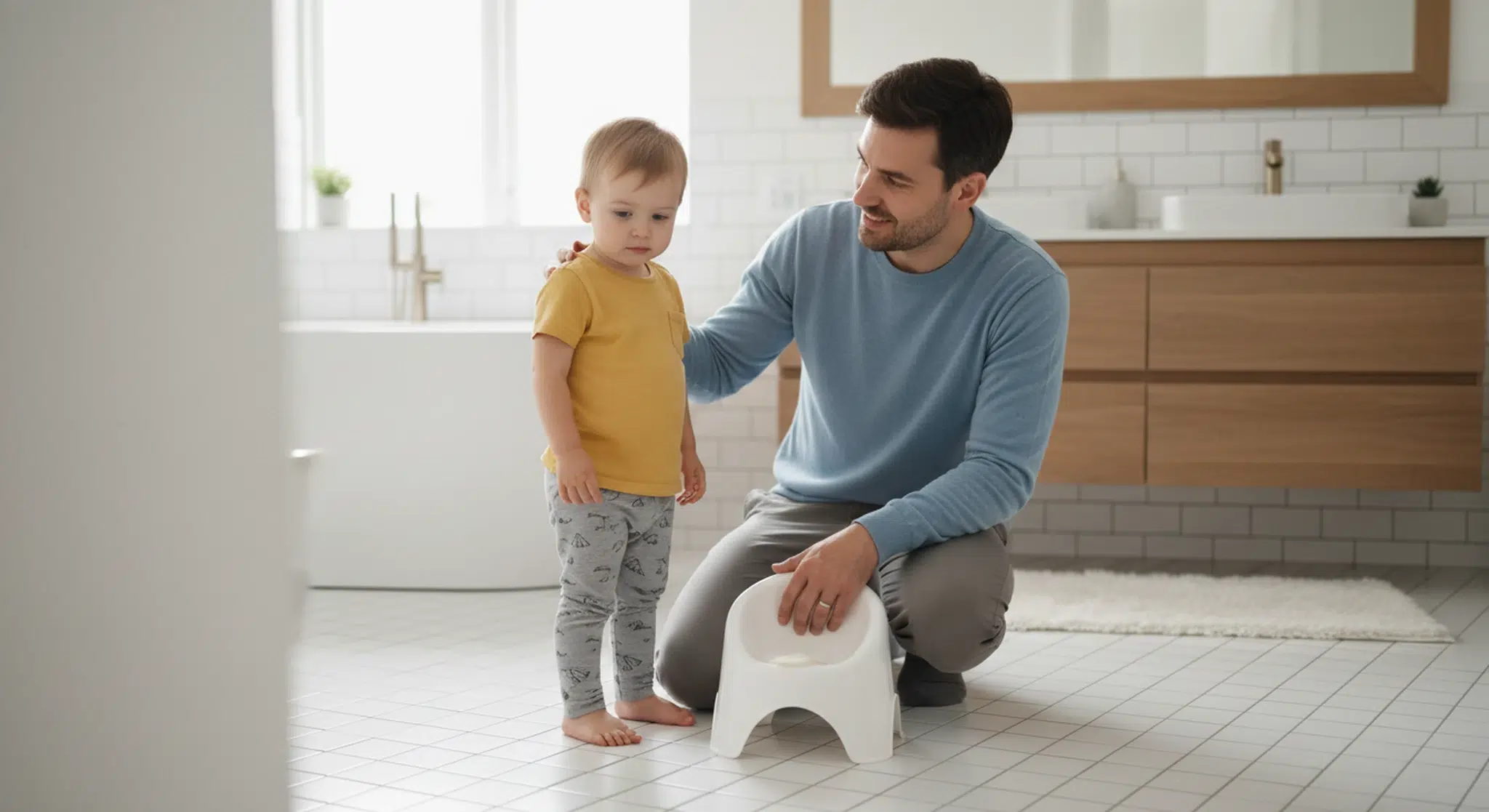
Potty training regression is when a child who was reliably using the toilet starts having frequent accidents again, and it is far more common than parents expect. It is almost always triggered by something identifiable: stress, a big life change, constipation, a urinary tract infection, or a power struggle, and it is almost always reversible.
Nothing deflates a parent faster than a fully potty trained kid suddenly puddling the kitchen floor three times in one day. You did the naked weekend. You gave out the M&Ms. You announced it to the grandparents. And now this.
Take a breath: potty training regression is a normal, well-documented phase, not a verdict on your child or your method. This guide covers why regression happens, the medical causes worth ruling out first, exactly how to respond (and what makes it worse), and when a pediatrician should get involved.
Key Takeaways
Regression means a previously trained child having frequent accidents again for days or weeks, not the occasional busy-day accident, which is normal for years.
The top triggers: big changes (new sibling, new school, moving), stress, constipation, urinary tract infections, deep-play distraction, and power struggles.
Rule out medical causes first: constipation is the single most common physical culprit and also causes daytime pee accidents by pressing on the bladder.
Respond boring and calm: no punishment, no shame, no drama; matter-of-fact cleanup plus a quiet return to basics fixes most regressions in 1 to 3 weeks.
Call the pediatrician for pain, blood, fever, sudden extreme thirst, hard stools, or a regression that persists beyond a few weeks despite a calm reset.
As an Amazon Associate, Betteroo earns from qualifying purchases.
Table of Contents
What Counts as Potty Training Regression?
Every trained child has occasional accidents, especially when absorbed in play, overtired, or in a new place; sporadic accidents can continue for a couple of years after training and are not regression. Regression is a pattern change: a child who was dry and self-initiating for weeks or months begins wetting or soiling frequently, refusing the potty, hiding to poop, or asking for diapers back, and it persists for more than a few days.
It helps to know what your baseline was. A child trained for three weeks who unravels is often just consolidating a new skill, the potty version of a sleep regression. A child trained for a year who suddenly floods their pants daily has a trigger, and your job is detective before coach. If the original training never quite finished, our how to potty train guide is the better starting point.
Why Regression Happens: The Common Triggers
Big life changes. A new baby is the classic: the toddler watches the newcomer get celebrated for filling diapers and rationally concludes diapers are where the attention is. New daycare or preschool, a move, a parent’s new schedule, travel, and even exciting changes like a big-kid bed can each spend the same adjustment currency.
Stress and big feelings. Toileting is one of the very few things a small child fully controls, so it is often the first place stress shows up. Family tension, a scary event, or even an overheard argument can surface as puddles.
Constipation. The stealth cause, and the most common medical one. A backed-up bowel presses on the bladder, causing urgency and pee accidents, and painful hard stools teach a child to withhold poop, which worsens the backup. Watch for infrequent stools, huge or hard stools, straining, and streak-soiling in underwear (liquid leaking around a blockage that looks deceptively like diarrhea).
Urinary tract infections. Sudden accidents plus urgency, dribbling, pain or burning, strong-smelling urine, or fever mean a same-week pediatric visit and a simple urine test, especially in girls.
Distraction and deep play. Three year olds mid-Lego do not experience bladder signals until the last three seconds. This is maturity, not motivation, and timed reminders fix it.
Power struggles. If the potty became a battleground of pressure, rewards escalation, and hovering, some strong-willed children discover that refusing is the most powerful move on the board. The fix is removing the audience, not raising the stakes.
Potty chaos and bedtime chaos often travel together
Take Betteroo’s free quiz and get a personalized plan for your toddler’s sleep, which quietly fixes half of daytime behavior too.
Rule out the body first. A quick pediatrician check for UTI and constipation beats two weeks of sticker charts aimed at a medical problem. Treating constipation alone resolves a huge share of regressions.
React like it is spilled milk. “Oops, pee goes in the potty. Let’s get dry clothes.” Flat tone, zero lecture, child helps with cleanup in a matter-of-fact, non-punitive way. Shame demonstrably backfires in toileting; it drives withholding and hiding.
Return to basics for a week or two. Scheduled potty sits after waking, after meals, and before leaving the house or starting long play; easy clothing; a timer that is the messenger so you are not the nag.
Reconnect deliberately. If a new sibling or big change is the trigger, ten minutes a day of one-on-one, child-led time treats the actual cause. Let your child hear you praise their big-kid skills to someone else.
Reward gently, if at all. A small, immediate acknowledgment for potty successes can restart momentum, but keep it light and expiring; escalating bribery hands the leverage to the toddler.
Keep them in underwear. A full retreat to diapers usually prolongs daytime regression (nighttime is a separate story; see nighttime potty training). If everyone is drowning, a short deliberate break of a few weeks, framed neutrally, then a fresh restart, is a legitimate reset for a child under 3.
Loop in caregivers. Daycare, grandparents, and both parents run the identical calm script, or the child reasonably tests whose rules are real.
What Not to Do
Do not punish, scold, or express disgust; do not force long potty sits; do not compare to siblings or classmates; and do not interrogate every accident. All four raise the emotional stakes of a task that works best boring. Toileting sits on the short list of things no adult can make a child do, which is exactly why pressure fails and calm systems win.
Also resist re-training from scratch as if nothing was learned. The skill is intact underneath the trigger. Your tone should say: this is a blip, you are a kid who uses the potty, and we are just helping your body remember. Boys and girls regress at similar rates, though the details of the original training can differ; see potty training boys and potty training girls for the tailored playbooks.
How Long Does Potty Training Regression Last?
With a calm reset and no medical driver, most regressions resolve within 1 to 3 weeks. Trigger-linked regressions (new sibling, new school) often fade as the adjustment settles, sometimes in days once connection time is restored. Constipation-driven regressions resolve on the constipation’s timeline, which is why treating it properly, often for months per pediatric guidance, matters more than any chart.
A regression that persists beyond about a month despite a consistent calm approach, or any regression accompanied by other lost skills (speech, play, motor), moves out of do-it-yourself territory and into a pediatric conversation.
When to Call the Pediatrician
Call promptly for: pain or burning with urination, blood in urine or stool, fever with accidents, sudden dramatic thirst and urination increase (a diabetes red flag), hard painful stools or stool-withholding, soiling with streaky leakage, or accidents returning after six months or more of complete dryness with no obvious trigger. Also raise it if regression persists past a few weeks, or if it arrives alongside regression in speech or social skills. Most of these have simple tests and very treatable answers.
Frequently Asked Questions
What is potty training regression?
It is when a child who was reliably using the toilet returns to frequent accidents, potty refusal, or requests for diapers for more than a few days. It differs from the occasional accident, which is normal for a couple of years after training, and it usually has an identifiable trigger.
Why is my potty trained child suddenly having accidents?
The most common causes are big changes (new sibling, new school, moving), stress, constipation pressing on the bladder, urinary tract infections, deep-play distraction, and power struggles. Constipation and UTIs are the two medical causes worth ruling out before any behavioral plan.
How do I fix potty training regression?
Rule out UTI and constipation, then run a calm reset: matter-of-fact accident cleanup with zero shame, scheduled potty sits after waking and meals, easy clothing, brief gentle rewards, extra one-on-one connection if a life change triggered it, and identical responses from every caregiver. Most regressions resolve in 1 to 3 weeks.
Should I put my child back in diapers during a regression?
Generally no for daytime; retreating to diapers usually stretches the regression out. Two exceptions: nighttime (dryness overnight is a separate, later development), and a full deliberate break of a few weeks for a child under 3 when the process has become a battle, followed by a fresh, low-pressure restart.
Is potty regression normal with a new baby?
Extremely. The newly promoted big sibling watches a newborn get around-the-clock attention for diaper needs and draws the obvious conclusion. Extra one-on-one time, jobs as the capable big kid, and praising their skills within earshot usually reverse it within a couple of weeks.